Day 1 — Saigon: The Southern Front
Start your journey in Ho Chi Minh City, the epicenter of the country's 20th-century history. Spend your morning at the War Remnants Museum. It is a sobering experience, but essential for understanding the local perspective on the conflict. Afterward, head to the Independence Palace, where the architecture remains frozen in the 1970s. In the evening, grab a "com tam" (broken rice) at a local stall and walk through the streets of District 1 to see the colonial-era post office and cathedral.
Day 2 — The Cu Chi Tunnels
Take a morning trip to the Cu Chi Tunnels, located about 60km from the city center. This network of underground passages is a masterclass in ingenuity and survival. You can crawl through sections of the tunnels and see the remnants of the conflict scattered throughout the forest. Return to the city by late afternoon and reward yourself with a "banh mi" from a street vendor and a glass of "ca phe sua da" as you watch the chaotic motorbike traffic from a sidewalk stool.
Day 3 — Hue: The Imperial Legacy
Fly from Ho Chi Minh City (호치민시 / 胡志明市 / ホーチミン市) to Hue. This city served as the seat of the Nguyen Dynasty and remains the cultural heart of the country. Spend your day exploring the Imperial Citadel Thang Long-style architecture at the Imperial Citadel. The site suffered significant damage during the 1968 Tet Offensive, and you can still see the contrast between the restored sections and the bullet-scarred walls. End your day with a bowl of "bun bo hue"—the spicy, lemongrass-infused beef noodle soup that defines the region.

Photo by Quang Nguyen Vinh on Pexels
Day 4 — The Royal Tombs
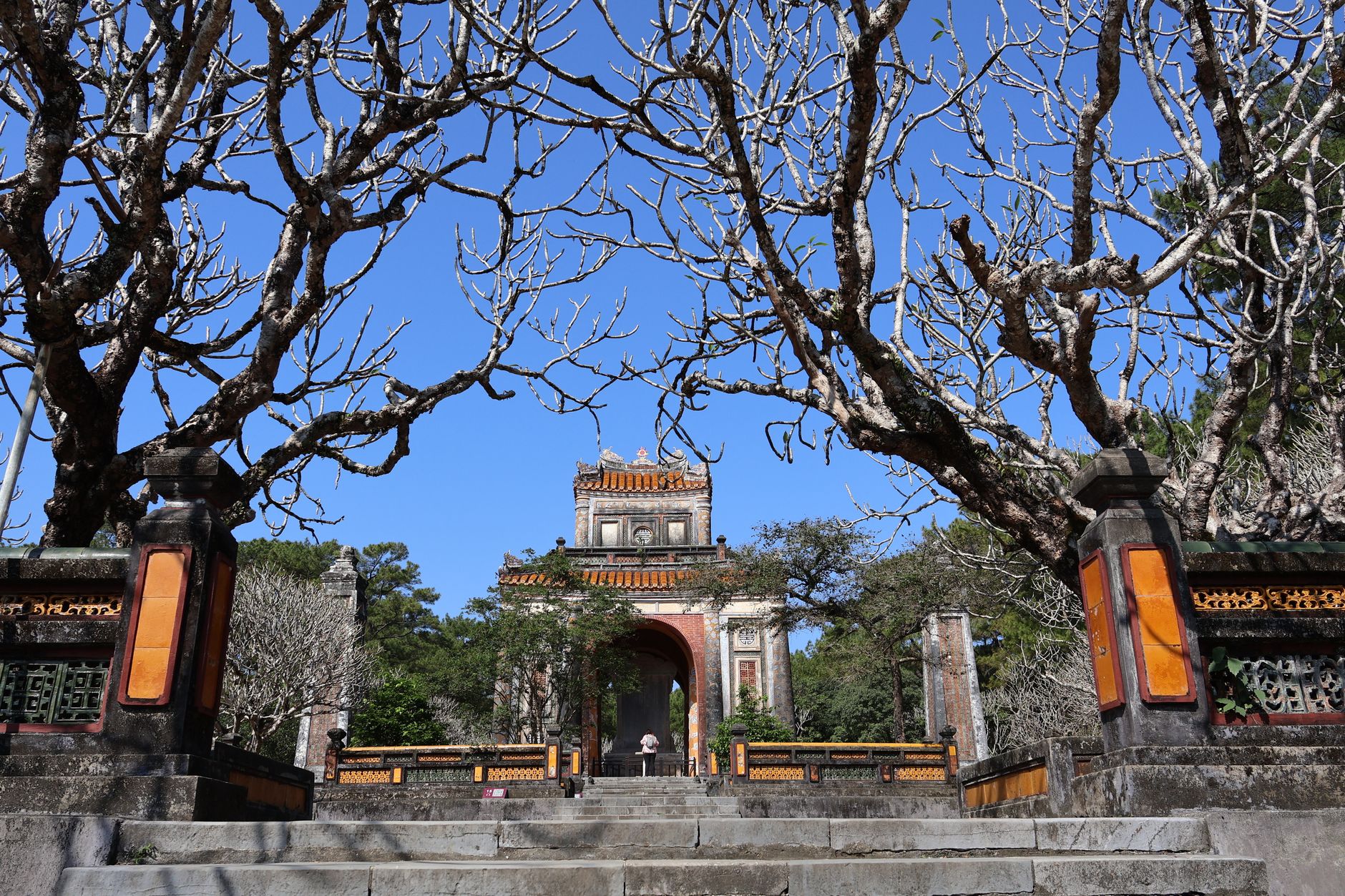
Dedicate your second day in Hue (후에 / 顺化 / フエ) to the outskirts. Visit the Tomb of Tu Duc and the Tomb of Khai Dinh. These structures are not just burial sites; they are elaborate reflections of the aesthetic values of the late 19th and early 20th centuries. The landscape around these tombs is quiet and reflective. In the evening, take a slow walk along the Perfume River before trying some local "banh beo" (steamed rice cakes).
Day 5 — Hanoi: The Capital
Fly north to Hanoi. Start your historical deep dive at the Temple of Literature, which dates back to 1070. It is a peaceful contrast to the intensity of the southern sites. Walk over to the Long Bien Bridge, designed by the same firm as the Eiffel Tower, which saw heavy activity during the war. For dinner, find a spot in the Old Quarter for "bun cha"—the grilled pork and noodle dish famously enjoyed by Anthony Bourdain and Barack Obama in 2016.

Photo by tu nguyen on Pexels
Day 6 — The Revolutionary History
Spend your morning at the Hoa Lo Prison, often referred to as the 'Hanoi Hilton.' It provides a look into the colonial period and the later years of the conflict. Afterward, visit the One Pillar Pagoda and the nearby Tran Quoc Pagoda, which sits on the edge of West Lake. If you have time, catch a traditional "water puppetry" show, an art form that has been performed in the Red River Delta for centuries. Finish your night with a "bia hoi" on a street corner, the freshest and cheapest beer you will find in the country.
Day 7 — The Northern Outskirts
For your final day, take a trip to the village of Bat Trang, famous for its ceramics, or head toward the outskirts to see the rural landscape that sustained the population during decades of upheaval. Reflect on the journey over a cup of "egg coffee" in a hidden cafe tucked away in a narrow alleyway. The transition from the southern urban sprawl to the northern traditionalism provides a complete picture of the country's complex narrative.
Practical notes
Domestic flights between Saigon, Hue, and Hanoi are frequent and affordable, usually costing between 1,000,000 VND and 2,000,000 VND per leg. Always carry a light rain jacket, as weather patterns change drastically between the north and south, and ensure you have comfortable walking shoes for the uneven terrain at historical sites.
Last updated · May 30, 2026 · independently researched, never sponsored.