Best Banh Mi in Saigon: 7 Stalls Worth Queueing For
Saigon's banh mi scene is faster, greasier, and more caffeinated than elsewhere in Vietnam. Here are seven stalls that justify the wait and the crowds.

Saigon's "banh mi" isn't a quieter breakfast ritual like you'll find in Hoi An or Da Nang. It's morning fuel: eaten standing up, oil dripping onto your shirt, coffee in the other hand. The bread is crispier, the fillings are heavier on the pâté and cha lua, and the price reflects demand. You will queue. You will eat in five minutes. You will want another one tomorrow.
Banh Mi Huynh Hoa — District 1
Start here if you want to understand why Saigonese will wait 20 minutes for a sandwich. Huynh Hoa sits on Nguyen Hue walking street, near the Old Post Office, and has been making the same "banh mi (반미 / 越式法包 / バインミー) thit nuong" (grilled pork) and "banh mi cha lua" (pork sausage) since the 1990s. The cha lua here — that pink, finely minced pork sausage — is the draw. It's from a specific supplier, slightly sweeter than you'll find elsewhere, and they never skimp. Toast the bread long enough that it's hard to bite through, slather the pâté thin, add cha lua, pickled carrot and radish, cilantro, and a smear of mayo. 80,000 VND gets you a sandwich that tastes identical to the one someone ate in 1995.
Arrive before 9 a.m. or after 10 a.m.; the 9–10 rush is tourist-thick.
Banh Mi Hoa Ma — District 3
Hoa Ma sits on Vo Van Tan street, a quiet lane in District 3 where locals actually live. The stall is small, cramped, easy to miss if you're looking for signage (there barely is any). But it's been here for 15 years, and the owner makes two versions: standard cha lua, and a spicier "banh mi cha lua cay" with extra chilies and a house-made hot sauce that's almost vinegary. The bread is from a local bakery three blocks away, delivered twice daily, so freshness isn't an issue. The pickles are sharper than Huynh Hoa — more aggressive with the vinegar and salt. 75,000 VND.
Crowd here is 90% regulars. If you sit at the plastic stool, you'll hear Vietnamese and feel like you've genuinely stepped into someone's morning routine.
Banh Mi 37 Nguyen Trai — District 1
Nguyen Trai street in District 1 is full of banh mi stalls, but stall 37 (marked by a hand-painted number) belongs to an older woman who grinds her own pâté and refuses to rush. She'll make your sandwich in front of you, toast the bread in a small charcoal toaster, and hand it wrapped in brown paper. The bread here is slightly less crispy than Huynh Hoa, so the texture leans softer — which some people prefer. Fillings are generous: she packs cha lua and pâté both into every sandwich, no halfing. 85,000 VND.
Open 6–10 a.m. only. Closes when she runs out of bread, usually by 9:30 a.m. on weekends.

Photo by Jordan Coleman on Pexels
Banh Mi Bay Ho — District 5
Bay Ho is the stall for the banh mi purist who wants to see the technique. It's on Ngo Duc Ke street, and the owner builds the sandwich like an architect: bread scored and toasted until the exterior shatters, then a precise layer of pâté, then precisely measured strips of cha lua and thit nuong (marinated pork), then greens and pickles as garnish, not filler. The ratio is always the same. No surprises. 80,000 VND.
This is the banh mi equivalent of a well-made cappuccino: familiar, disciplined, no room for improvisation. Locals in the neighborhood eat here daily.
Banh Mi Saigon Xua — District 5
On Tran Hung Dao street, near the harbor, this stall leans into nostalgia — the name means "Saigon (사이공 / 西贡 / サイゴン) of the Past." The owner is in her 60s and cooks pâté the old way: liver, ground by hand, mixed with spices, wrapped in aluminum foil and steamed. It takes longer. The taste is more textured, less smooth. Some people find it better; others prefer the modern grind. Try the "banh mi gan" (pâté-only sandwich) to taste the difference. 70,000 VND. It's the cheapest on this list and arguably the most character-filled.
Banh Mi Ngo Hoa — District 5
Ngo Hoa is tucked on Ngo Duc Ke's small alley, and it's a two-person operation: an older man and his adult daughter. The stall has no sign, just a hand cart and a small toaster. They make banh mi thit nuong primarily — grilled meat that's actually grilled over charcoal in the back, not pre-made. You taste the charcoal smoke. It's richer, fattier, and more aggressive than mass-produced versions. 85,000 VND.
Open 6–11 a.m. Tourist maps won't find this stall. It exists for the neighborhood.
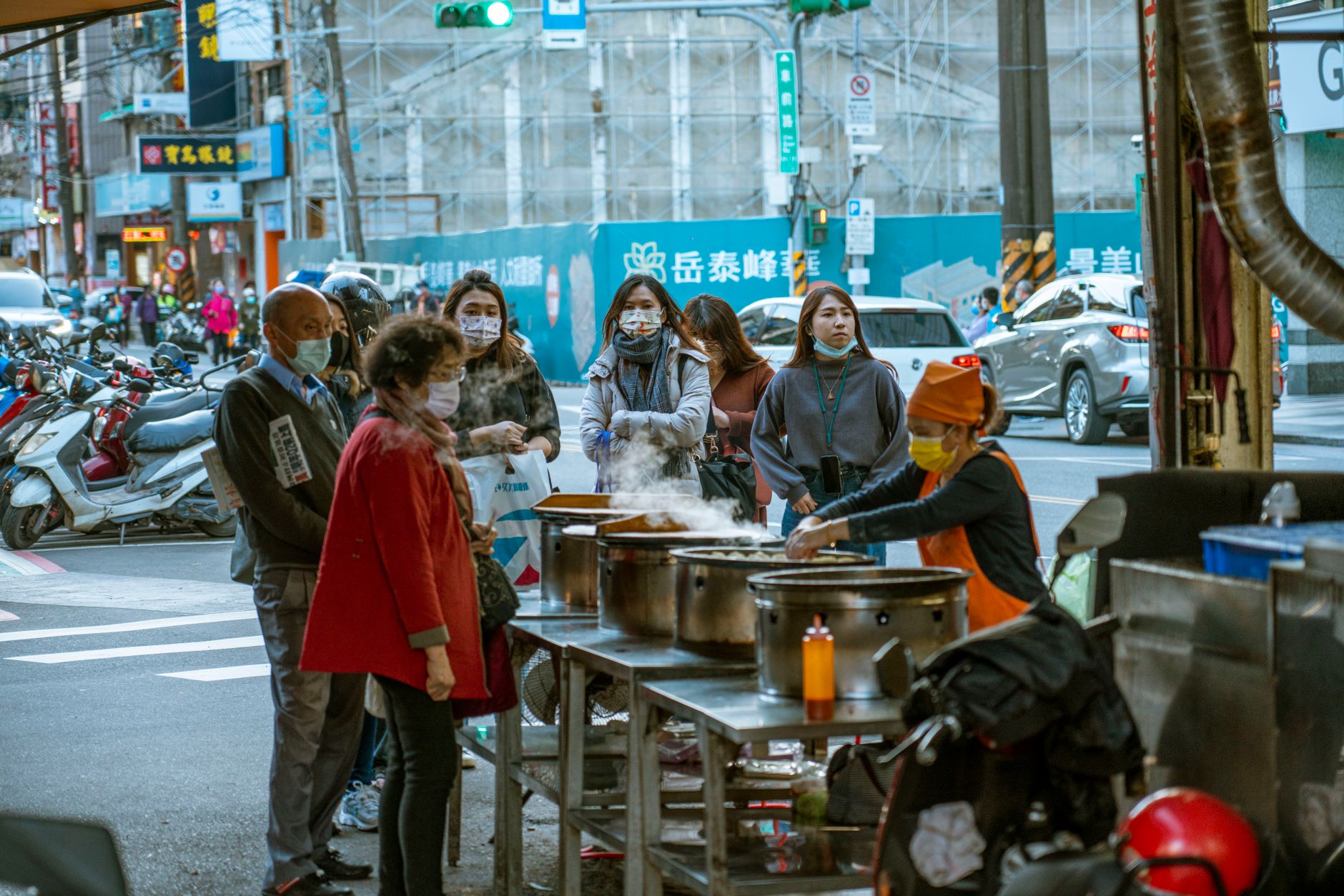
Photo by Jimmy Liao on Pexels
Banh Mi Minh Duc — District 1
On Mac Thi Buoi street, this stall is newer (opened in 2015) but technically skilled. The owner trained as a baker before deciding to specialize in banh mi bread and fillings. The bread here has more of a sourdough tang, less pure crispness, but the complexity is intentional. Fillings are standard, but the bread is the event. 90,000 VND.
Best if you're curious about banh mi as a bread problem, not just a pork-and-sauce problem.
What Makes Saigon Banh Mi Different
Compare Saigon to Hoi An (호이안 / 会安 / ホイアン), and you notice the differences immediately. Hoi An "banh mi" tends to be lighter — more greens, more fish sauce-laced mayo, often with extra protein like meatball or shrimp. Hoi An's bread is thinner, crisper, smaller. Hoi An banh mi is a dish you sit down for.
Saigon banh mi is a working-class breakfast. The bread is thicker, the fillings are heavier (more pâté, more cha lua), the greens are minimal. Oil pools at the bottom of the wrapper. The goal is satiety and speed. Saigon banh mi tastes like it was invented for a factory worker, not a tourist.
Saigon also embraces meat variety. You'll find banh mi with "thit ga" (chicken), "banh mi cua" (crab), and even "banh mi que" (sausage from a specific region). Hoi An tends to stick to pork. Saigon experiments more.
Practical notes
Most stalls operate 6–10 a.m. only; lunch banh mi in Saigon is rare. Expect to pay 70,000–90,000 VND per sandwich. Bring cash — many stalls don't take cards. Arrive early or during the 10–11 a.m. lull if you want to avoid crowds and actually have time to ask the owner questions.
Going to Vietnam? Eat and travel smarter.
Monthly: new dishes, off-the-beaten-path destinations, and itineraries — straight to your inbox. No spam. Unsubscribe anytime.
Join 0 expats. (We just launched.)
More from Ho Chi Minh City
Other articles covering this city.

Notre Dame Cathedral Saigon: French Colonial Centerpiece in the Heart of HCMC
Saigon's Notre Dame Cathedral has been wrapped in scaffolding for years, but the square in front of it remains one of the best starting points for a colonial-era walking tour of District 1.

Best Pho Saigon in Ho Chi Minh City: Where Locals Send You
Pho Saigon is thinner, sweeter, and faster than its northern cousin. Here's where to find the real thing in HCMC, plus what makes it different and how to order.

Best Com Tam in Ho Chi Minh City: Where Locals Send You
Authentic "com tam" in Saigon isn't trendy—it's breakfast, lunch, and dinner staple. Here's where locals actually eat it, what to order, and why the rice is better here than anywhere else.
More from Southern Vietnam
Other articles covering the same region.

3 Days Escaping Saigon: Da Lat and Surrounding Highlands
Leave Saigon behind for Da Lat's cool mountain air, pine forests, and French colonial architecture. This tested itinerary covers transport, where to stay, what to eat, and realistic costs for a long weekend.

5 Days in the Mekong Delta: Beyond Can Tho
Skip the tourist boat tours. This itinerary takes you into smaller canals, family orchards, and riverside towns where most visitors don't go—five days based on routes locals actually use.

Best Muc 1 Nang in Mui Ne: Where Locals Send You
Muc 1 nang—grilled squid stuffed with herbs and meat—reaches its peak in Mui Ne. Here's where locals actually eat it, what to order, and why this coastal town makes it better than anywhere else.
More in Food & Drink
More articles from the same category.

Best Tau Hu in Hoi An: Where Locals Send You
Tau hu—silky tofu soup—tastes different in Hoi An. Here's where locals actually eat it, and why.

Best Pho Chua in Ha Giang: Where Locals Send You
Ha Giang's take on sour pho is sharper, tangier, and less known than the southern version. Here's where locals actually eat it.

Best Banh Xeo in Nha Trang: Where Locals Send You
Nha Trang's banh xeo scene is rowdier and greasier than the south. Here's where locals actually eat, what to order, and why the crispy rice pancakes here taste different.

Best Banh Nam in Hue: Where Locals Send You
Hue's version of "banh nam" is a steamed rice cake pocket stuffed with shrimp and pork—nothing like its northern cousin. Here's where locals actually eat it.

Best Banh Uot Thit Nuong in Buon Ma Thuot: Where Locals Send You
Banh uot thit nuong — steamed rice rolls with grilled pork — is a breakfast staple in Buon Ma Thuot's Central Highlands. Here are the spots locals actually eat.

Best Banh Canh Ca in Da Nang: Where Locals Send You
Da Nang's version of "banh canh ca" — thick tapioca noodles in crab broth — tastes different from Hanoi or Saigon. Here's where locals actually eat it, what to order, and why timing matters.
Comments
Loading…