Chau Doc is a city of 100,000 in An Giang Province, 250 kilometers west of Ho Chi Minh City. It sits on the Hau River (a Mekong branch) and the Vinh Te Canal, close enough to Cambodia that you feel the border's presence in daily commerce. A bus from Saigon takes about 5 hours.
Geography and Climate
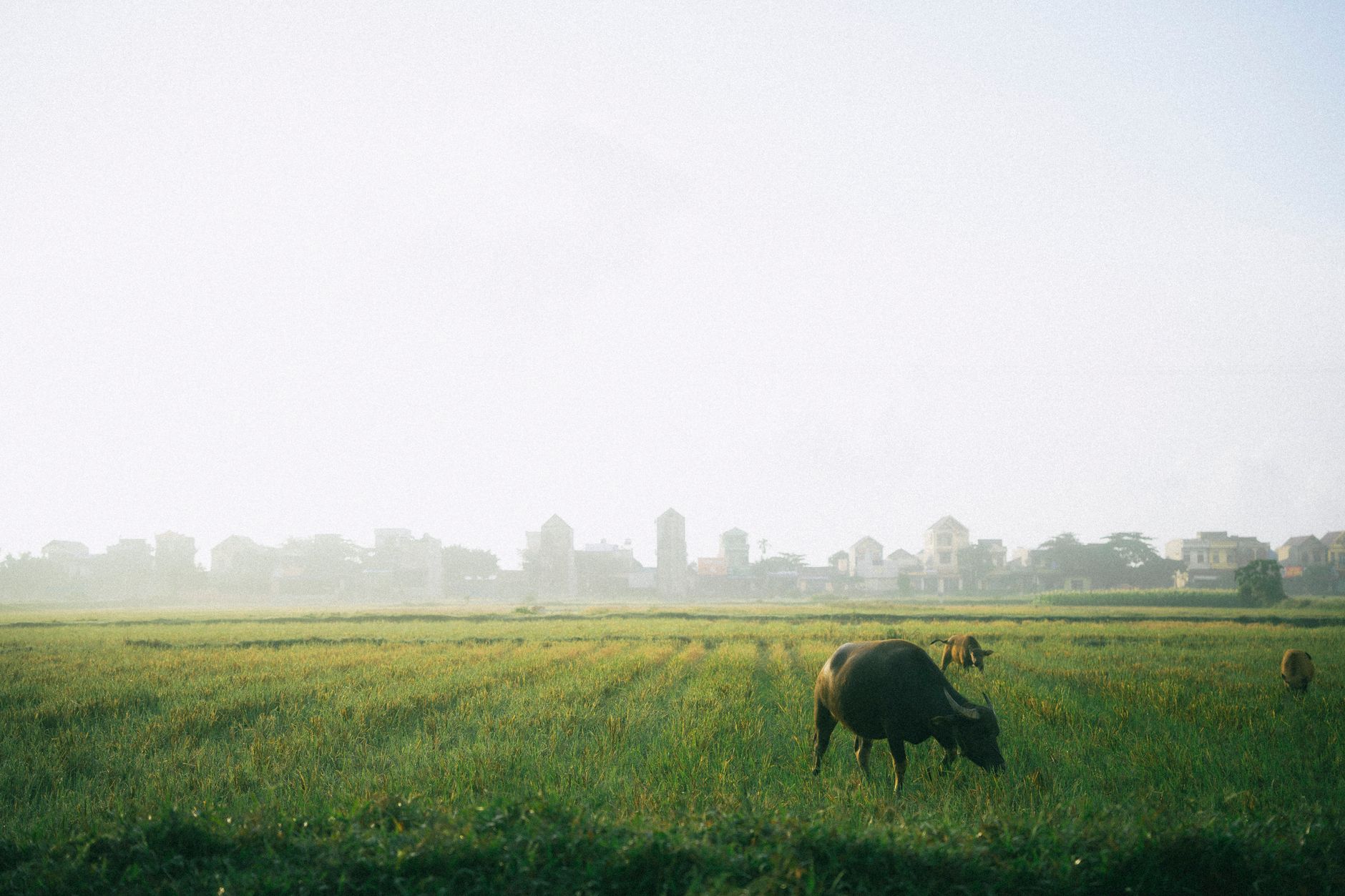
The city occupies 105 square kilometers of flat Mekong terrain. Expect tropical savanna weather: April through November is wet (but not extreme), December to March is dry and clearer. The landscape is river and rice, punctuated by Sam Mountain.
Temperatures hover between 26 and 36 degrees Celsius year-round. The wet season brings afternoon downpours that last an hour or two, then clear. Flooding is part of life here — the Hau River swells between August and November, and locals adjust without drama. If you visit during flood season, you will see fields submerged and boats replacing motorbikes on certain routes. It is not dangerous for travelers, just different. The dry months (December through March) are the most comfortable for walking Sam Mountain and spending mornings on the river.
Sam Mountain and Temples
Sam Mountain rises 284 meters — the Mekong Delta (메콩 델타 / 湄公河三角洲 / メコンデルタ)'s highest point, and visible from the city center seven kilometers away. It is a pilgrimage site. The Lady of Sam Mountain (Ba Chua Xu Nui Sam) temple sits on the peak; locals make annual ceremonies every April (lunar calendar, usually May). The views from the top are expansive: river, rice fields, Cambodia across the water.
The hike to the summit takes about 45 minutes at a moderate pace. Steps are concrete and well-maintained, but bring water — shade disappears halfway up. A "xe om" (motorbike taxi) from the city center to the mountain base costs around 30,000–50,000 VND. If you prefer not to walk, motorbike taxis will take you partway up the access road for about 40,000 VND. There is no entrance fee for the mountain itself, though donation boxes sit at several temple stops along the route.
In the city itself, Tay An Temple dates to 1847. Phuoc Dien Temple is a recognized historic monument. Both are active; you may encounter devotees and ceremonies. Tay An is worth a slow visit — the architecture blends Vietnamese, Cham, and Khmer influences, which tells you everything about this town's cultural position. Look for the rows of bodhisattva statues lining the entrance hall. Dress modestly (cover shoulders and knees) and remove shoes before entering any temple.
"Mam Tai" and Fish Sauce
Chau Doc is the origin point for "mam tai," an anchovy-based "nuoc mam" (fish sauce) that is bottled and shipped across Vietnam (베트남 / 越南 / ベトナム) and overseas. The local economy runs on fish sauce export and farmed basa catfish. If you're curious about how this staple tastes at source, vendors near the market and along the river will sell small bottles. The aroma is assertive; don't be shy.
A 500ml bottle of local "mam" runs 30,000–60,000 VND depending on grade and age. The older ferments are darker and more pungent — vendors will let you smell before buying if you ask. For something more approachable, try "mam ca loc" (snakehead fish paste), which locals eat with steamed rice, fresh herbs, and sliced green mango. Several small restaurants on Nguyen Huu Canh Street serve "bun mam" — a thick, fermented-fish noodle soup that is Chau Doc's signature dish. Expect to pay 35,000–50,000 VND per bowl. It is not subtle. The broth is deep, funky, and layered with shrimp paste, pork, eggplant, and water spinach. If you have eaten pho and bun bo Hue and think you know Vietnamese noodle soups, "bun mam" will reset your assumptions.

Image by Vyacheslav Argenberg via Wikimedia Commons (CC BY-SA)
Floating Market and Trade
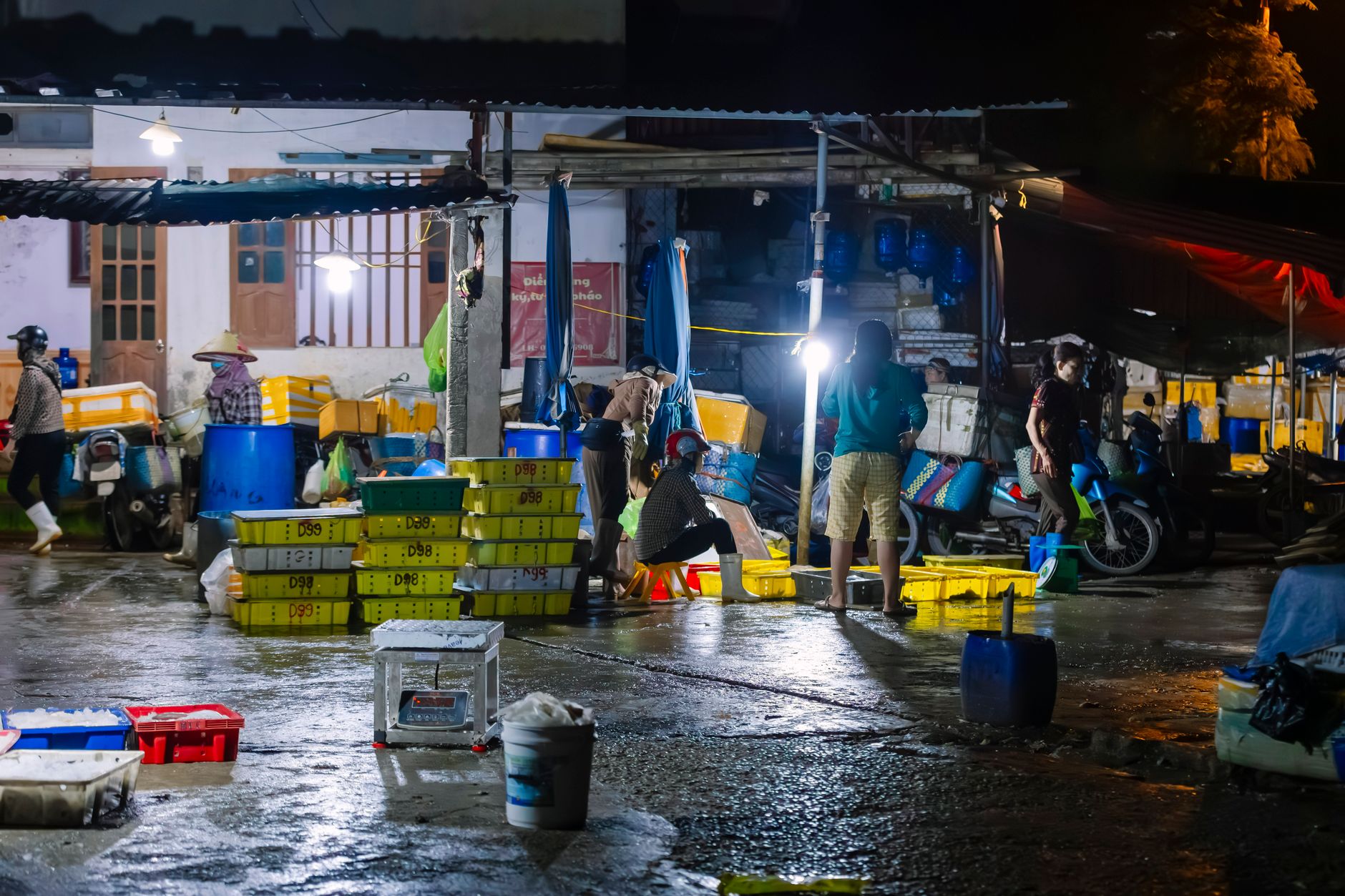
The floating market operates daily on the river and canals. Boats loaded with fruit, vegetables, fish, and household goods gather at dawn. Prices are negotiated boat-to-boat. It's a working market, not a stage set — vendors are buying and selling for restaurants and homes, not tourists. If you hire a small boat, go early (5:00–7:00 a.m.) before the peak crowd.
Boat hire costs 150,000–250,000 VND for a one- to two-hour circuit, depending on your negotiation and whether you book through a hotel or directly at the dock near the Victoria Hotel. Some boats will also take you past the floating fish farms, where families raise basa catfish in netted pens beneath their houses. The fish farms are a major local industry — An Giang Province produces a significant share of Vietnam's catfish exports. Watching families feed the fish and haul nets at sunrise is one of those moments that sticks with you. Ask your boatman for "lang ca be" (fish farm village) and they will know where to go.
Chau Doc itself is a busy trading hub because of the Cambodian border. You'll see Vietnamese, Cambodian, and Thai commercial traffic. The energy is mercantile and practical.
What to Eat Beyond Fish Sauce
Chau Doc's food scene leans heavily on river ingredients and Khmer-Cham-Viet crossover flavors. Beyond "bun mam," look for these:
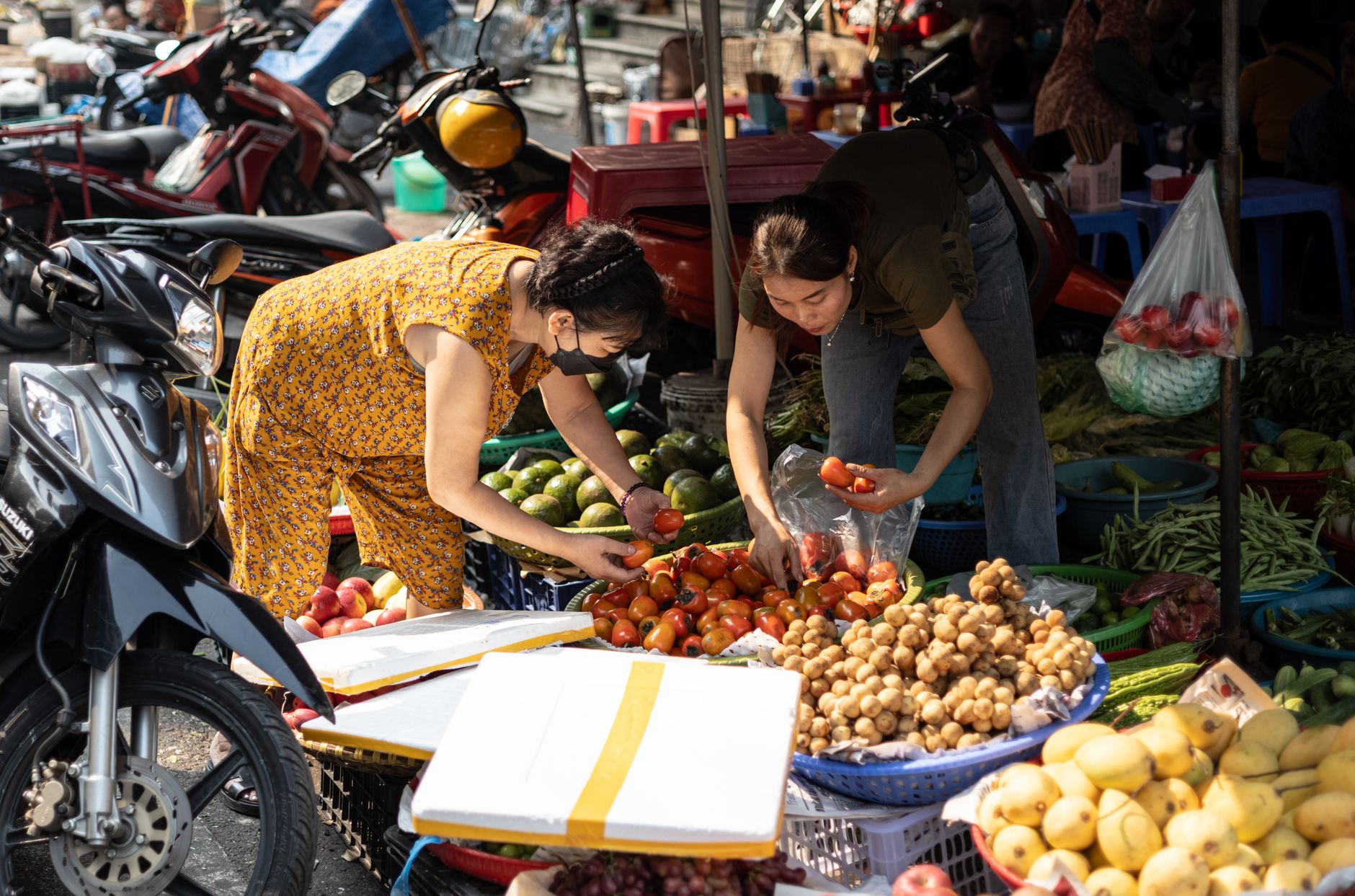
- "Banh bo thot not": a steamed rice cake made with palm sugar from Tinh Bien district (about 30 km away). Chewy, mildly sweet, sold at morning markets for 5,000–10,000 VND per portion. Pair it with grated coconut.
- "Com tam": broken rice with grilled pork, common throughout southern Vietnam, but Chau Doc vendors add their own pickled vegetables and a side of "mam" dipping sauce.
- Grilled snakehead fish ("ca loc nuong trui"): a whole fish buried in straw and set on fire, then served with rice paper, herbs, and dipping sauce. Street-side restaurants near the river charge around 80,000–120,000 VND per fish, enough for two people.
- Khmer-style curry ("ca ri"): thinner and more aromatic than Thai curries, served at several Khmer-run shops in the neighborhoods south of the market. Ask for "ca ri ga" (chicken curry) with baguette — a banh mi variation that reflects French-Khmer-Vietnamese layering in a single meal.
For morning coffee, Chau Doc's cafes serve standard Vietnamese coffee ("ca phe sua da") for 15,000–25,000 VND. There is no specialty roaster scene here — this is filter-drip or "phin" coffee, strong and sweet, taken at plastic tables overlooking the river. The cafe strip on Chi Lang Street is where locals sit in the early morning.
People and Religions
The population mixes Kinh Vietnamese (majority), Cham Muslims, and Khmer Buddhists. Mahayana Buddhism (Kinh temples), Theravada Buddhism (Khmer), and Sunni Islam (Cham) are all represented. Walking through neighborhoods, you'll pass different temples and mosques. This diversity is quiet and ordinary here — communities coexist without fanfare.
The Cham villages near Chau Doc, particularly along the river south of the city center, are worth a visit. Women weave silk and cotton textiles on traditional looms — you can watch and buy scarves or sarongs directly (50,000–200,000 VND depending on material and size). The Mubarak Mosque, about 4 km south of town, is a simple but striking structure with a green-domed roof. Visitors are welcome outside prayer times; remove shoes and dress conservatively.

Image by Vyacheslav Argenberg via Wikimedia Commons (CC BY-SA)
Where to Stay
Victoria Hotel is the upmarket choice, with colonial-era charm. The city center near the market has budget-friendly hotels with decent rooms and decent prices. A quirk unique to Chau Doc: two floating hotels on the river itself — one accessed by footbridge, one by boat. They are modest but memorable; views of the Hau River at dawn are worth the novelty.
Budget rooms near the central market run 200,000–400,000 VND per night for air-conditioning, hot water, and Wi-Fi. Victoria Chau Doc Hotel starts around 1,200,000 VND and includes a pool and river-facing restaurant. The floating hotels charge roughly 300,000–500,000 VND — book directly, not online, as they do not always appear on booking platforms. If you are a light sleeper, note that the floating hotels rock gently with river traffic and engine noise carries at night.
Getting There and Around
From Ho Chi Minh City, minibuses depart daily from backpacker zones and bus stations; ask for An Giang Province or Chau Doc direct. The ride is 5 hours on a flat, straight road. Motorbike taxis and cyclos are cheap for moving around town. To reach Sam Mountain, hire a motorbike or join a tour group.
If you are heading to or from Cambodia, speedboats run daily from Chau Doc to Phnom Penh via the Mekong. The journey takes about 4–5 hours and costs around 600,000–900,000 VND depending on the operator. Tickets are sold at hotels and travel agencies along the waterfront — buy a day ahead during peak season (December through February). You will need a valid Cambodian visa or e-visa arranged in advance. The border crossing at Vinh Xuong is straightforward but not fast; expect 30–60 minutes of paperwork.
Within Chau Doc, distances are short. A "xe om" across town rarely exceeds 20,000 VND. Renting a bicycle (50,000–80,000 VND per day from guesthouses) is the best way to reach Sam Mountain and the Cham villages at your own pace. The roads are flat and traffic is manageable compared to Saigon.
Common Mistakes and What Surprises Foreigners
- Skipping the floating market because "Can Tho is better." Can Tho's Cai Rang market is larger, yes, but Chau Doc's market is smaller, less touristy, and easier to access without a long boat ride. They are different experiences, not competitors. If you are already in Chau Doc, go.
- Arriving at the market after 7:30 a.m. By 8:00, most vendors have packed up and moved on. Set an alarm. Your hotel can arrange a boat the night before.
- Expecting English menus everywhere. Chau Doc sees fewer foreign tourists than Hoi An or Da Nang. Point-and-order works at most food stalls. Useful phrases: "Cho toi mot phan" (give me one portion), "Bao nhieu tien?" (how much?), "Khong cay" (not spicy).
- Underestimating the heat on Sam Mountain. There is almost no shade on the upper half. Bring at least one liter of water. Go early morning or late afternoon — midday climbs in April are punishing.
- Treating Cham villages as a photo opportunity. People live and work here. Ask before photographing, especially at mosques and weaving workshops. A small purchase goes further than a tip.
- Not trying "bun mam." Many travelers default to "pho" or goi cuon (spring rolls) because they are familiar. "Bun mam" is the dish that defines this city. Order it once. If the fermented fish flavor is too intense, ask for "it mam" (less paste).
Quick Reference
- Province: An Giang
- Distance from Saigon: 250 km (~5 hours by bus)
- Distance from Can Tho: 120 km (~3 hours by bus)
- Distance to Cambodia (Phnom Penh): ~5 hours by speedboat via Mekong
- Best months: December – March (dry, cooler)
- Key dish: "Bun mam" (fermented fish noodle soup), 35,000–50,000 VND
- Key site: Sam Mountain, 7 km from city center, free entry
- Floating market hours: 5:00–7:30 a.m. daily
- Boat hire (floating market circuit): 150,000–250,000 VND
- Budget accommodation: 200,000–400,000 VND/night
- Mid-range accommodation: 600,000–1,200,000 VND/night
- Local transport ("xe om" across town): 15,000–30,000 VND
- Bicycle rental: 50,000–80,000 VND/day
- ATMs: Available near the central market (Vietcombank, Agribank)
- Language: Vietnamese; limited English; some Cham and Khmer spoken locally
Why Come
Chau Doc is not a beach town or a postcard. It is a river frontier where trade, agriculture, and pilgrimage intersect. If you want to see how the Mekong Delta actually works — the boats, the market chaos, the simple temples, the cross-border energy — this is it. Plan 2–3 days. Sunrise on the river. Sam Mountain at midday. Fish sauce tasting. A floating-market dawn ride. Then move on, or stay longer if the rhythm catches you.
Final Note
Chau Doc rewards the kind of traveler who does not need a checklist. There is no bucket-list monument, no Instagram landmark that everyone queues for. What there is: a working river city where three cultures overlap without performance, where the food is honest and pungent, and where the border gives everything a slight edge of impermanence. Come with an empty stomach and a willingness to get on a boat before sunrise. That is enough.
Last updated · May 29, 2026 · independently researched, never sponsored.