Gateway to the Central Highlands
Kon Tum is a provincial city in the Central Highlands (중부 고원 / 中部高原 / 中部高原), positioned 547 kilometers north of Ho Chi Minh City and 292 kilometers south of Da Nang. The name comes from the Ba Na people, Vietnam's indigenous inhabitants, and means "Village by the Lake" in their language. The city sits at 525 meters elevation in a basin landscape, encircled by the Dak Bla River valley. Today, Kon Tum is home to 20 different ethnic groups—a living intersection of Ba Na, Kinh, and other highland communities.
Most travelers barrel through on the way to Pleiku or Buon Ma Thuot. That's a mistake. Kon Tum is one of the few Central Highlands cities where ethnic culture isn't staged for cameras, where a French-era wooden church doubles as a functioning parish, and where you can sit at a sidewalk "com binh dan" stall eating rice plates for 25,000–35,000 VND while watching water buffalo cross the Dak Bla bridge. It's not polished—and that's the point.
Geography and Climate
Kon Tum City covers 433 square kilometers and has a population of over 200,000 (as of 2021). The landscape is characterized by fertile land fed by the Dak Bla River, framed by low mountains to the south. The Chu Hreng mountain range, peaking at 1,152 meters, forms much of the administrative boundary with Gia Lai Province.
The climate is tropical savanna: warm and humid year-round, with a wet season from April to November and a dry season from December to March. Temperatures stay consistently warm, making it accessible most of the year, though the dry months (December–February) offer clearer skies for exploring outlying villages and trekking nearby highlands. Expect daytime highs around 28–32°C in the dry season. Nights can dip to 16–18°C between December and January—cool enough that you'll want a light jacket, especially on a motorbike. The wet season brings heavy afternoon downpours, but mornings are usually clear until 11 a.m. or so, which is plenty of time for a village visit or a walk along the river.

Image by Rdavout via Wikimedia Commons (CC BY-SA)
French Colonial Legacy
French missionaries arrived in the 1840s, and by 1893, French colonial authorities formally established Kon Tum as an administrative agency. That heritage remains visible today: a striking Roman Catholic wooden church built on stilts stands as Kon Tum's most photographed landmark. A large French-built seminary, dating to the 1850s, now houses a small museum dedicated to local hill tribe culture and history. Both are walking-distance from the city center and worth a morning visit if you're interested in colonial-era Southeast Asian architecture.
The wooden church—officially Nha Tho Go Kon Tum—sits on Nguyen Hue Street, about 500 meters from the Dak Bla River bridge. It was built entirely from local timber in 1913, blending Romanesque architecture with Ba Na communal house ("nha rong") design elements. The stained-glass windows were crafted by local artisans, not imported from France. No entrance fee. The church is open daily, though services run on Sunday mornings (usually 5:30 a.m. and 7:00 a.m.), and visiting during Mass gives you a sense of how central Catholicism remains in parts of the highlands. Dress modestly—long pants or a skirt below the knee, shoulders covered.
The seminary complex next door is worth 30–40 minutes. The small ethnographic museum inside displays Ba Na gongs, weaving looms, crossbows, and ceremonial masks. Labels are in Vietnamese and some French; English signage is minimal. Admission is free, though a small donation box sits near the entrance.
Ethnic Minority Villages and Cultural Tourism
Kon Tum is a genuine multiethnic hub, not a tourist performance. The Ba Na people, whose ancestral lands these are, still live in surrounding communes, and you can visit traditional stilt-house villages in the suburbs—Kon K'Tu and surrounding areas—where families maintain weaving, agriculture, and traditional cooking practices. Unlike the more developed Sapa region, these villages see fewer tour groups and offer a quieter window into highland life.
Kon K'Tu village is about 7 kilometers east of the city center, reachable by motorbike in 15 minutes. The village sits directly on the Dak Bla River and centers around a towering "nha rong"—the communal stilt house that serves as the social and ceremonial heart of Ba Na communities. These structures can reach 15–17 meters tall, with steep thatched roofs. The one at Kon K'Tu is among the most intact in the province. You're generally welcome to walk around the village, but ask before entering the "nha rong" or photographing people. Families here sell hand-woven textiles—scarves run about 80,000–150,000 VND, larger pieces more. Buying directly supports the weavers.
Other accessible villages include Kon Hra Chot (about 5 km south) and Kon Tum Kopong (3 km from the center), both with functioning communal houses. The Gia Rai and Xe Dang communities live in villages slightly further out, typically 15–30 km from the city—these require a motorbike or car.
A local guide (arranged through your hotel or via travel agencies in Da Nang) is strongly recommended; many villages have limited English, and a guide helps ensure visits are respectful and benefit the communities you're meeting. Expect to pay 500,000–800,000 VND for a half-day guided village tour. Your hotel front desk can usually arrange one with a day's notice.

Image by Đào Phúc Quang Vũ via Wikimedia Commons (CC BY-SA)
What to Eat in Kon Tum
The food scene here is small but distinct. Don't expect the depth of Hanoi or Saigon—this is a provincial city, and the pleasures are simpler.
"Pho" and noodle soups are everywhere, served at sidewalk stalls from about 6:00 a.m. A bowl runs 30,000–40,000 VND. The highland versions tend to be lighter on herbs than what you'd find further south. You'll also see "bun rieu"—crab-and-tomato noodle soup—at market stalls, especially around the central market on Tran Phu Street.
"Com tam" (broken rice) and "com binh dan" (everyday rice plates) are the default lunch. Point at what looks good behind the glass counter—grilled pork, braised fish, stir-fried greens, egg—and you'll get a full plate for 25,000–40,000 VND.
Grilled meats are a highland specialty. Look for "ga nuong" (grilled chicken) and "thit heo nuong" (grilled pork) at small restaurants along the river road, especially in the evening. Chicken is often free-range from nearby farms—leaner and more flavorful than city poultry. A half chicken with rice, dipping salt, and greens typically costs 80,000–120,000 VND.
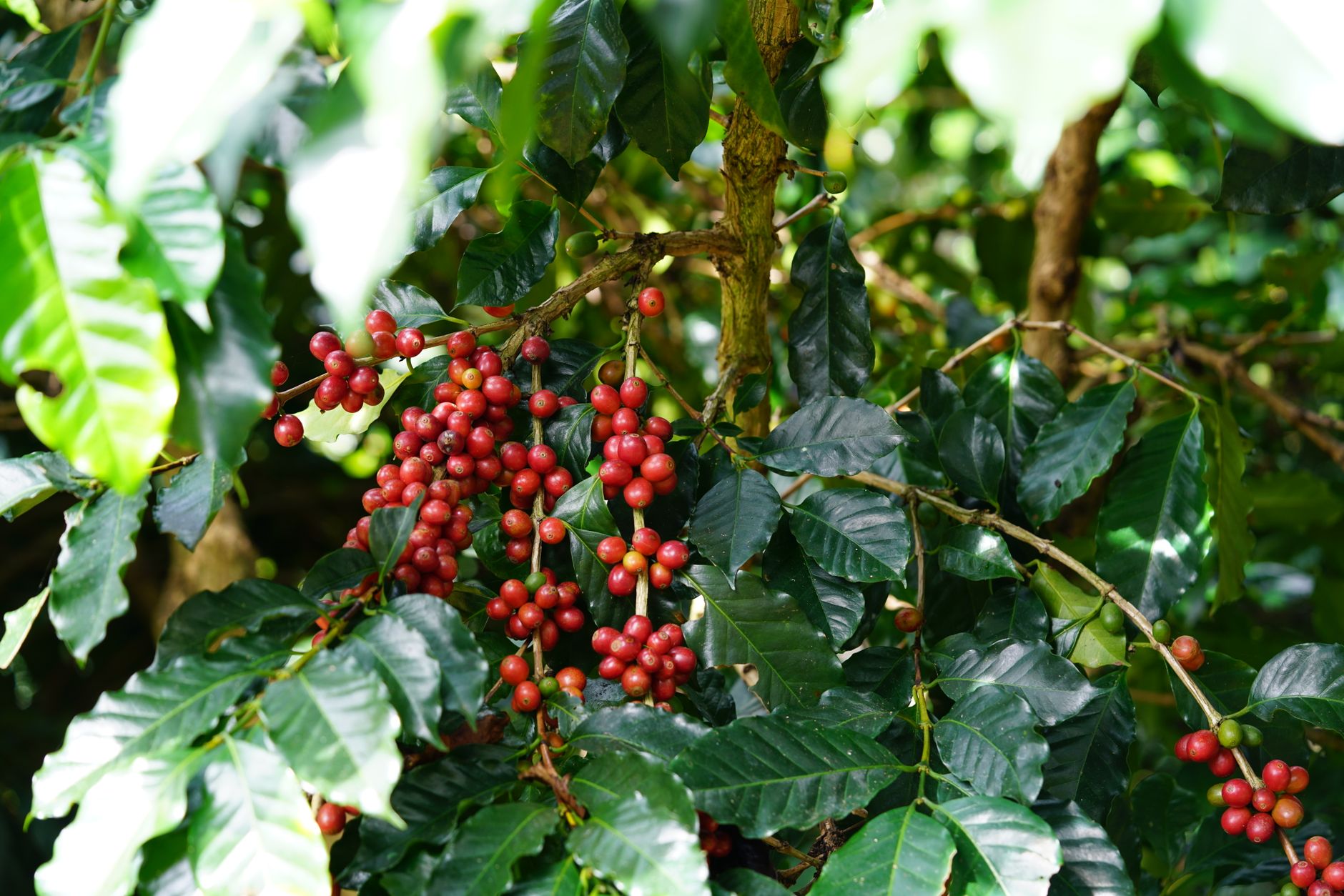
"Ca phe" culture exists here, but it's low-key. Kon Tum sits on the edge of the Central Highlands coffee belt that stretches south through Gia Lai to Buon Ma Thuot. Most cafes serve robusta-based drip coffee. A "ca phe sua da" (iced milk coffee) costs 15,000–25,000 VND. There are no specialty third-wave roasters—this is old-school "ca phe" territory, strong and sweet.
For "bia hoi" (fresh draft beer), check the open-air spots near the central market in the evening. A glass runs about 10,000–15,000 VND, and the atmosphere is purely local.
Practical Base for the Central Highlands
Kon Tum's strength is location and access. It sits 50 kilometers from Pleiku (gateway to Yok Don National Park and Gia Lai's coffee plantations) and 229 kilometers from Buon Ma Thuot (known for coffee estates and the Serepok River). The city itself has basic hotels, street-food markets, and decent transport connections. Most visitors pass through en route to one of the larger highlands cities—but if you have a day or two, Kon Tum rewards a slower pace: early-morning visits to ethnic villages, the wooden church at sunrise, a hike on the Chu Hreng trails if weather permits.
Accommodation is functional rather than fancy. Budget guesthouses ("nha nghi") start around 150,000–250,000 VND per night. Mid-range hotels with air conditioning, hot water, and Wi-Fi cluster along Nguyen Hue and Tran Phu streets, typically 350,000–600,000 VND. There's no international-brand hotel in Kon Tum; the best options are locally run, clean, and perfectly adequate. The Indochine Hotel and Kon Tum Hotel are among the more established choices.
Getting There
Kon Tum is accessible by road from Da Nang (5–6 hours, mostly Highway 14, scenic in parts). Buses from Saigon take 14–18 hours and are not recommended unless you have time and energy to spare. A rental motorbike or hired car from Da Nang gives you flexibility to stop in Quang Ngai or Binh Dinh en route. The nearest airport is in Da Nang, about 290 kilometers north.
Pleiku's airport (25 km from Pleiku city center, roughly 75 km from Kon Tum) is technically closer and receives daily flights from Saigon and Hanoi on Vietnam Airlines and VietJet. From Pleiku airport, a taxi or Grab car to Kon Tum takes about 1–1.5 hours and costs approximately 350,000–500,000 VND. This is the fastest way in if you're coming from Hanoi or Saigon and don't want the overland slog.
Local transport within Kon Tum itself is limited. There's no ride-hailing Grab bike or car service (as of recent years). Your hotel can arrange motorbike rental (120,000–180,000 VND per day) or call a local "xe om" (motorbike taxi). Distances within the city are short—the wooden church, central market, and river bridge are all within a 2-kilometer radius.
What Surprises Foreigners
The quiet. If you're coming from Hanoi or Saigon, the first thing you'll notice is the silence. No honking walls of motorbikes, no construction noise bouncing off buildings. Kon Tum is genuinely calm, even by Vietnamese small-city standards.
The ethnic diversity is visible, not performative. Ba Na, Xe Dang, Gia Rai, and other highland communities live in and around the city. You'll see traditional dress at the market, hear non-Vietnamese languages on the street, and encounter "nha rong" structures that are actual community buildings, not replicas built for tourists.
Limited English. Even hotel staff may speak only basic English. A translation app on your phone is essential. A few useful phrases: "Bao nhieu tien?" (How much?), "Cho toi xem cai nay" (Let me see this), "Cam on" (Thank you). For ordering food, pointing works.
No ATMs from international banks. Vietcombank and Agribank ATMs are available and accept Visa/Mastercard, but bring backup cash. 500,000–1,000,000 VND in small bills is wise for village visits and market stalls.
The coffee is surprisingly good. You're at the northern edge of Vietnam's coffee-growing heartland. What you drink at a 20,000 VND streetside stall in Kon Tum may be fresher than what cafes in Saigon serve at triple the price.
Quick Reference
- Elevation: 525 meters above sea level
- Population: ~200,000 (2021)
- Best months to visit: December–March (dry season, clear skies, cooler nights)
- Distance from Da Nang: 292 km (5–6 hours by road)
- Distance from Pleiku: 50 km (1–1.5 hours)
- Distance from Buon Ma Thuot: 229 km (4–5 hours)
- Nearest airport: Pleiku (Phu Cat), ~75 km south
- Budget meal: 25,000–40,000 VND
- Budget guesthouse: 150,000–250,000 VND/night
- Mid-range hotel: 350,000–600,000 VND/night
- Coffee: 15,000–25,000 VND
- Half-day village tour with guide: 500,000–800,000 VND
- Currency: Vietnamese Dong (VND). Cards accepted at hotels; cash only at markets and villages.
Final Note
Kon Tum isn't trying to impress you—and that's exactly what makes it worth the detour. It's a working highland city where Ba Na culture, French colonial architecture, and everyday Vietnamese life overlap without fanfare. Give it two days, walk slowly, drink the coffee, and you'll understand why some travelers skip Pleiku entirely and stay here instead.
Last updated · May 29, 2026 · independently researched, never sponsored.