Most people come to Hue for the Imperial Citadel or a royal tomb, tick the boxes, and leave. An Hien Garden House sits about 4 km north of the Perfume River, largely off that circuit — and that's exactly what makes it worth the detour.
What the Garden-House Tradition Actually Is
Hue (후에 / 顺化 / フエ)'s "nha vuon" culture — literally "garden house" — developed during the Nguyen dynasty (1802–1945) as a distinctly local residential ideal. Aristocrats, court officials, and wealthy scholars built private compounds that fused architecture with cultivated nature: a main timber hall oriented by geomancy, flanked by secondary buildings, wrapped in layered gardens of longan trees, ornamental ponds, bonsai, and low walls of latticework brick. The point was not ostentation. It was a kind of controlled calm — a private world that reflected the owner's learning and taste.
Hue once had hundreds of these compounds. Urban pressure, neglect, and decades of war reduced the count dramatically. Today fewer than a dozen survive in recognizable form. An Hien is among the most intact.
The House Itself
An Hien was built in the mid-nineteenth century and passed through several aristocratic families before eventually coming under state heritage protection. The main hall is a three-bay, two-corridor timber structure built in the traditional "nha ruong" style — columns of ironwood, bracketed roof joinery, walls of lime-plastered brick. The woodwork inside retains its lacquered red-and-black finish and carved decorative panels. It's not a museum reconstruction. The bones are original.
Out front, a rectangular pond reflects the treeline. The garden itself has a slightly overgrown quality that feels honest — pomelo trees, a few old plum trees, stands of bamboo at the perimeter. Someone has clearly tended it without over-manicuring it into a theme park.
The property receives enough visitors to be staffed but few enough that you can spend twenty minutes in the main hall without anyone rushing you. Entrance is around 30,000–50,000 VND depending on the day; check at the gate.
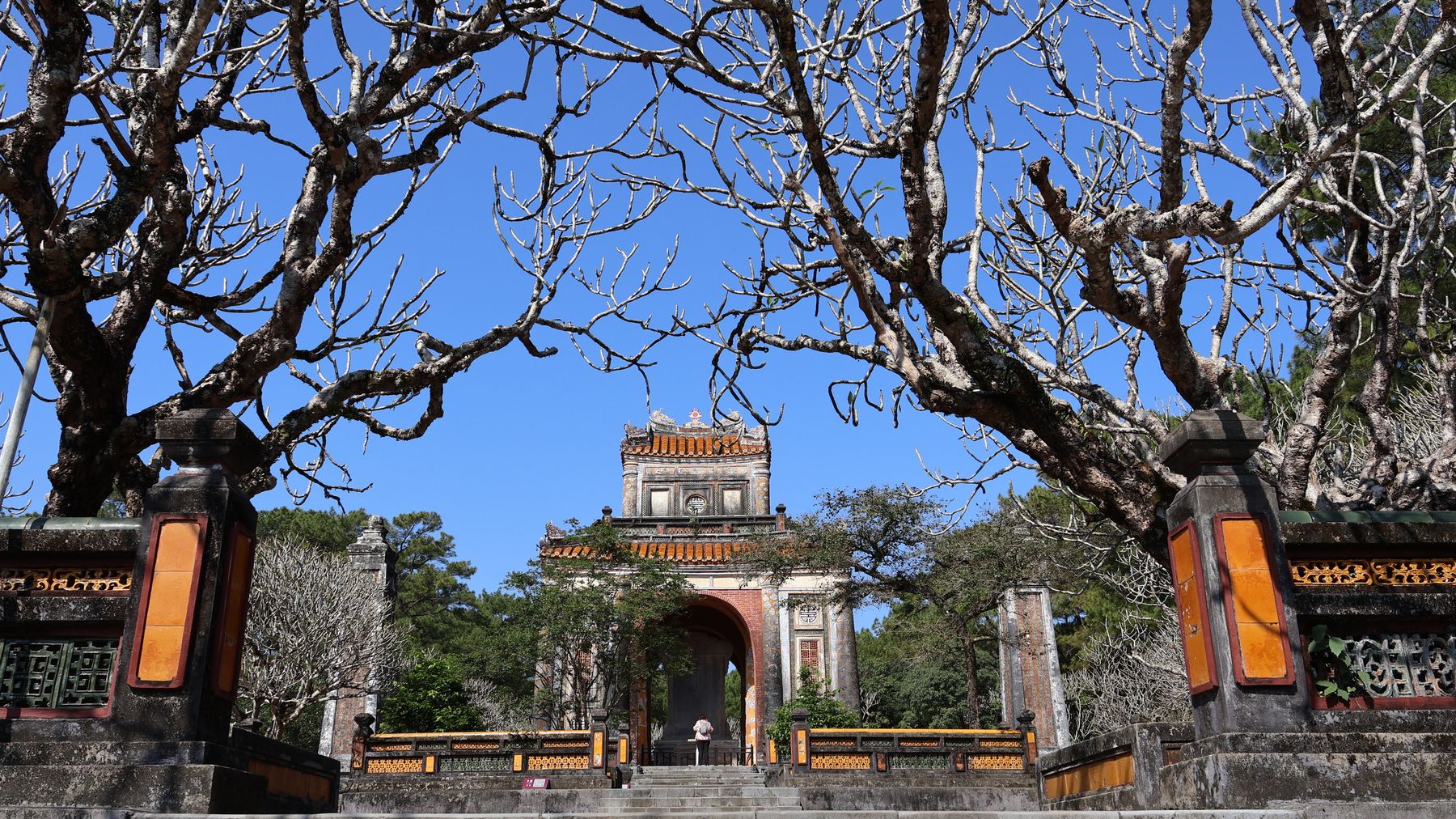
Photo by Minh Lê on Pexels
Why This Beats the Tombs for Some Travelers
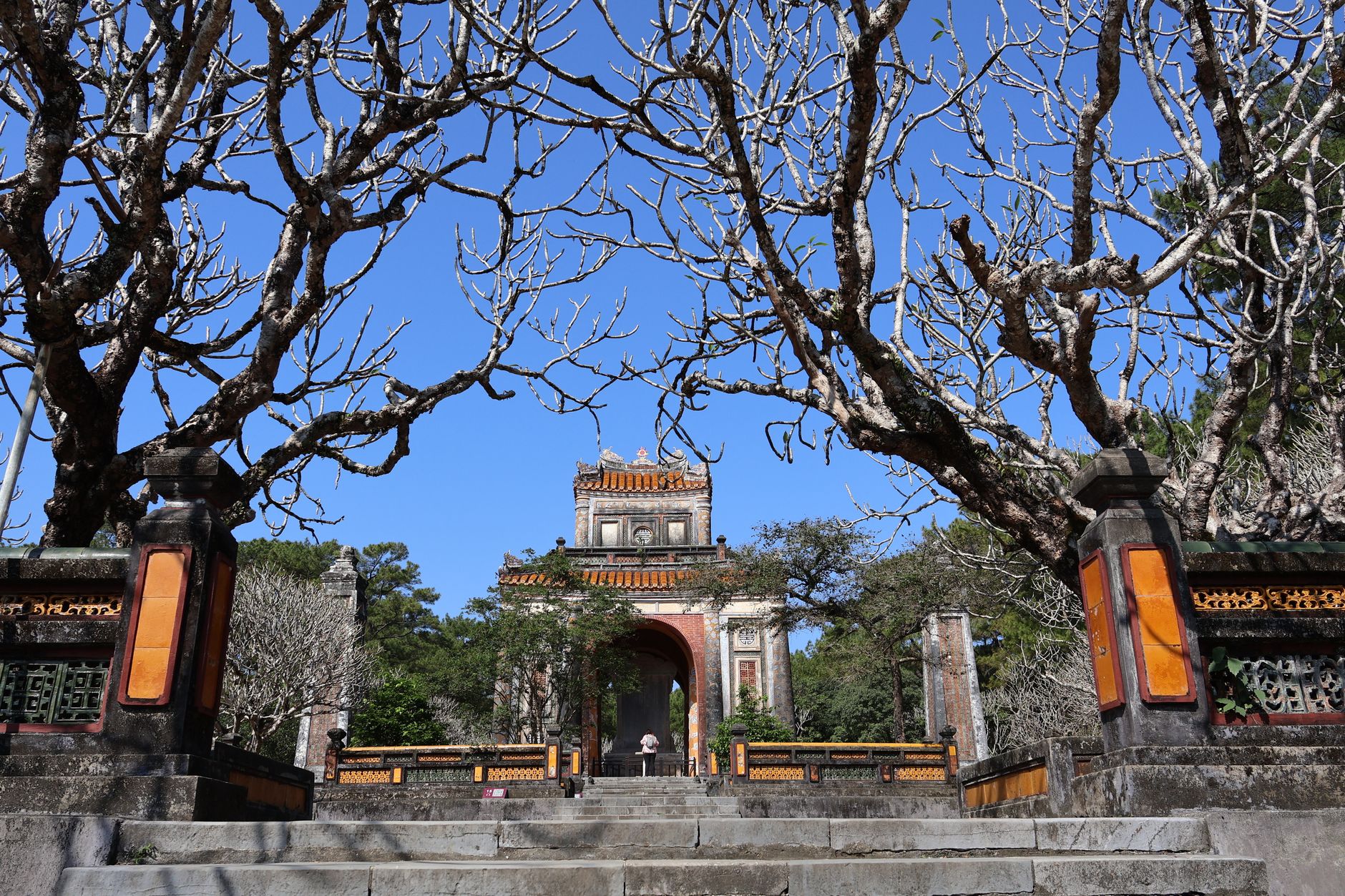
The Tomb of Tu Duc and the Tomb of Khai Dinh are genuinely impressive — Tu Duc's lakeside complex especially rewards a slow visit. But they're funerary architecture, built for eternity and imperial image. An Hien is domestic space built for living. The scale is human. The rooms feel as though someone actually ate, slept, and argued in them.
That shift in register matters if you're trying to understand Hue as a city rather than a symbol. Nguyen-dynasty court culture produced extraordinary ritual architecture, but it also produced this: a cultivated private life organized around gardens, scholarship, and quiet.
Hue's "ao dai" culture, its refined cuisine, its literary traditions — all of it makes more intuitive sense once you've stood inside a nha vuon compound and felt the logic of the place.
Getting There and Pairing It With Nearby Stops
An Hien sits on Nguyen Phuc Nguyen street in the Huong Long ward, on the north bank of the Perfume River. From the center of Hue, a xe om (motorbike taxi) or Grab runs about 15,000–25,000 VND. You can also rent a bicycle from almost any guesthouse on Pham Ngu Lao or Vo Thi Sau streets and ride out in under twenty minutes — the road along the north bank is flat and straightforward.
If you're building a half-day from this direction, a few combinations work well:
North-Bank Morning Loop
Start at Thien Mu Pagoda, Hue's most recognizable riverside landmark, about 1.5 km upstream from An Hien. Walk or ride between the two. From An Hien, continue inland to the royal tomb area if you haven't done it — Tu Duc's complex is another 4 km south. That's a full morning without doubling back through the city center.
Slow Afternoon Version
Come to An Hien in the late afternoon, around 3–4 pm, when the light through the longan trees is better and the tour groups have mostly dispersed. Afterward, find a plastic stool somewhere along the north bank and have an iced "ca phe sua da" while the river traffic slows down. Hue at that hour is a different city from Hue at noon.
Photo by Minh Lê on Pexels
What Hue's Garden Houses Tell You About the Food
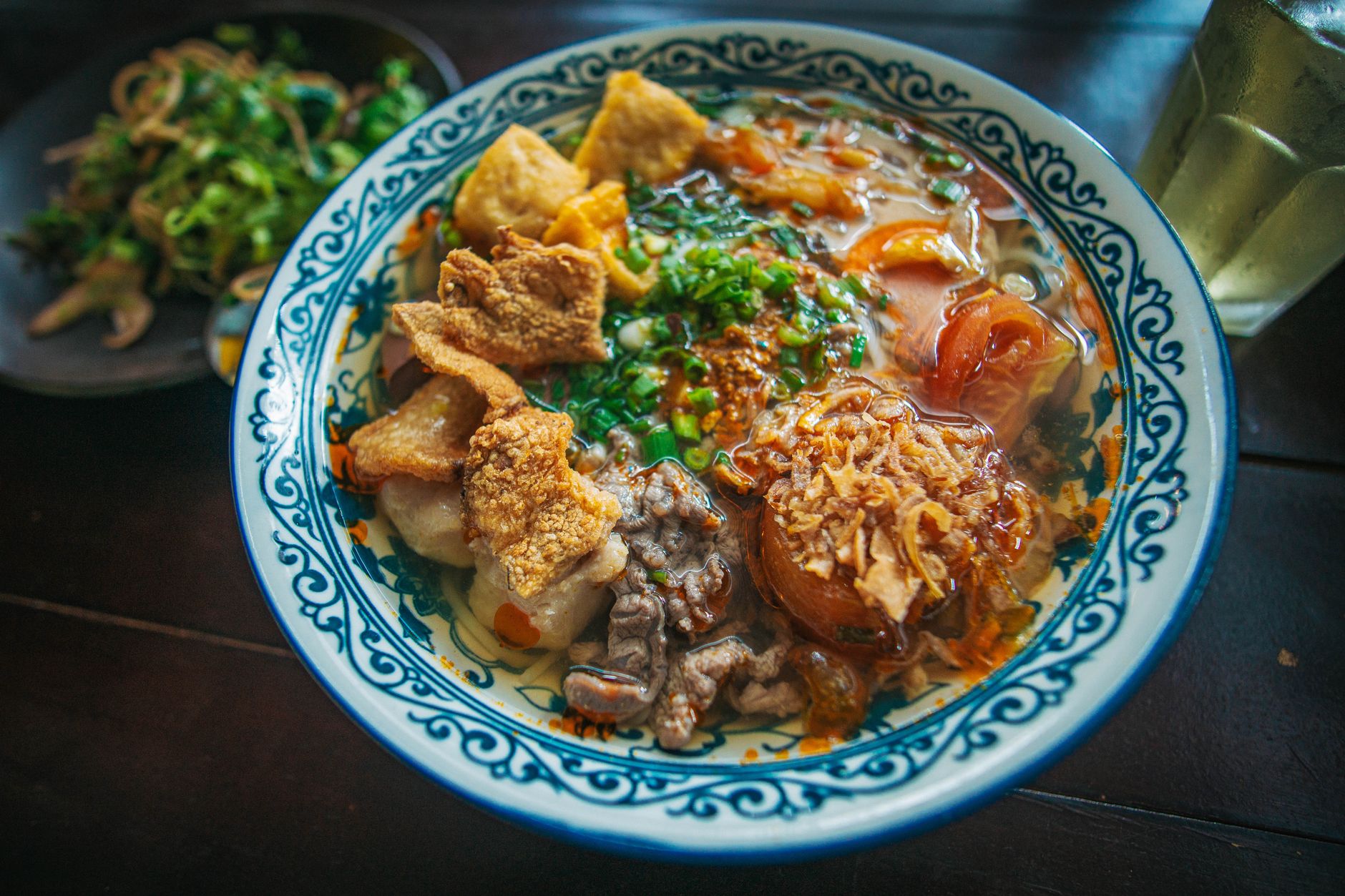
This is worth mentioning because Hue's cuisine and its domestic architecture come from the same sensibility. The Nguyen court developed an elaborate food culture that valued presentation, variety, and refinement over quantity — the same principles that shaped nha vuon garden design. A meal of "bun bo hue (분보후에 / 顺化牛肉粉 / ブンボーフエ)" from a street cart near Dong Ba Market, or "banh cuon" at a family shop off Le Loi, connects to that same cultural logic: local ingredients, careful technique, nothing wasted or excessive.
Visiting An Hien first and eating well in the evening afterward isn't a bad structure for a day in Hue.
Practical Notes
An Hien is generally open during daylight hours but operating hours can vary — call ahead or ask your guesthouse to confirm before making it the anchor of your morning. The site is small enough that an hour is sufficient unless you're a serious student of Vietnamese timber joinery, in which case budget two. Combine it with Thien Mu Pagoda and you have a half-day that covers more of what makes Hue distinctively Hue than most of the packaged city tours manage.
Last updated · May 27, 2026 · independently researched, never sponsored.