What Is Banh Beo?
"Banh beo" translates literally to "water fern cakes" — the name comes from the dish's resemblance to water lettuce (beo in Vietnamese). The cake itself is steamed rice flour and tapioca, soft and slightly chewy, served in small individual dishes. What changes from region to region are the toppings and sauces, each reflecting local ingredients and tastes.
You'll encounter banh beo most often as a street-side snack, served in stacks of shallow ceramic saucers or small plastic cups. A typical order is 8 to 12 pieces. It sits alongside other Hue-origin dishes like "banh nam" (flat steamed rice cakes wrapped in banana leaf) and "banh loc" (tapioca dumplings with shrimp and pork). In fact, many vendors sell all three together as a set — if you see a handwritten sign reading "banh beo, nam, loc," that's your cue to sit down.
The batter is simple: rice flour, tapioca starch, water, and a pinch of salt. Some cooks add a splash of oil for a silkier finish. Each saucer gets a thin pour of batter and goes into a steamer for about five minutes. The result is a disk roughly 6-7 cm across, translucent at the edges and slightly puffy in the center. It's mild on its own — almost blank — which is the whole point. The toppings and dipping sauce do the talking.
Hue's Classic Version
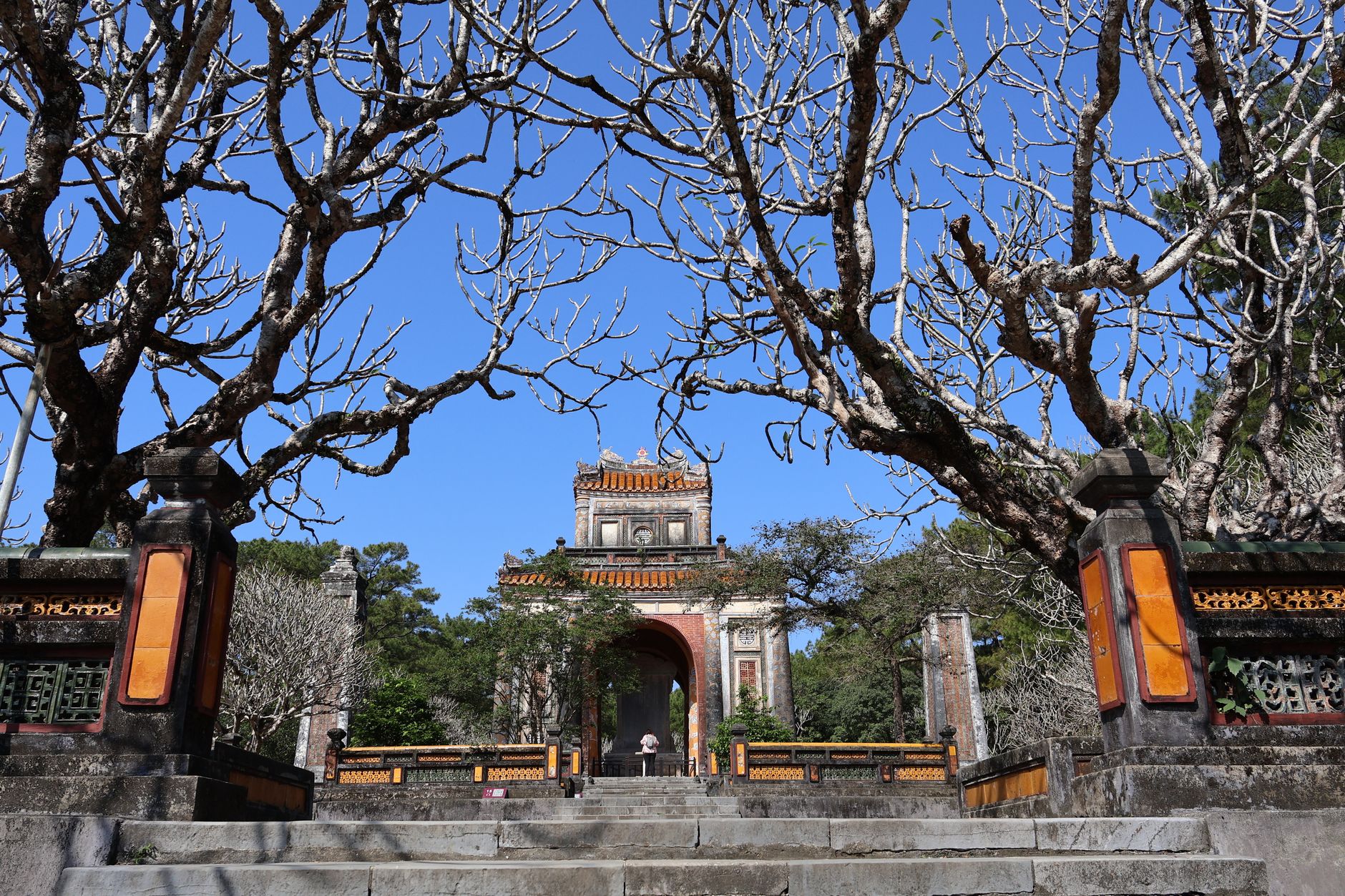
Hue, in Central Vietnam (베트남 / 越南 / ベトナム), is where banh beo originated. The traditional form arrives as a delicate, saucer-shaped cake topped with dried shrimp and crispy pork skin — the shrimp brings umami, the skin provides crunch. Scallion oil drizzles over the top, and the whole thing gets a dip in "nuoc mam," a clear sauce made from fish sauce, sugar, garlic, and often Thai chili. The nuoc mam is crucial; it cuts the richness and balances the mildness of the rice cake.
To eat it: use a spoon or chopsticks to nudge the whole cake into your mouth at once. That way all the toppings, sauce, and cake hit together.
In Hue (후에 / 顺化 / フエ) proper, you'll find banh beo at almost any "quan" (small eatery) in the neighborhoods around Dong Ba Market and along the streets south of the Perfume River. Prices in Hue are low even by Vietnamese standards — expect 15,000 to 30,000 VND for a full set of 10-12 pieces. A few well-known spots:
- Banh Beo Ba Cu on Nguyen Binh Khiem Street — a no-frills stall that's been around for decades. The pork skin here is fried to order, so it's genuinely crunchy. Around 20,000 VND per set.
- Hanh Restaurant at 11 Pho Duc Chinh — serves the full Hue snack trio (banh beo, banh nam, banh loc) for roughly 40,000-50,000 VND combined. Opens early, around 6:30 AM, and closes by 9 PM.
Hue's version is also the most common one you'll encounter outside Vietnam — most Vietnamese restaurants abroad that serve banh beo use this dried-shrimp-and-pork-skin template.

Image by CEphoto, Uwe Aranas via Wikimedia Commons (CC BY-SA)
How It Changes Across Vietnam
Quang Ngai. South of Hue, Quang Ngai Province tops its banh beo with shrimp and pork paste instead of separate ingredients. The paste is cooked and seasoned, creating a richer, more unified flavor — softer and less textured than Hue's version. Quang Ngai banh beo is also slightly thicker, and the dipping sauce tends to be sweeter and less fishy. If you're passing through Quang Ngai city, the area around the central market on Quang Trung Street has multiple vendors selling this style.
Southern Vietnam. Further south, banh beo gains sweetness. Mung bean paste becomes the topping, lightly sweetened and creamy, contrasting with the chewy rice cake. This sweeter profile is typical of Southern Vietnamese cooking and sets it apart from the savory Central versions. In Saigon (Ho Chi Minh City), you'll find both styles — the Hue original and the Southern adaptation — sometimes at the same restaurant. Vendors in Districts 1 and 3 often cater to tourists with the Hue version, while local-focused spots in Districts 4, 7, and Binh Thanh lean Southern. Prices in Saigon run a little higher: 25,000-45,000 VND per set depending on the neighborhood.
Da Nang. Sitting geographically between Hue and Quang Ngai, Da Nang serves a version that splits the difference. The toppings are close to Hue's — dried shrimp, scallion oil — but the cakes themselves are sometimes slightly larger and the sauce a touch sweeter. The Con Market area downtown is a reliable spot.

Image by CEphoto, Uwe Aranas via Wikimedia Commons (CC BY-SA)
Where to Order Banh Beo Beyond Central Vietnam
Banh beo has migrated well beyond Hue, and you can find it in most Vietnamese cities now. Here's where to look:
Hanoi. Hue-style restaurants cluster in the Old Quarter and around the Hoan Kiem Lake area. Look for signs advertising "bun bo Hue" — these places almost always carry banh beo too, since they specialize in Central Vietnamese food. A reliable pick is the strip of Hue-food shops on Hang Dieu Street. A full set runs 30,000-40,000 VND. While you're in the neighborhood, pho and bun cha are never more than a block away.
Hoi An. About 130 km south of Hue, Hoi An has its own strong food identity — cao lau, mi quang, and "com ga" dominate — but Hue-style banh beo appears on menus in the Old Town and at the Central Market. Prices in the tourist zone are inflated (40,000-60,000 VND), so walk a few blocks west toward Cam Nam for better value.
Da Lat. The highland city has a cool climate that makes steamed snacks especially appealing. Several vendors near the Da Lat Night Market serve banh beo alongside "banh can" (tiny griddled rice cakes), another Central-origin snack. Around 25,000-35,000 VND.
In general, if a city has a sizable community of Central Vietnamese transplants — and most do — you'll find banh beo somewhere.
How to Eat It
Banh beo is best eaten fresh; the texture breaks down quickly if it sits. It's technically a snack but popular enough now in restaurants that it often becomes a light lunch or dinner. Pair it with green tea, black tea, or Vietnamese iced coffee ("ca phe sua da"). The key: make sure each bite includes some cake, some topping, and a dip of sauce so you get all the flavors at once.
Ordering is straightforward. At street stalls, you usually just say "cho toi banh beo" (give me banh beo) and hold up fingers for the number of sets if they ask. Most places serve a standard portion of 10-12 pieces. Some fancier restaurants in Saigon or Hanoi let you order by the piece — useful if you want to try multiple dishes without overfilling.
Don't skip the sauce. The cake without nuoc mam is bland on purpose. And if the vendor sets out a bowl of chopped chilies or sliced green mango on the side, use them — the chili adds heat and the green mango gives a tart counterpoint that works surprisingly well with the creamy tapioca.
Banh Beo vs. Other Vietnamese Rice Cakes
Vietnam has a deep bench of rice-based cakes and it's easy to confuse them. Here's how banh beo fits:
- "Banh cuon" — rolled rice crepes filled with minced pork and wood ear mushroom. Thinner, larger, and folded rather than served in saucers. A Northern specialty, especially popular in Hanoi.
- "Banh xeo" — crispy turmeric crepes filled with shrimp, pork, and bean sprouts. Much bigger, fried rather than steamed, and wrapped in lettuce before eating. A Southern favorite.
- "Banh nam" — flat steamed rice cakes wrapped in banana leaf with shrimp paste. Also from Hue. Denser and chewier than banh beo, and usually eaten alongside it.
- "Banh loc" — tapioca dumplings stuffed with shrimp and pork belly. Translucent, sticky, and heavier. Another Hue classic.
If you're in Hue and order a combination platter, you'll likely get banh beo, banh nam, and banh loc together. It's the best way to taste the range of Central Vietnamese steamed snacks in one sitting.
Common Mistakes Foreigners Make
Treating it like a main course. Banh beo is a snack. Ordering 20 pieces as your entire dinner sounds logical but you'll get bored of the texture after 12. Better to order one set and fill out the meal with bun bo Hue (spicy beef noodle soup) or a plate of com tam (broken rice).
Skipping the sauce. Some travelers dip tentatively or skip the nuoc mam entirely because they're wary of fish sauce. The cake is deliberately under-seasoned — it needs the sauce. Commit to it.
Eating it cold. Banh beo that's been sitting for 30 minutes is a different, worse dish. The edges dry out and the tapioca turns rubbery. If you see a vendor with pre-made trays sitting in the open and no steamer running, walk to the next one.
Confusing the slang meaning with the dish. If a Vietnamese friend laughingly calls someone "banh beo," they're not talking about food (see below). Context matters.
Photographing for too long. This isn't a joke — the dish is time-sensitive. Get your shot in 30 seconds and eat. The vendor is watching you let it go cold and they're judging.
A Word on Slang
In modern Vietnamese, "banh beo" has picked up a slang meaning — it's sometimes used informally (and critically) to describe girls or women seen as overly feminine or delicate. The metaphor comes from the dish's soft, rubbery texture. It's worth knowing the term exists, but it doesn't change the dish's real status: a beloved, iconic part of Vietnamese food culture, celebrated for its simplicity and regional range.
Whether you find Hue's shrimp-and-pork-skin version, Quang Ngai's paste topping, or the Southern mung bean sweet version, banh beo is a window into how regional taste shapes a single dish across the country.
Quick Reference
- What: Steamed rice flour and tapioca cakes, served in small saucers with savory or sweet toppings
- Origin: Hue, Central Vietnam
- Price range: 15,000-50,000 VND per set (10-12 pieces), depending on city and venue
- Best paired with: Nuoc mam dipping sauce (mandatory), green tea, or "ca phe sua da"
- When to eat: Morning through evening — most vendors start by 7 AM and close by 9 PM
- Ordering phrase: "Cho toi banh beo" (give me banh beo)
- Also try alongside: "Banh nam," "banh loc," bun bo Hue, goi cuon (fresh spring rolls)
- Vegetarian-friendly? Not traditionally — most toppings include shrimp or pork. Some modern restaurants in Saigon offer mushroom or tofu versions, but ask first.
Bottom Line
Banh beo isn't flashy. It doesn't photograph as dramatically as a sizzling "banh xeo" or a steaming bowl of pho. But that's the point — it's quiet, precise, regional food that rewards you for paying attention to texture and sauce and freshness. Start in Hue if you can, eat it within two minutes of it leaving the steamer, and don't be shy with the nuoc mam.
Last updated · May 29, 2026 · independently researched, never sponsored.