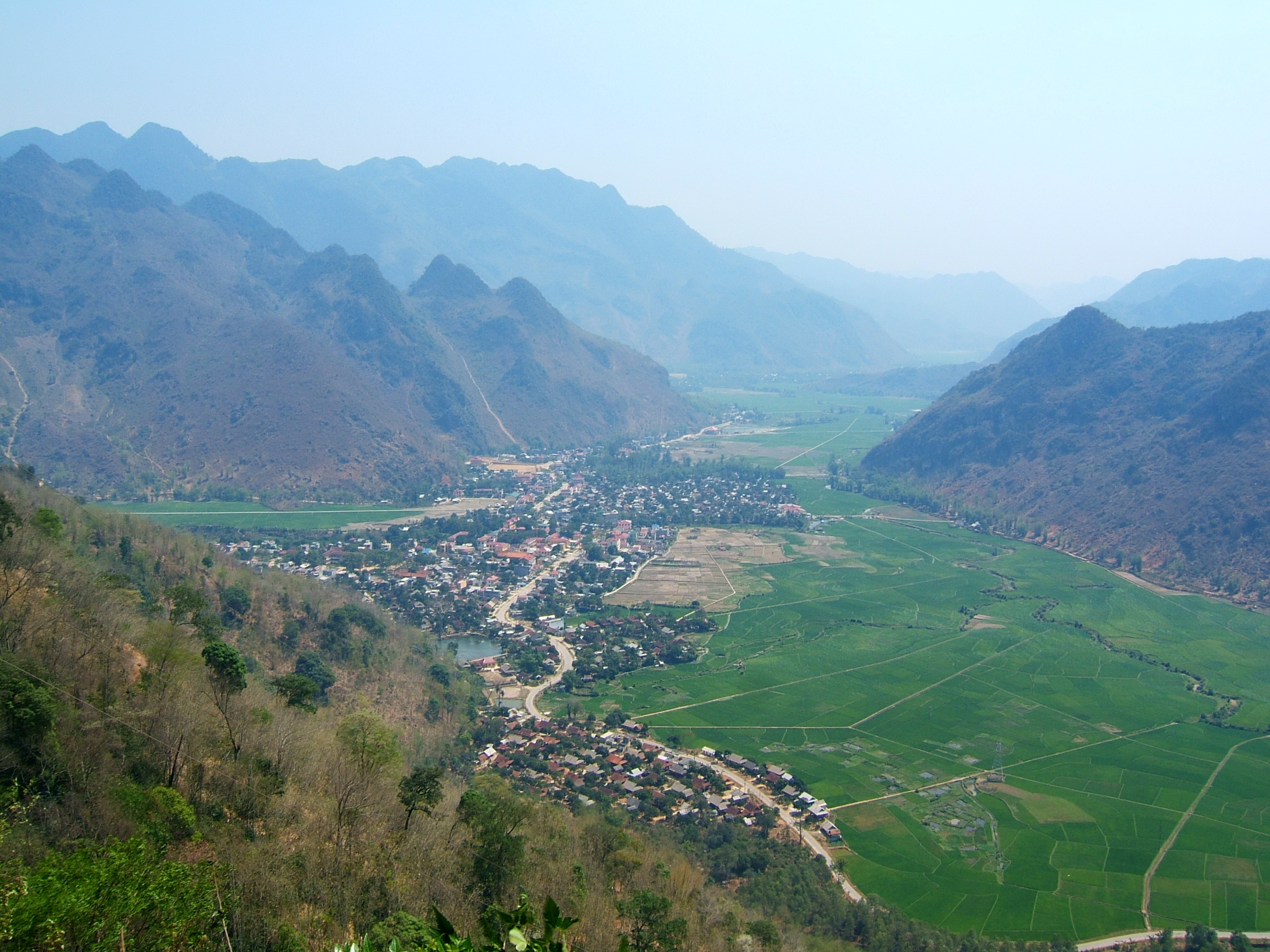
Mai Chau is not a town you rush through. It's a valley—quiet, green, and built for lingering.
Located in what is now Phu Tho province, Mai Chau sits in the Northern Midlands and Mountains region, home to the White Thai ethnic group and a handful of other minority communities. The name itself is a Kinh rendering of the Tai word Chieng Sai (ຊຽງ ໄຊ), a reminder that this corner of Vietnam (베트남 / 越南 / ベトナム) belongs linguistically and culturally to multiple worlds.
The Valley and the Homestays
What draws most visitors is straightforward: stilt houses, rice fields, and the chance to stay inside both. Traditional homestays line the valley floor, their wooden frames raised on stilts, interiors dark and cool even in sticky heat. You arrive, dump your bag, and eat whatever the family cooked that morning—usually "sticky rice", grilled fish, stir-fried greens, soup with turmeric or wild herbs.
Many homestays provide bicycles. Cycling the valley at dawn or early evening is the closest thing to a "must-do" in Mai Chau—and it actually delivers. You'll pass farmers heading to paddies, kids on the way to school, oxen standing in ditches. Villages appear and disappear. The rhythm is human-scale.
Most homestay owners speak enough Vietnamese and basic English to sort logistics, but don't expect fluent conversation. A few useful phrases go a long way: "Xin chao" (hello), "Cam on" (thank you), and "Bao nhieu?" (how much?) will cover ninety percent of interactions. If you want to ask about food, pointing works better than Google Translate.
Villages Worth Time
Lac Village and Pom Coong Village are the two main homestay clusters, each with its own character. Lac skews slightly more commercial; Pom Coong feels quieter. Both offer homestays, guide services, and local performances in the evening—typically traditional music and dance, sometimes corny, sometimes genuinely moving depending on your tolerance for tourism theater.
Beyond these two, smaller settlements like Na Phon and Na Meo see far fewer visitors and give a better sense of daily agricultural life. Na Phon sits about 3 km south of Lac Village along a flat dirt path — easy on a bicycle. You won't find organized performances there, just families farming, weaving, and going about their day. If someone invites you for tea, accept. That's the real evening entertainment.
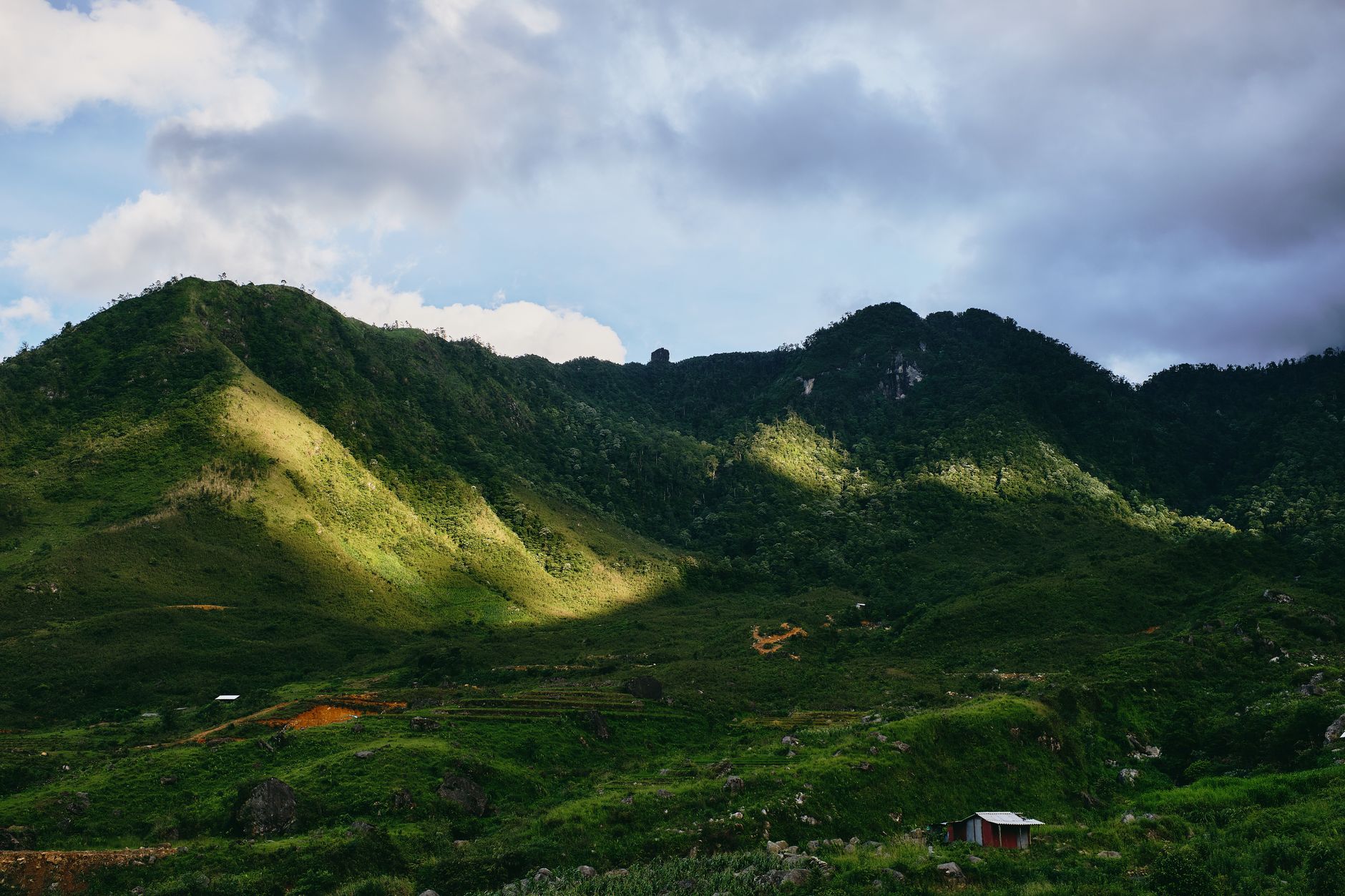
If you're willing to trek into the surrounding mountains, you'll find more remote villages and encounter other ethnic groups. The terrain is steep; hire a local guide rather than going solo.

Image by Steven C. Price via Wikimedia Commons (CC BY-SA)
Food and Markets
The local cuisine is built on rice, fresh vegetables, fish from the rivers, and whatever protein is at hand. "Sticky rice" appears at nearly every meal—glutinous, slightly sweet, wrapped in bamboo leaves or served plain. Grilled fish seasoned with lemongrass and turmeric is standard. Markets (small, morning-focused) sell live fish, leafy greens, dried chilies, and handicrafts—mostly weavings and textiles from local artisans.
If you're coming from Hanoi with a palate tuned to "pho" and "banh mi", Mai Chau will recalibrate you. The valley diet is mountain food — heavier on glutinous rice, wild herbs, bamboo shoots, and freshwater fish than the lowland noodle-and-broth tradition. You'll eat "com lam" (rice cooked inside bamboo tubes over charcoal), smoked buffalo meat, and stir-fried fern tips that taste like nothing back in the city. If the family breaks out their own rice wine — a cloudy, slightly sour home brew fermented in clay jars — say yes to one glass, and pace yourself from there.
If you're staying in a homestay, negotiate cooking lessons with your host family. You'll learn how to prepare meals using ingredients from their garden and the market, and eat better than any restaurant can offer.
Natural Attractions Nearby
Mo Luong Cave sits a short trek from the main valley and is worth the walk if you enjoy caves. The surrounding mountains offer scrambling and day-hikes; guides available through homestays.
Pu Luong Nature Reserve, about 30 km northwest of the valley center, is the big day-trip draw. It's a protected limestone range with terraced rice paddies, dense forest, and waterfalls that actually have water during rainy season (May through September). You can arrange a motorbike or car through your homestay for around 300,000–500,000 VND round-trip. Some travelers turn Pu Luong into an overnight extension — basic homestays inside the reserve run 200,000–350,000 VND per night with meals. The trek from Pu Luong back toward Mai Chau through the hills takes a full day and requires a guide (around 500,000 VND).
Closer to the valley floor, the Go Lao waterfall is a 6 km ride southeast of Lac Village, more trickle than torrent in dry months but pleasant for a swim from June to August.

Image by Shyamal via Wikimedia Commons (CC BY-SA)
Getting There and Practicalities
Mai Chau is approximately 140 km southwest of Hanoi, a 3–4 hour bus ride via Highway 6 toward Hoa Binh. Buses depart from Hanoi's Long Bien or My Dinh stations multiple times daily; fares run 80,000–120,000 VND depending on comfort level.
A private car or motorbike from Hanoi takes roughly the same time but gives you the freedom to stop at the Hoa Binh reservoir viewpoint about 90 km in, or detour through the smaller hill-town roads. Renting a motorbike for the Hanoi–Mai Chau loop runs about 150,000–200,000 VND per day from rental shops in Hanoi's Old Quarter. The road through Hoa Binh city is well-paved; the final 20 km descent into the valley has tight curves but good asphalt.
Once there, most homestays will arrange transport from the main village. Bicycles rent for 30,000–50,000 VND per day. Guesthouses and homestays range from basic (200,000–300,000 VND/night) to mid-range (400,000–600,000 VND), usually including dinner and breakfast.
No visa headaches; Mai Chau is open to standard tourist visits. Mobile signal is spotty; don't expect reliable internet. ATMs exist but are few; bring cash.
When to Visit
The valley has two distinct sweet spots. October through November brings harvested golden rice, cool mornings, and dry skies — the postcard months. March through May offers green paddies just after planting, warmer days, and wildflowers on the hillsides. Both windows have comfortable cycling weather, daytime temperatures between 20–28°C.
June through September is wet season. Rain arrives in heavy afternoon bursts, trails get muddy, and leeches come out in the mountains. The valley itself stays accessible, and fewer visitors means lower homestay prices and more personal attention from hosts. If you don't mind soggy shoes, it's a valid time.
December through February gets genuinely cold — temperatures can drop to 5–8°C at night, and stilt houses have no insulation. Bring a proper sleeping bag or at least a fleece liner. Hosts provide blankets, but expectations of "enough blankets" vary.
What Surprises Foreigners
The quiet is real. If you're arriving from the noise floor of Hanoi (하노이 / 河内 / ハノイ) or Saigon, Mai Chau at 9 PM feels like someone turned the world off. No traffic, no karaoke (usually), no honking. Some people love it immediately; others get restless by hour three.
Homestay sleeping is communal. Most traditional stilt house stays mean shared floor space on mats, not private rooms. You sleep alongside other travelers, separated by mosquito nets rather than walls. If you need privacy, ask specifically for a guesthouse with partitioned rooms — they exist, but they cost more (400,000 VND and up).
The rice wine is stronger than it tastes. Host families often produce their own "ruou can" (straw wine fermented in jars). It goes down smooth and hits hard. Refusing politely is fine — smile, gesture "no", nobody will be offended. Accepting every toast offered is how tourists end up crawling to their sleeping mat.
Textiles are not cheap souvenirs. The handwoven scarves and fabrics at Lac Village look simple but take days to produce on backstrap looms. Expect to pay 150,000–400,000 VND for a quality scarf. Bargaining is normal, but don't haggle like you're at Ben Thanh Market — the margins here are thinner and the labor is real.
Roosters don't care about your schedule. Stilt houses sit in farmyards. Expect to hear roosters starting around 4:30 AM. Earplugs are the single most useful thing you can pack for Mai Chau.
Quick Reference
- Distance from Hanoi: ~140 km southwest (3–4 hours by bus or car)
- Bus stations: My Dinh or Long Bien, departures throughout the morning
- Bus fare: 80,000–120,000 VND one way
- Homestay cost: 200,000–600,000 VND/night (dinner + breakfast usually included)
- Bicycle rental: 30,000–50,000 VND/day
- Local guide for trekking: ~500,000 VND/day
- Best months: October–November (harvest), March–May (green season)
- Cold months: December–February (pack warm layers, nights drop to 5–8°C)
- Cash: bring it — ATMs are scarce and unreliable
- Mobile signal: patchy; download offline maps before you arrive
- Key villages: Lac Village, Pom Coong Village, Na Phon
- Nearby nature: Pu Luong Nature Reserve (~30 km), Mo Luong Cave, Go Lao waterfall
Mai Chau as Part of a Longer Route
Many travelers pair Mai Chau with other northern destinations. From the valley, you can continue northwest toward Sapa — a long day's drive but doable with a stop in Son La or Moc Chau along the way. Moc Chau's tea plantations and cooler highland climate make a natural overnight break, roughly 120 km from Mai Chau.
Heading east instead loops you back toward Ninh Binh, about 150 km away, where the landscape shifts from valley to karst — limestone peaks, river gorges, and the ancient capital at Hoa Lu. The Hanoi–Mai Chau–Ninh Binh–Hanoi loop is a solid 4–5 day motorbike circuit that covers mountains, valleys, and wetlands without retracing your path.
If you're building a longer northern itinerary, Ha Giang and the far northeast are a different trip entirely — plan those separately rather than trying to bolt them onto a Mai Chau visit.
Why You Go
Mai Chau isn't a sight-and-move-on destination. You go to slow down, stay in someone's home, eat their food, watch the valley light change over three days, and leave feeling like you've actually been somewhere—not just photographed it. The White Thai communities here have survived by farming the same valley for centuries. A night or two in a homestay is the closest you'll get to understanding why they stay.
Final Note
Mai Chau doesn't try to impress you. There's no entrance fee to the valley, no flagship attraction, no highlight reel. The whole point is that ordinary life here — cooking rice over charcoal, cycling past water buffalo, falling asleep to silence — turns out to be the thing worth traveling for. Give it at least two nights. One is not enough.
Last updated · May 26, 2026 · independently researched, never sponsored.