Two Ridges, One Valley
Pu Luong Nature Reserve sits in the North Central Coast, straddling Thanh Hoa Province and bordering Hoa Binh. The landscape is defined by two parallel mountain ridges running northwest to southeast, separated by a fertile valley. Limestone karsts rise above dense forest canopy, their peaks offering panoramic drops into the valleys below. The geography alone justifies the visit—but the human element is what makes it stick.
The central valley between those ridges isn't officially part of the protected reserve, but it's the living heart of Pu Luong. This is where Thai ethnic minority villages cluster, where rice terraces cascade down every slope, where life happens. The reserve covers roughly 17,662 hectares, with elevations ranging from around 60 meters in the valley floor to 1,700 meters at the highest ridge points. That range compresses multiple climate zones into a single day's trek.
Rice Terraces, Thai Stilt Houses, and Local Life
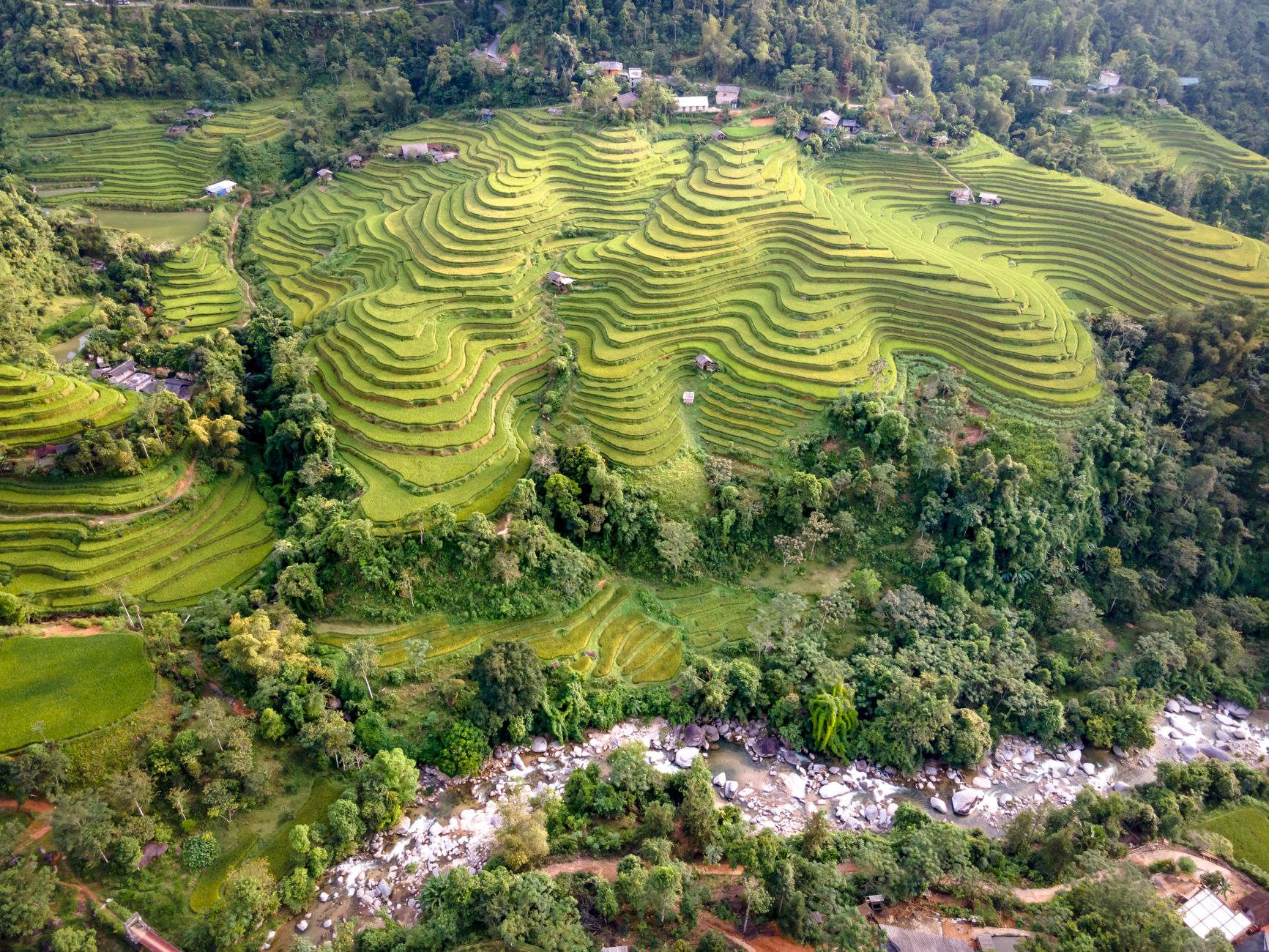
The valleys support extensive rice cultivation on terraced fields that transform with the seasons. During planting, the paddies fill with water and mirror the sky. At harvest, they turn gold. It's not a backdrop—it's the actual work of the people who live here, generation after generation.
These villages are home primarily to the Thai people, whose agricultural practice and settlement patterns have adapted to the terrain over centuries. Many families have opened their homes to visitors through community homestays in traditional stilt houses. You eat where they eat, learn to cook "banh chung" (sticky rice cakes) in their kitchen, and walk their trails through the rice fields in the morning.
Key villages worth visiting include Kho Muong, Don, Hang, and Hieu. Kho Muong sits deeper in the valley and sees fewer visitors—good if you want quieter trails and a more local pace. Don village is the most accessible and has the highest concentration of homestays. Hieu village, perched higher on the slopes, gives you a wider view of the terraced landscape below.
Beyond rice, locals cultivate corn, vegetables, and fruit trees. Many also sustainably harvest non-timber forest products—bamboo, mushrooms, medicinal plants—from the surrounding slopes. Tourism dollars have given conservation a financial stake: when the forest is healthy, visitors come, and the community benefits.

Image by Staffan Scherz from Ho Chi Minh City (호치민시 / 胡志明市 / ホーチミン市), Vietnam (베트남 / 越南 / ベトナム) via Wikimedia Commons (CC BY-SA)
Biodiversity Worth the Trek
Pu Luong's forests contain significant endemic plant species, including medicinal herbs and orchids woven through the undergrowth. The animal life is more striking to scientists than to casual trekkers, but worth knowing: the reserve is a critical habitat for the Delacour's langur, a critically endangered primate. You won't see one easily (they're wary and territorial), but knowing they exist in these forests changes how you move through them.
Other mammals—civets, deer, wild pigs—inhabit the forest. Birdlife is particularly rich: forest birds, raptors, water birds. Insects sustain the whole system. The varied elevation and forest types (evergreen, deciduous, bamboo groves) create different microclimates and support different species at different altitudes.
Conservation here isn't a sign on a gate—it's forest protection, reforestation, species monitoring, and community engagement happening simultaneously. Local people are trained as conservation stewards, not excluded from the reserve.

Image by Gio Dong (thao luan) via Wikimedia Commons (CC BY-SA)
Getting There from Hanoi
Pu Luong is accessible by road from Hanoi (roughly 200 km south). The drive takes about four to five hours depending on which route you choose and how many times you stop.
Option 1: Direct via Mai Chau. Take the Hanoi–Hoa Binh expressway toward Mai Chau, then continue southwest into Thanh Hoa Province. This is the most popular route. Many travelers spend one night in Mai Chau before continuing to Pu Luong—it breaks up the journey and gives you a preview of the stilt-house culture.
Option 2: Via Ninh Binh. If you're coming from Ninh Binh or want to combine trips, you can approach from the southeast through Thanh Hoa city. This route is longer (around six hours from Hanoi) but lets you pair Pu Luong with Tam Coc or Trang An.
Transport options:
- Private car or motorbike hire from Hanoi: Around 2,500,000–3,500,000 VND round trip for a car with driver. Book through your hotel or a Hanoi travel agency. Motorbike rental runs about 150,000–200,000 VND per day if you're comfortable on mountain roads.
- Local bus: Catch a bus from Hanoi's My Dinh station to Thanh Hoa (about 100,000 VND), then transfer to a local bus or "xe om" (motorbike taxi) heading toward Ba Thuoc or Quan Hoa district. Budget more time—this can stretch to seven or eight hours total.
- Organized tour: Two-day/one-night group tours from Hanoi start around 2,000,000 VND per person. Three-day trips with more trekking run 3,000,000–5,000,000 VND. These typically include transport, meals, homestay, and a guide.
The last 30 km into the reserve area are on narrow, winding roads. If you're on a motorbike, take it slow—livestock, children, and water buffalo share the road without much concern for traffic.
Where to Stay
Accommodation in Pu Luong falls into two categories: community homestays and private eco-lodges. Both have their place.
Homestays are the original and still the best way to experience Pu Luong. You sleep on a mattress on the floor of a traditional Thai stilt house, share meals with the family, and wake up to roosters and rice-field views. Expect to pay 250,000–400,000 VND per person per night, usually including dinner and breakfast. Don village and Kho Muong have the most options. Bathrooms are shared and basic. Bring a headlamp and earplugs if you're a light sleeper.
Eco-lodges have multiplied in recent years. Places like Pu Luong Retreat and Pu Luong Natura offer private bungalows with better beds, hot showers, and infinity pools overlooking the terraces. Rates range from 1,500,000 to 4,000,000 VND per night for a double room. These are comfortable, but you trade proximity to village life for amenities. If you have two nights, consider splitting: one homestay, one lodge.
Booking in advance is smart during harvest season (September–October) and national holidays like Tet. Outside peak times, you can often arrange a homestay on arrival by asking around in the village.
What to Eat and Drink
You won't find fancy restaurants here—and that's the point. Meals at homestays are communal, served family-style on a low table. Expect sticky rice steamed in bamboo, stir-fried greens from the garden, grilled pork or chicken, bamboo shoot soup, and fresh spring rolls wrapped in banana leaves. The food is simple, seasonal, and honest. If you've been eating "pho" and "banh mi" across the cities, Pu Luong's Thai cuisine is a different register entirely.
A few things to try:
- "Com lam" — sticky rice cooked inside a bamboo tube over charcoal. The bamboo imparts a faint sweetness. Sold at village markets for about 10,000–15,000 VND per tube.
- Grilled stream fish — small freshwater fish from the local rivers, seasoned with "mac khen" (a local pepper) and grilled over wood fire.
- "Ruou can" — rice wine fermented in clay jars and drunk communally through long bamboo straws. Your host will almost certainly offer it. It's stronger than it tastes. Pace yourself.
- Wild honey and bamboo shoots — foraged from the surrounding forest and featured in soups and stir-fries.
For Vietnamese coffee fans, don't expect drip "ca phe" stations out here. Some lodges serve decent coffee, but homestays usually offer local tea. The nearest proper "bia hoi" (fresh draft beer) spot is back in the town of Canh Nang, about 20 km from the central valley.
How to Visit and What to Do
Pu Luong is accessible by road from Hanoi (roughly 200 km south). Hire a driver, join an organized tour, or take a local bus into Thanh Hoa Province. The winding roads offer views of the rural landscape as you enter the reserve area.
Once there, trekking is the primary activity—trails vary in difficulty and wind through rice terraces, forests, and past villages. Half-day and multi-day treks are available. The most popular route runs from Kho Muong to Hieu village (about 14 km, five to six hours), passing through forest, over a ridge, and down through terraces. A shorter loop from Don village through the surrounding paddies takes two to three hours and suits anyone who just wants a morning walk.
Homestays provide accommodation in stilt houses; many include cooking classes where you'll prepare traditional Thai dishes. Cycling through the valleys is a gentler alternative—several homestays and lodges rent basic bikes for 50,000–100,000 VND per day. You can visit local markets (the Pho Doan market, held every five days, is the liveliest), explore caves, or swim in natural springs and waterfalls. Hieu waterfall, about a 20-minute walk from Hieu village, has a natural pool deep enough to swim in during the wet season.
The best time depends on what you want to see. Planting season (May–June) shows the paddies flooded and reflective. Harvest (September–October) shows them golden. The landscape is beautiful year-round, but trails are easier and drier from October through April.
What Conservation Looks Like on the Ground
The reserve was established to protect biodiversity and maintain these ecosystems while supporting the people who live within them. That balance is the hardest part. Deforestation, agricultural expansion, human-wildlife conflict, and climate change all press in. The response has been forest protection, reforestation of degraded areas, habitat monitoring for endangered species like the Delacour's langur, and sustained community engagement.
Local residents aren't sidelined—they're central to long-term conservation success. Education programs raise awareness about biodiversity. Community-based tourism provides economic incentive: if people profit from a healthy forest, they'll defend it. The goal is to preserve Pu Luong's unique biodiversity and cultural landscape for the next generation, which is why your visit—and your spending—matters more than it might seem.
Quick Reference
- Location: Ba Thuoc and Quan Hoa districts, Thanh Hoa Province
- Distance from Hanoi: ~200 km (4–5 hours by car)
- Reserve size: 17,662 hectares
- Elevation range: 60 m – 1,700 m
- Best months for trekking: October – April (dry, cooler)
- Best months for rice terraces: May – June (flooded/planting), September – October (golden/harvest)
- Homestay cost: 250,000–400,000 VND/person/night (dinner + breakfast included)
- Eco-lodge cost: 1,500,000–4,000,000 VND/night
- Key villages: Don, Kho Muong, Hieu, Hang
- Language: Thai ethnic language locally; Vietnamese widely understood; very limited English
- ATMs: None inside the reserve. Withdraw cash in Canh Nang town or before leaving Hanoi
- Mobile signal: Spotty in the valley, better on ridges. Viettel has the best coverage here
Common Mistakes Visitors Make
Treating it like Sapa or Hoi An. Pu Luong has no ATMs, no convenience stores, no Western restaurants. Bring enough cash (VND only) for your entire stay plus a buffer. Credit cards are useless here.
Packing too heavy. If you're trekking between villages, you carry your own bag. A small daypack with water, rain jacket, sunscreen, and a change of clothes is all you need. Leave the rolling suitcase in Hanoi.
Skipping the guide. Trails aren't always marked. A local guide (around 500,000–700,000 VND per day) knows the paths, speaks the language, and can arrange lunch stops in villages along the way. Homestays can connect you with one.
Arriving on a weekend or holiday without booking. Pu Luong gets busy with domestic tourists from Hanoi during long weekends. Homestay spots fill up. Book ahead or travel midweek.
Expecting hot showers at homestays. Some have them, most don't. The mountain water is cold. An eco-lodge is the safer bet if hot water is non-negotiable.
Rushing through in one day. A day trip from Hanoi is technically possible but pointless. Two nights is the minimum to actually walk the trails, eat with a family, and slow down enough to notice where you are. Three nights lets you trek between villages without hurrying.
Not bringing cash for tips and small purchases. Your homestay host, your guide, the woman selling "com lam" at the trailhead—small tips and purchases go directly into the local economy. Bring plenty of small bills (10,000–50,000 VND denominations).
Bottom Line
Pu Luong doesn't compete with Da Nang beaches or Hanoi street food crawls. It's a different proposition entirely: quiet valleys, working rice terraces, and a pace of life that makes you realize how fast you've been moving. Come with enough cash, comfortable shoes, and no fixed agenda. That's when Pu Luong works best.
Last updated · May 29, 2026 · independently researched, never sponsored.