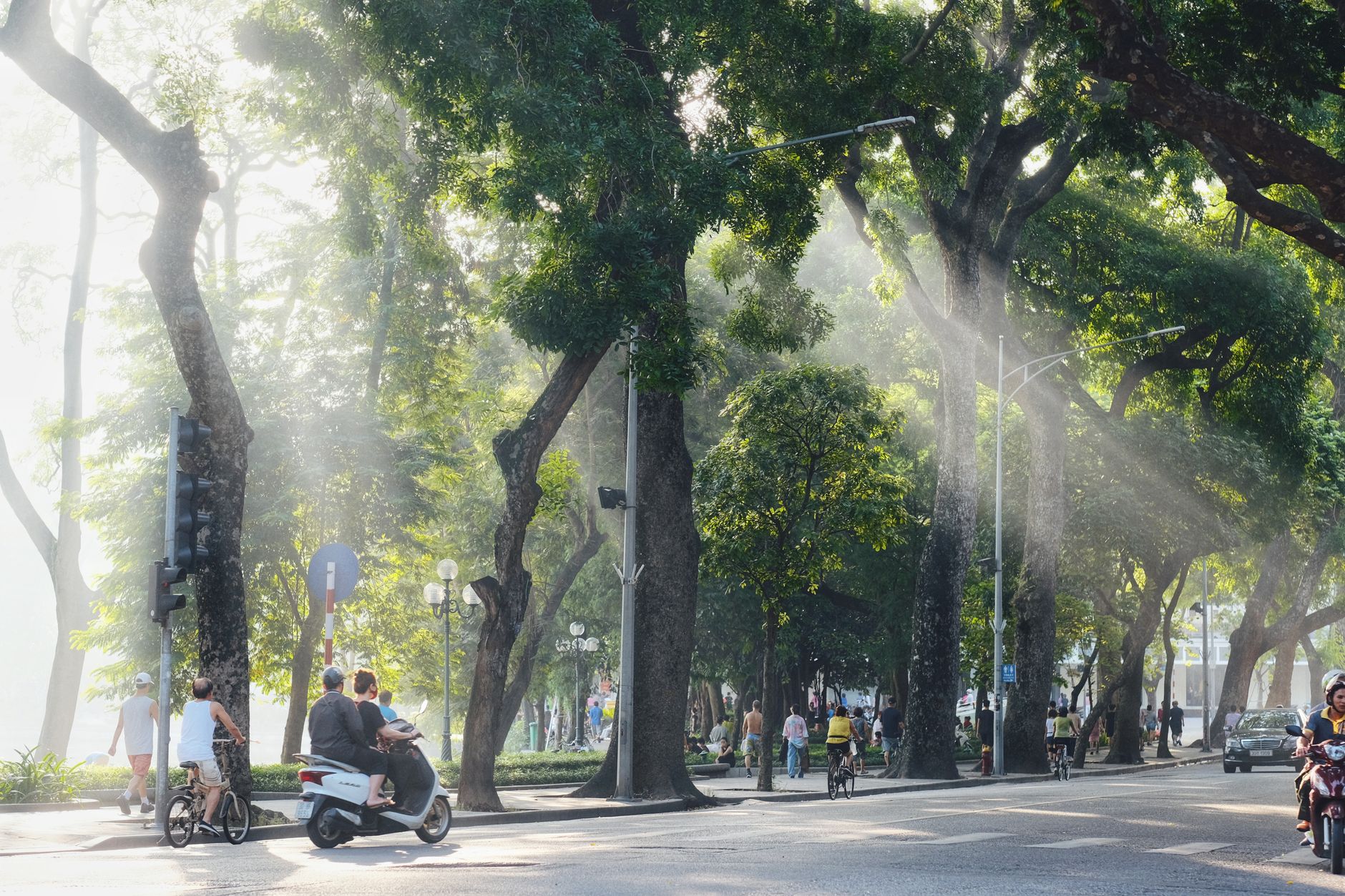
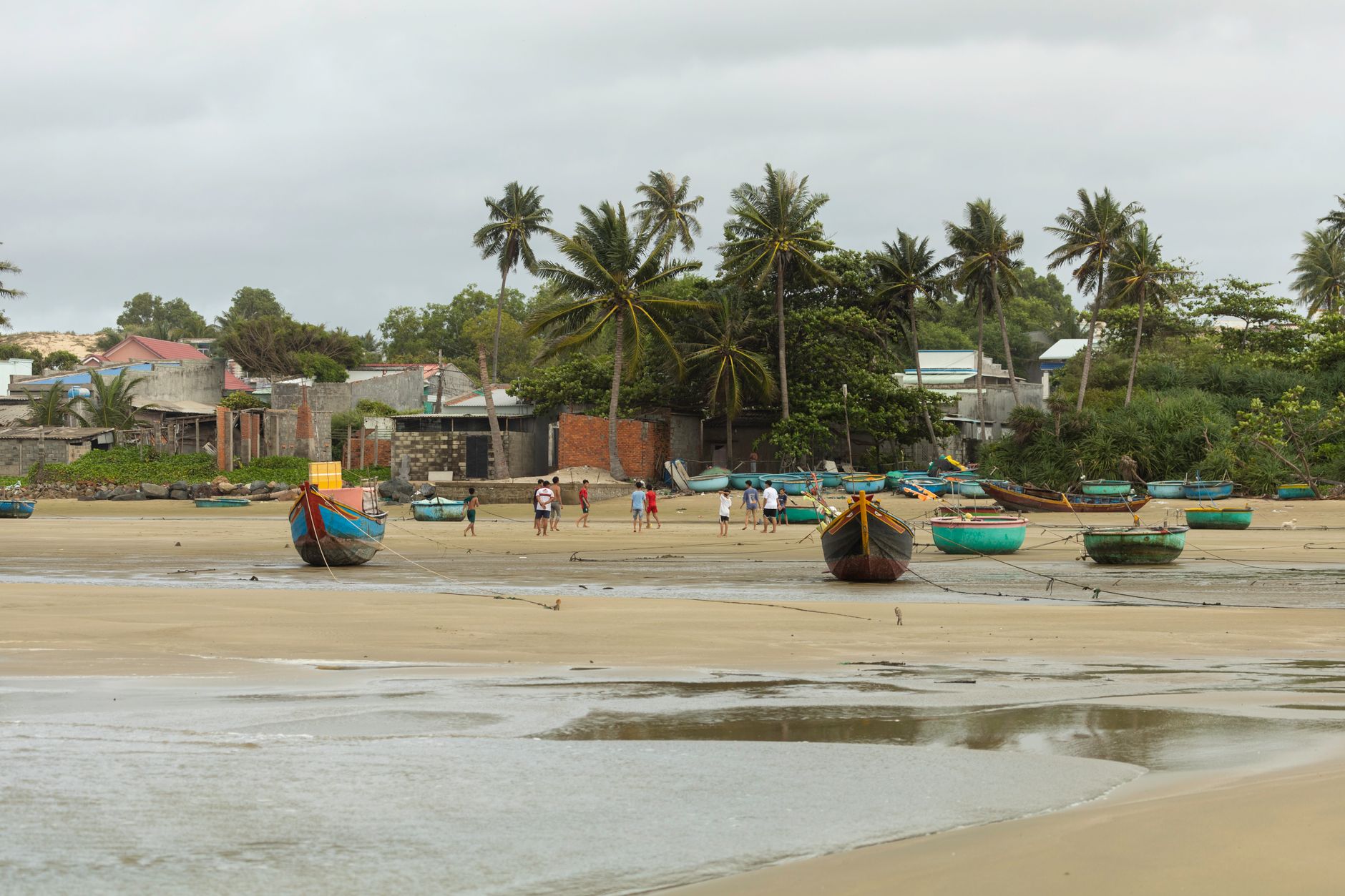
Hanoi Then and Now
Hanoi, Vietnam (베트남 / 越南 / ベトナム)'s capital and second-largest city by population, sits at 3,358.6 km² across the Red River Delta in the north. The city drew 18.7 million domestic and international visitors in 2022, drawn by historical landmarks, temples, lakes, and the chaotic appeal of its Old Quarter. The economy is substantial: Hanoi's gross regional domestic product hit US$48 billion in 2023, second only to Ho Chi Minh City.
What strikes most arrivals is the layering—French villas alongside Soviet-era apartments, tube houses crammed into alleys, lakes in the middle of commerce, temples tucked between storefronts. This mix is no accident. Hanoi (하노이 / 河内 / ハノイ) has been continuously inhabited for roughly 4,000 years and was named and renamed with each dynasty's rise.
A Thousand Years of Names
In 1010, King Ly Thai To of the Ly dynasty established his capital here and called it Thang Long, meaning "ascending dragon." The name came from the curved bend of the Red River, seen as a serpentine shape. Before that, the site had gone by Long Bien ("dragons interweaving"), Tong Binh ("Song pacification"), and Dai La ("big net") when it was fortified into a citadel around 866 AD.
Later, the Nguyen dynasty moved the national seat to Hue in 1802, and the city was officially renamed Hanoi in 1831. From 1883 to 1949, it served as the capital of French Indochina and the French protectorate of Tonkin—a period that left behind grand colonial architecture, tree-lined boulevards, and the grid system of the French Quarter that survives today. After 1954, Hanoi became the capital of North Vietnam, and in 1976, after national unification, it became the capital of the Socialist Republic of Vietnam.
Today, it hosts 78 foreign embassies, the Vietnam People's Army headquarters, and Vietnam National University, cementing its role as the country's political and diplomatic center.
Before Thang Long: Ancient Hanoi
Archaeological digs reveal human presence dating back 20,000 years. Artifacts from the Son Vi Culture—carved and processed pebbles—were discovered in Ba Vi and Dong Anh during the early 1970s and again in 1998–1999 near Dong Mo Lake in Son Tay. Around 10,000 to 4,000 years ago, rising sea levels submerged much of the region; the coast once sat near present-day Hanoi before retreating. Continuous habitation has been documented for the past 4,000 years.
By the third century BC, the Co Loa citadel—an outer embankment covering 600 hectares—had been constructed within what is now Hanoi. It became the first political center of early Vietnamese civilization. In 179 BC, Zhao Tuo's state of Nanyue annexed the region, and in 111 BC, the Han dynasty conquered Nanyue and organized it into seven commanderies, three of which were in Vietnam: Giao Chi, Cuu Chan, and Nhat Nam.
One historical figure tied to Hanoi is the Trung Sisters, Trung Trac and Trung Nhi, daughters of an aristocratic family from Me Linh district. In 40 AD, they led a major uprising against Han rule, which spread across the Red River Delta and beyond. Their court was established upriver in Me Linh, and the rebellion drew support from approximately 65 towns before being suppressed in 42 AD. They remain cultural figures in Vietnamese tradition.

Image by Cheong. Original uploader was Cheong Kok Chun at en.wikipedi via Wikimedia Commons (CC BY-SA)
Climate: Hot Summers, Cool Winters
Hanoi sits in a monsoon-influenced humid subtropical climate zone with four distinct seasons:
Summer (May–September): Hot and humid, averaging 29.2 °C (84.6 °F) at the peak, with frequent rainfall. The rainy season accounts for most of the city's 1,612 millimeters (63.5 inches) of annual precipitation, spread across roughly 114 rainy days.
Autumn (October–November): Cool-down period with dropping rainfall. Mild and pleasant—often cited as the best time to visit.
Winter (December–February): Cool and dry, averaging 16.4 °C (61.5 °F) in the coldest months. Extreme lows are rare but recorded; in January 2016, temperatures dropped near freezing, and snow fell on nearby Ba Vi mountain.
Spring (March–April): Transition month with drizzle and less sunshine as the southeast monsoon brings moisture from the sea.
Average annual temperature sits at 23.6 °C (74 °F), with relative humidity exceeding 80%. The recorded extreme high is 42.8 °C (109 °F) in May 1926; the extreme low is 2.7 °C (37 °F) in January 1955.
Top Attractions
Imperial Citadel of Thang Long: The walled fortress where kings ruled for nearly a millennium. Remnants of the 11th-century gate and defensive walls remain, with a small museum inside.
Hoan Kiem Lake: The heart of central Hanoi, ringed by footpaths, street vendors, and the Jade Island temple in its center. Perfect for early morning walks when locals do tai chi and exercise.
West Lake (Ho Tay): Larger than Hoan Kiem and quieter, dotted with temples, cafes, and restaurants. A scenic 8 km loop around the perimeter is popular with cyclists and joggers.
Ho Chi Minh Mausoleum: A monumental complex in Ba Dinh Square, where the embalmed remains of Ho Chi Minh lie in state. Respectful dress required; photography is restricted inside.
Ba Vi National Park: Located 45 km southwest of the city, this 19,300-hectare reserve has three peaks, waterfalls, and hiking trails. Bring insect repellent and water.

Image by CEphoto, Uwe Aranas via Wikimedia Commons (CC BY-SA)
The Old Quarter and Street Food
Hanoi's most famous neighborhood, the Old Quarter (36 Streets area), is a dense grid of tube houses, street-level shops, and narrow alleys that have been a commercial hub since the 15th century. Each street traditionally specialized in one product—silk, tin, silver, hemp. That legacy persists: Hang Gai (silk street), Hang Bac (silver street), etc.
Street food is the pulse here. "Pho" (rice noodle soup), "banh mi" (Vietnamese sandwich), "bun cha" (grilled pork with noodles), and "banh chung" (sticky rice cake) are cheaper and often fresher from pushcart vendors than sit-down restaurants. Morning is peak time; by midday, many carts pack up.
Environmental Reality
Hanoi ranks among the world's most air-polluted cities. Fine dust concentrations regularly hit 40.8 μg/m³, more than four times the WHO's recommended limit of 10 μg/m³. The Ministry of Natural Resources and Environment lists Hanoi as Vietnam's most air-polluted city.
Water pollution is also severe. Rivers flowing through the city—the Nhue, To Lich, Kim Ngu, Lu, and Set—receive approximately 78% of Hanoi's untreated wastewater daily, totaling tens of thousands of cubic meters. Algae blooms and fish kills are common. Visitors should avoid swimming in lakes and rivers and be aware that air quality is worst during the dry, cold winter months (December–February) when pollution traps near ground level.
Getting Around
Hanoi sprawls across multiple districts. The Old Quarter is compact and best explored on foot. For longer distances, taxis, Grab (ride-hailing app), and motorbike rentals are cheap and reliable. The planned metro system remains under construction; buses exist but routes are confusing for non-Vietnamese speakers.
Thao Dien International Airport, 25 km southeast, connects Hanoi to major cities in Southeast Asia and beyond. Noi Bai is the older domestic terminal; Nhat Tan handles more international traffic.
Frequently Asked Questions
How old is Hanoi and when was it officially named?
Hanoi has been continuously inhabited for roughly 4,000 years, with human presence documented as far back as 20,000 years through archaeological finds. The city was named Thang Long ("ascending dragon") in 1010 by King Ly Thai To of the Ly dynasty. It was officially renamed Hanoi in 1831 under the Nguyen dynasty, which had relocated the national capital to Hue in 1802.
What is the best time of year to visit Hanoi?
Hanoi has four distinct seasons driven by a monsoon-influenced humid subtropical climate. Summer (May to September) is hot and humid, averaging 29.2 degrees Celsius, with frequent rainfall. Visitors who prefer drier, cooler conditions should plan around the rainy season, which accounts for most of the city's 1,612 mm annual rainfall. The article notes cool winters as a separate season, making the non-summer months a practical alternative.
When did Hanoi become the capital of a unified Vietnam?
Hanoi became the capital of the Socialist Republic of Vietnam in 1976, following national unification. Before that, it served as the capital of North Vietnam after 1954, and prior to independence it was the capital of French Indochina from 1883 to 1949. Today the city hosts 78 foreign embassies and the Vietnam People's Army headquarters, reflecting its continued role as Vietnam's political center.
Last updated · May 29, 2026 · independently researched, never sponsored.