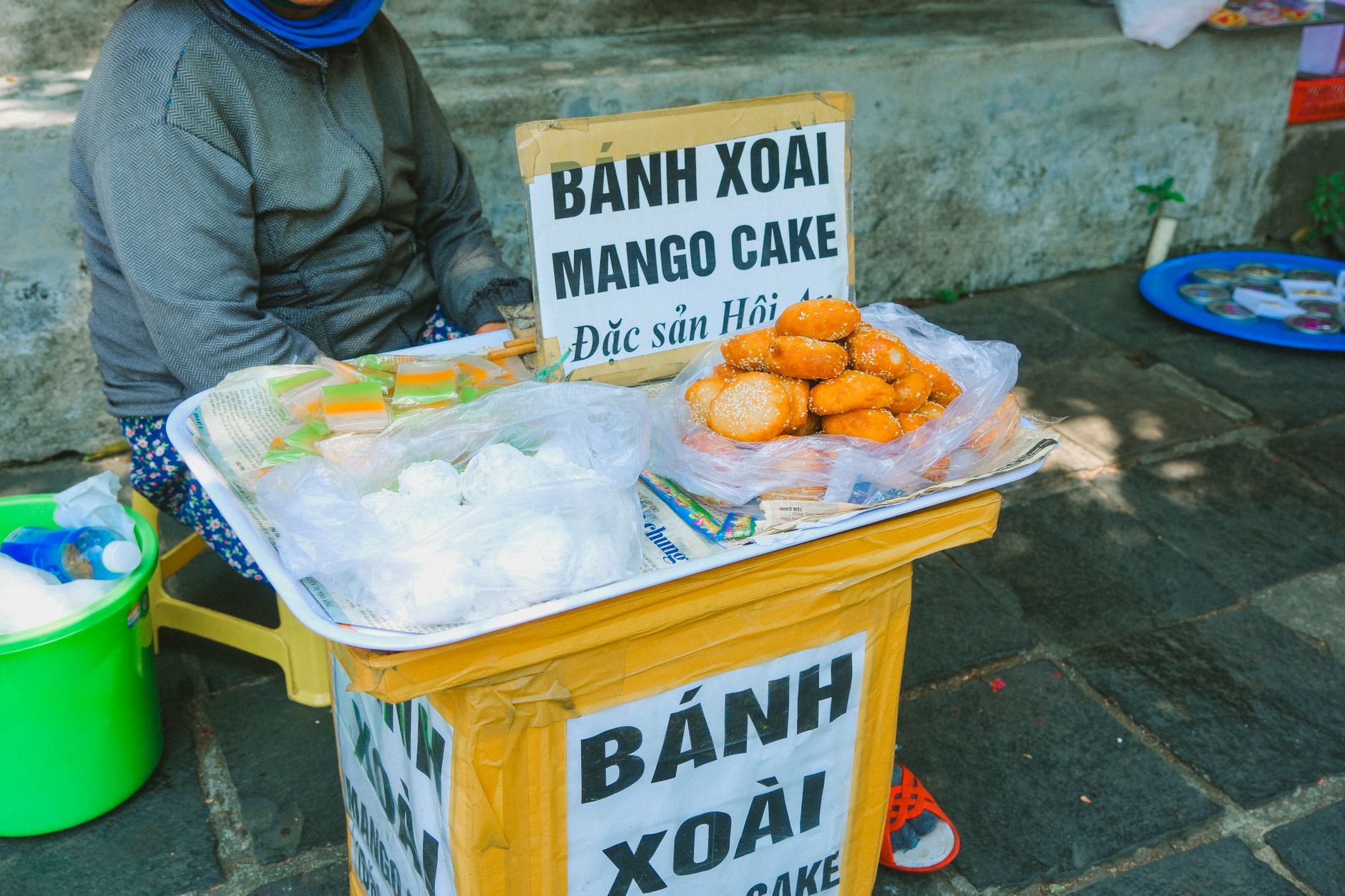
Vietnam (베트남 / 越南 / ベトナム)'s food is built on a handful of core ingredients, which means people with common allergies face real challenges. Peanuts, monosodium glutamate (MSG), fish sauce, and wheat show up in nearly every regional cuisine—sometimes visibly, often not. Knowing what to order and how to communicate your allergy in Vietnamese can mean the difference between a good meal and a trip to the pharmacy.
Peanuts: Hidden in Sauces and Sweets
Peanuts are woven into Vietnamese cooking so thoroughly that avoiding them requires constant vigilance. They appear in obvious places—peanut brittle, peanut candy, crushed peanuts sprinkled over "banh mi"—but also in sauces you wouldn't expect.
"Nuoc leo" (peanut-based dipping sauce) is the main culprit. It accompanies "goi cuon" (spring rolls), "banh mi", grilled meats, and many street-food carts. Even if you order something without peanuts, restaurants often serve it with peanut sauce on the side or mixed in. "Toi bi di ung dau phong" (I am allergic to peanuts) is the phrase to lead with.
Less obvious: peanuts ground into curry pastes, desserts flavored with peanut oil, and satay marinades for grilled chicken. Vietnamese bakeries often use peanut oil in "banh mi" fillings and pastries. If you're buying packaged goods or eating at a small shop, always ask the vendor to check the ingredients or preparation surface.
Safer bet: stick to soups like "pho" or "bun rieu", rice-based dishes without sauce, and grilled meat with soy sauce or lime. Confirm the kitchen hasn't used shared cutting boards or oil for peanut items.
MSG: In the Stock, In the Seasoning Powder
Monosodium glutamate (bot ngot, literally "sweet powder") is ubiquitous in Vietnamese kitchens. It seasons broths for "pho", "bun bo Hue", and "hu tieu"; it's sprinkled into "com tam" (broken-rice dishes); it flavors dipping sauces. Many street vendors and restaurant cooks reach for the small bags without thinking twice.
If you're MSG-sensitive, the challenge is that it's not always listed or visible. A bowl of "pho" might have MSG in the broth, the dipping sauce ("nuoc cham"), or both. Same with "bun cha"—the marinade often contains it.
Your best approach: ask directly, "Bot ngot co khong?" (Does it have MSG?). Be specific: "Canh nay co bot ngot khong?" (Does this soup have MSG?). Some vendors will honestly say yes; others may not know, or may assume all broths naturally contain umami (which they do, but not in powder form). Smaller stalls and family-run shops are often more willing to modify or confirm.
Safer options: grilled meat with fresh herbs and lime, rice with steamed vegetables, fruit smoothies. Avoid anything pre-made or bottled, unless the label explicitly states no MSG (hoi gat khi tay chua).
Fish Sauce: Nearly Impossible to Fully Avoid
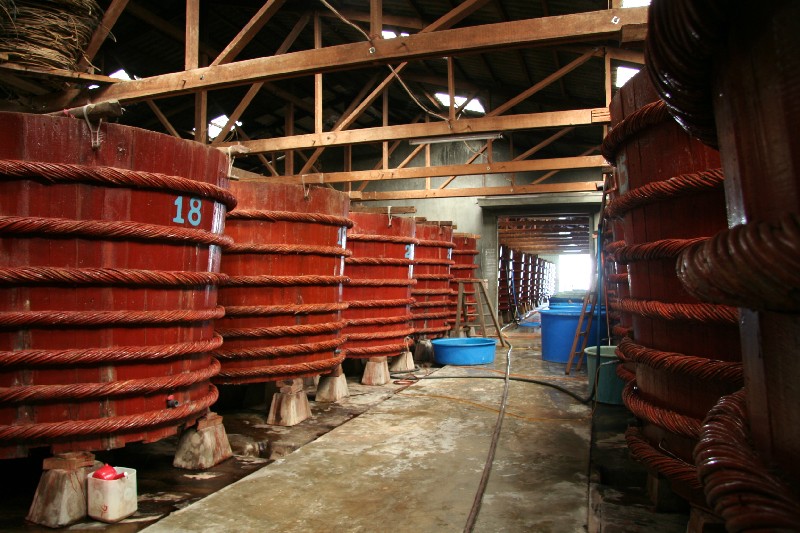
Fish sauce (nuoc mam) is the salt of Vietnamese cuisine. It's in salad dressings, marinades, soup broths, dipping sauces, even some desserts. If you have a fish sauce allergy, you're essentially removing a core ingredient from most dishes.
Unlike peanuts or MSG, you cannot easily ask a vendor to cook without fish sauce. It's already in the stock, the "nuoc cham" (dipping sauce), the "nuoc leo". Asking them to remake a dish often isn't practical, especially at street stalls.
Your options are limited but real:
- Vegetable-forward dishes without broth: fresh spring rolls (if made without fish-sauce dip), salads with lime and salt only, grilled vegetables.
- Rice and protein: plain steamed rice with grilled chicken or seafood seasoned only with salt and lime. You'll need to specify: "Khong nuoc mam, chi muoi va chanh" (No fish sauce, only salt and lime).
- Egg dishes: "banh trang nuong" (crispy rice paper with egg), "trung oplet" (omelette). Specify no fish sauce in the oil or filling.
- Fruit and coffee: fresh fruit, Vietnamese coffee (though condensed milk varies by vendor), coconut water.
When eating at a restaurant (versus a street stall), write down your allergy or show them a card stating it in Vietnamese. Upmarket places in Hanoi, Saigon, Da Nang, and Hoi An are more likely to accommodate. Street vendors often cannot.
Gluten: Rice-Based Cuisine Helps
Gluten is actually less of a minefield than the other three. Vietnamese cuisine is heavily rice-based—"pho", "bun", "com", "banh mi" (rice flour), "banh xeo" (rice flour), "banh cuon (반꾸온 / 蒸米卷 / バインクオン)" (rice paper), "goi cuon" (rice paper). Even traditional wheat noodles ("mi") are increasingly available in rice versions at markets.
The main gluten sources:
- Soy sauce: contains wheat. Always check dipping sauces and marinades.
- "Banh mi" bread: traditional French-style baguette contains wheat, though gluten-free alternatives are emerging in larger cities.
- Some broths: a few regional soups use wheat-based thickeners, though it's uncommon.
- Packaged snacks and condiments: imported or processed items may contain wheat.
Safer picks: rice noodles ("bun"), rice paper wraps, "com tam", steamed rice with protein, grilled meat with fresh herbs, "banh xeo" (made from rice flour, though check the vendor). Many "banh mi" vendors will happily swap the bread for rice paper or lettuce wraps if you ask.
If you're celiac or non-celiac gluten-sensitive, always confirm that soy sauce and dipping sauces are gluten-free (tamari instead of standard soy). Most restaurants won't have this on hand, but larger cities have health-conscious cafes stocking GF condiments.
Communicating Allergies
Write it down. Vietnamese communication about allergies can be vague—vendors may not fully understand or may not recall ingredients in sauces made by someone else. Before eating:
- "Toi bi di ung [ingredient]" (I am allergic to [ingredient]). Peanut: dau phong. Fish sauce: nuoc mam. MSG: bot ngot (or bot mi chinh, monosodium glutamate). Wheat/gluten: lua mi.
- Carry a translation card if you're eating primarily at street stalls. Write your allergies in Vietnamese and English.
- Order at restaurants, not street carts, if your allergy is severe. Staff at sit-down places are more likely to take you seriously and can check with the kitchen.
- Eat during lunch hours (11 a.m.–1 p.m.) when vendors are less rushed and more willing to answer questions.
Vegetarian and Vegan Dining (Bonus)
If you're also vegetarian ("an chay"), you'll find dedicated vegetarian restaurants and stalls in every city. However, be aware that "vegetarian" in Vietnam sometimes includes fish sauce and shellfish paste. If you want no animal products at all, specify "an chay trai" (strict vegan) or list out what you don't eat.
Frequently Asked Questions
How do I tell a vendor in Vietnamese that I have a peanut allergy?
Say "Toi bi di ung dau phong" (I am allergic to peanuts) before ordering. Peanuts appear not just as a topping but in nuoc leo dipping sauce served alongside goi cuon, banh mi, and grilled meats — often without being listed. Safer choices include pho, bun rieu, or plain grilled meat with soy sauce and lime. Always ask whether shared cutting boards or oil were used for peanut items.
What Vietnamese dishes are safer to order if I am MSG-sensitive?
Grilled meat with fresh herbs and lime, plain rice with steamed vegetables, and fresh fruit smoothies are lower-risk options. The challenge is that bot ngot (MSG) seasons broths for pho, bun bo Hue, and hu tieu, and also appears in marinades for bun cha and broken-rice dishes like com tam. Ask vendors directly: "Bot ngot co khong?" (Does it have MSG?) or "Canh nay co bot ngot khong?" (Does this soup have MSG?). Family-run shops are generally more willing to confirm or modify.
When is fish sauce most likely to appear in a dish I did not expect?
Fish sauce (nuoc mam) is present in nearly every stage of Vietnamese cooking — broths, salad dressings, marinades, dipping sauces like nuoc cham and nuoc leo, and occasionally desserts. Unlike peanuts, it is typically cooked into the base stock before service, making removal impractical at street stalls. Fresh spring rolls prepared without a fish-sauce dip and vegetable-forward dishes without broth are among the few realistic alternatives for travelers with a fish allergy.
Practical Notes
Vietnam's street food is wonderful but not always allergy-friendly. Carry antihistamines and know the location of a nearby clinic or hospital if your reaction is severe. Upscale restaurants and hotels in major cities, Hoi An) are more likely to accommodate complex dietary needs; smaller towns may not have English-speaking staff or the flexibility to modify dishes. When in doubt, order simple grilled or boiled items with fresh vegetables and ask for sauces on the side.
Last updated · May 29, 2026 · independently researched, never sponsored.