Vietnam Wayfarer
Food & DrinkDestinationsItinerariesTravel Tips
Newsletter
Home/Food & Drink
Food & Drink

Hu Tieu: Vietnam's Soul Noodle Soup

"Hu tieu" is the south's answer to "pho" — a bowlful of chewy noodles, pork bone broth spiked with dried shrimp, and a customizable heap of meat and organ that tastes better than it sounds. Here's what you need to order.

May 4, 2026·4 min read
#Hu Tieu#Noodle Soup#Breakfast#Southern Vietnam#Street Food#Pork#Seafood#Teochew Cuisine#Mekong Delta
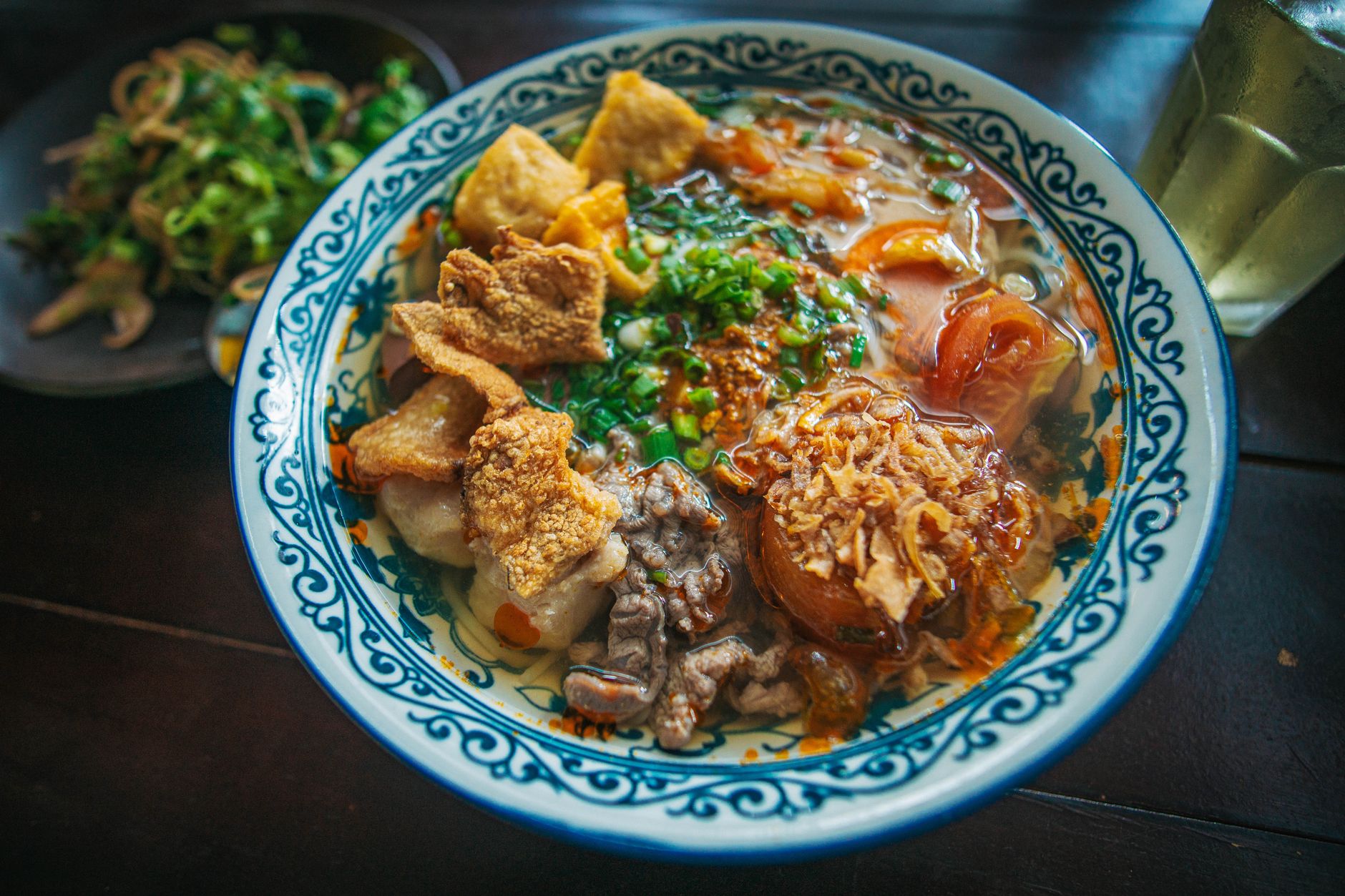
Hu tieu
Image via Wikipedia (Hu tieu, CC BY-SA)

Hu tieu, also spelled hu tiu, is the breakfast dish of choice in Southern Vietnam. You'll see it on breakfast menus from 5 a.m. until noon, though streetside vendors push carts loaded with steaming pots until mid-afternoon.

The basics: chewy or soft rice noodles, a pork bone broth that's slightly sweet, ground pork, liver, shrimp, and a scatter of fried shallots and garlic. You can order it wet (with broth), dry (noodles only, broth on the side), or mixed. It arrived in Vietnam via the Teochew people from Guangdong, China — the original dish was "kuay teow", flatter and softer than today's version. Southern Vietnamese cooks made the noodles chewier, and the name stuck: "hu tieu" comes from the Teochew 粿條 (gue diou, or kway teow).

The Noodles

Hu tieu uses three main noodle types. Soft rice noodles are the lightest and most delicate — they'll break apart if you look at them hard. Egg noodles give a richer, slightly yellow appearance. The chewy tapioca noodles, called "hu tieu dai", are translucent and have a texture that snaps between your teeth — these are the signature of "hu tieu My Tho" style.

You'll usually see vendors offer a choice: "soft or chewy?" Soft is easier to eat. Chewy is more filling and more interesting, if you like a bit of resistance.

The Broth

The soul of hu tieu. Pork bones simmer for hours with dried squid and dried shrimp until the broth is clear and slightly sweet. In the south, this sweetness is intentional — it balances the salty condiments and the richness of the organ meat. The broth is cooler and more delicate than "pho" broth; it's meant to be slurped, not chewed.

When you order "hu tieu kho" (dry), you get the noodles, toppings, and a separate small bowl of hot broth to sip alongside — a practical choice if you're on the street and don't want soup splashing on your lap.

The Toppings

This is where hu tieu gets interesting. Ground pork, usually sauteed with garlic, sits in a small mound at the center. Thinly sliced pork liver (pink when cooked) adds iron and a subtle offal flavor that divides people — try it. Pork intestines, cut into rings and blanched, are chewy and neutral. Shrimp are almost always included, either poached whole or chopped.

On top: fried shallots, crispy garlic, fresh chives, Chinese celery leaves (a little bitter), and a pinch of white pepper. Some vendors add a quail egg or a dollop of fish sauce caramel.

Libélula (Orthetrum sabina) sobre un Gymnocalicium mihanowichii, Ciudad Ho Chi Minh, Vietnam, 2013-08-14, DD 02

Image by Diego Delso via Wikimedia Commons (CC BY-SA)

The Sauces

Hu tieu always arrives with a sauce tray. Soy sauce (for umami), black or red vinegar (sharp, cuts fat), "shacha sauce" (a Chinese-origin paste of soybean oil, garlic, and dried shrimp — tangy and complex), thinly sliced fresh red chilis, and minced chili-garlic sauce. Mix these to taste. The vinegar is essential — one splash transforms the whole bowl from rich to balanced.

Regional Styles

Hu Tieu Nam Vang — "Phnom Penh hu tieu." This Cambodian-leaning style has a richer broth and wider toppings: quail eggs, minced pork, shrimp, sometimes a bit of minced fish. Pickled garlic and garlic sauce replace some of the Chinese sauces. You'll find this in Ho Chi Minh City, especially in neighborhoods with Cambodian heritage.

Hu Tieu Sa Te — Shacha broth. The broth itself is flavored with shacha (that soybean-based Chinese condiment), making it spicy and savory. Less sweet than classic hu tieu. A Teochew original, popular in central and southern Vietnam.

Hu Tieu My Tho — Named after the Mekong Delta city of My Tho, this version uses thin white rice noodles and leans heavily into seafood: prawns, octopus, cuttlefish, snails. The broth is often made with seafood stock, not just pork. Order this if you want something lighter and more oceanic than the pork-heavy versions.

Hu Tieu Sa Dec — From Sa Dec in Dong Thap province, this style features thicker, white rice noodles and a clear, delicate broth made with specific pork cuts. Less crowded than My Tho style. More subtle.

Hu Tieu Go — Street food. "Go" means "knocking" — the sound vendors make by tapping two metal bars together on their pushcarts to announce their presence. Hu tieu go is simpler and cheaper: basic broth, fewer toppings, smaller portions. It's breakfast food for people in a hurry. You'll find these vendors in alleys and markets in every southern city, usually set up by 5 a.m.

Adarga (Nymphaea alba), Ciudad Ho Chi Minh, Vietnam, 2013-08-14, DD 01

Image by Diego Delso via Wikimedia Commons (CC BY-SA)

Where to Eat It

Hu tieu is everywhere in the south. Ho Chi Minh City has dedicated hu tieu stalls in markets like Ben Thanh and Binh Tay. Can Tho and My Tho have their own famous shops (search local reviews for names — they change hands, or don't have signs). In Saigon, a bowl costs 25,000–50,000 VND depending on the vendor and toppings you choose. Street vendors are cheaper; sit-down restaurants cost more.

Gordon Ramsay featured hu tieu on the 2013 US MasterChef season, where he challenged contestants to prepare it. He'd also eaten it years earlier at Cai Rang floating market in Can Tho during his 2010–2011 TV series Gordon's Great Escape.

How to Order

Point to the noodle type (soft or chewy), or say "noodles medium-chewy." The vendor will ask if you want all the usual toppings — just nod. Ask for extra garlic sauce if you like spice. Eat it hot, immediately. The noodles soften fast in the broth.

You might also like
Imexpharm đồng hành hội nghị dược sĩ nhà thuốc tại Đà Nẵng - Báo VnExpress Sức khỏe
Travel Tips

Vietnam Pharmacy Guide: What to Buy, What to Skip, and How to Ask

May 5, 2026 · 4 min
Ho Chi Minh City panorama at dusk
Travel Tips

Dress Code in Vietnam: What to Wear at Temples, Beaches, and Restaurants

May 5, 2026 · 4 min

Going to Vietnam? Eat and travel smarter.

Monthly: new dishes, off-the-beaten-path destinations, and itineraries — straight to your inbox. No spam. Unsubscribe anytime.

Join 0 expats. (We just launched.)

More from Ho Chi Minh City

Other articles covering this city.

Ho Chi Minh City panorama at dusk
Travel Tips

Drinking Water in Vietnam: What's Safe, What Isn't, and Why

Tap water isn't safe to drink straight from the tap in Vietnam. Here's what you need to know about bottled water, ice, brushing teeth, and hot drinks.

May 5, 2026·4 min read
Mekong Delta rice paddies and waterways
Travel Tips

Eating with Food Allergies in Vietnam: Peanuts, MSG, Fish Sauce & Gluten

Peanuts hide in desserts and sauces, MSG seasons nearly everything, and fish sauce is in almost every savory dish. Here's how to navigate Vietnamese food safely.

May 5, 2026·5 min read
Hanoi skyline with Ba Vi Mountain in the distance
Travel Tips

Wifi and Internet in Vietnam: What to Expect and How to Stay Connected

Free wifi is nearly everywhere in Vietnamese cities, but speeds drop in rural areas. Here's what works, where to find it, and what to pay.

May 5, 2026·3 min read

More from Southern Vietnam

Other articles covering the same region.

Mekong Delta
Itineraries

7 Days in the Mekong Delta: Floating Markets, Homestays & Eco-Tours

A week-long loop through the Mekong's quietest towns: My Tho, Ben Tre, Vinh Long, Can Tho, and Chau Doc. Sleep in family homestays, catch dawn at Cai Rang market, and paddle through orchards and rice paddies.

May 5, 2026·7 min read
Nha Trang
Itineraries

5 Days in Vietnam's Southern Beach Towns: Nha Trang, Phu Quoc, Con Dao

A practical south-coast beach itinerary covering Nha Trang's island hops, Phu Quoc's resort infrastructure, and Con Dao's quieter coves—without the resort-marketing nonsense.

May 5, 2026·5 min read
Ho Chi Minh City
Itineraries

3 Days in Saigon: A Street Food Trail Through District 1, Cholon, and Beyond

Eat your way through Saigon's best neighborhoods in 72 hours: broken rice and grilled pork in District 1, crispy pancakes in Cholon, and late-night seafood soups at the city's beating heart.

May 5, 2026·4 min read

More in Food & Drink

More articles from the same category.

View all in Food & Drink →
Ruou can
Food & Drink

Ruou Can: Vietnam's Communal Rice Wine Ritual

Ruou can is a fermented rice wine shared through cane tubes from a single earthenware jar—a ritual drink of Vietnam's ethnic minorities in the Central Highlands and Northwest, where hospitality and community are sipped together.

May 5, 2026·2 min read
Ruou nep
Food & Drink

Ruou Nep: Vietnam's Fermented Glutinous Rice Pudding

Ruou nep is a mildly alcoholic pudding or drink made from fermented glutinous rice, particularly beloved in northern Vietnam. Learn how it's made, its regional varieties, and where to find it.

May 5, 2026·2 min read
Nuoc mia
Food & Drink

Nuoc Mia: Vietnam's Ice-Cold Sugarcane Juice

Sugarcane juice, or "nuoc mia," is the sound and smell of every Vietnamese street. Fresh stalks crushed through a motorized press, poured over ice, sometimes with a squeeze of kumquat—it's one of the cheapest, most refreshing drinks you'll find, available everywhere from Hanoi's Old Quarter to a rural roadside stall.

May 5, 2026·3 min read
Vietnamese tea
Food & Drink

Vietnamese Tea: A Guide to Green, Lotus, and Heritage Brews

From thousand-year-old trees to delicate lotus-scented leaves, Vietnamese tea reflects centuries of tradition. Learn where to find the best teas, how to brew them, and why green tea dominates the culture.

May 5, 2026·4 min read
Lotus tea
Food & Drink

Lotus Tea: Six Ways to Drink Vietnam's National Flower

Lotus tea takes many forms in Vietnam—from flower-scented green tea to seed brews and root infusions. Each preparation honors the lotus plant's delicate flavors and deep cultural roots.

May 5, 2026·3 min read
Vietnamese iced coffee
Food & Drink

Vietnamese Iced Coffee: From Phin to Egg Coffee

"Ca phe sua da" — Vietnamese iced coffee — is built on three pillars: dark robusta beans, a metal phin filter, and sweetened condensed milk. Learn how to brew it and explore nine regional variations from egg coffee to salt coffee.

May 5, 2026·4 min read
View all in Food & Drink →
← Older
Banh Chung: Square Sticky Rice Cake for Tet
Newer →
Hoi An: Untangling Vietnam's Most Confusing Place Name

Popular this week

  1. 1
    Itineraries
    2 Weeks in Vietnam: The Perfect First-Timer's Itinerary
    Apr 21, 2026 · 16 min
  2. 2
    Food & Drink
    Saigon Street Food Tour: 12 Dishes You Must Try in Ho Chi Minh City
    Apr 17, 2026 · 10 min
  3. 3
    Food & Drink
    Pho in Hanoi: The 7 Bowls That Are Actually Worth Lining Up For
    Apr 25, 2026 · 11 min
  4. 4
    Itineraries
    3 Days in Hoi An: The Complete Itinerary (With Where to Eat)
    Apr 4, 2026 · 12 min
  5. 5
    Destinations
    The Ha Giang Loop: A Complete 4-Day Motorbike Adventure Guide
    Apr 29, 2026 · 14 min
Get the monthly digest

New dishes, destinations, and itineraries — once a month.

Subscribe →
Vietnam Wayfarer

Insider guides to Vietnam — food, travel, and regional specialties most foreigners never find. Independent, no sponsored content without disclosure.

Topics

  • Food & Drink
  • Destinations
  • Itineraries
  • Travel Tips

Resources

  • Newsletter
  • Contact
  • Affiliate Disclosure
  • Privacy
  • Search

Get the Newsletter

Monthly: dishes, destinations, itineraries — straight to your inbox.

© 2026 Vietnam Wayfarer. All rights reserved.

We use minimal analytics + ads (no personal tracking). See our privacy policy.