Vietnam Wayfarer
Food & DrinkDestinationsItinerariesTravel Tips
Newsletter
Home/Food & Drink
Food & Drink

Goi Cuon: The Fresh Spring Roll That Changes City to City

Rice paper, herbs, protein, dipping sauce — the formula is simple. What's inside changes every 100 kilometers. Here's how "goi cuon" works across Vietnam's three regions.

May 4, 2026·4 min read
#Goi Cuon#Nem Cuon#Rice Paper Rolls#Street Food#Hanoi Food#Saigon Food#Regional Specialties
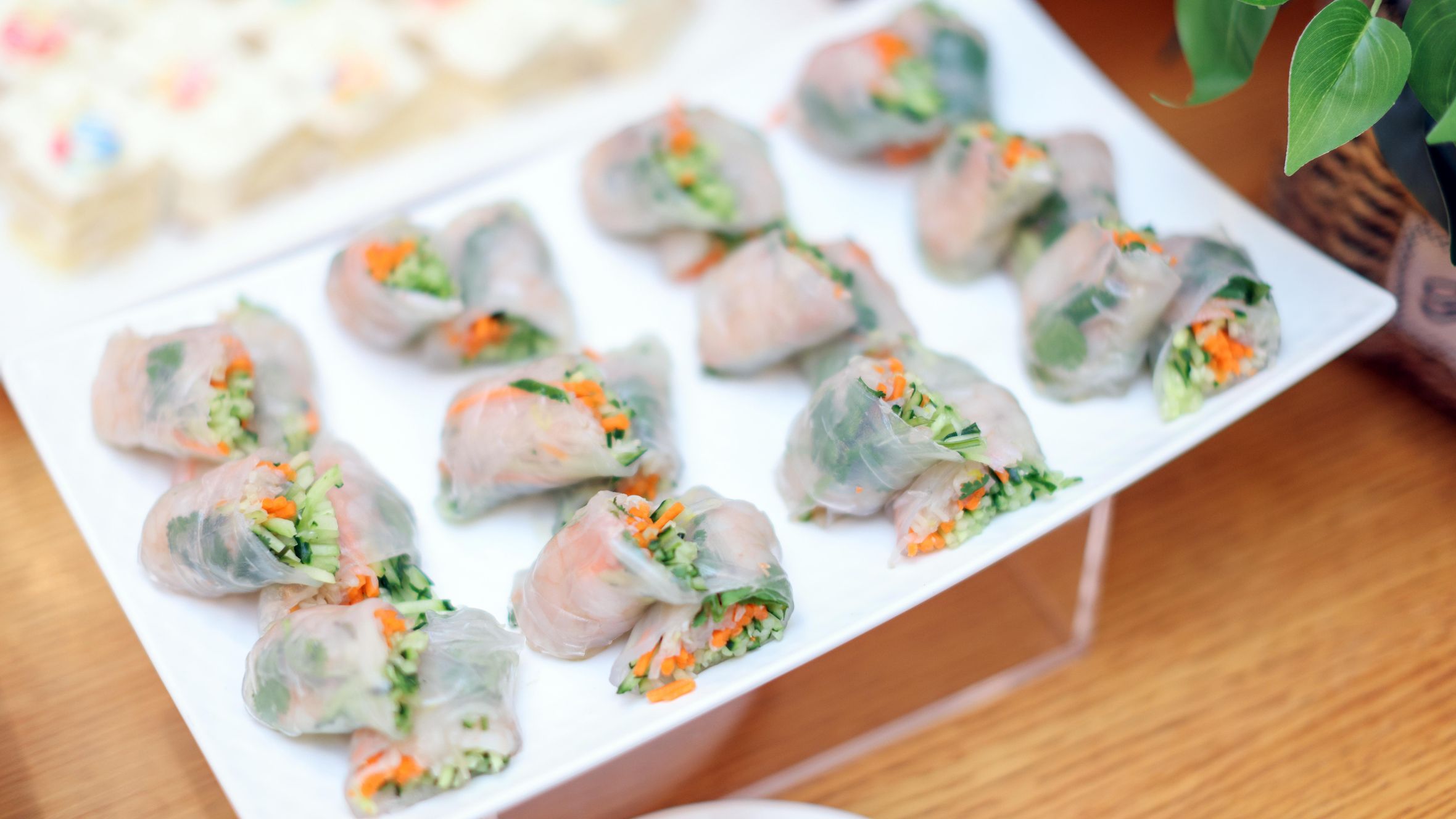
Goi cuon
Image via Wikipedia (Goi cuon, CC BY-SA)

"Goi cuon" is Vietnam's most flexible dish. The basic idea — fresh ingredients wrapped in soft rice paper, dipped in sauce — stays constant from Hanoi to the Mekong Delta. Everything else is negotiable.

In the south, where the dish originated, you'll find shrimp and pork belly with lettuce, basil, and perilla, wrapped in paper-thin "banh trang". The dipping sauce is usually "tuong" (fermented soybean paste) mixed with crushed roasted peanuts and fried shallots. Move north and the name changes to "nem cuon", the rice paper gets thicker, and the sauce might include a splash of "ruou nep cai" (glutinous rice wine).

There's no master recipe. Goi cuon is a template, not a fixed dish.

What Goes Inside

The filling breaks down into five categories:

Protein: Boiled pork belly, shrimp (boiled or pan-fried), beef, duck, crab, "cha" (cured pork), "gio lua" (Vietnamese sausage), eggs. Some vendors use pig ear or fish.

Rice paper (banh trang): The thin, soft type that doesn't need soaking. Southern rolls use much thinner paper than central Vietnam versions. The harder, stiffer paper is for "nem ran" (fried spring rolls), not fresh rolls.

Herbs and greens: Lettuce (usually leaf lettuce, not iceberg), Vietnamese coriander ("rau ram"), Thai basil, perilla, dill. The herb mix varies by city.

Vegetables and fruit: Cucumber, green banana, sour star fruit, jicama, pineapple. These add crunch and acidity.

Noodles: Thin vermicelli ("bun") or vermicelli sheets ("bun la"). Some rolls skip noodles entirely.

The Sauce

Two main styles:

  1. Tuong (fermented soybean paste): Thinned with water, mixed with crushed peanuts, fried shallots, sometimes a bit of hoisin. Common in the south.

  2. "Nuoc cham" (fish sauce dip): Fish sauce, lime juice, sugar, garlic, chili. Some recipes add cornstarch or coconut milk for thickness. In Hanoi, vendors sometimes mix in ruou nep cai.

A third variation uses pickled vegetables — kohlrabi and carrot, salted and blanched, then mixed with garlic, chili, lime, and fish sauce.

Hanoi Montage

Image by Cheong. Original uploader was Cheong Kok Chun at en.wikipedi via Wikimedia Commons (CC BY-SA)

How to Roll

At street stalls and homes, you assemble your own. Lay out the rice paper, add a lettuce leaf, then layer protein, noodles, herbs, and vegetables in the center. Roll it tight, folding in the sides as you go. Some cooks tie the roll with a blanched shallot strand or place a chive lengthwise for flavor and structure.

Restaurants and takeaway vendors pre-roll them, often cutting each roll into bite-sized pieces. Foam boxes with skewers let you eat without getting your hands messy.

Hanoi Vietnam The-omnipresent-plastic-chairs-01

Image by CEphoto, Uwe Aranas via Wikimedia Commons (CC BY-SA)

Regional Variations

"Thit luoc cuon" (boiled pork rolls): The simplest version. Boiled pork belly or hock, rice paper or fig leaves, dipped in "mam nem" (fermented anchovy sauce) or "mam tom chua" (sour shrimp paste).

"Nem cuon tom thit" (shrimp and pork rolls): The standard Saigon goi cuon. Boiled pork belly, pan-fried shrimp (sliced lengthwise), thin omelet strips, lettuce, vermicelli, herbs. Often includes green banana and sour star fruit. Dipped in tuong or nuoc cham.

"Pho cuon": A Hanoi specialty that first appeared at the corner of Ngu Xa and Nguyen Khac Hieu streets. Fresh pho noodle sheets replace rice paper. The filling is stir-fried beef with garlic and scallions. Dipped in nuoc cham, sometimes with a side of "quay" (fried dough).

"Nem tai" (pig ear rolls): Boiled pig ear, sliced thin, tossed with roasted rice powder, wrapped in rice paper with fig leaves, "la mo tam the" (tri-color piper leaves), "la dinh lang", and "kinh gioi" (Vietnamese balm). The herb mix is specific — this isn't a dish where you improvise.

"Nem chua cuon" (fermented pork rolls): Fried, grilled, or fresh "nem chua" (fermented pork), cut into pieces, wrapped with herbs, dipped in sweet-sour-spicy fish sauce. Several Hanoi shops specialize in this.

"Mon cuon Thuy Nguyen": A Hai Phong specialty. Uses short segments of vermicelli sheets. Blanched shallots soften and tie the roll. Thin omelet strips, crispy pan-fried river shrimp, boiled pork belly, fried tofu, all julienned. The lettuce leaf stays partially open to show the filling. The shallot strand wraps around the outside.

"Bo cuon la cai" (beef in mustard greens): Lightly cooked beef, mustard greens, unripe banana, green star fruit, served with black bean sauce and mustard.

"Ca cuon" (fish rolls): Hanoi's "nem ca" uses marinated, pan-fried fish fillets with mayonnaise, vermicelli, and dill. In the south, grilled snakehead fish ("ca loc nuong trui") wrapped with wild herbs is common. Steamed mackerel with boiled lean pork and fresh ginger is another variation.

"Thit chua cuon": A Thanh Son (Phu Tho) specialty. Sour fermented pork wrapped in rice paper with herbs similar to nem tai.

Where to Start

If you're new to goi cuon, order nem cuon tom thit at any southern street stall or northern banh trang tron shop. It's the baseline version — shrimp, pork, herbs, nuoc cham. Once you understand that template, the regional variations make sense.

The dish is everywhere: street corners, markets, sit-down restaurants, hotel breakfast buffets. Prices range from 5,000–15,000 VND per roll at street stalls, 30,000–60,000 VND for a plate of four at mid-range restaurants.

Goi cuon isn't exotic. It's daily food. That's why it works.

You might also like
Imexpharm đồng hành hội nghị dược sĩ nhà thuốc tại Đà Nẵng - Báo VnExpress Sức khỏe
Travel Tips

Vietnam Pharmacy Guide: What to Buy, What to Skip, and How to Ask

May 5, 2026 · 4 min
Ho Chi Minh City panorama at dusk
Travel Tips

Dress Code in Vietnam: What to Wear at Temples, Beaches, and Restaurants

May 5, 2026 · 4 min

Going to Vietnam? Eat and travel smarter.

Monthly: new dishes, off-the-beaten-path destinations, and itineraries — straight to your inbox. No spam. Unsubscribe anytime.

Join 0 expats. (We just launched.)

More from Hanoi

Other articles covering this city.

Ho Chi Minh City panorama at dusk
Travel Tips

Drinking Water in Vietnam: What's Safe, What Isn't, and Why

Tap water isn't safe to drink straight from the tap in Vietnam. Here's what you need to know about bottled water, ice, brushing teeth, and hot drinks.

May 5, 2026·4 min read
Mekong Delta rice paddies and waterways
Travel Tips

Eating with Food Allergies in Vietnam: Peanuts, MSG, Fish Sauce & Gluten

Peanuts hide in desserts and sauces, MSG seasons nearly everything, and fish sauce is in almost every savory dish. Here's how to navigate Vietnamese food safely.

May 5, 2026·5 min read
Hanoi skyline with Ba Vi Mountain in the distance
Travel Tips

Wifi and Internet in Vietnam: What to Expect and How to Stay Connected

Free wifi is nearly everywhere in Vietnamese cities, but speeds drop in rural areas. Here's what works, where to find it, and what to pay.

May 5, 2026·3 min read

More from All of Vietnam

Other articles covering the same region.

Sapa terraced rice fields and waterfall
Travel Tips

Vietnam Vaccinations: What You Actually Need Before You Go

No shots are legally required to enter Vietnam. But a few are smart, depending on where you're going and how long you'll stay.

May 5, 2026·3 min read
Mekong Delta rice paddies and waterways
Travel Tips

Vietnam Currency Guide: VND Notes, Colors & How to Avoid Common Scams

A breakdown of Vietnamese dong notes, their colors, and the change scams that catch travelers. Learn how to spot fake notes and protect yourself at markets and street food stalls.

May 5, 2026·4 min read
Hoi An Old Town lanterns over the Thu Bon River
Travel Tips

Airport to City: Getting from Tan Son Nhat, Noi Bai & Da Nang into Town

Skip the touts and overpriced taxis. Here's what Grab costs, which buses actually run, and how to avoid the classic arrival scams at Vietnam's three busiest airports.

May 5, 2026·5 min read

More in Food & Drink

More articles from the same category.

View all in Food & Drink →
Ruou can
Food & Drink

Ruou Can: Vietnam's Communal Rice Wine Ritual

Ruou can is a fermented rice wine shared through cane tubes from a single earthenware jar—a ritual drink of Vietnam's ethnic minorities in the Central Highlands and Northwest, where hospitality and community are sipped together.

May 5, 2026·2 min read
Ruou nep
Food & Drink

Ruou Nep: Vietnam's Fermented Glutinous Rice Pudding

Ruou nep is a mildly alcoholic pudding or drink made from fermented glutinous rice, particularly beloved in northern Vietnam. Learn how it's made, its regional varieties, and where to find it.

May 5, 2026·2 min read
Nuoc mia
Food & Drink

Nuoc Mia: Vietnam's Ice-Cold Sugarcane Juice

Sugarcane juice, or "nuoc mia," is the sound and smell of every Vietnamese street. Fresh stalks crushed through a motorized press, poured over ice, sometimes with a squeeze of kumquat—it's one of the cheapest, most refreshing drinks you'll find, available everywhere from Hanoi's Old Quarter to a rural roadside stall.

May 5, 2026·3 min read
Vietnamese tea
Food & Drink

Vietnamese Tea: A Guide to Green, Lotus, and Heritage Brews

From thousand-year-old trees to delicate lotus-scented leaves, Vietnamese tea reflects centuries of tradition. Learn where to find the best teas, how to brew them, and why green tea dominates the culture.

May 5, 2026·4 min read
Lotus tea
Food & Drink

Lotus Tea: Six Ways to Drink Vietnam's National Flower

Lotus tea takes many forms in Vietnam—from flower-scented green tea to seed brews and root infusions. Each preparation honors the lotus plant's delicate flavors and deep cultural roots.

May 5, 2026·3 min read
Vietnamese iced coffee
Food & Drink

Vietnamese Iced Coffee: From Phin to Egg Coffee

"Ca phe sua da" — Vietnamese iced coffee — is built on three pillars: dark robusta beans, a metal phin filter, and sweetened condensed milk. Learn how to brew it and explore nine regional variations from egg coffee to salt coffee.

May 5, 2026·4 min read
View all in Food & Drink →
← Older
Com Tam: Saigon's Broken Rice Dish, From Dockworkers to CNN
Newer →
Cha Gio: The Crispy Vietnamese Spring Roll You Need to Try

Popular this week

  1. 1
    Itineraries
    2 Weeks in Vietnam: The Perfect First-Timer's Itinerary
    Apr 21, 2026 · 16 min
  2. 2
    Food & Drink
    Saigon Street Food Tour: 12 Dishes You Must Try in Ho Chi Minh City
    Apr 17, 2026 · 10 min
  3. 3
    Food & Drink
    Pho in Hanoi: The 7 Bowls That Are Actually Worth Lining Up For
    Apr 25, 2026 · 11 min
  4. 4
    Itineraries
    3 Days in Hoi An: The Complete Itinerary (With Where to Eat)
    Apr 4, 2026 · 12 min
  5. 5
    Destinations
    The Ha Giang Loop: A Complete 4-Day Motorbike Adventure Guide
    Apr 29, 2026 · 14 min
Get the monthly digest

New dishes, destinations, and itineraries — once a month.

Subscribe →
Vietnam Wayfarer

Insider guides to Vietnam — food, travel, and regional specialties most foreigners never find. Independent, no sponsored content without disclosure.

Topics

  • Food & Drink
  • Destinations
  • Itineraries
  • Travel Tips

Resources

  • Newsletter
  • Contact
  • Affiliate Disclosure
  • Privacy
  • Search

Get the Newsletter

Monthly: dishes, destinations, itineraries — straight to your inbox.

© 2026 Vietnam Wayfarer. All rights reserved.

We use minimal analytics + ads (no personal tracking). See our privacy policy.