What You're Actually Getting
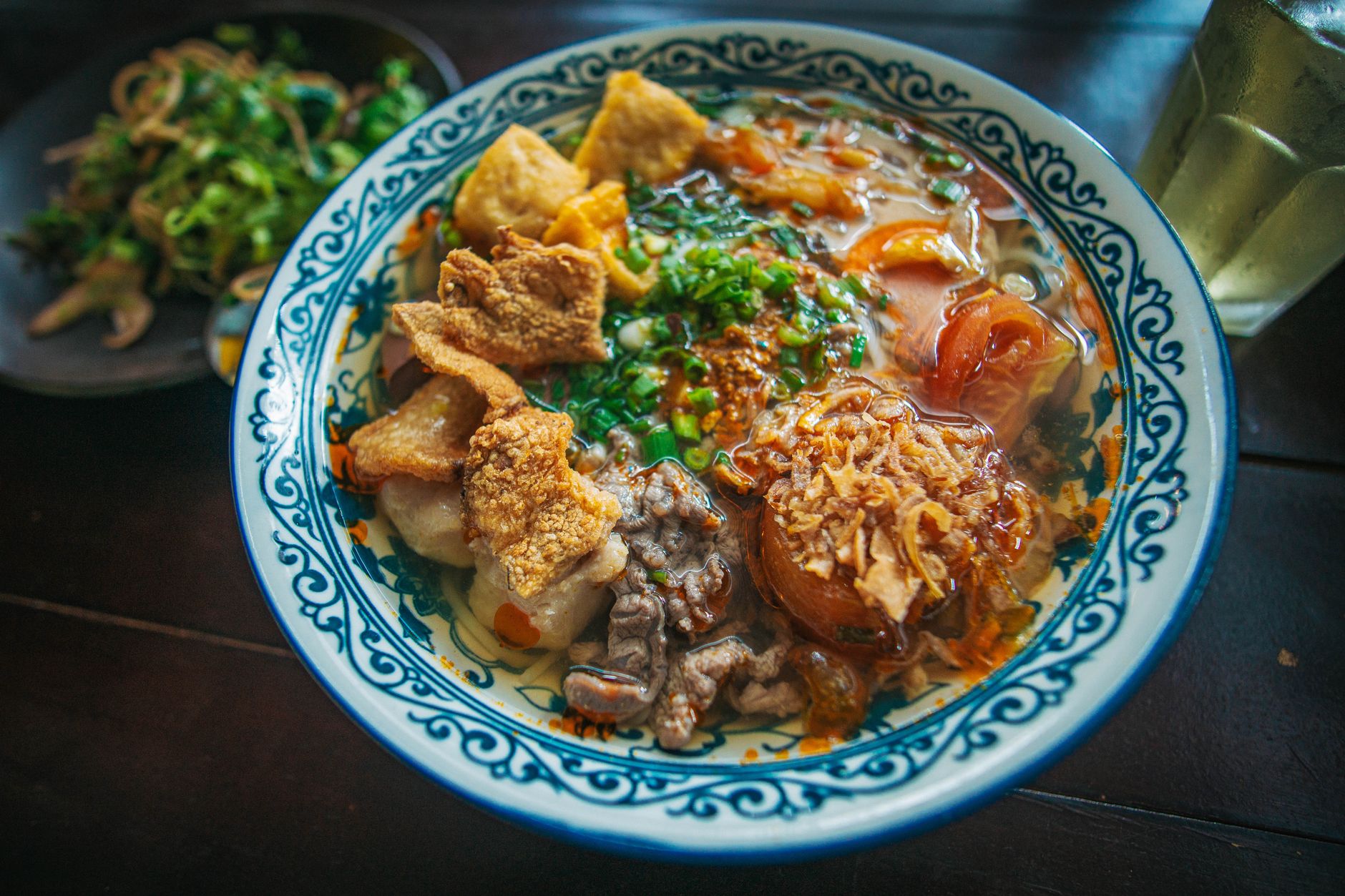
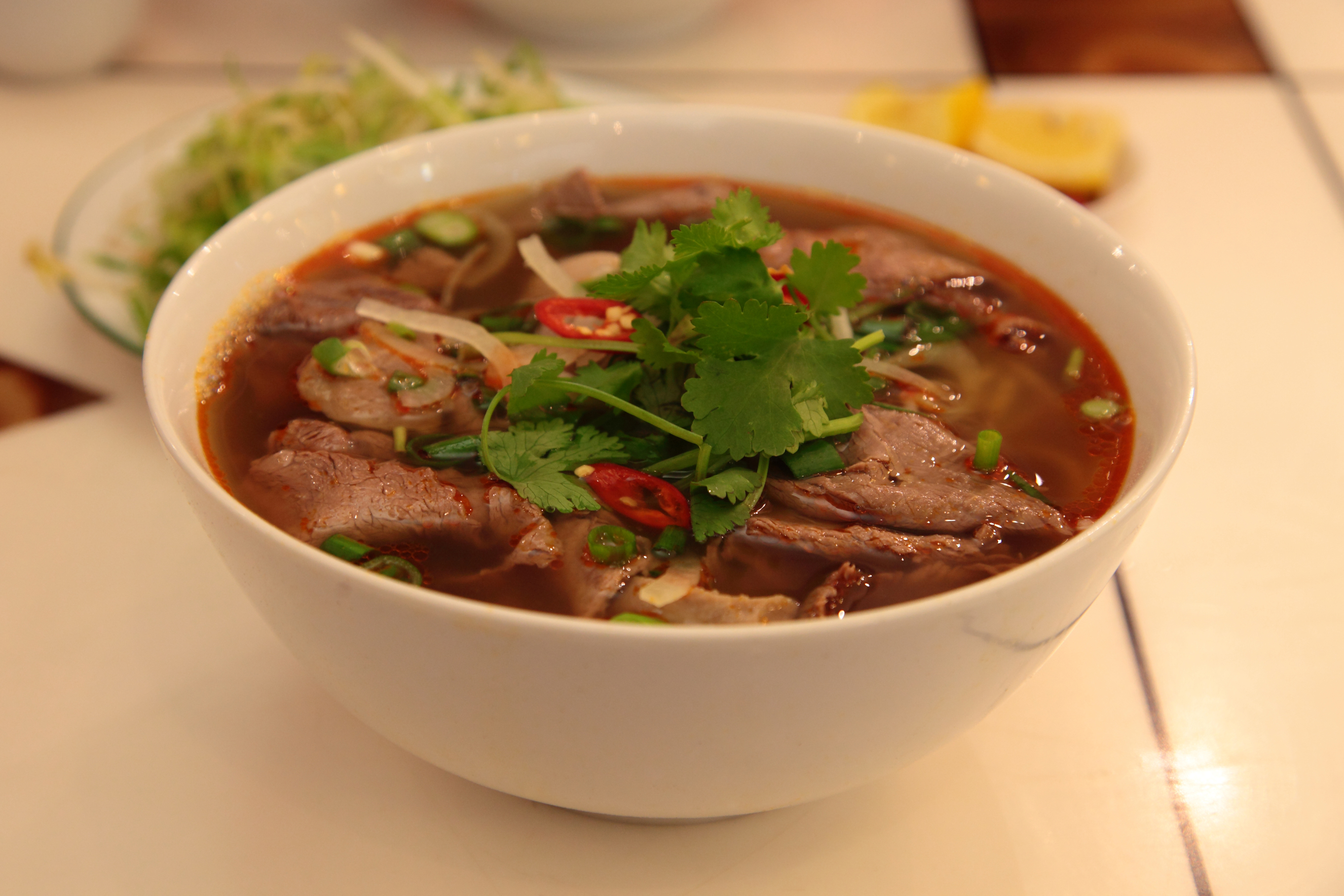
In Hue, people call this "bun bo" or "bun bo - gio heo." Everywhere else calls it "bun bo Hue (분보후에 / 顺化牛肉粉 / ブンボーフエ)" to mark the origin. The bowl centers on rice vermicelli, sliced beef shank ("thit bap bo"), and pork hock (gio heo). The broth runs reddish from chili oil, and the flavor comes from lemongrass stalks and "mam ruoc" (fermented shrimp paste) — not the faint background notes you get in pho, but forward, almost aggressive.
Hue cooks add whole lemongrass stalks directly to the pot and a measured spoonful of mam ruoc. That's what separates this from every other Vietnamese beef noodle soup. The noodles themselves are thicker and rounder than pho noodles — closer to the diameter of a chopstick. They have more chew, more presence in the mouth. If someone hands you a bowl with flat rice noodles, you're eating pho with the wrong label.
A standard bowl in Hue runs 30,000–45,000 VND at street-level shops. Tourist-facing restaurants near the Perfume River or the Imperial Citadel charge 55,000–70,000 VND for the same thing, sometimes with less meat.
The Broth, Step by Step
The base is beef and pork bones simmered for hours — typically four to six. Vendors crack the bones to release marrow, which gives the broth its body. Early in the simmer, lemongrass stalks go in whole, bruised with the back of a knife. Some cooks tie them in bundles so they're easier to fish out later.
The color comes from "annatto" seed oil (hat dieu mau), not from chili powder dumped in at the end. A cook heats oil, adds annatto seeds until the oil turns brick-red, strains out the seeds, and stirs the oil into the pot. That's the base layer of color. Chili oil or chili flakes add heat on top, but the red you see in the broth is mostly annatto.
Then comes the mam ruoc. This is where most outsiders flinch. Fermented shrimp paste smells harsh on its own — salty, funky, almost chemical. In the broth, it transforms into something savory and deep. The amount matters: too little and the soup tastes like generic beef broth with lemongrass; too much and it overwhelms everything. Experienced cooks in Hue (후에 / 顺化 / フエ) treat the mam ruoc spoonful the way a bartender treats bitters — precise, not casual.
Some families also add a small piece of sugarcane or a pinch of sugar to round out the broth. This isn't sweetness you'd notice on its own. It just prevents the shrimp paste and lemongrass from turning sharp.
What Comes on the Side
You'll get chopped scallions, sliced onions, a lime wedge, fish sauce with fresh chilies, and Hue-style chili paste. Traditionally, the herb situation is minimal: thinly sliced banana blossom, a bit of "hung lui" (Vietnamese balm), and "rau ram" (Vietnamese coriander). Not the overflowing herb basket you see with pho in Hanoi or Saigon.
If the vendor piles on mint, Thai basil, and bean sprouts, they're catering to outside expectations. Hue locals didn't eat it that way.
The chili paste on the table — "ot sa te" or sometimes just called "ot Hue" — deserves attention. It's made with chili, lemongrass, garlic, and oil. A small spoonful stirred into your bowl adds a second wave of lemongrass flavor plus slow-building heat. Start with half a teaspoon if you're not sure about your spice tolerance. Hue food is the spiciest regional cuisine in Vietnam, and locals don't hold back.

Image by CEphoto, Uwe Aranas via Wikimedia Commons (CC BY-SA)
What Doesn't Belong (Traditionally)
Authentic versions skip rare beef ("bo tai"), congealed pig's blood ("huyet"), and Vietnamese pork sausage ("cha lua"). The original formula sticks to pork hock, beef shank, and beef tendon. Blood cubes and cha lua are modern vendor additions — common now, but not part of the blueprint.
Some shops offer both styles. If you want the traditional build, ask for "bun bo gio heo, khong huyet, khong cha."
The pork hock is the part most visitors underestimate. It's braised until the collagen breaks down but the meat still holds shape — soft, slightly gelatinous at the edges, with skin that has real texture. If the hock is tough or dry, the cook pulled it too early. A good piece should yield easily to chopsticks without falling apart.

Image by CEphoto, Uwe Aranas via Wikimedia Commons (CC BY-SA)
Where to Eat It in Hue
Most of the well-known spots are on the south bank of the Perfume River, in the neighborhoods between the citadel area and the backpacker strip along Pham Ngu Lao.
Bun Bo Hue O Phuong — 16B Truong Dinh, near Dong Ba Market. Open roughly 5:30 AM to 10:00 AM. A bowl costs around 30,000–35,000 VND. This is one of the names that comes up constantly among locals. The broth leans heavy on mam ruoc; if you want the real thing undiluted, this is the test.
Bun Bo Ba Tuyet — 47 Nguyen Cong Tru. Also a morning operation, closing by late morning. Similar price range, slightly more balanced broth. Good banana blossom on the side plate.
Bun Bo Hue Dong Ba — not a single shop but a cluster of vendors inside and around Dong Ba Market. Prices start at 25,000 VND. Quality varies stall to stall, but eating here puts you in the middle of the actual market breakfast crowd — wholesale vendors, motorbike delivery drivers, market porters. Nobody is performing authenticity for tourists at 6 AM in Dong Ba.
For a sit-down experience with air conditioning and slightly higher prices (50,000–65,000 VND), Hanh Restaurant on Pho Duc Chinh is a reliable midrange option.
Breakfast is the standard meal for bun bo in Hue. Many shops close by 10 or 11 AM. Some reopen for a shorter evening session around 4–7 PM, but morning is when the broth is freshest and the meat selection is fullest.
Bun Bo Hue Outside of Hue
You can find bun bo Hue in every major Vietnamese city. In Ho Chi Minh City, it's everywhere — District 1, District 3, Binh Thanh. Prices run 45,000–65,000 VND at street shops. The Saigon versions tend to be sweeter and come with the full herb basket plus bean sprouts, which reflects southern eating habits. It's still good soup, but it's adapted.
In Hanoi, bun bo Hue shops cluster in the Old Quarter and around Hoan Kiem. Hanoi versions sometimes dial back the mam ruoc — northerners generally prefer subtler fermented flavors. A bowl runs 40,000–55,000 VND.
Da Nang, sitting just 100 km north of Hue on the coast, gets the closest approximation outside the city itself. Many Da Nang vendors are originally from Hue or source their mam ruoc from the same producers. If you're splitting time between Da Nang beaches and day trips to Hoi An for cao lau or banh mi, you can find solid bun bo without making the two-hour drive south.
Common Mistakes Foreigners Make
Treating it like pho. Pho and bun bo Hue share almost nothing except being soup with noodles and beef. Different noodle shape, different broth base, different protein, different garnish philosophy. Ordering bun bo Hue and then asking for hoisin sauce or sriracha — the pho condiment move in many overseas Vietnamese restaurants — will get you a blank look.
Skipping the chili paste. The "ot" on the table isn't decoration. The soup is designed to be adjusted at the table. A bowl without added chili paste is like a bowl at 60% volume. Add a little, stir, taste, repeat.
Ignoring the pork hock. First-timers sometimes push the hock aside and eat only the beef slices. The hock is the point. The collagen-rich meat with its layer of soft skin is what makes this bowl different from a dozen other Vietnamese noodle soups like bun cha, com tam, or hu tieu.
Expecting it at dinner. In Hue, bun bo is a breakfast and sometimes lunch food. If you show up at 7 PM expecting a full selection, many of the best shops will be closed or out of meat. Plan for morning.
Over-herbifying. If the shop gives you a small plate of banana blossom and two types of herb, that's the intended ratio. You don't need to build a salad on top of the soup.
Legal and Cultural Status
In 2016, Vietnam's Intellectual Property Office granted Trademark Registration Certificate No. 4-0272400-000 for "Bun Bo Hue," protecting the name commercially. On July 5, 2025, the government recognized "Traditional knowledge about Bun bo Hue" as National Intangible Cultural Heritage — cementing its place in the canon alongside other protected dishes.
This matters because it draws a line between what can legally be called "Bun Bo Hue" and what's just spicy beef noodle soup with lemongrass.
Quick Reference
- What it is: Spicy beef and pork hock noodle soup from Hue, central Vietnam
- Key broth flavors: Lemongrass, fermented shrimp paste (mam ruoc), annatto oil
- Standard proteins: Beef shank, pork hock, beef tendon
- Noodle type: Round, thick rice vermicelli (thicker than pho noodles)
- Price in Hue: 25,000–45,000 VND (street/market), 50,000–70,000 VND (restaurant)
- Price in Saigon/Hanoi: 40,000–65,000 VND
- Best time to eat: Breakfast, 5:30–10:00 AM
- Useful phrase: "Mot to bun bo, khong huyet" (one bowl of bun bo, no blood)
- Spice level: Hot by Vietnamese standards — Hue cuisine is the spiciest in the country
- Pairs with: Vietnamese coffee, especially "ca phe da" (black iced coffee) to cut through the richness
Bottom Line
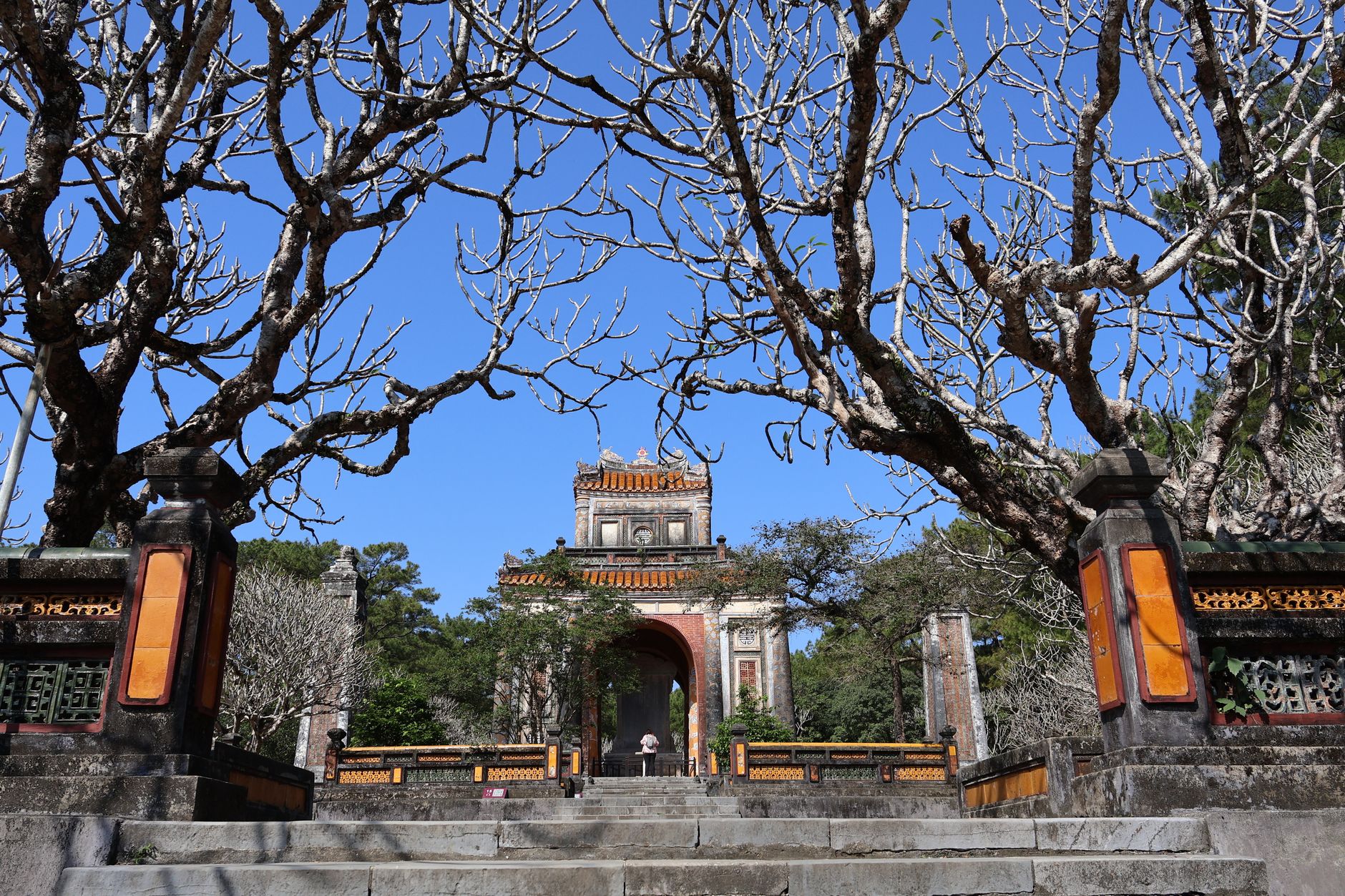
Bun bo Hue is not a variant of pho. It's a fundamentally different soup from a different city with a different palate — heavier, spicier, more pungent. If you visit Hue and eat only one dish between touring the Imperial Citadel and the Tomb of Tu Duc, make it this one, and eat it before 9 AM at a shop where the locals outnumber the tourists. That's the version worth crossing the country for.
Last updated · May 29, 2026 · independently researched, never sponsored.