Vietnam Wayfarer
Food & DrinkDestinationsItinerariesTravel Tips
Newsletter
Home/Food & Drink
Food & Drink

Banh Xeo: Vietnam's Sizzling Pancake, Region by Region

Crispy, turmeric-yellow, stuffed with shrimp and pork — "banh xeo" changes dramatically from north to south. Here's what to expect in Hue, the Mekong Delta, and beyond.

May 4, 2026·4 min read
#Banh Xeo#Street Food#Hue Food#Mekong Delta#Southern Vietnam#Central Vietnam#Northern Vietnam#Pancakes
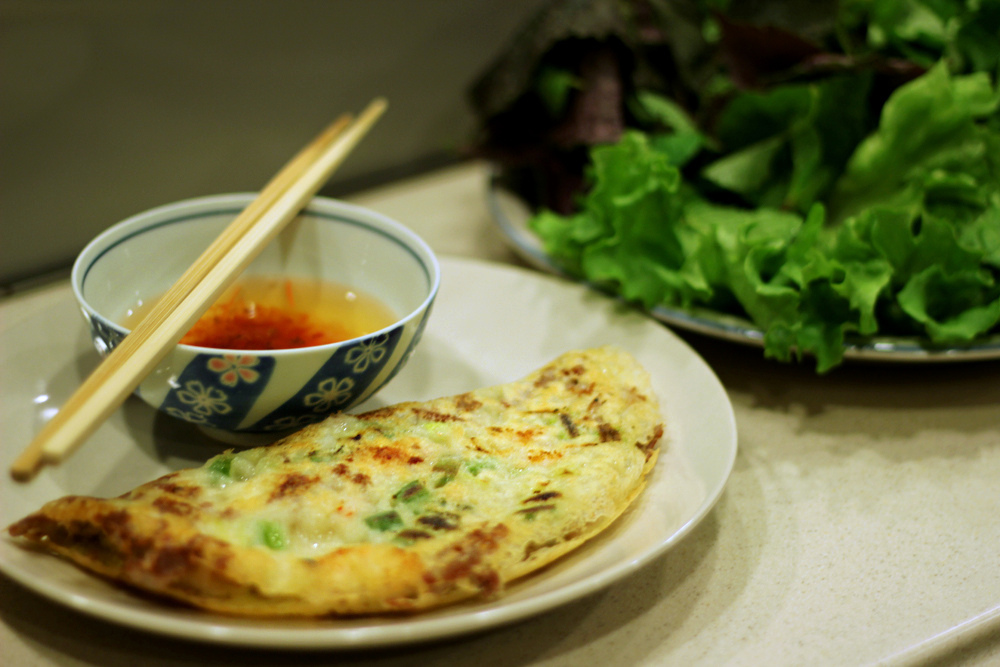
Banh xeo
Image via Wikipedia (Banh xeo, CC BY-SA)

What Is Banh Xeo?

"Banh xeo" gets its name from the sizzle — xeo — when rice batter hits a smoking-hot pan. It's a savory crepe, turmeric-yellow, filled with shrimp, pork, and bean sprouts, then folded into a half-moon and fried until the edges turn crisp. You tear off pieces, wrap them in lettuce and herbs, and dip into fish sauce. The ritual is the same across Vietnam, but the pancake itself — the batter, the filling, the sauce, the herbs — shifts dramatically depending on where you are.

Central Vietnam: Hue's Banh Khoai and Phan Thiet's Teacup Pancakes

In Hue, banh xeo is called "banh khoai" and comes with grilled pork instead of boiled. The defining element is "nuoc leo", a thick, rust-colored dipping sauce made from fermented soybean paste, pork liver, and ground peanuts. It's richer and more savory than the sweet-sour fish sauce you'll find in the south. The herb plate includes tart starfruit and unripe figs alongside the usual lettuce and mint.

The name banh khoai likely comes from banh khoi — smoke cake. When you pour batter into a hot pan filmed with oil, smoke rises. In the Hue accent, khoi sounds like khoai. Making it properly — thin, crispy, with that smoky aroma — takes practice.

Phan Thiet does something completely different. The pancakes are tiny, about the size of a teacup, and you don't wrap them in lettuce. Instead, you drop them straight into a bowl of "nuoc mam chin" — cooked fish sauce blended with garlic and chili. Tuyen Quang Street in Phan Thiet is lined with stalls serving these, earning it the nickname Banh Xeo Street.

Southern Vietnam: Big, Crispy, Herb-Heavy

In the Mekong Delta, banh xeo is bigger, crispier, and comes with an overwhelming herb plate. The batter often includes egg, and the dipping sauce is sweet-sour fish sauce — lighter and brighter than Hue's nuoc leo. The herb selection varies by province. In Can Tho, you'll get "la chiet" (a sharp-flavored leaf). In Dong Thap, "la bang lang". Vinh Long serves young mango leaves. Bac Lieu adds "la cach". Some of these herbs don't have English names — you just eat them and figure it out.

In Saigon, longtime spots like Banh Xeo A Phu and Banh Xeo Dinh Cong Trang have been serving the same recipe for over twenty years. A more recent innovation is "lotus banh xeo," created by artisan Muoi Xiem, which incorporates lotus seeds, stems, and roots into the filling.

Hue Vietnam A-lady-with-her-bike-transporting-goods-01

Image by CEphoto, Uwe Aranas via Wikimedia Commons (CC BY-SA)

Northern Vietnam: Jicama and Taro

In the north, the filling often includes thinly sliced jicama or taro in addition to the standard shrimp and pork. The pancakes are less crispy than in the south — sometimes closer to a soft crepe.

How It's Made

Traditional banh xeo starts with soaking rice until it's plump, grinding it with fresh turmeric (preferred over powder for brighter color and flavor), then thinning the batter with water. Some cooks add coconut milk, which gives the pancake a pale brownish-yellow color instead of bright turmeric yellow. Dried coconut milk — made by pressing warm water through grated dried coconut — is stirred in, and the batter rests for 30 minutes. Just before cooking, finely chopped green onions go in.

Pre-mixed banh xeo flour is widely available now — just add water.

The filling: boiled pork belly, sliced thin and cooked with a pinch of salt. Shrimp, sauteed lightly with salt and MSG. Hulled mung beans, cooked until soft. Bean sprouts, blanched. In some regions, the filling ingredients are marinated raw and cook directly in the pancake.

To cook: heat a large pan with a small amount of oil. Pour in a ladle of batter, tilt the pan to spread it thin, cover until half-cooked. Add the filling in the center, cover again until crispy. In Hue, cooks use small, flat-bottomed round molds instead of tilting the pan.

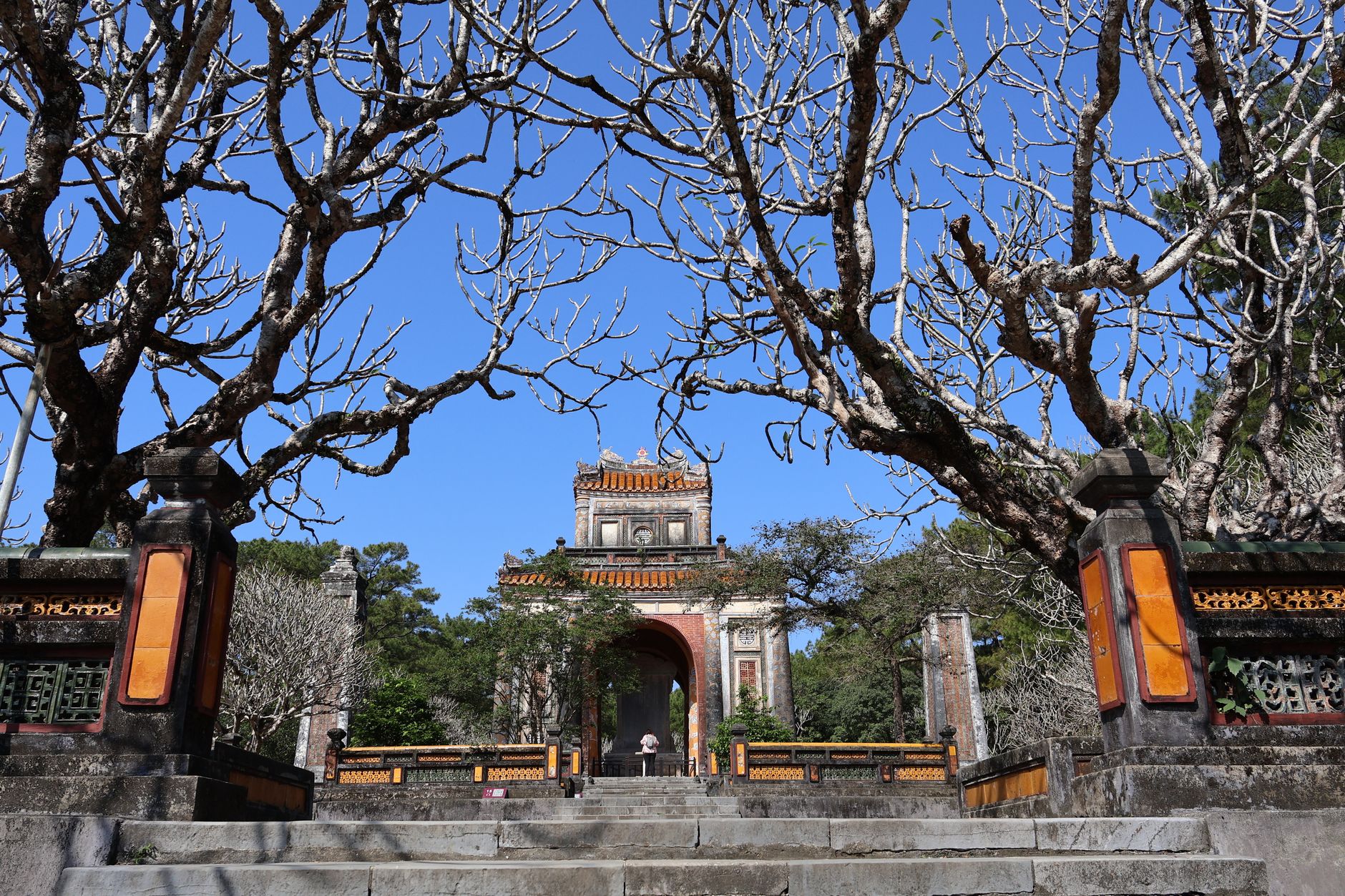
Hue Vietnam Tomb-of-Emperor-Minh-Mang-03

Image by CEphoto, Uwe Aranas via Wikimedia Commons (CC BY-SA)

The Herb Plate and Dipping Sauce

Banh xeo is always served with a plate of fresh greens: lettuce, mustard greens, fish mint ("rau ram"), perilla, basil, and sometimes young "com nguyen" leaves. The dipping sauce varies. In the south: fish sauce, water, lime juice (not vinegar — lime tastes better), sugar, a touch of MSG, shredded carrots, minced chili. In Hue: nuoc leo, thick and savory with fermented bean paste and liver.

Korea and Japan Have Their Own Versions

Korea's pancakes are called "jeon". Examples: "baechujeon" (napa cabbage), "dongnaepajeon" (whole green onion), "buchujeon" (chive). Buchujeon is often paired with "makgeolli", a sweet, milky rice wine served in a small teapot or a wooden bowl with a ladle. Korean pancake batter is looser than Vietnamese. Seafood is blanched in water with white wine, mixed with 5cm pieces of green onion and chive, then combined with a batter made from flour, sugar, garlic, vinegar, and salt. Beaten egg is poured over the filling before frying.

Japan's version is "okonomiyaki" — the name means "grilled as you like it." It's a specialty of Kansai and Hiroshima, but you'll find it across Japan. The batter is flour, water, and egg, mixed with shrimp, pork, thinly sliced cabbage, red ginger, and green onions. Pre-mixed okonomiyaki flour often includes seasonings. After frying on both sides (about 5 minutes per side), it's drizzled with okonomiyaki sauce and mayonnaise, then topped with bonito flakes that curl and wave in the heat.

All three — Vietnamese banh xeo, Korean jeon, Japanese okonomiyaki — share the same basic idea: savory pancake, hot pan, crispy edges, lots of toppings. But the details — the batter, the herbs, the sauce, the ritual — are completely different.

You might also like
Ho Chi Minh City panorama at dusk
Travel Tips

Dress Code in Vietnam: What to Wear at Temples, Beaches, and Restaurants

May 5, 2026 · 4 min
Ho Chi Minh City panorama at dusk
Travel Tips

Drinking Water in Vietnam: What's Safe, What Isn't, and Why

May 5, 2026 · 4 min

Going to Vietnam? Eat and travel smarter.

Monthly: new dishes, off-the-beaten-path destinations, and itineraries — straight to your inbox. No spam. Unsubscribe anytime.

Join 0 expats. (We just launched.)

More from Hue

Other articles covering this city.

Hanoi skyline with Ba Vi Mountain in the distance
Travel Tips

Grab vs Be vs Taxi in Vietnam: How to Choose

Grab dominates, but Be is cheaper for locals. Traditional taxis still reliable. Here's what each option costs, when to use it, and why some are safer than others.

May 5, 2026·3 min read
North–South railway (Vietnam)
Travel Tips

Vietnam Train Travel Guide: Reunification Express and Overnight Sleepers

The Reunification Express connects Hanoi to Saigon in 30+ hours across 1,700 km. Here's how to book soft sleeper cabins, what to expect on overnight runs, and which legs are worth riding.

May 5, 2026·4 min read
Hoi An Old Town lanterns over the Thu Bon River
Travel Tips

Best Time to Visit Vietnam: Weather by Region and Month

Vietnam's weather is fiercely regional. The north's cool dry season (October–April) is perfect for trekking in Sapa, while the central coast stays pleasant February–August. Plan by region, not country.

May 5, 2026·4 min read

More from All of Vietnam

Other articles covering the same region.

Imexpharm đồng hành hội nghị dược sĩ nhà thuốc tại Đà Nẵng - Báo VnExpress Sức khỏe
Travel Tips

Vietnam Pharmacy Guide: What to Buy, What to Skip, and How to Ask

Vietnamese pharmacies sell most medications without a prescription. Here's what actually works for traveller stomach issues, fevers, and allergies—and what to avoid.

May 5, 2026·4 min read
Sapa terraced rice fields and waterfall
Travel Tips

Vietnam Vaccinations: What You Actually Need Before You Go

No shots are legally required to enter Vietnam. But a few are smart, depending on where you're going and how long you'll stay.

May 5, 2026·3 min read
Mekong Delta rice paddies and waterways
Travel Tips

Eating with Food Allergies in Vietnam: Peanuts, MSG, Fish Sauce & Gluten

Peanuts hide in desserts and sauces, MSG seasons nearly everything, and fish sauce is in almost every savory dish. Here's how to navigate Vietnamese food safely.

May 5, 2026·5 min read

More in Food & Drink

More articles from the same category.

View all in Food & Drink →
Ruou can
Food & Drink

Ruou Can: Vietnam's Communal Rice Wine Ritual

Ruou can is a fermented rice wine shared through cane tubes from a single earthenware jar—a ritual drink of Vietnam's ethnic minorities in the Central Highlands and Northwest, where hospitality and community are sipped together.

May 5, 2026·2 min read
Ruou nep
Food & Drink

Ruou Nep: Vietnam's Fermented Glutinous Rice Pudding

Ruou nep is a mildly alcoholic pudding or drink made from fermented glutinous rice, particularly beloved in northern Vietnam. Learn how it's made, its regional varieties, and where to find it.

May 5, 2026·2 min read
Nuoc mia
Food & Drink

Nuoc Mia: Vietnam's Ice-Cold Sugarcane Juice

Sugarcane juice, or "nuoc mia," is the sound and smell of every Vietnamese street. Fresh stalks crushed through a motorized press, poured over ice, sometimes with a squeeze of kumquat—it's one of the cheapest, most refreshing drinks you'll find, available everywhere from Hanoi's Old Quarter to a rural roadside stall.

May 5, 2026·3 min read
Vietnamese tea
Food & Drink

Vietnamese Tea: A Guide to Green, Lotus, and Heritage Brews

From thousand-year-old trees to delicate lotus-scented leaves, Vietnamese tea reflects centuries of tradition. Learn where to find the best teas, how to brew them, and why green tea dominates the culture.

May 5, 2026·4 min read
Lotus tea
Food & Drink

Lotus Tea: Six Ways to Drink Vietnam's National Flower

Lotus tea takes many forms in Vietnam—from flower-scented green tea to seed brews and root infusions. Each preparation honors the lotus plant's delicate flavors and deep cultural roots.

May 5, 2026·3 min read
Vietnamese iced coffee
Food & Drink

Vietnamese Iced Coffee: From Phin to Egg Coffee

"Ca phe sua da" — Vietnamese iced coffee — is built on three pillars: dark robusta beans, a metal phin filter, and sweetened condensed milk. Learn how to brew it and explore nine regional variations from egg coffee to salt coffee.

May 5, 2026·4 min read
View all in Food & Drink →
← Older
Bun Bo Hue: What Makes Hue's Noodle Soup Different
Newer →
Com Tam: Saigon's Broken Rice Dish, From Dockworkers to CNN

Popular this week

  1. 1
    Itineraries
    2 Weeks in Vietnam: The Perfect First-Timer's Itinerary
    Apr 21, 2026 · 16 min
  2. 2
    Food & Drink
    Saigon Street Food Tour: 12 Dishes You Must Try in Ho Chi Minh City
    Apr 17, 2026 · 10 min
  3. 3
    Food & Drink
    Pho in Hanoi: The 7 Bowls That Are Actually Worth Lining Up For
    Apr 25, 2026 · 11 min
  4. 4
    Itineraries
    3 Days in Hoi An: The Complete Itinerary (With Where to Eat)
    Apr 4, 2026 · 12 min
  5. 5
    Destinations
    The Ha Giang Loop: A Complete 4-Day Motorbike Adventure Guide
    Apr 29, 2026 · 14 min
Get the monthly digest

New dishes, destinations, and itineraries — once a month.

Subscribe →
Vietnam Wayfarer

Insider guides to Vietnam — food, travel, and regional specialties most foreigners never find. Independent, no sponsored content without disclosure.

Topics

  • Food & Drink
  • Destinations
  • Itineraries
  • Travel Tips

Resources

  • Newsletter
  • Contact
  • Affiliate Disclosure
  • Privacy
  • Search

Get the Newsletter

Monthly: dishes, destinations, itineraries — straight to your inbox.

© 2026 Vietnam Wayfarer. All rights reserved.

We use minimal analytics + ads (no personal tracking). See our privacy policy.