Tet is not a restaurant holiday. It is a kitchen holiday, a family-table holiday, and if you are lucky enough to be invited into someone's home — or find yourself in the right town — it is the single best food experience Vietnam (베트남 / 越南 / ベトナム) offers.
Here are five places where Tet (뗏 (베트남 설날) / 越南春节 / テト) food culture runs deep, and what to actually eat while you are there.
Hanoi — The North's Ritual Table
No city takes Tet food as seriously as Hanoi. The northern tradition is formal, specific, and largely unchanged across generations. The centrepiece is "banh chung" — dense square cakes of glutinous rice packed with mung bean paste and fatty pork, wrapped in dong leaves and boiled overnight. Families still make them at home, though you will find street vendors selling them stacked in pyramids from late January onward.
A proper Hanoi Tet spread also includes "gio lua" (silky steamed pork roll), "mang lon" (dried bamboo shoot soup cooked with pork trotters), and pickled spring onions called "dua hanh" to cut through the richness. Dong Xuan Market in the Old Quarter is worth a walk in the days before Tet — not for the main stalls, which sell clothing and plastics, but for the street-level vendors around its perimeter selling candied ginger, dried lotus seeds, and every preserved ingredient a Hanoi grandmother needs.
If you can wrangle an invitation through a guesthouse host or a local contact, a New Year's Eve family meal in a Hanoi home is irreplaceable. Short of that, "bun thang" — a delicate chicken and egg noodle soup served almost exclusively around Tet — appears at a handful of old-quarter stalls for a few days only. Do not miss it.
Hue — Imperial Tet on a Budget
Hue's Tet food tradition carries the weight of the imperial court, even if the city itself is modest and quiet during the holiday. "Banh tet" replaces the square banh chung here — a cylindrical cousin, still glutinous rice and pork but denser and sliced into rounds. Hue versions often include banana and are distinctly sweeter.
The city also produces "nem chua" — fermented pork rolls wrapped in banana leaf with garlic and chilli — which locals give as gifts and eat as snacks throughout the Tet week. Small family-run banh mi stalls still open on the second or third day of Tet when most restaurants stay shut; a 15,000 VND banh mi with nem chua stuffed inside is about as Hue as it gets.
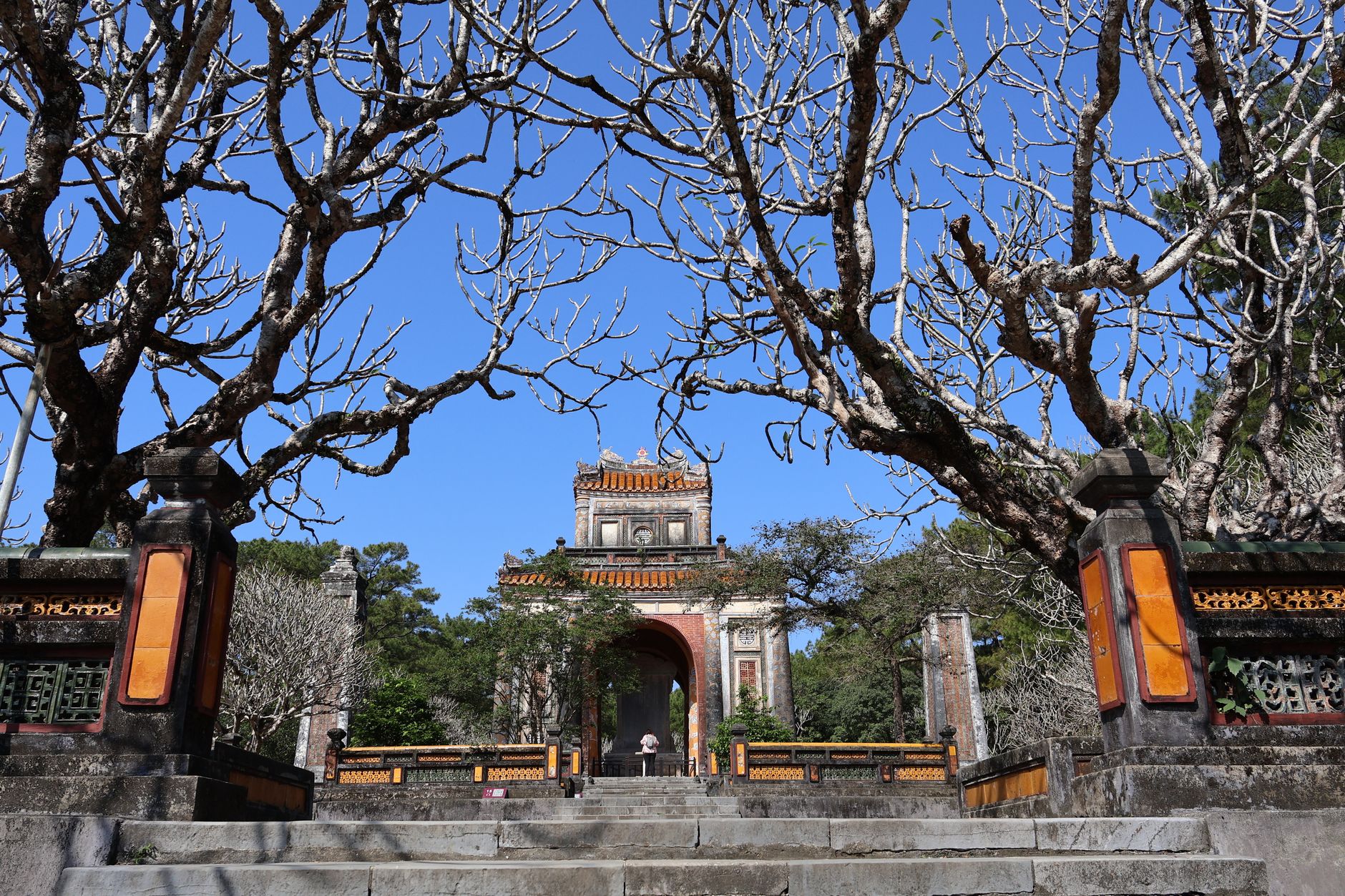
The Tomb of Tu Duc and the Tomb of Khai Dinh are quieter than usual during Tet and worth a half-day visit — flowers are placed at the sites and the atmosphere is genuinely reflective rather than touristy.

Photo by Nguyen Truong Khang on Pexels
Hoi An — Village Food Within Walking Distance
Hoi An's Tet advantage is geography. Within 3 km of the Ancient Town lie genuine working villages where the holiday looks nothing like a tourism product. Cam Thanh and Cam Kim villages still hold communal cooking sessions where neighbours gather to make banh tet together over wood fires the night before New Year's Eve.
The Ancient Town itself closes its lanes to motorbikes during Tet and lights lanterns along the Thu Bon River — the food scene shifts from restaurants to family stalls selling "cao lau" (the Hoi An wheat noodle dish that tastes different everywhere else because the water is different), along with sweet "che" dessert soups in a dozen varieties.
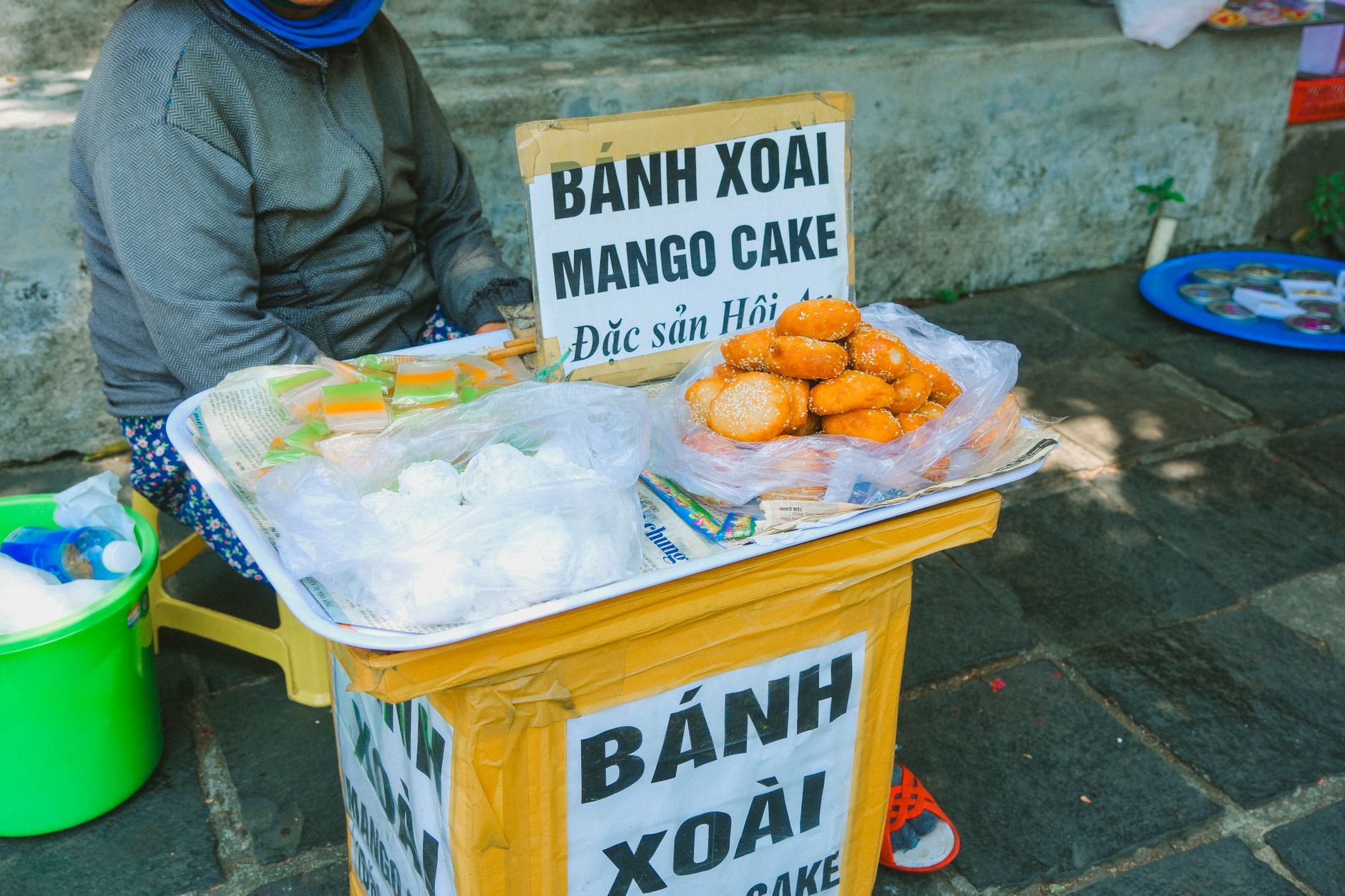
If you are staying through the first three days of Tet, find a banh mi cart that opens by day two — Hoi An's "banh mi" is among the most imitated dishes in Vietnam, and eating it on a near-empty street at 7am during the New Year silence is worth planning for.
Saigon — Tet for Everyone, Including Outsiders
Saigon empties during Tet as millions of residents return to home provinces. What remains is a city that is actually walkable, and a food scene that shifts to regional imports. Migrant workers from the Mekong Delta, Central Highlands, and the north all return home — but their food stays. Markets in Binh Thanh and District 5 sell "banh chung" alongside the southern "banh tet" and regional "mut" (candied fruit and vegetables) from every province.
Ben Thanh Market closes, but the surrounding streets fill with flower vendors and seasonal food carts. "Com tam" stalls that stay open through Tet become neighbourhood anchors — rice, grilled pork, and a fried egg at 50,000 VND is the default meal for the Saigoners who stayed behind.
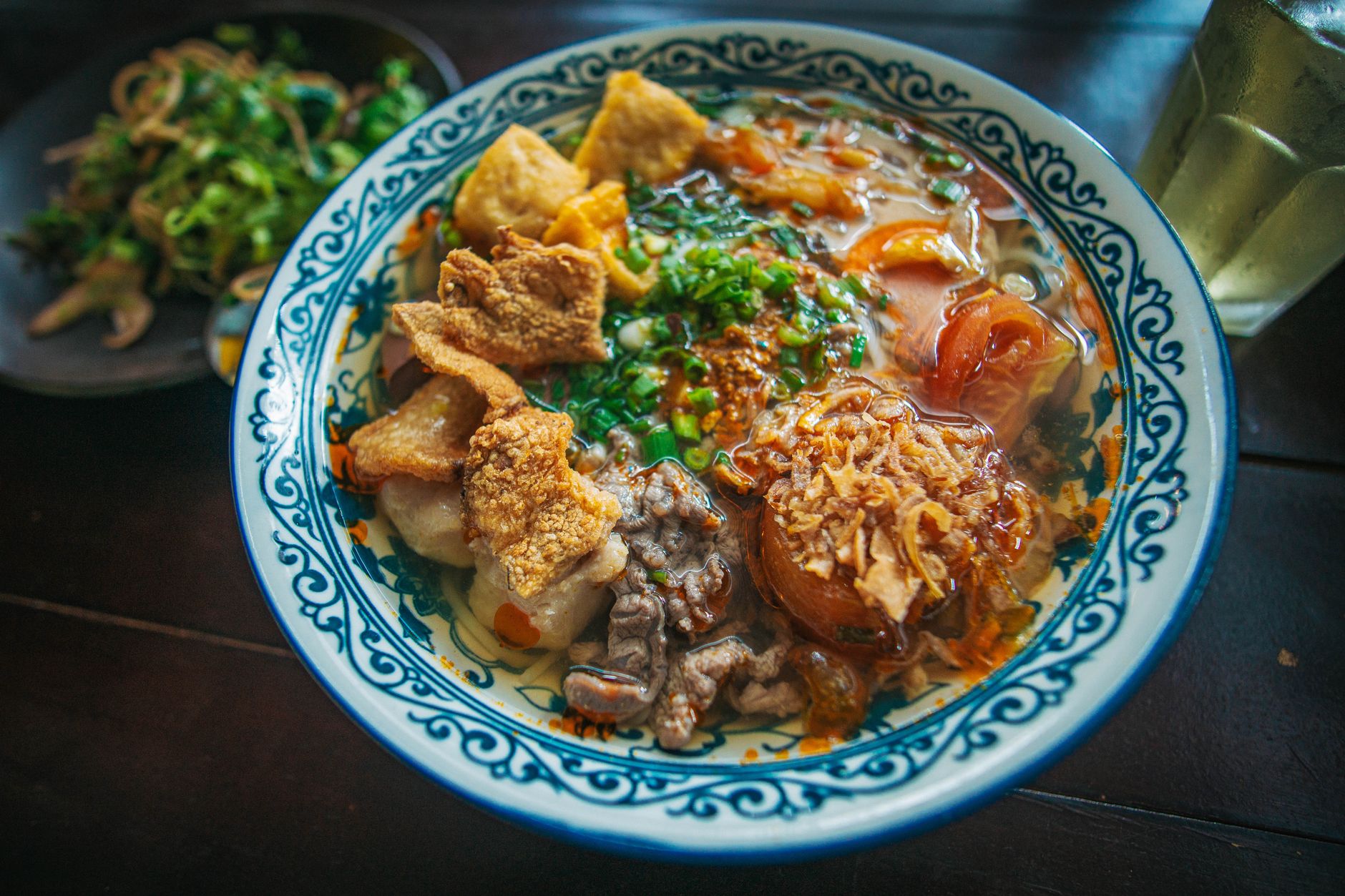
For drink, "bia hoi" corners in District 1 that survive the holiday are social magnets — a place where strangers and remaining locals share a table over 10,000 VND draught beer and complain cheerfully about the heat.

Photo by VANNGO Ng on Pexels
Can Tho — Mekong Tet at the Floating Market
Can Tho's Tet is quieter and more domestic than the northern cities, which is precisely why it is worth considering. The floating market at Cai Rang operates on reduced hours during the holiday but does not fully close — arriving by boat at 6am on the second day of Tet, with vendors still selling pineapples and pomelos draped in red ribbons, is a scene that has not changed in decades.
The Mekong Delta Tet table features "hu tieu" — a clear, light pork and seafood noodle soup — alongside river fish braised in clay pots with caramel sauce. "Banh tet chay" (vegetarian rice cakes) appear for Buddhist families observing the first days of the new year without meat. Guesthouses along the Ninh Kieu waterfront often host informal Tet meals for guests if you ask ahead.
Practical Notes
Tet falls between late January and mid-February depending on the lunar calendar — confirm the exact date before booking. Transport is heavily congested in the 3-4 days before and after New Year's Eve; book trains and buses at least three weeks out. Most restaurants close for 3-7 days, so budget street food and market stalls become your primary option — which, frankly, is the better experience anyway.
Last updated · May 29, 2026 · independently researched, never sponsored.