Con Dao Islands: History, Sea Turtles, and Why Bourdain Loved It
Con Dao is a small archipelago off Vietnam's southern coast that holds more history per square kilometer than almost anywhere in the country — and some of the clearest water you'll find.

Con Dao sits about 230 km southeast of Saigon — small enough to feel genuinely remote, with a history heavy enough that you feel it from the moment you land.
Anthony Bourdain visited and called it one of the most moving places he had ever been. That is not hyperstated. Most visitors come expecting a quiet beach escape and leave having felt something they did not anticipate.
The History You Can't Separate from the Place
The French built a prison colony on Con Son island in 1862. What followed over the next century — under French colonial rule and then under successive Vietnamese governments during wartime — was one of the longest-running systems of political detention in Southeast Asia. Tens of thousands of prisoners passed through.
The "tiger cages" are the detail most visitors carry home. These were stone isolation cells, roughly 1.4 meters wide and 2.7 meters long, covered with iron grating. Guards could walk on top and look down at prisoners below. They were used to hold political detainees, and the conditions were severe. You can walk through them today at Phu Hai Prison, the largest of the eleven camps on the island. The site is open to visitors daily; entry is around 30,000 VND.
The history here is presented in Vietnamese, so hiring a local guide from Con Dao town (around 200,000–300,000 VND for a half-day) is worth doing if you want context beyond the signage.
Vo Thi Sau and the Shrine at Hang Duong Cemetery
Hang Duong Cemetery is where many prisoners who died on the island are buried. Vo Thi Sau — a Vietnamese resistance fighter executed here in 1952 at around 19 years old — has become a revered figure, and her grave draws steady visitors who leave flowers, incense, and offerings. The atmosphere in the early morning, when local residents come to pay respects before the tour groups arrive, is quietly affecting.
The cemetery is about 1.5 km from Con Dao town. Most guesthouses can arrange a motorbike for 100,000–150,000 VND per day if you want to get around independently.
Diving and the Underwater Side
Con Dao National Park covers most of the land and a substantial marine protected area around it. The diving here is genuinely good — visibility regularly hits 15–20 meters, and the reefs are in better shape than most accessible sites in Vietnam (베트남 / 越南 / ベトナム). Expect hard and soft corals, reef sharks, rays, and sea turtles on nearly every dive.
The best diving window is roughly April through October, when seas are calmer and visibility peaks. A two-tank dive with a local operator runs around 1,200,000–1,500,000 VND, gear included. Rainbow Divers and Con Dao Diving are the main operators on the island.
If you are not a diver, the snorkeling around Tre Lon and Bay Canh islands is strong, and the national park runs boat trips for around 300,000–500,000 VND per person depending on group size.

Photo by Luke Dang on Pexels
Turtle-Watching Season
Bay Canh island, about 8 km from Con Son, is one of the most significant green sea turtle nesting sites in Southeast Asia. Nesting season runs from May through October, with peak activity in July and August. The national park organizes guided night walks to observe nesting females — you are required to go with a ranger, no flash photography, strict distance rules. Permits cost around 200,000 VND and need to be arranged in advance through the national park office in Con Dao town.
If you time your trip right, watching a 120-kg turtle haul herself up the beach at midnight is the kind of thing you remember for a long time.
Getting There
Flights from Saigon (사이공 / 西贡 / サイゴン) (Tan Son Nhat or Con Dao airport code: VCS) run about 45–55 minutes. Vietnam Airlines and Bamboo Airways both serve the route. Tickets booked a few weeks out typically run 800,000–1,500,000 VND one-way depending on season. High season is July–August and December–January; book early for those windows.
There is also a ferry from Vung Tau, but the crossing takes 12–14 hours and is only practical if you have a very flexible schedule or are bringing a motorbike.
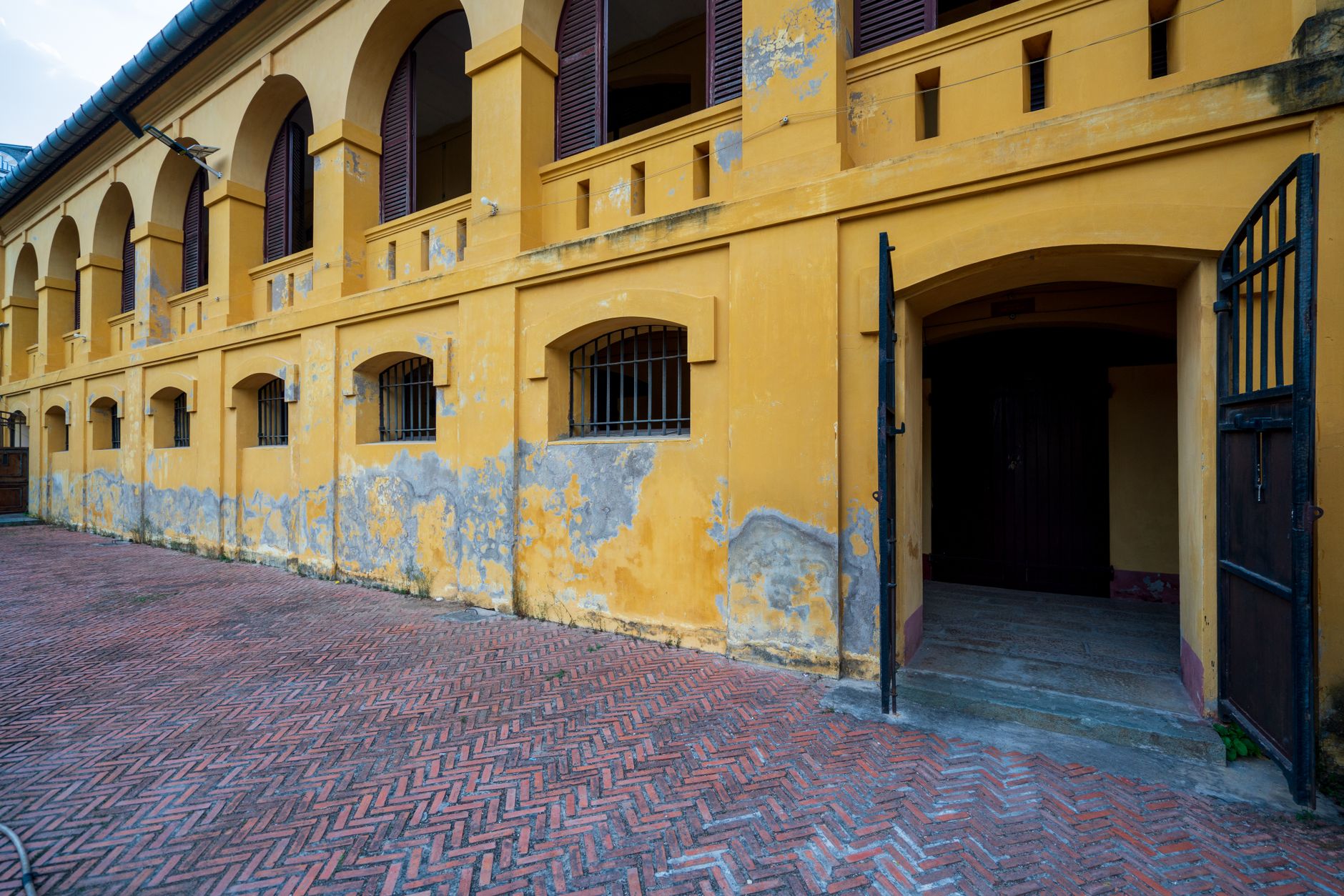
Photo by Đan Thy Nguyễn Mai on Pexels
Where to Stay
Con Dao town has a small spread of guesthouses and mid-range hotels along the main strip for 400,000–800,000 VND per night — serviceable, nothing remarkable. The Con Dao Resort (formerly managed by Saigontourist) sits on a decent beach and is a reasonable mid-tier option.
If the budget allows, Six Senses Con Dao is one of the better luxury properties in Vietnam. The villas sit directly above the water on Bay Canh-facing hillside, the food is good, and the staff genuinely know the island's history and ecology. Rates start around USD 600–800 per night in peak season, but off-season you can sometimes find it under USD 400. It is expensive, but it is not a generic luxury resort — the setting and the programming around the national park make it earn its price more than most.
What Bourdain Saw
Bourdain featured Con Dao in Parts Unknown and spoke about it with a restraint that felt appropriate — the place resists easy description. What he seemed to respond to was exactly what makes Con Dao unusual: that it holds grief and beauty in the same frame without resolving the tension between them. The prison history and the coral reefs and the turtle nests and the incense smoke over Vo Thi Sau's grave all coexist. You are not meant to feel only one thing here.
Practical Notes
Con Dao has one small ATM at Vietcombank in town; bring enough cash from Saigon. Most guesthouses have wi-fi but mobile signal is patchy outside town. The island shuts down early — by 9 p.m. most nights, Con Dao is quiet.
Going to Vietnam? Eat and travel smarter.
Monthly: new dishes, off-the-beaten-path destinations, and itineraries — straight to your inbox. No spam. Unsubscribe anytime.
Join 0 expats. (We just launched.)
More from con-dao
Other articles covering this city.

5 Days in Vietnam's Southern Beach Towns: Nha Trang, Phu Quoc, Con Dao
A practical south-coast beach itinerary covering Nha Trang's island hops, Phu Quoc's resort infrastructure, and Con Dao's quieter coves—without the resort-marketing nonsense.
More from Southern Vietnam
Other articles covering the same region.

Long Hai and Ho Coc: The Quieter Beach Alternatives to Vung Tau
When Vung Tau feels too crowded, Saigon drivers push another 30-50 km east to Long Hai and Ho Coc — two coastal stretches that still feel like weekends used to.

Vinh Long Mekong Homestay: Orchards, Brick Kilns, and the Slow Boat Life
Vinh Long sits an hour from Can Tho but feels a world apart — island homestays, working orchards, and crumbling brick kilns that most Mekong tourists never reach.
Ben Tre: Coconut Country, Canal Boats, and the Mekong's Quietest Corner
Ben Tre moves slower than the rest of the Mekong Delta — fewer tour buses, more waterways, and coconut palms as far as you can see. Here's how to spend two days properly.
More in Destinations
More articles from the same category.

Bat Trang vs Phu Lang vs Chu Dau: Vietnam's Three Ceramic Villages Compared
Three villages, three completely different traditions in clay. Here's how Bat Trang, Phu Lang, and Chu Dau compare — and how to visit each from Hanoi.

Tet Nguyen Dan: What Really Happens During Vietnam's Lunar New Year Week
Tet shuts Vietnam down and lights it back up simultaneously. Here's what actually unfolds day by day — and how to navigate it as a visitor.

Hat Xam: The Blind Beggar Music of Vietnam Making a Comeback
Hat xam was sung by blind street performers for centuries — then nearly vanished. Here's where to hear it live in Hanoi today.

Vietnamese Calligraphy: The Ong Do Tradition and Where to Commission a Piece
Vietnam's 'ong do' calligraphy tradition peaks at Tet but survives year-round. Here's the history, where to find calligraphers in Hanoi and Saigon, and how to commission a piece.

Van Phuc Silk Village: The 1000-Year Loom Town Just Outside Hanoi
Twelve kilometers southwest of Hanoi's Old Quarter, Van Phuc has been weaving silk for over a millennium — and it's still the best place in the north to buy the real thing.

Son Mai: Vietnam's Lacquer Art, From Temple Walls to Hanoi Galleries
Son mai lacquerware is one of Vietnam's most technically demanding crafts. Here's how it's made, who the key artists are, and where to find the real thing in Hanoi.
Comments
Loading…