Phu Quoc North: U Minh Forest, Ganh Dau Cape, and the Quiet End of the Island
While the south end of Phu Quoc fills up with resorts and sunset bars, the north stays slow — forest tracks, empty beaches, and a cape where you can see Cambodia on a clear day.

Most people who visit Phu Quoc spend their time in the south — Long Beach, the night market, the cable car across to Hon Thom. The north is a different island entirely: thinner roads, fewer tourists, and a national park that takes up nearly half the landmass. If you have a spare day and a motorbike, go north.
Why the North Feels Different
The development gradient on Phu Quoc (푸꾸옥 / 富国岛 / フーコック) runs hard from south to north. Duong Dong town sits roughly in the middle, and south of it you get the resort strip, beach clubs, and the organized chaos of Dinh Cau Night Market. North of Duong Dong, the road narrows, the signage thins out, and within 15 minutes you're riding past pepper farms and rubber trees with almost no other traffic.
There are no major all-inclusive resorts up here. Ong Lang Beach, about 7 km north of Duong Dong, has a loose cluster of small guesthouses and a few low-key restaurants on the sand. Past that, the infrastructure drops off quickly. That's the appeal.
Renting a Motorbike from Duong Dong
This is a day trip you do on two wheels. Rental shops cluster around the main market area in Duong Dong — a semi-automatic 110cc Honda Wave runs about 100,000–130,000 VND per day, a manual 150cc around 150,000–180,000 VND. Check the brakes before you leave; some of the rental fleet is tired.
Fuel up at a proper Petrolimex station on Tran Hung Dao before heading north — petrol availability gets patchier once you're past Ong Lang. Google Maps works fine for navigation but treats some dirt tracks as primary roads, so cross-reference with satellite view if the route looks implausible.
U Minh Forest
The Phu Quoc National Park covers roughly 31,400 hectares across the north of the island, and U Minh is the section most accessible to casual visitors. The forest here is dense lowland tropical — melaleuca, dipterocarp, and thick undergrowth — with a network of trails that range from a short 1 km loop to longer routes that push 5–6 km into the interior.
The entrance is around 15 km north of Duong Dong. Park fee is 20,000 VND per person. Go early — before 8am if you can — both to avoid heat and because the birdlife is actually worth pausing for in the morning. Hornbills, kingfishers, and if you're patient and quiet, the occasional slow loris sighting has been reported by rangers, though these are nocturnal and genuinely rare in daylight.
The trails are not well-signed in English. The main loop is easy to follow; anything branching off it is worth asking a park ranger about before you commit. Bring water — there's no vendor inside.
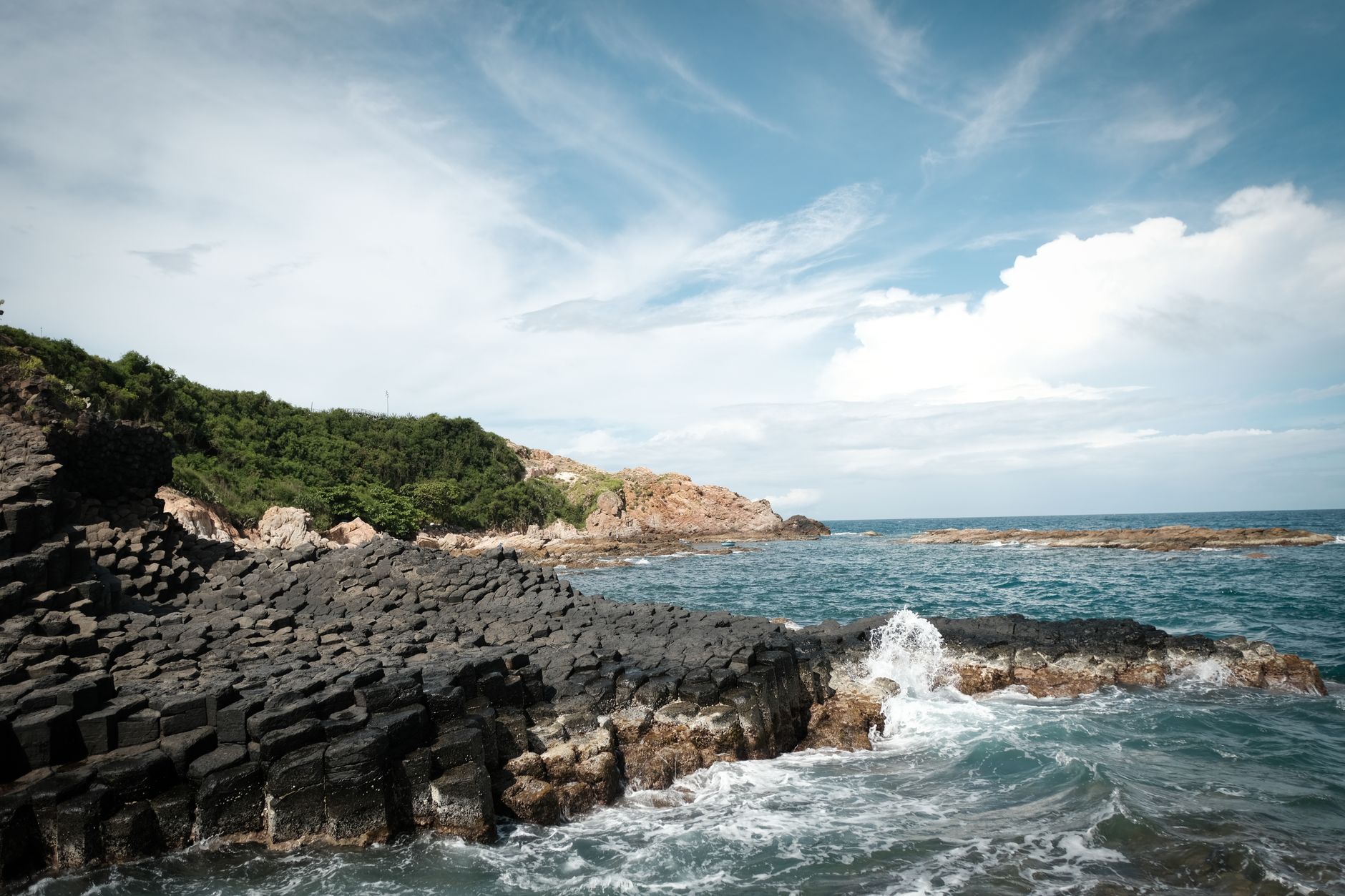
Photo by Ngân Dương on Pexels
Ganh Dau Cape
Ganh Dau is the northernmost point of the island, about 25 km from Duong Dong along a road that becomes a single lane for the last few kilometers. The cape itself is a low headland with a small fishing village, a beach of grey-white sand, and on a clear day, a direct line of sight to the Cambodian coastline — close enough that you can make out the hills without binoculars. It's around 12 km across the water.
The beach at Ganh Dau is calm and shallow, partly sheltered by the cape. It's not a white-sand postcard — the sand is coarser and there's seagrass in patches — but it's genuinely quiet. A few seafood shacks operate near the village; grilled squid and steamed clams run about 80,000–150,000 VND a plate depending on size. Eat here. The food is straightforward and fresh.
Don't expect facilities. There's no sunbed rental, no beach bar, no WiFi. That's the point.
Da Ngon Beach
On the ride back south from Ganh Dau, watch for the turnoff to Da Ngon Beach — it's a dirt track off the main road, about 2 km before you hit the national park entrance again. The beach is undeveloped and frequently empty on weekdays. Snorkeling is reasonable in the dry season (November–April) when visibility improves; the coral isn't pristine but there's enough marine life to make it worthwhile if you carry your own mask.
No facilities here at all. Pack out what you bring in.

Photo by cottonbro studio on Pexels
Day Trip or Overnight at Ong Lang
The north works as a full day trip from Duong Dong or the southern resort strip — leave by 7:30am, hit the forest first while it's cool, ride to Ganh Dau for lunch, stop at Da Ngon on the way back, and you're back in Duong Dong before dark. Total riding distance is around 60–70 km including detours.
If you want more time, overnight at Ong Lang. There are small guesthouses starting around 350,000–500,000 VND a night, and a few open-air restaurants on the beach where you can order grilled fish and a cold "bia hoi" without feeling rushed. Ong Lang is still genuinely relaxed — not yet absorbed into the resort economy that's reshaped Long Beach.
The downside of staying north: nightlife is essentially nonexistent, and the restaurant options are limited. If that's a problem, stay south and day-trip. If it's not a problem, Ong Lang is one of the better slow evenings you'll have in Phu Quoc.
Practical Notes
The north road is manageable for confident motorbike riders but has some rough sections near Ganh Dau — ride at your own pace and don't push it at dusk when visibility drops. Best months are November through April; the wet season (May–October) makes the forest trails muddy and the dirt roads to Da Ngon difficult. Bring cash — there are no ATMs past Duong Dong.
Going to Vietnam? Eat and travel smarter.
Monthly: new dishes, off-the-beaten-path destinations, and itineraries — straight to your inbox. No spam. Unsubscribe anytime.
Join 0 expats. (We just launched.)
More from Phu Quoc
Other articles covering this city.

Phu Quoc Cable Car: Crossing to Hon Thom on the World's Longest Sea Cable Car
The Sun World cable car on Phu Quoc stretches 7.9 km over open water to Hon Thom island — here's what the ride is actually like, what's included, and whether the price is worth it.

Sao Beach Phu Quoc: White Sand Reality Check and the Best Time to Go
Sao Beach is genuinely one of the best stretches of sand in southern Vietnam — but timing and expectations matter more than you'd think.

5 Days in Hoi An and Phu Quoc: A Honeymoon Itinerary
A romantic five-day itinerary blending Hoi An's lantern-lit riverside charm with Phu Quoc's island beaches and water activities—designed for couples.
More from Southern Vietnam
Other articles covering the same region.

Long Hai and Ho Coc: The Quieter Beach Alternatives to Vung Tau
When Vung Tau feels too crowded, Saigon drivers push another 30-50 km east to Long Hai and Ho Coc — two coastal stretches that still feel like weekends used to.

Vinh Long Mekong Homestay: Orchards, Brick Kilns, and the Slow Boat Life
Vinh Long sits an hour from Can Tho but feels a world apart — island homestays, working orchards, and crumbling brick kilns that most Mekong tourists never reach.
Ben Tre: Coconut Country, Canal Boats, and the Mekong's Quietest Corner
Ben Tre moves slower than the rest of the Mekong Delta — fewer tour buses, more waterways, and coconut palms as far as you can see. Here's how to spend two days properly.
More in Destinations
More articles from the same category.

Bat Trang vs Phu Lang vs Chu Dau: Vietnam's Three Ceramic Villages Compared
Three villages, three completely different traditions in clay. Here's how Bat Trang, Phu Lang, and Chu Dau compare — and how to visit each from Hanoi.

Tet Nguyen Dan: What Really Happens During Vietnam's Lunar New Year Week
Tet shuts Vietnam down and lights it back up simultaneously. Here's what actually unfolds day by day — and how to navigate it as a visitor.

Hat Xam: The Blind Beggar Music of Vietnam Making a Comeback
Hat xam was sung by blind street performers for centuries — then nearly vanished. Here's where to hear it live in Hanoi today.

Vietnamese Calligraphy: The Ong Do Tradition and Where to Commission a Piece
Vietnam's 'ong do' calligraphy tradition peaks at Tet but survives year-round. Here's the history, where to find calligraphers in Hanoi and Saigon, and how to commission a piece.

Van Phuc Silk Village: The 1000-Year Loom Town Just Outside Hanoi
Twelve kilometers southwest of Hanoi's Old Quarter, Van Phuc has been weaving silk for over a millennium — and it's still the best place in the north to buy the real thing.

Son Mai: Vietnam's Lacquer Art, From Temple Walls to Hanoi Galleries
Son mai lacquerware is one of Vietnam's most technically demanding crafts. Here's how it's made, who the key artists are, and where to find the real thing in Hanoi.
Comments
Loading…