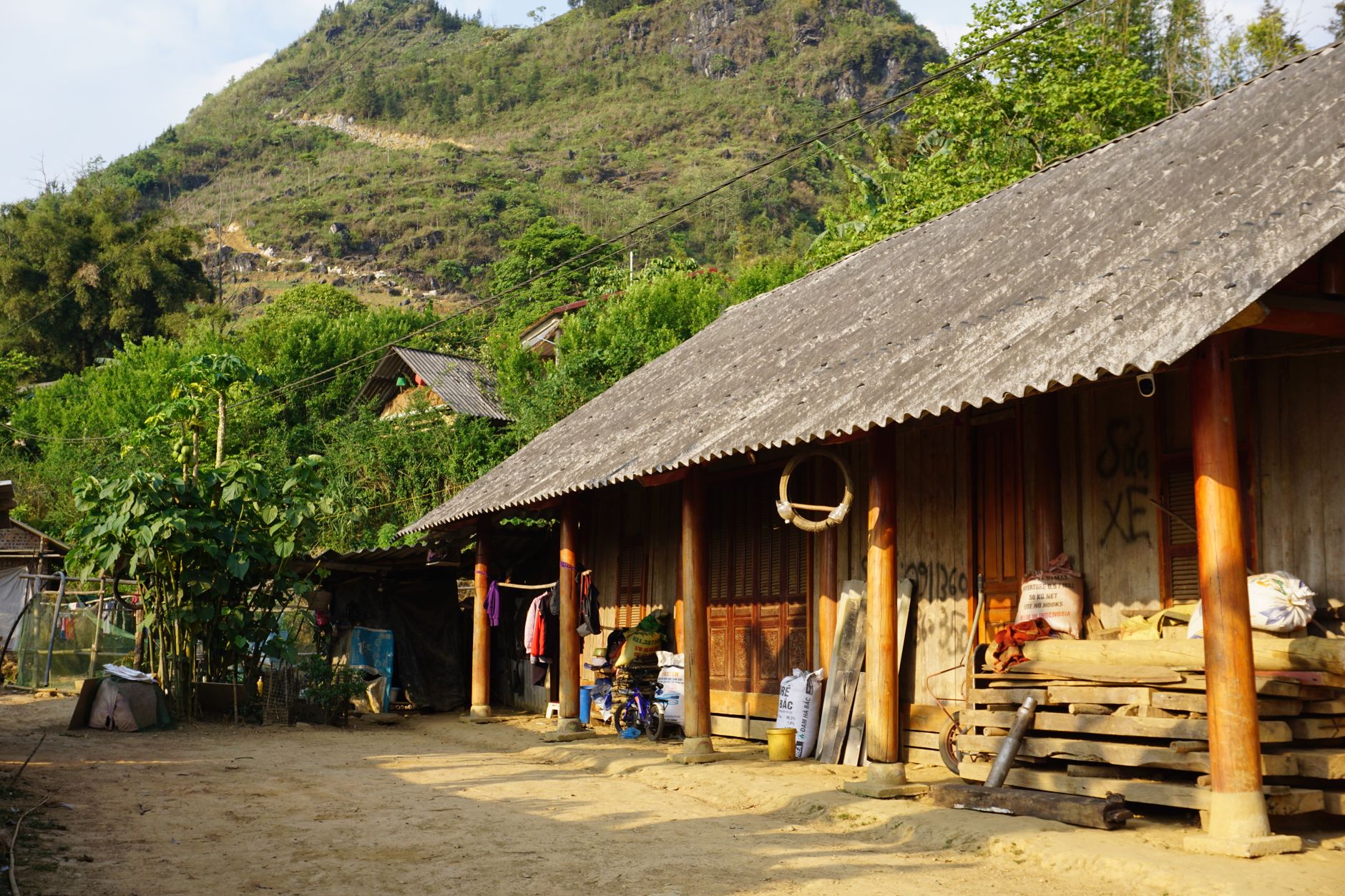
Most people schedule Bac Ha purely around the Sunday market and lose the rest. But arrive on Saturday in mid-January or early February and you get something rarer: the plum orchards in bloom, the hillside paths nearly empty, and a town that's still just going about its week.
When the Blossoms Actually Peak
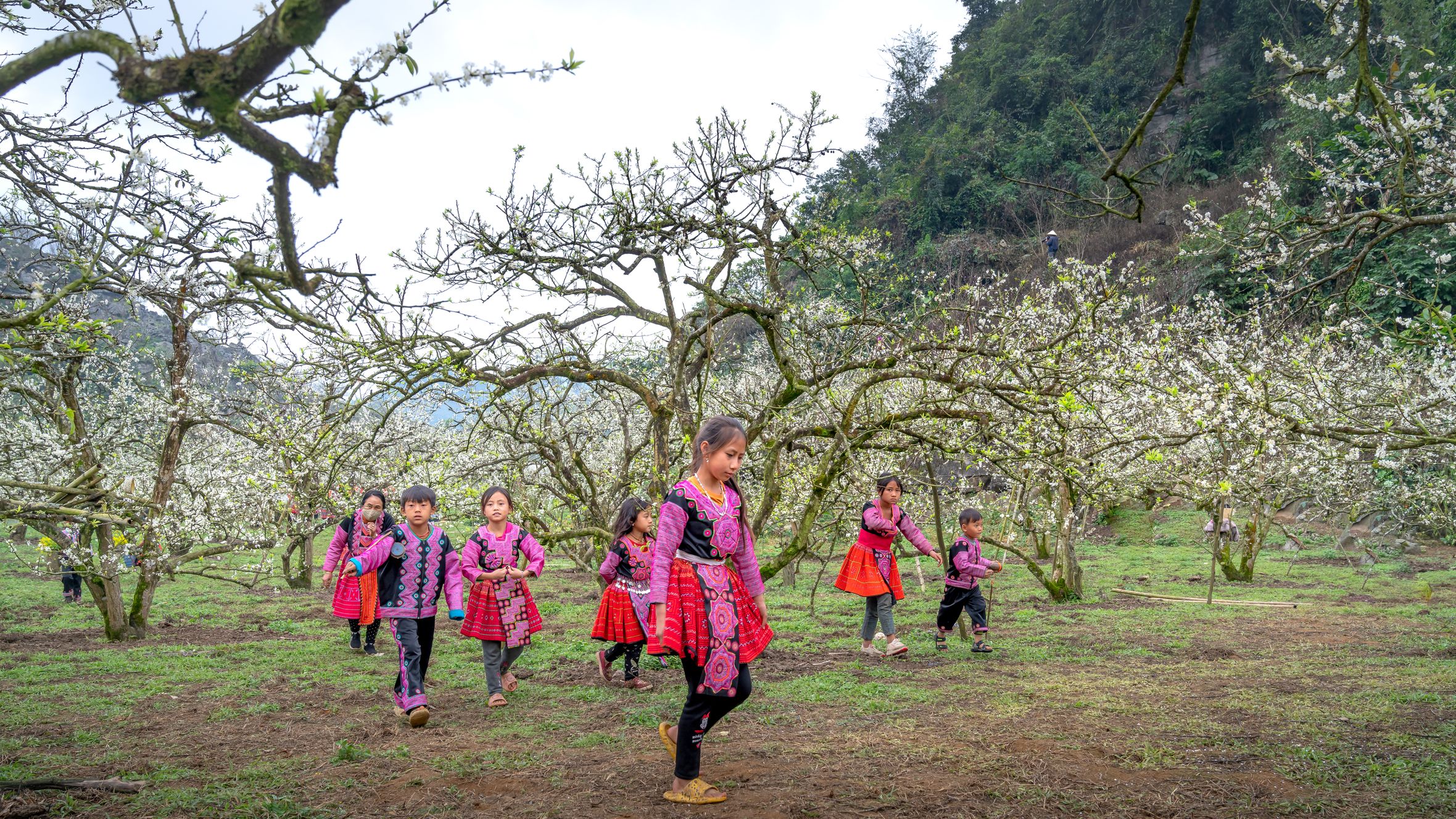
Bac Ha sits at around 900 metres above sea level in Lao Cai province, about 65 km northeast of Sapa by road. The cooler altitude means plum trees — planted in clusters around Hmong and Flower Hmong villages — bloom later than the lowlands, typically from around January 15 through early February, depending on the year. The blossoms are white, not the pink you might associate with cherry trees, and they appear before the leaves, which gives the bare-branched orchards a clean, almost graphic look against the red-soil terraces.
The bloom window is maybe three weeks. Hit it right and the hillsides above town, particularly around the villages of Ban Pho and Na Hoi (each roughly 4–6 km from the Bac Ha market square), are worth an afternoon on their own.
Saturday — The Day Before Everyone Arrives
Morning: Walk the Orchards Above Ban Pho
Ban Pho (쌀국수 / 越南河粉 / フォー) is Bac Ha's best-known corn-wine village, but in blossom season the terraces above it are the draw. Hire a motorbike from your guesthouse (around 150,000–200,000 VND for a half-day with a driver, or self-ride if you're comfortable on mountain roads) and head out before 9am. The light on the white blossoms is better before midday mist rolls in.
There's no formal orchard trail — you follow the concrete farm paths that switchback up between the terraces. Locals are usually pruning or working nearby and don't mind you walking through, though stepping into someone's private plot without acknowledgment is bad form. A nod and a smile go a long way.
Corn wine, known locally as "ruou ngo", is sold in Ban Pho almost out of every other house — small plastic bottles for around 20,000–30,000 VND. It's rougher than the tourist-packaged versions sold at Sapa (사파 / 沙坝 / サパ) guesthouses, and significantly stronger.
Late Morning: Na Hoi and the Flower Hmong Settlements
Na Hoi sits on the other side of town, a little flatter, with smaller orchards but better views down toward the Chay River valley. The Flower Hmong communities here are distinct from the Black Hmong you see in Sapa — their clothing is far more saturated in colour, geometric embroidery on indigo-dyed fabric. On a Saturday, you'll see women stitching outside their houses, preparing goods for the next morning's market. This is genuine prep work, not a performance.
Afternoon: Lunch in Town and the Pre-Market Setup
Back in Bac Ha town by noon, eat at one of the simple com pho shops along the main street near the market building. A bowl of "pho" or a plate of "com" (rice) with pork and pickled vegetables runs 30,000–50,000 VND. Nothing here is fancy. That's fine.
By mid-afternoon on Saturday, vendors from outlying villages begin arriving and setting up their stalls under the market roof and on the surrounding lanes. Bolts of fabric, hand-embroidered pouches, live chickens in bamboo crates, mountains of dried herbs. Walking through this setup — before the Sunday rush compresses everything into chaos — is genuinely useful. You can actually talk to people, see what's being laid out, ask prices without a crowd breathing down your neck.
Evening: Stay the Night in Bac Ha
There are a handful of guesthouses in town ranging from 150,000 to 400,000 VND a night for a clean room. Hoang Yen Guesthouse and Ngan Nga Bac Ha are both reasonable, functional options. Don't expect much beyond a bed, a hot shower, and someone who can arrange transport. That's enough.
In the evening, the town quiets down quickly. A few stalls sell grilled meats — "thit nuong" — on the roadside. Grab something, eat outside, go to bed early. The market starts before 6am.
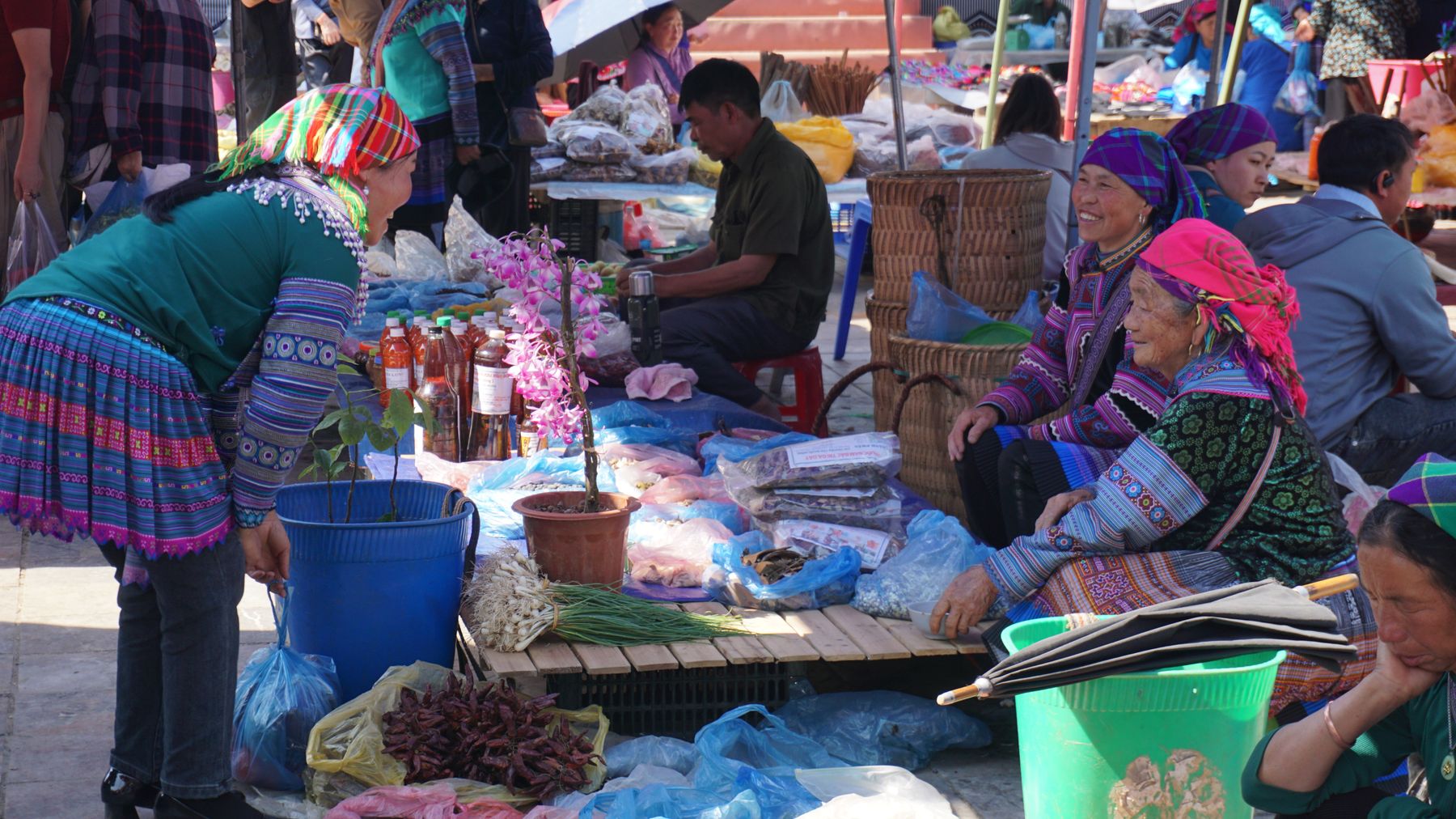
Photo by Duong Nguyen on Pexels
Sunday — The Market at First Light
Bac Ha's Sunday market is one of the larger weekly markets in the northern highlands. It peaks between 7am and 10am. The livestock section — horses, pigs, cattle traded in the open field beside the main building — is the part most guidebooks don't mention but is genuinely the most vivid. By 11am the out-of-town vendors are already packing up.
If you're day-tripping from Sapa, you're arriving at the same time as every other day-tripper. If you slept in Bac Ha, you've already had two days by the time the vans roll in.

Photo by Quang Nguyen Vinh on Pexels
Getting to Bac Ha
The most direct route from Sapa is via Lao Cai city, then northeast on Highway 153 — total roughly 100 km from Sapa, around 2.5 hours by car or motorbike. Buses from Lao Cai city run to Bac Ha daily (around 60,000–80,000 VND, 2 hours). Some guesthouses in Sapa run Saturday transfers timed for the market, but these fill up — book ahead if that's your plan.
Ha Giang province sits further east; if you're already doing the Ha Giang loop, Bac Ha can be folded into the return leg with some planning.
Practical Notes
January and early February nights in Bac Ha drop to 8–12°C — a down layer and waterproof shell are not optional. The bloom timing shifts year to year; locals and guesthouse owners will know if it's running early or late when you arrive in Lao Cai. Go on a weekend only — the Sunday market is the anchor, and the Saturday blossom walk only makes sense as a pair with it.
Last updated · May 27, 2026 · independently researched, never sponsored.