Bac Ha Sunday Market: What to Eat and Buy at Vietnam's Biggest Hill-Tribe Gathering
Every Sunday, ethnic Hmong, Dao, and Tay traders converge on Bac Ha in Lao Cai province. Here's what to eat, what to buy, and what to expect in the chaos.

Bac Ha's Sunday market is not a tourist attraction dressed up as local life. It's the real thing — 2,000-plus traders from surrounding villages, many in traditional dress, haggling over livestock, textiles, and produce in a muddy hillside plaza 1,500 metres above sea level. If you come expecting photo ops, you'll find them. But if you come hungry and curious, you'll eat better.
The market sprawls across a sloped field on the edge of town, about 2 km from central Bac Ha. Traders start arriving around 6 a.m.; by 8 a.m. the place is packed. By noon, most vendors are packing up. The energy is frantic — shouts in Hmong, Dao, and Tay, motorbikes threading between stalls, kids chasing chickens. Expect mud, dust, and genuine chaos.
What to Eat
Food stalls cluster on the market's upper edge. Most are run by Hmong women cooking over charcoal fires. Prices are low — most dishes cost 20,000–50,000 VND.
"Thang co" (horse-meat stew) is the signature dish. A large bowl of bony horse chunks simmered with ginger, star anise, and chilies costs around 40,000 VND. It's rich, warming, and tastes nothing like the lean meat you might expect. The broth is the best part — starchy and almost sweet. Locals consider it a delicacy; many vendors sell out by 10 a.m. If horse isn't your thing, pork and chicken "thang" are equally common.
Steamed "banh cuon" (rice rolls) filled with minced pork and mushroom are another staple. A plate of four or five costs 15,000 VND. They're wrapped in banana leaf and soft enough to melt on your tongue.
"Pho" here is lighter than the Hanoi version — thin noodles in a clear broth with beef or chicken. A big bowl is 25,000 VND.
Buy grilled meat skewers if you want something quick: beef or pork on bamboo sticks, charred over charcoal, dipped in salt and chilli. A few skewers cost 10,000 VND.
Stay away from the raw meat stalls unless you know exactly what you're looking at. Hygiene standards are minimal, and foodborne illness is a real risk if the meat has been sitting unrefrigerated for hours.
What to Buy
Textiles are the main draw for repeat visitors. Hmong women sell indigo-dyed fabric, embroidered vests, and traditional sashes. Quality varies wildly; new items in good condition cost 200,000–500,000 VND per piece. Worn or vintage textiles are cheaper — 50,000–150,000 VND — and more authentic if authenticity is your goal. Most vendors will negotiate, though the discounts are rarely dramatic (expect 10–15 percent off).
Batik fabric from Dao traders is also worth browsing. It's hand-dyed in geometric patterns, softer than factory-made cloth, and costs around 150,000–300,000 VND per metre.
Buy silver jewellery if you want something portable. Hmong silversmiths sell bracelets, rings, and hair clips; prices hover around 100,000–200,000 VND. Check weight and ask if it's solid silver — some pieces are plated or mixed alloy.
Embroidered bags and pouches are everywhere. Most are tailored to tourists' tastes, but a few stalls have genuinely old pieces. Prices range from 80,000–400,000 VND.
Skip the knock-off tourist trinkets (fake branded goods, mass-produced "tribal" keychains) unless you're buying them as a joke.

Photo by Koen Swiers on Pexels
What to Skip
The livestock section — cattle, pigs, chickens, and dogs — takes up the market's lower half. If you're squeamish about live animals or butchering, avoid this area. It's loud, smelly, and confronting. Vendors are used to tourists wandering through, but the scene can be distressing if you're not prepared for it.
Don't buy "exotic" animals or animal products (bones, skins, etc.) unless you're certain they're legal to export from Vietnam. Customs have become stricter about wildlife goods.
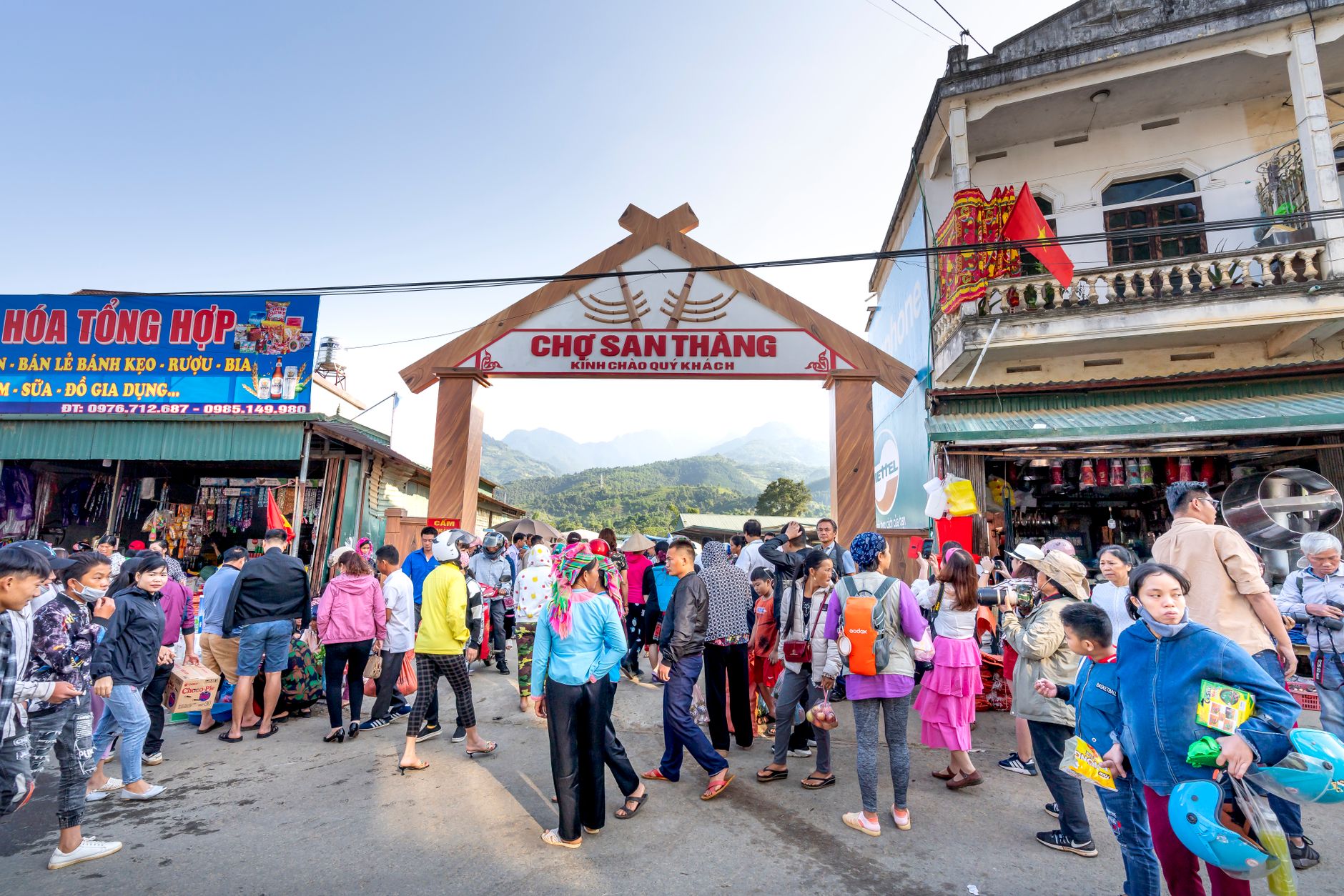
Photo by Quang Nguyen Vinh on Pexels
Getting There and Timing
Bac Ha is 160 km northeast of Hanoi (하노이 / 河内 / ハノイ), a 3.5-hour drive. Most visitors hire a motorbike or join a tour from Hanoi or Sapa (Sapa is 40 km closer). If you're driving yourself, leave very early — the road is winding, and Sunday traffic gets heavy by 9 a.m.
If you're coming from Sapa (사파 / 沙坝 / サパ), it's a straight shot down Route 4. Direct minivan services run from Sapa town (around 200,000 VND per person, 2 hours). Arrive by 7:30 a.m. to beat the crowds.
Stay the night if you can. The town quiets down after the market ends, and the surrounding countryside — rice terraces, Hmong villages, waterfalls — is worth a lazy afternoon walk.
Practical Notes
Bring cash in Vietnamese dong; almost no vendors accept cards. Wear sturdy shoes (the market is muddy and sloped). If you're photographing people, ask first — some vendors are welcoming, others aren't. The market is genuine, not staged for tourists, which is both its appeal and its rawness. Go hungry, go early, go with low expectations of comfort, and you'll have a better time than those treating it as a checklist item.
Going to Vietnam? Eat and travel smarter.
Monthly: new dishes, off-the-beaten-path destinations, and itineraries — straight to your inbox. No spam. Unsubscribe anytime.
Join 0 expats. (We just launched.)
More from bac-ha
Other articles covering this city.

3 Days in Bac Ha and Sapa: Sunday Market and Hmong Villages
Combine Bac Ha's chaotic Sunday market with Sapa's mountain villages and cool-season trekking. This route feels less touristy than Sapa alone and gives you genuine textile trading and ethnic-minority life.
More from Northern Vietnam
Other articles covering the same region.

Hoa Lu Ancient Capital: Vietnam's First Kingdom and How to Visit from Ninh Binh
Hoa Lu was Vietnam's first royal capital, and the two temple complexes that survive are among the most atmospheric historical sites in the north.

Hoan Kiem Lake: The Sword Legend, Ngoc Son Temple, and When to Visit
Hoan Kiem Lake sits at the center of Hanoi's Old Quarter — here's the legend behind it, how to walk it properly, and when the streets actually belong to you.

Lung Cu Flag Tower: Vietnam's Northernmost Point
The drive to Lung Cu Flag Tower takes you to Vietnam's northernmost point at 1,500 metres. It's a half-day trip from Dong Van with a steep climb, mountain views, and nearby Hmong villages.
More in Food & Drink
More articles from the same category.

Best Tau Hu in Hoi An: Where Locals Send You
Tau hu—silky tofu soup—tastes different in Hoi An. Here's where locals actually eat it, and why.

Best Pho Chua in Ha Giang: Where Locals Send You
Ha Giang's take on sour pho is sharper, tangier, and less known than the southern version. Here's where locals actually eat it.

Best Pho Saigon in Ho Chi Minh City: Where Locals Send You
Pho Saigon is thinner, sweeter, and faster than its northern cousin. Here's where to find the real thing in HCMC, plus what makes it different and how to order.

Best Banh Xeo in Nha Trang: Where Locals Send You
Nha Trang's banh xeo scene is rowdier and greasier than the south. Here's where locals actually eat, what to order, and why the crispy rice pancakes here taste different.

Best Banh Nam in Hue: Where Locals Send You
Hue's version of "banh nam" is a steamed rice cake pocket stuffed with shrimp and pork—nothing like its northern cousin. Here's where locals actually eat it.

Best Banh Uot Thit Nuong in Buon Ma Thuot: Where Locals Send You
Banh uot thit nuong — steamed rice rolls with grilled pork — is a breakfast staple in Buon Ma Thuot's Central Highlands. Here are the spots locals actually eat.
Comments
Loading…