Banh Nam and Banh Loc: Hue's Twin Steamed Cakes Worth Seeking Out
Banh nam and banh loc are Hue's signature steamed cakes—both wrapped in banana leaf, both filled with shrimp and pork, but made from rice flour and tapioca respectively. Here's how to tell them apart and where to find the best versions in the city.

What sets them apart
"Banh nam" and "banh loc" look almost identical when wrapped, but bite into one and the difference is immediate. Banh nam uses rice flour mixed with water—the result is dense, slightly chewy, and pale. Banh loc relies on tapioca starch, giving it a translucent, slippery texture that clings to your teeth a little. Both are formed into flat rounds, wrapped in banana leaf, then steamed until they set firm.
The filling is where they shine: minced shrimp and pork (usually in equal parts), sometimes with a pinch of salt and pepper. The banana-leaf wrapper imparts a subtle green, grassy note that's harder to describe than to taste. Once you've had it, you notice it missing in banh nam and banh loc made without proper wrapping.
Why Hue owns this dish
These cakes belong to central Vietnam (베트남 / 越南 / ベトナム)'s imperial-cuisine tradition. Hue was the seat of the Nguyen Dynasty, and its court kitchens specialized in dishes that were labor-intensive, small-portioned, and refined. Banh nam and banh loc fit that mold: they require hand-shaping, precise steaming, and respect for ingredient ratios. You won't find them casual or mass-produced. A vendor selling these has usually learned the technique from family, not a formal recipe.
Walking Hue (후에 / 顺化 / フエ)'s Old Quarter or riverside neighborhoods, you'll see street vendors selling stacks of these cakes in the early morning (5–8 a.m. is peak time). Many close by mid-morning once inventory runs out. The production is slow; a vendor might make 60–80 cakes in a morning session.
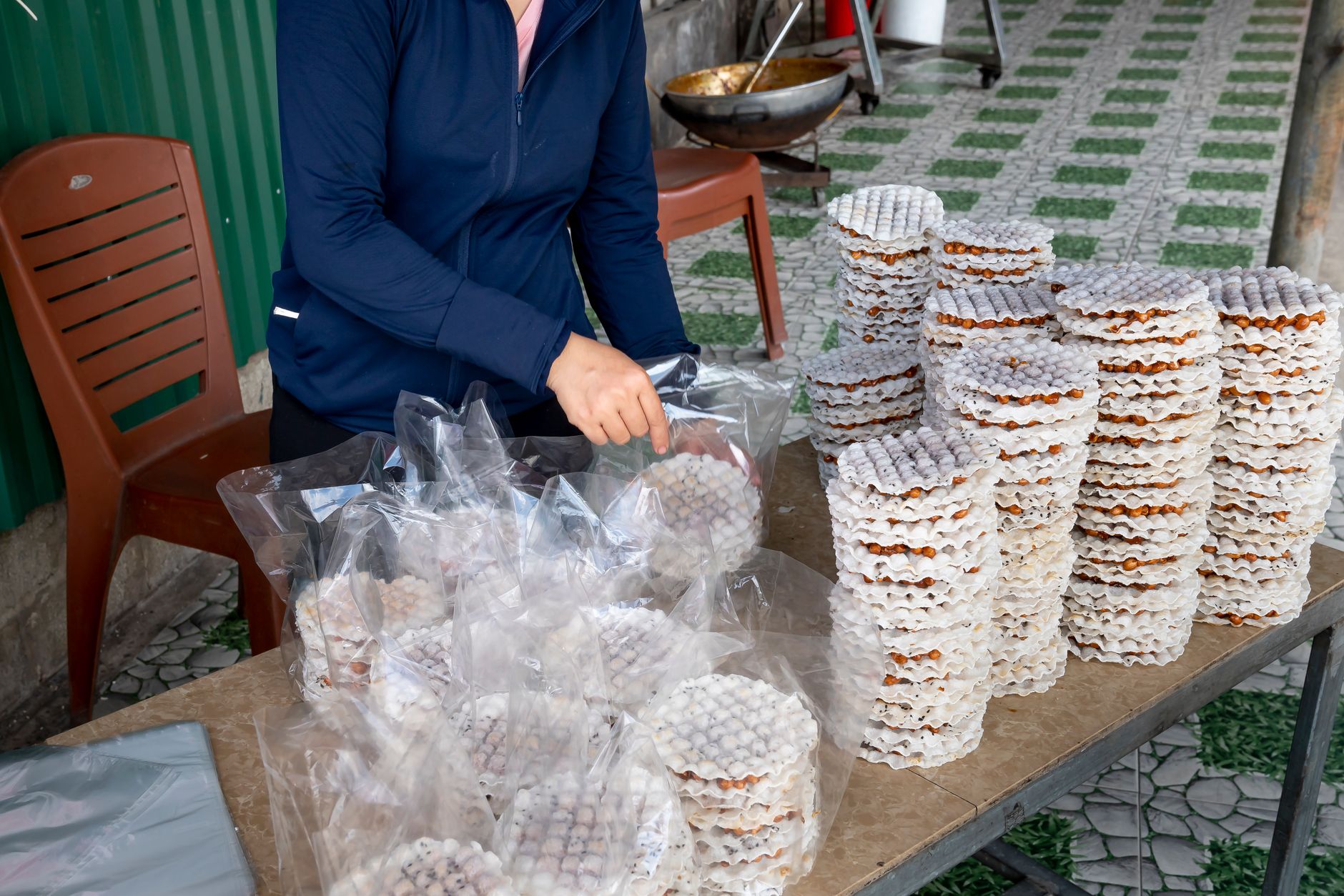
Photo by Quang Nguyen Vinh on Pexels
How to eat them
Banh nam and banh loc are eaten warm, unwrapped, and dipped into "nuoc cham"—the sharp, sour-salty-spicy dipping sauce that accompanies nearly every savory dish in Vietnam. The standard nuoc cham has lime juice, fish sauce, sugar, garlic, and bird's eye chili. Some vendors prepare a lighter version for these cakes, letting the shrimp-and-pork filling do the talking.
If you're eating from a street stall, you'll get a small foam plate, a few cakes, and a small bowl of nuoc cham. The whole order costs 15,000–25,000 VND (depending on the vendor and whether you order banh nam, banh loc, or a mix). Eat them with your hands or a plastic fork; there's no etiquette beyond "don't wait for them to cool."
Pairing either cake with "Vietnamese coffee"—the strong, slow-dripped kind—creates an odd but memorable breakfast. The richness of the coffee cuts through the richness of the shrimp-pork filling, and the sweetened condensed milk (if you order ca phe sua da (연유커피 / 越南冰咖啡 / ベトナムアイスコーヒー), the iced version) provides a foil to the nuoc cham's saltiness.
Where to find them in Hue
The most reliable spot is Quang Chuong Street (Duong Quang Chuong), near the Perfume River in the Old Quarter. Two or three vendors set up between 5 and 8 a.m. on most mornings, selling banh nam, banh loc, and sometimes banh cuon (steamed rice rolls) from aluminum carts. Ask a local hotel or your guesthouse for the current favorite—vendor spots shift slightly by season and popularity.
Another cluster exists near Dong Ba Market, the central wet market where produce vendors, meat stalls, and prepared-food sellers converge. Arrive before 7 a.m. and you'll find banh nam and banh loc vendors setting up or already selling their first batches.
Banh Loc Hue Tram is a small sit-down shop on Chu Van An Street that specializes in banh loc. It's more formal than a street stall—you order at a counter, sit at a plastic table, and eat from a ceramic plate—but the price is the same (20,000–25,000 VND for three cakes). The advantage is consistency and longevity; the shop has been operating since the 2000s and takes pride in their tapioca sourcing.
If you're staying near the Imperial Citadel, the riverside cafes and small restaurants dotting the embankment often sell banh nam and banh loc as breakfast or light lunch items, though the quality can be hit-or-miss (and prices creep toward 30,000 VND). It's safer to stick with the street vendors and dedicated banh loc shops.
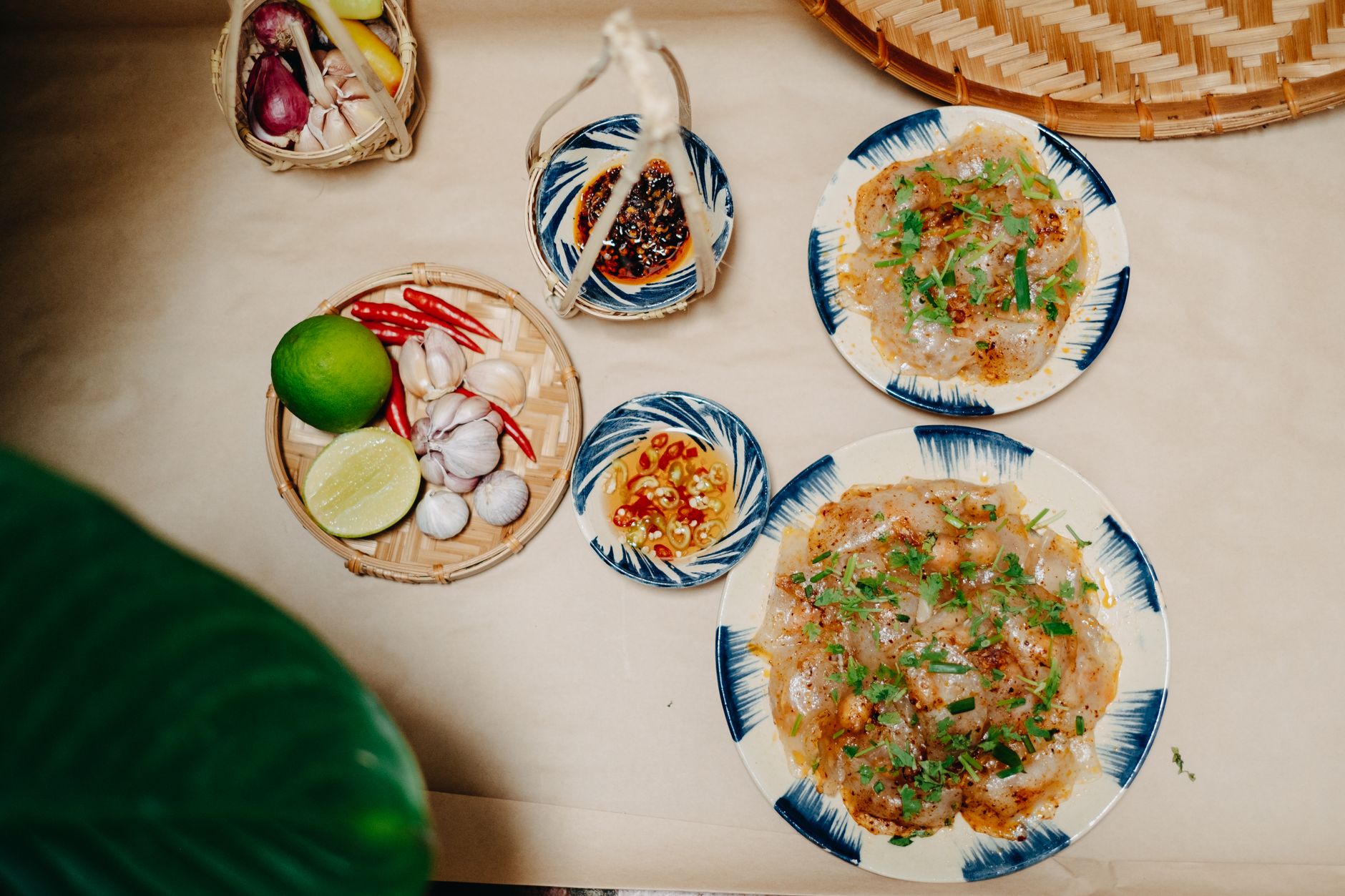
Photo by Pew Nguyen on Pexels
The tapioca vs. rice-flour question
Banh nam's rice-flour base makes it slightly more forgiving to cook; it's harder to overcook or leave gummy. Banh loc demands more precision: undercooked, it's mushy and tastes raw; overcooked, it toughens and loses its defining translucence. Most vendors will tell you banh loc is "harder" and charge a few thousand dong more, though the difference is subtle if you're buying from a skilled maker.
If you're trying both for the first time, start with banh loc. Its texture is more distinctive. Once you've had it, banh nam's denser crumb feels like a natural partner—they're not competitors, just different expressions of the same idea.
Practical notes
Banh nam and banh loc are strictly morning and early-afternoon foods; you won't find them for dinner. Bring cash (most vendors don't take digital payments). If you're leaving Hue the same day, try to hit a banh nam or banh loc vendor before 9 a.m.; after that, you're gambling on leftovers. And remember to ask for extra nuoc cham—it's usually free, and you'll want it.
Going to Vietnam? Eat and travel smarter.
Monthly: new dishes, off-the-beaten-path destinations, and itineraries — straight to your inbox. No spam. Unsubscribe anytime.
Join 0 expats. (We just launched.)
More from Hue
Other articles covering this city.

Best Banh Nam in Hue: Where Locals Send You
Hue's version of "banh nam" is a steamed rice cake pocket stuffed with shrimp and pork—nothing like its northern cousin. Here's where locals actually eat it.

Best Banh Khoai in Hue: Where Locals Send You
Hue's "banh khoai" — crispy, half-moon savory crepes — taste different here than anywhere else in Vietnam. Here's where locals actually eat them.

Where to Stay in Hue: Citadel vs South Bank vs Beach
Hue splits into three distinct neighborhoods for travelers. Each offers different trade-offs between history access, dining, and atmosphere—here's how to choose.
More from Central Vietnam
Other articles covering the same region.

Paradise Cave, Quang Binh: The 31km Marble Cave That Beats Phong Nha for Photographers
Paradise Cave runs 31km through Quang Binh's karst and delivers the kind of cathedral-scale formations that Phong Nha's boat tour simply can't match. Here's how to see it properly.

Son Doong Cave: What the $3,000 Oxalis Expedition Actually Includes
Son Doong is the world's largest cave and only one operator is legally allowed to take you inside. Here is what the permit-only expedition covers and whether it is worth it.

Phong Nha Cave: Wet Cave, Dry Cave, and How to Choose
Phong Nha has two main caves worth your time — one you reach by river boat, one on foot. Here's how to pick, what each costs, and when to go.
More in Food & Drink
More articles from the same category.

Best Tau Hu in Hoi An: Where Locals Send You
Tau hu—silky tofu soup—tastes different in Hoi An. Here's where locals actually eat it, and why.

Best Pho Chua in Ha Giang: Where Locals Send You
Ha Giang's take on sour pho is sharper, tangier, and less known than the southern version. Here's where locals actually eat it.

Best Pho Saigon in Ho Chi Minh City: Where Locals Send You
Pho Saigon is thinner, sweeter, and faster than its northern cousin. Here's where to find the real thing in HCMC, plus what makes it different and how to order.

Best Banh Xeo in Nha Trang: Where Locals Send You
Nha Trang's banh xeo scene is rowdier and greasier than the south. Here's where locals actually eat, what to order, and why the crispy rice pancakes here taste different.

Best Banh Uot Thit Nuong in Buon Ma Thuot: Where Locals Send You
Banh uot thit nuong — steamed rice rolls with grilled pork — is a breakfast staple in Buon Ma Thuot's Central Highlands. Here are the spots locals actually eat.

Best Banh Canh Ca in Da Nang: Where Locals Send You
Da Nang's version of "banh canh ca" — thick tapioca noodles in crab broth — tastes different from Hanoi or Saigon. Here's where locals actually eat it, what to order, and why timing matters.
Comments
Loading…