Where to Stay in Hue: Citadel vs South Bank vs Beach
Hue splits into three distinct neighborhoods for travelers. Each offers different trade-offs between history access, dining, and atmosphere—here's how to choose.

Hue is small enough to walk, but where you plant yourself matters. The Citadel draws history obsessives; the South Bank caters to people who want restaurants and nightlife; Thuan An Beach suits those who'd rather wake to salt air than temple bells. Here's what each zone actually delivers.
Inside the Citadel
Staying within the old Imperial City walls puts you steps from the main draw: the Citadel itself. Morning walks around the ramparts are quiet. The "Tomb of Tu Duc" and "Tomb of Khai Dinh" are day trips of 10–15 km south, easily reachable by xe om (motorbike taxi) for 50,000–80,000 VND.
This zone is tight, walkable, and heavy on guesthouses. Expect $20–40 for a basic room with fan or AC; $50–80 for something with style (restored French colonial buildings are common). Streets like Tran Hung Dao and Vo Thi Sau have most of the budget options.
The trade-off: restaurants thin out after dark. The neighborhood itself is quiet—some find that charming, others isolating. Internet can be patchy in older buildings. Most guests eat where they sleep or venture to the South Bank for dinner.
South Bank (Tay Loc)
Across the Huong River, the South Bank is Hue's de facto restaurant and hotel corridor. Hang Vuong, Le Loi, and Chu Van An streets cluster cafes, "[pho](/posts/pho-vietnam (베트남 / 越南 / ベトナム)-noodle-soup-guide)" vendors, bakeries, and tourist-aimed storefronts. It feels less intimate than the Citadel but more livable if you plan to stay 3+ nights.
Accommodation ranges from $25–50 for midrange guesthouses to $80–150 for hotel chains (Morin, Saigon Morin). Booking a room here means you're 10–15 minutes from major sites by taxi (40,000–60,000 VND) but you eat well. Evening strolls along the riverbank are pleasant. Many visitors use the South Bank as a base and make day trips to the Citadel, "My Son" (about 45 km west), or tombs.
Downside: less character. You could be in any Vietnamese town. Noise carries if you're street-facing. The river view is scenic but the nearer bank is industrial.
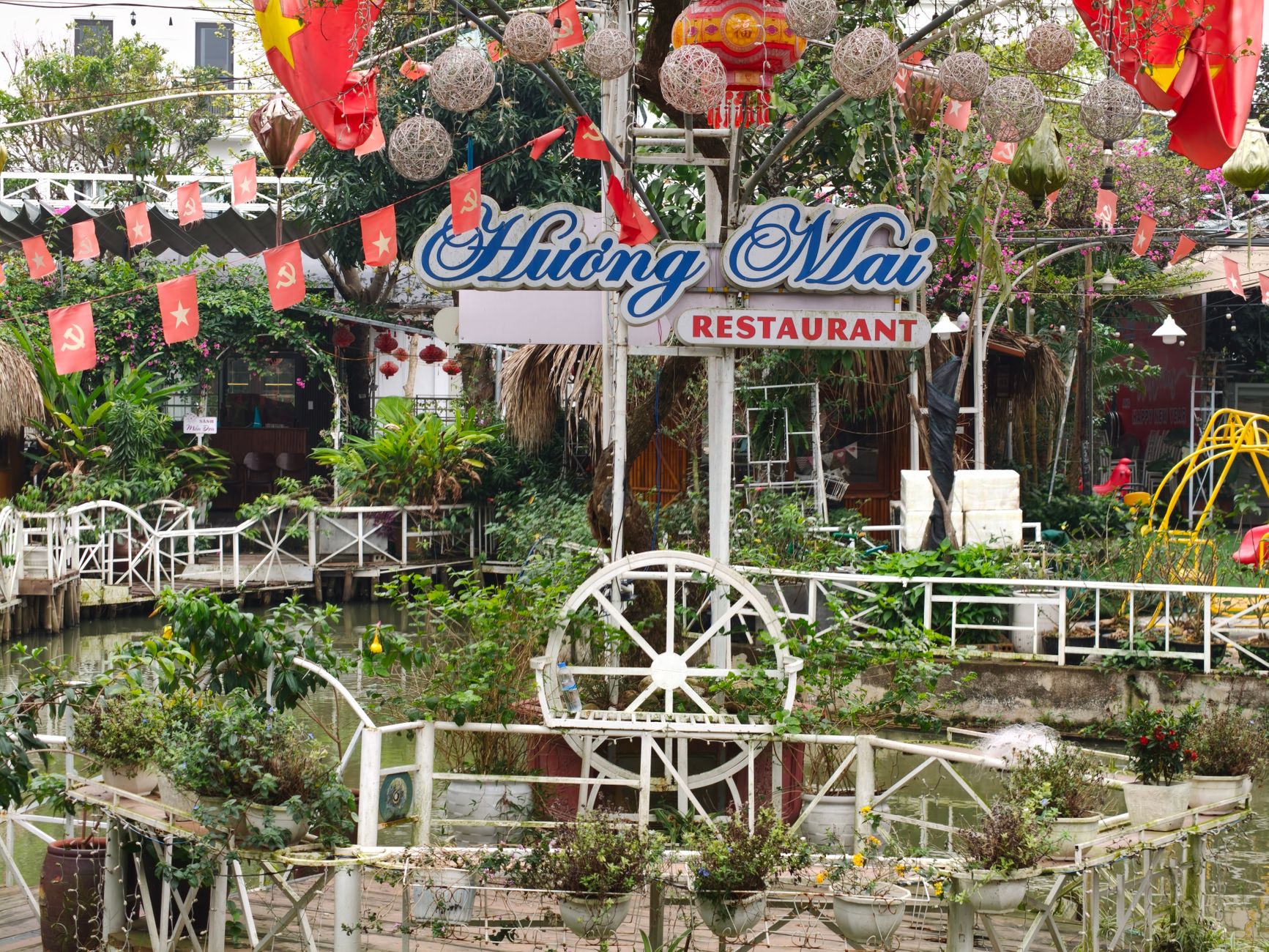
Photo by Quý Hoàng on Pexels
Thuan An Beach
About 15 km northeast, the beach village of Thuan An Hamlet sits on a low-key lagoon fringe. A handful of small resorts and homestays ($30–80) cater to people seeking quiet; a few upmarket spots run $100–150. The beach itself is narrow and more functional than scenic, but it's where locals spend weekend afternoons.
Getting to the Citadel or tombs requires 30–40 minutes by taxi (80,000–120,000 VND round-trip). You'll eat at your resort or local "[com tam](/posts/com-tam-saigon (사이공 / 西贡 / サイゴン)-broken-rice)" shops—dining out is limited. The trade-off is obvious: you trade access for peace. This works if your Hue plan is two nights, a beach morning, and a lazy dinner. It doesn't work if you're a Citadel completist.
Thuan An also catches more rain and humidity in the monsoon season (September–October); confirm weather before booking.

Photo by Theodore Nguyen on Pexels
Quick comparison
Inside the Citadel if you're visiting for history, spending under 48 hours, and sleeping early.
South Bank if you want restaurants, a social vibe, and flexibility to branch out.
Thuan An Beach if you're timing a beach day into a longer central Vietnam loop and won't regret 30-minute taxi rides.
Practical notes
Hue's main sights (Citadel, tombs, "My Son" temple complex) are spread 10–45 km apart; there's no walkable cluster beyond the Citadel itself. A one-day rental motorbike ($5–8) or pre-booked car with driver ($35–50/day) often makes sense if you're staying 2+ nights and want to move fast. Book accommodation once you've decided whether you're day-tripping from a base or moving daily.
Going to Vietnam? Eat and travel smarter.
Monthly: new dishes, off-the-beaten-path destinations, and itineraries — straight to your inbox. No spam. Unsubscribe anytime.
Join 0 expats. (We just launched.)
More from Hue
Other articles covering this city.

Best Banh Nam in Hue: Where Locals Send You
Hue's version of "banh nam" is a steamed rice cake pocket stuffed with shrimp and pork—nothing like its northern cousin. Here's where locals actually eat it.

Best Banh Khoai in Hue: Where Locals Send You
Hue's "banh khoai" — crispy, half-moon savory crepes — taste different here than anywhere else in Vietnam. Here's where locals actually eat them.

Grab vs Be vs Xanh SM: Which Ride-Hailing App to Use in Vietnam
Three ride-hailing apps dominate Vietnam. Here's how they differ on price, coverage, payment, and which one makes sense depending on where you are and what you value.
More from Central Vietnam
Other articles covering the same region.

Son Doong Cave: Inside the $3,000 Oxalis Expedition
Son Doong is the world's largest cave by volume—and the only way in is a 4-day permit-exclusive tour with Oxalis. Here's what you actually get, who should go, and what cheaper caves offer instead.

Phong Nha Cave: Boat Tours, Dry Caves, and How to Choose
Phong Nha-Ke Bang has two main cave experiences: the iconic river boat through Phong Nha Cave itself, and the dry trek into Tien Son. Here's how to pick, what to expect, and when to go.

Hoi An Lantern Festival: Full Moon Nights and How to Plan Around Them
The Hoi An Lantern Festival happens on the 14th lunar day each month. Electricity shuts off, lanterns float on the Thu Bon River, and crowds triple. Here's how to time your visit and actually enjoy it.
More in Travel Tips
More articles from the same category.

Bargaining in Vietnam: When to haggle, when to pay the asking price
Haggling is normal at markets and with cyclos, but not everywhere. Learn which settings expect negotiation, how much to push back, and where to just hand over your money.
Best Vietnam eSIM Providers 2026: Costs, Setup, and Real-World Tips
A practical breakdown of Vietnam's top eSIM options, real prices, and how to avoid common pitfalls when arriving with no local SIM.

Where to Stay in Saigon: District 1 vs District 3 vs District 7
Three neighborhoods, three vibes. Pick District 1 for backpackers and chaos, District 3 for quiet and value, or District 7 for modern expat comfort. Here's how each stacks up.

Where to Stay in Sapa: Town Center vs Cat Cat vs Ta Van
Sapa has three distinct bases: the foggy town center for convenience, Cat Cat village for quiet hilltop views, or Ta Van for homestay immersion. Pick based on whether you're chasing comfort or trekking.

Where to Stay in Can Tho: Ninh Kieu, Cai Rang, or Orchards
Can Tho's three main neighborhoods offer different angles on Mekong Delta life. Here's how to pick based on your priorities and budget.

Vietnam Gift Culture: Red Envelopes, Lucky Money & Birthday Etiquette
Understanding "li xi", birthday cakes, and the unwritten rules of gift-giving in Vietnam—from Tet bonuses to wedding contributions.
Comments
Loading…