Vietnamese Cooking Classes: Hanoi vs Hoi An vs Saigon
Three cities, three distinct approaches to learning Vietnamese food. Here's what to expect, what you'll actually cook, and which one fits your style.

Vietnamese cooking classes have become a standard part of the tourist itinerary—but the experience varies wildly depending on where you go. The difference isn't just venue or price; it's the philosophy behind what you're learning. Here's how the three main cities compare, based on what you'll actually spend your morning doing.
Hoi An: The Instagram-Heavy Route
Hoi An has the oldest and most-established class scene, which cuts both ways. "Red Bridge Cooking School" is the most famous—you'll see it referenced in every guidebook and travel blog. It sits 4 km outside the old town, so you get a minibus pickup in the morning, a visit to the local wet market, then a cooking session in a farmhouse-style setup. You'll usually make "banh mi", "spring rolls", and a curry. It costs around $55–70 per person and takes about 4 hours. The market visit is the main draw; the cooking itself is fairly basic and group-oriented (classes can be 12–15 people).
"Morning Glory Cooking School" is the alternative, run by chef Duc Thanh and positioned as more upscale. Smaller groups (6–8 people), more detailed instruction, similar price ($60–75). You learn fewer dishes but in deeper detail—how to build flavours in "ca tru" (a soup stock), proper technique with a mortar and pestle. The farmhouse setting is prettier, the food at the end more refined. If you're coming to Hoi An (호이안 / 会安 / ホイアン) specifically for this, it's worth the extra money.
Both classes end with eating what you cooked. Both fill up quickly in peak season (Oct–Apr), so book ahead.
Hanoi: The Intimate, Neighborhood Option
Hanoi (하노이 / 河内 / ハノイ)'s scene is smaller and less branded. "Hidden Hanoi" operates out of a home kitchen in the Old Quarter—actual home, not a purpose-built facility. The owner, a Vietnamese woman named Oanh, teaches 4–6 people at a time. You walk to the market with her, choose your ingredients, then cook in her kitchen. Classes are 3 hours, around $35–45, and you learn 3–4 dishes (often "pho", "goi cuon", "banh canh"). The vibe is intimate and chaotic in the best way; you're not performing for a tour group, you're learning in a working kitchen.
"Apron Up" is the other main option, also Old Quarter-based, slightly more organized. It's a real cooking school (not a home), but still small-group (max 10). The market visit is included, and they offer both daytime and evening classes. Cost is similar ($40–50), but the instruction is more structured. You'll walk away knowing exactly why you're doing each step, not just the motions.
Hanoi classes don't position themselves as "experiences"—there's less of the farmhouse-photo aesthetic. They're more about practical skill transfer. If you want to actually learn to cook Vietnamese food at home afterward, Hanoi is your better bet.
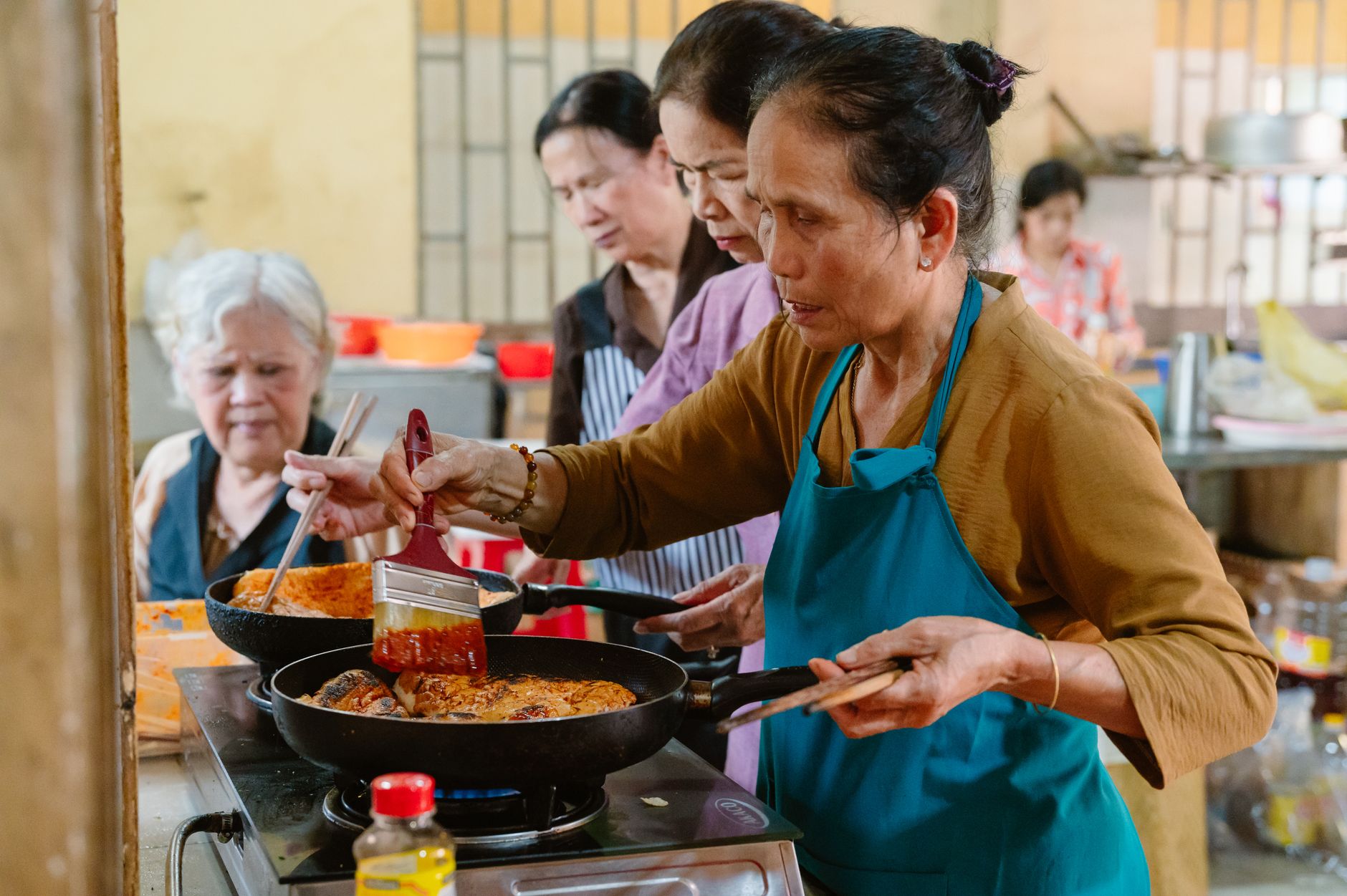
Photo by Thư Tiêu on Pexels
Saigon: The Restaurant-Centric Approach
Saigon (사이공 / 西贡 / サイゴン)'s classes are often run by established restaurants or chefs with restaurant pedigrees. "Saigon Cooking Class" is run out of a commercial kitchen in District 1; you get transported there, do the market visit (usually a local Saigon market, not a rural one), cook 4 dishes, and eat in the kitchen. It's slick and well-organized. Classes are larger (10–15 people) and cost $50–70.
"GRAIN" is the upscale option, attached to a restaurant in District 7. It's less about tourism and more about food culture—they emphasize regional Vietnamese cuisines, not just tourist-friendly "banh mi" and spring rolls. You might cook "bun rieu" (crab and tomato noodle soup), "mi quang" (region-specific noodle dish), or "banh canh (반깐 / 粗米粉汤 / バインカイン)" (tapioca or shrimp-based soup). Classes are smaller (6–8 people), cost $65–80, and you eat lunch at the restaurant afterward. The instructor is usually a professional chef, not a home cook adapted to tourism.
Saigon classes feel the most restaurant-professional, which is good if you want serious technique, but they can feel less intimate than Hanoi's home-kitchen vibe.
What You'll Actually Learn
Don't expect to leave as a Vietnamese chef. Most classes teach 3–4 dishes in a morning or afternoon. You'll learn basic knife skills, how to balance salty-sour-sweet-spicy flavours, and how markets work in Vietnam. You'll also learn the names of ingredients and techniques you can try at home—important if you want to replicate what you eat in restaurants.
The deeper question: do you want to learn for practical home-cooking skill, or for the experience itself? Hanoi classes (especially Hidden Hanoi) lean practical. Hoi An and Saigon lean experience. That's not a judgment—just a different value.
Photo by Theodore Nguyen on Pexels
Cost Breakdown
- Hoi An: $55–75 (Red Bridge, Morning Glory). Usually includes transport from town.
- Hanoi: $35–50 (Hidden Hanoi, Apron Up). Usually walk-able; no expensive transport.
- Saigon: $50–80 (Saigon Cooking Class, GRAIN). Depends on the class tier.
All prices typically include ingredients, instruction, lunch, and a printed recipe card or booklet.
Practical Notes
Book 2–3 days ahead in low season, 1–2 weeks ahead in peak season (Oct–Apr). Wear clothes you don't mind staining—turmeric, fish sauce, and oil are standard. If you have dietary restrictions (vegetarian, allergy), mention it when booking; most classes can adapt. Classes run year-round, but Hoi An and Saigon are most comfortable Oct–Apr. Hanoi is sweaty and muggy June–Sept, but fewer tourists means smaller, more personal classes.
Going to Vietnam? Eat and travel smarter.
Monthly: new dishes, off-the-beaten-path destinations, and itineraries — straight to your inbox. No spam. Unsubscribe anytime.
Join 0 expats. (We just launched.)
More from Hanoi
Other articles covering this city.

Hoi An Old Town Walking Guide: Yellow Walls, Lantern Alleys, and the Japanese Bridge
A street-level route through Hoi An's UNESCO core — old merchant houses, assembly halls, the famous Japanese Bridge, and when to walk each stretch for the best light.

Hoan Kiem Lake: The Sword Legend, Ngoc Son Temple, and When to Visit
Hoan Kiem Lake sits at the center of Hanoi's Old Quarter — here's the legend behind it, how to walk it properly, and when the streets actually belong to you.
Best Tau Hu in Hoi An: Where Locals Send You
Tau hu—silky tofu soup—tastes different in Hoi An. Here's where locals actually eat it, and why.
More from All of Vietnam
Other articles covering the same region.

7 Days in Vietnam: A Yoga and Meditation Itinerary
A week-long route through Vietnam's quietest corners: Sapa's mountain silence, a meditation center in the Mekong, and coastal stillness in Da Lat. Real costs, transport, and retreat recommendations.

7 Days in Vietnam: A Solo Backpacker Itinerary
A tested week-long route through Hanoi, Ha Long Bay, and Saigon with budget lodging, street food, and overland transport. Real costs and booking tips included.

Best Banh Xeo in Nha Trang: Where Locals Send You
Nha Trang's banh xeo scene is rowdier and greasier than the south. Here's where locals actually eat, what to order, and why the crispy rice pancakes here taste different.
More in Food & Drink
More articles from the same category.

Best Pho Chua in Ha Giang: Where Locals Send You
Ha Giang's take on sour pho is sharper, tangier, and less known than the southern version. Here's where locals actually eat it.

Best Pho Saigon in Ho Chi Minh City: Where Locals Send You
Pho Saigon is thinner, sweeter, and faster than its northern cousin. Here's where to find the real thing in HCMC, plus what makes it different and how to order.

Best Banh Nam in Hue: Where Locals Send You
Hue's version of "banh nam" is a steamed rice cake pocket stuffed with shrimp and pork—nothing like its northern cousin. Here's where locals actually eat it.

Best Banh Uot Thit Nuong in Buon Ma Thuot: Where Locals Send You
Banh uot thit nuong — steamed rice rolls with grilled pork — is a breakfast staple in Buon Ma Thuot's Central Highlands. Here are the spots locals actually eat.

Best Banh Canh Ca in Da Nang: Where Locals Send You
Da Nang's version of "banh canh ca" — thick tapioca noodles in crab broth — tastes different from Hanoi or Saigon. Here's where locals actually eat it, what to order, and why timing matters.

Best Muc 1 Nang in Mui Ne: Where Locals Send You
Muc 1 nang—grilled squid stuffed with herbs and meat—reaches its peak in Mui Ne. Here's where locals actually eat it, what to order, and why this coastal town makes it better than anywhere else.
Comments
Loading…