What to Eat in Hai Duong: A Traveler's Guide to North Vietnam's Overlooked Food Scene
Hai Duong sits between Hanoi and Ha Long but rarely makes traveler itineraries. The food here is worth the detour: sticky rice cakes, crab soup, and markets where locals actually eat.

Hai Duong province doesn't make most Vietnam guidebooks, and that's partly why the food is so good. You won't find tourist markups or watered-down versions of regional dishes. This is where Red River delta farming meets the coast, so expect freshwater fish, shellfish, and sticky rice in ways you won't see in Hanoi proper.
What Makes Hai Duong Food Distinctive
The province sits 60 km east of Hanoi, squeezed between the Red River delta and the start of the Ha Long coast. That geography matters for the plate. You get inland vegetables and sticky rice culture from the delta, plus crab and river shrimp from tidal zones. Many dishes carry Tonkin-era recipes that Hanoi either forgot or commercialized.
The food is also cheaper than Hanoi—not tourist-cheap, but real-local cheap. A bowl of crab "banh canh" (a thick tapioca noodle soup, distinctly regional) runs 35,000–50,000 VND at a proper com pho (rice-and-soup place), not 60,000–80,000 like in the Old Quarter.
Market Food: Where Locals Actually Eat
Hai Duong Central Market (Cho Hai Duong)
Open from 5 a.m. to 9 a.m., then again from 3 p.m. to 7 p.m. This is the real spine of the city. Don't expect a traveler experience—there are no signs in English, no laminated menus. What you get is grandmothers selling sticky rice, vendors with baskets of fresh crab, and a breakfast counter that moves fast.
Walk the outer ring for breakfast food: sticky rice with mung bean ("xoi xanh") sold by weight from metal pots, usually 20,000–30,000 VND per portion. Grab a plastic stool, sit at a shared table, and eat standing up—that's the market rhythm.
Crab Section (Back-Left Corner)
Hai Duong's crab trade is serious. Live crabs in baskets, freshly boiled crabs in metal tubs. Vendors will crack one open and sell you meat by weight. A handful of crab meat goes for 80,000–120,000 VND. Take it to one of the soup stalls and have them make you a bowl of crab-and-herb soup on the spot.

Photo by FOX ^.ᆽ.^= ∫ on Pexels
Signature Dishes to Hunt For
Banh Canh Cua (Crab Tapioca Soup)
This is the dish. Thick, starchy noodles made from tapioca flour, swimming in a broth loaded with fresh crab meat, pork bone, and wood-ear mushroom. It's comfort food in its purest form—nothing flashy, just technique and ingredient quality.
Where to find it:
- Banh Canh Anh Dung (Alley behind Tran Hung Dao Street): A family stall that's been running for 15 years. A large bowl costs 50,000 VND. No phone, no sign. Ask locals for "banh canh noi cua"—they'll point you.
- Banh Canh Linh (Nguyen Trai Street, near the market): Slightly more tourist-friendly; same price, slightly less crab meat per bowl, but reliable quality.
Order "cua buoi" (fresh meat crab) if available, not "cua canh" (crab claws)—worth the 10,000 VND upgrade.
Com Tam Cua (Crab Broken Rice)
Broken rice (the same base as Saigon's iconic com tam) topped with fresh crab meat, fried shallots, and a sunny-side-up egg. Less known than Saigon versions, but the crab here is fresher. Count on 60,000–80,000 VND.
Where:
- Stands inside the central market, morning only (5 a.m.–8 a.m.).
- Com Tam No (Nguyen Trai Street): More permanent spot, open 6 a.m.–2 p.m., also serves crab with sticky rice.
Hu Tieu (Clear Tapioca Noodle Soup)
Hai Duong's version leans toward the southern style (Saigon), not the Hue version. Light pork broth, thin tapioca noodles, pork liver, shrimp, and greens. It's a breakfast dish, often eaten alongside a "banh mi" (crispy baguette sandwich).
Cost: 25,000–35,000 VND per bowl at any early-morning stall in the market or on side streets.
Nem Chua (Sour Pork Spring Roll)
Hai Duong's fermented pork sausage rolls are sharper, tangier, and less sweet than Hanoi versions. Locals buy them by the piece from market vendors and eat them with fresh herbs and dipping sauce. 5,000–8,000 VND per roll.
Best place: central market, vendor stalls near the entrance.
Cha Ca (Fish Cake Skewers)
Small fried fishcakes on a stick, eaten as a snack or with rice. Cheaper than Hanoi street food, 3,000–5,000 VND per skewer. Often sold by the same vendors who have nem chua.
Where NOT to Eat (Tourist Traps)
Hai Duong city center has a few tourist-targeting restaurants along Tran Phu Street (the main drag). They charge 2–3x market prices for the same dishes, or worse—they water down the broth, use frozen shrimp instead of fresh, and add extra sugar to appeal to international tastes. Avoid chains like "Pho Hai Duong" with large storefronts and plastic chairs. The real version is in the market or in unmarked alleys.
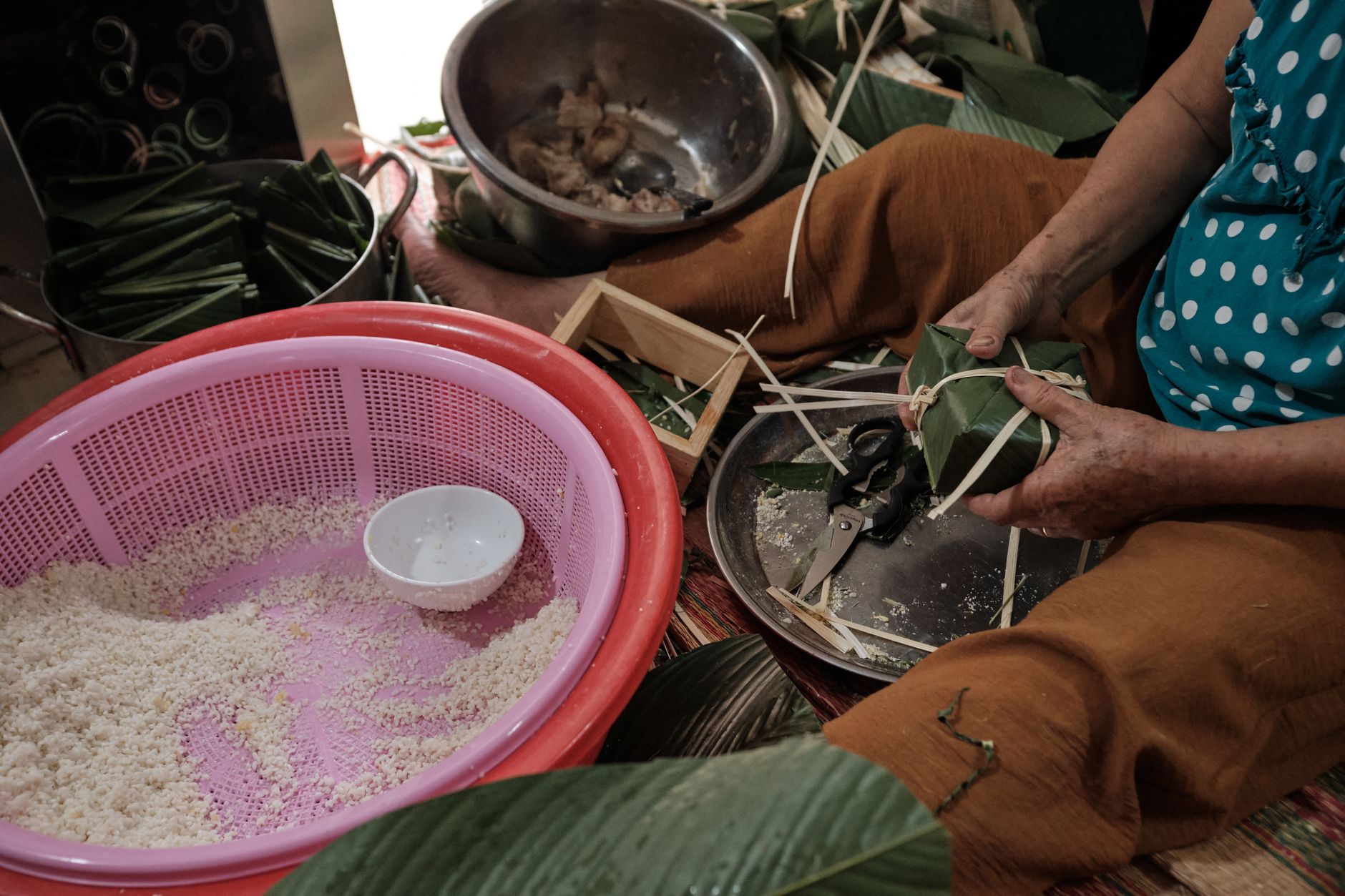
Photo by Nguyen Truong Khang on Pexels
Drinks to Pair
Hai Duong is not a coffee town like Da Lat, but you'll find strong Vietnamese coffee ("ca phe sua da"—iced coffee with condensed milk) everywhere. 10,000–15,000 VND at a street stall. There's also a growing craft "bia hoi" (fresh draft beer) scene on Tran Hung Dao Street. A glass poured fresh costs 8,000–12,000 VND and goes perfectly with crab.
Practical Notes
Hai Duong city is 1.5 hours from Hanoi by minibus (Gia Lam station, 50,000 VND), or 45 minutes from Ha Long. The food scene is dense in the central market (hit it between 5–8 a.m. for the best selection) and scattered across alleys near Tran Hung Dao and Nguyen Trai streets. Most stalls close by mid-afternoon and reopen for dinner around 5 p.m. Bring cash—no card readers. A full meal of banh canh, a side of fresh herbs, and a coffee costs 70,000–100,000 VND. Go early, eat standing up, and don't expect English menus.
Going to Vietnam? Eat and travel smarter.
Monthly: new dishes, off-the-beaten-path destinations, and itineraries — straight to your inbox. No spam. Unsubscribe anytime.
Join 0 expats. (We just launched.)
More from hai-duong
Other articles covering this city.

How to Get to Hai Duong: Bus, Train & Motorbike from Hanoi
Hai Duong sits 50 km east of Hanoi and is easiest reached by bus or motorbike. Here's how, with costs and times for all options.

Hai Duong: What to do — a traveler's guide
Hai Duong is a quiet Red River delta province sandwiched between Hanoi and Ha Long. It's not on most tourist radars, but ceramics, temples, and countryside walks make it worth a day trip.

Hai Duong: Red River Delta Gateway Between Hanoi and Haiphong
Hai Duong sits at the heart of the Red River Delta, a quieter alternative to its busier neighbors Hanoi and Haiphong. Known for lychees and traditional "banh dau xanh" (mung bean cake), the province merges rural agricultural tradition with modern industrial growth.
More from Northern Vietnam
Other articles covering the same region.

Hoa Lu Ancient Capital: Vietnam's First Kingdom and How to Visit from Ninh Binh
Hoa Lu was Vietnam's first royal capital, and the two temple complexes that survive are among the most atmospheric historical sites in the north.

Hoan Kiem Lake: The Sword Legend, Ngoc Son Temple, and When to Visit
Hoan Kiem Lake sits at the center of Hanoi's Old Quarter — here's the legend behind it, how to walk it properly, and when the streets actually belong to you.

Lung Cu Flag Tower: Vietnam's Northernmost Point
The drive to Lung Cu Flag Tower takes you to Vietnam's northernmost point at 1,500 metres. It's a half-day trip from Dong Van with a steep climb, mountain views, and nearby Hmong villages.
More in Destinations
More articles from the same category.

Landmark 81 Saigon: Observation Deck, Ice Rink, and Getting There from District 1
Landmark 81 is Vietnam's tallest building and Saigon's most visible skyline anchor. Here's what's actually inside and whether it's worth the trip.

Bitexco Financial Tower: Skydeck, Helipad Bar, and Whether the Ticket Is Worth It
Saigon's most recognizable skyscraper charges 250,000 VND to ride up to the 49th floor — here's what you actually see, and whether you should bother.

Notre Dame Cathedral Saigon: French Colonial Centerpiece in the Heart of HCMC
Saigon's Notre Dame Cathedral has been wrapped in scaffolding for years, but the square in front of it remains one of the best starting points for a colonial-era walking tour of District 1.

Paradise Cave, Quang Binh: The 31km Marble Cave That Beats Phong Nha for Photographers
Paradise Cave runs 31km through Quang Binh's karst and delivers the kind of cathedral-scale formations that Phong Nha's boat tour simply can't match. Here's how to see it properly.

Son Doong Cave: What the $3,000 Oxalis Expedition Actually Includes
Son Doong is the world's largest cave and only one operator is legally allowed to take you inside. Here is what the permit-only expedition covers and whether it is worth it.

Phong Nha Cave: Wet Cave, Dry Cave, and How to Choose
Phong Nha has two main caves worth your time — one you reach by river boat, one on foot. Here's how to pick, what each costs, and when to go.
Comments
Loading…