Where to Stay in Sapa: Town Center vs Cat Cat vs Ta Van
Sapa has three distinct bases: the foggy town center for convenience, Cat Cat village for quiet hilltop views, or Ta Van for homestay immersion. Pick based on whether you're chasing comfort or trekking.

Sapa town center: walkable, touristy, perpetually cloudy
Stay in the grid of streets around Sapa Stone Church and Sapa Market — you'll find most guesthouses, restaurants, and tour operators here. It's the obvious choice if you want to roll out of bed and grab coffee without planning.
The trade-off is obvious: it's crowded, especially on weekends, and the fog sits thick most afternoons. Your room might get damp. Street noise picks up after 9 p.m. when bars fill. But if you're arriving late, leaving early, or just want to minimize logistics, the town center works.
Typical costs: $20–50 for a basic double; $50–100 for a mid-range hotel with heating and a real bathroom. Many places bundle a trekking tour. A meal at a tourist restaurant runs 80,000–150,000 VND. You'll walk to everything.
Best for: First-time visitors, short trips, people who don't want to think about transport.
Cat Cat village: 10-minute uphill, quieter, ethnic minority homestays
Climb the hill just southeast of town (or take a xe om for 50,000 VND) and you enter Cat Cat, a "Black H'mong" settlement where homestays have become the norm. The views of the valley are sharper here, and the air feels less clogged.
Homestays typically include a bedroom, communal meals, and the owner's knowledge of local trekking routes. Expect simple rooms with basic heating — this is not a hotel. But you'll eat fresh vegetables and meet other trekkers. The village has a few shops and a handful of restaurants; it's not isolated, but it feels separate from the town crowds.
The morning walk back down to town for supplies or a restaurant meal is routine. If you want to trek into "X Trai" or up toward "Muong Hoa" valley, Cat Cat is a natural jumping-off point.
Typical costs: $25–80 for a double room with meals (breakfast and dinner). Without meals, $20–40. A bottle of water from the shop costs 10,000 VND (higher than town).
Best for: Trekkers, people who want a quieter base without sacrificing convenience, solo travelers looking to meet others.
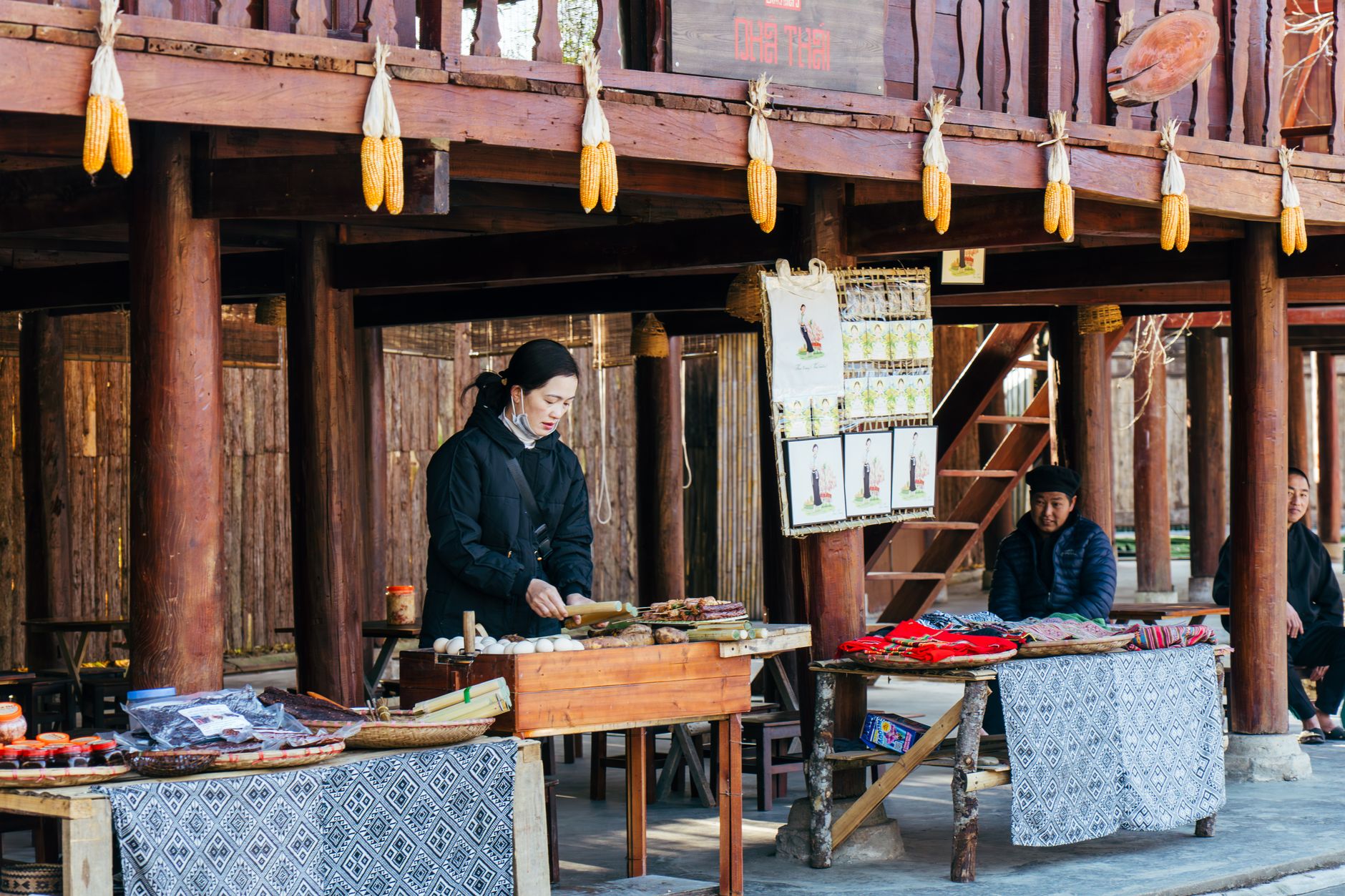
Photo by Gibson Chan on Pexels
Ta Van: the deep homestay experience, 45 minutes away
Ta Van is a small H'mong-Dao-Giay mixed village in the Muong Hoa valley, about 6 km southwest of town. You can walk there in 2–3 hours, but most people take a xe om or arrange a ride with their homestay.
Homestays here are genuinely rural: you sleep in a family home, eat at their table, help in the fields if you want, and meet tourists and locals on equal ground. Running water and heating are less certain than in Cat Cat. Internet is unreliable. This is where you go if you want to feel disconnected.
The upside is price and authenticity. Owners have fewer guests and less English, which forces engagement. The valley itself is striking—rice paddies, fruit orchards, and mountain walls. Many trekking loops begin or end here.
Typical costs: $15–40 per night with meals. Food is what the family cooks; vegetarian options exist but are basic. A motorbike ride from town is 100,000–150,000 VND one-way.
Best for: Trekkers doing multi-day loops, people comfortable with minimal infrastructure, adventurers who want genuine homestay life rather than a "homestay experience."

Photo by Quang Nguyen Vinh on Pexels
Quick comparison
| Factor | Town center | Cat Cat | Ta Van | |--------|---------|---------|--------| | Fog | Heavy | Lighter | Clearest | | Walk to cafes | 2 min | 10 min | 45 min | | Noise at night | High | Low | Very low | | Heating/comfort | Good | Fair | Basic | | English | High | Medium | Low | | Cost | $20–100 | $25–80 | $15–40 | | Best for trekking | Moderate | Good | Excellent |
Practical notes
Book homestays in Cat Cat and Ta Van in advance via Booking.com, Airbnb, or direct email — walk-ups work, but you might end up in a less-tidy room. Bring a warm layer even in summer; Sapa (사파 / 沙坝 / サパ) is 1,600 m high. If you hate fog, stay in Ta Van or visit March–April or September–October. Town center is fine for 1–2 nights; homestays reward longer stays. If you're doing a trekking guide, ask where they'll collect you from.
Going to Vietnam? Eat and travel smarter.
Monthly: new dishes, off-the-beaten-path destinations, and itineraries — straight to your inbox. No spam. Unsubscribe anytime.
Join 0 expats. (We just launched.)
More from Sapa
Other articles covering this city.

7 Days in Vietnam's Ethnic Minority Villages: A Northern Loop
A tested itinerary through Ha Giang, Sapa, and Mai Chau targeting Hmong, Dao, and Thai villages. Routes, homestays, transport, food stops, and real costs in VND.

7 Days in Vietnam for Vegetarian and Vegan Travelers
A tested week-long route from Hanoi to Saigon hitting street food, temples, and markets where plant-based eating is embedded in local culture, not a special request.

How to Get to Tuyen Quang: Transport Guide from Hanoi, Saigon & Da Nang
Tuyen Quang sits off most tourist radars, but getting there from major cities is straightforward. Here's what each transport option costs and how long it takes.
More from Northern Vietnam
Other articles covering the same region.

Lung Cu Flag Tower: Vietnam's Northernmost Point
The drive to Lung Cu Flag Tower takes you to Vietnam's northernmost point at 1,500 metres. It's a half-day trip from Dong Van with a steep climb, mountain views, and nearby Hmong villages.

Hoa Lu Ancient Capital: Vietnam's First Kingdom and How to Visit from Ninh Binh
Hoa Lu was the seat of Vietnam's first independent dynasties in the 10th century. Two surviving temples anchor a quiet bike ride through rice fields just outside Ninh Binh.

Perfume Pagoda Day Trip from Hanoi: Boat, Hike, and Festival Season
A half or full-day pilgrimage from Hanoi to the Perfume Pagoda involves a scenic boat ride through limestone karst, a trek or cable car ascent, and crowds during Tet season. Here's what to expect and how to plan.
More in Travel Tips
More articles from the same category.

Bargaining in Vietnam: When to haggle, when to pay the asking price
Haggling is normal at markets and with cyclos, but not everywhere. Learn which settings expect negotiation, how much to push back, and where to just hand over your money.
Best Vietnam eSIM Providers 2026: Costs, Setup, and Real-World Tips
A practical breakdown of Vietnam's top eSIM options, real prices, and how to avoid common pitfalls when arriving with no local SIM.

Where to Stay in Saigon: District 1 vs District 3 vs District 7
Three neighborhoods, three vibes. Pick District 1 for backpackers and chaos, District 3 for quiet and value, or District 7 for modern expat comfort. Here's how each stacks up.

Where to Stay in Can Tho: Ninh Kieu, Cai Rang, or Orchards
Can Tho's three main neighborhoods offer different angles on Mekong Delta life. Here's how to pick based on your priorities and budget.

Where to Stay in Hue: Citadel vs South Bank vs Beach
Hue splits into three distinct neighborhoods for travelers. Each offers different trade-offs between history access, dining, and atmosphere—here's how to choose.

Vietnam Gift Culture: Red Envelopes, Lucky Money & Birthday Etiquette
Understanding "li xi", birthday cakes, and the unwritten rules of gift-giving in Vietnam—from Tet bonuses to wedding contributions.
Comments
Loading…