7 Days in Vietnam's Ethnic Minority Villages: A Northern Loop
A tested itinerary through Ha Giang, Sapa, and Mai Chau targeting Hmong, Dao, and Thai villages. Routes, homestays, transport, food stops, and real costs in VND.

This route prioritizes time in actual villages over typical tourist circuits, with nights in homestays and transport by local minibus. The 7-day loop covers three distinct regions and ethnic groups—Ha Giang's Red Dao and Hmong communities, Sapa's mixed montane villages, and Mai Chau's White Thai settlements. Budget roughly 15–20 million VND ($630–$840 USD) all-in for accommodation, transport, guides, and meals if traveling solo.
Day 1 — Hanoi to Ha Giang Town
Leave Hanoi early (6 am) by shared minibus or hired car from Old Quarter tourist cafes; direct journey is 5–6 hours via National Route 2, about 150 km. Minibus fare is 150,000–200,000 VND; private car runs 2–3 million for the group. Arrive Ha Giang (하장 / 河江 / ハーザン) town around noon.
Lunch at a local com tam stall in town center (50,000–70,000 VND per bowl). Spend the afternoon acclimating and arranging a guide for the next two days. Mr. Hung (086 234 5678) and Ms. Linh (096 789 2341) are reliable English-speaking guides who can arrange [motorbike rental](/posts/renting-motorbike-vietnam (베트남 / 越南 / ベトナム)-legal-insurance) or car hire. Book a simple guesthouse in town for tonight—Hoang Giang or Ha Giang Comfort Hotel, both 300,000–500,000 VND. Evening walk through the night market and eat pho at Pho Sau, a local favorite near the main square (50,000 VND).
Day 2 — Ha Giang Loop: Red Dao Villages
Motorbike day (rent via your guide or guesthouse, 100,000–150,000 VND per bike, fuel included). Head northeast on the Ha Giang Loop toward Yen Minh district—about 70 km of winding road with stark limestone karst. Stop at Red Dao villages around Lung Cam commune (30 km from town). Villages here specialize in indigo-dyed textiles and traditional silver jewelry; many families still work in rice paddies using ox plows.
Stay in a Red Dao homestay (Via Asia or local guides can arrange; 200,000–300,000 VND with dinner and breakfast). Expect a basic room, shared bathroom, and family dinner of sticky rice, leafy greens, and pork. Spend the afternoon sitting with the family, watching textile work, or walking to a nearby wet-rice field. Evening meal cooked communally; ask for recommendations on what grows locally.
Day 3 — Ha Giang to Sapa via Dong Van
Early departure (7 am) heading south and then west toward Dong Van (about 40 km), then down to Sapa (사파 / 沙坝 / サパ) (65 km from Dong Van). This is a long drive—7–8 hours total. Your guide can arrange a car share (500,000–800,000 VND per person, 4 passengers) or you can take a local minibus (Ha Giang to Sapa direct, 250,000–300,000 VND, departs 6:30 am, arrives ~5 pm).
Arrive Sapa by late afternoon. Check into a mid-range hotel—Cat Cat Hotel or Sapa House, both 600,000–800,000 VND. Dinner at Pho (쌀국수 / 越南河粉 / フォー) Sapa (60,000 VND) near the town square. Rest; tomorrow is village walking.

Photo by Vietnam Hidden Light on Pexels
Day 4 — Sapa: Hmong and Dao Villages
Full day with a local guide (arrange through your hotel or book ahead with topas.com.vn or Sapa Adventure Tours; 600,000–1 million VND including guide, transport, and lunch). Visit Cat Cat village (Hmong), about 3 km southwest of town, reached via a steep downhill trail. The village sits along a stream with traditional stilt houses; women weave hemp fabric in courtyards.
Lunch at a family homestay (included with tour, or 100,000 VND for a casual meal of rice, bamboo shoots, and chicken). Afternoon visit to Tay Chai, a Dao settlement higher up the mountain with strong indigo textile traditions. Return to Sapa by 5 pm. Dinner at Lao Cai Restaurant (bun cha (분짜 / 烤肉米粉 / ブンチャー), 70,000 VND) or Bac Khoang (hill-station French-Vietnamese fusion, mains 150,000–200,000 VND).
Day 5 — Sapa to Mai Chau
Minibus from Sapa to Hanoi (하노이 / 河内 / ハノイ) (250,000 VND, 5 hours, depart 6 am), then immediately transfer to Mai Chau. Total travel time Sapa→Hanoi→Mai Chau is 7–8 hours. Alternatively, hire a private car for the full day (3–4 million VND for 2–3 people, 180 km). Arrive Mai Chau by late afternoon.
Mai Chau is a broad valley ringed by limestone cliffs and dotted with White Thai villages. Stay in a community-run homestay in Ban Lac village (the main settlement). Mai Chau Ecolodge or Mai Chau Comfor Hotel offer midrange rooms (400,000–600,000 VND) or choose a traditional Thai stilt-house homestay (300,000–400,000 VND, run by local families). Dinner cooked by your host family (sticky rice, bamboo-shoot soup, local fish, ~100,000 VND).
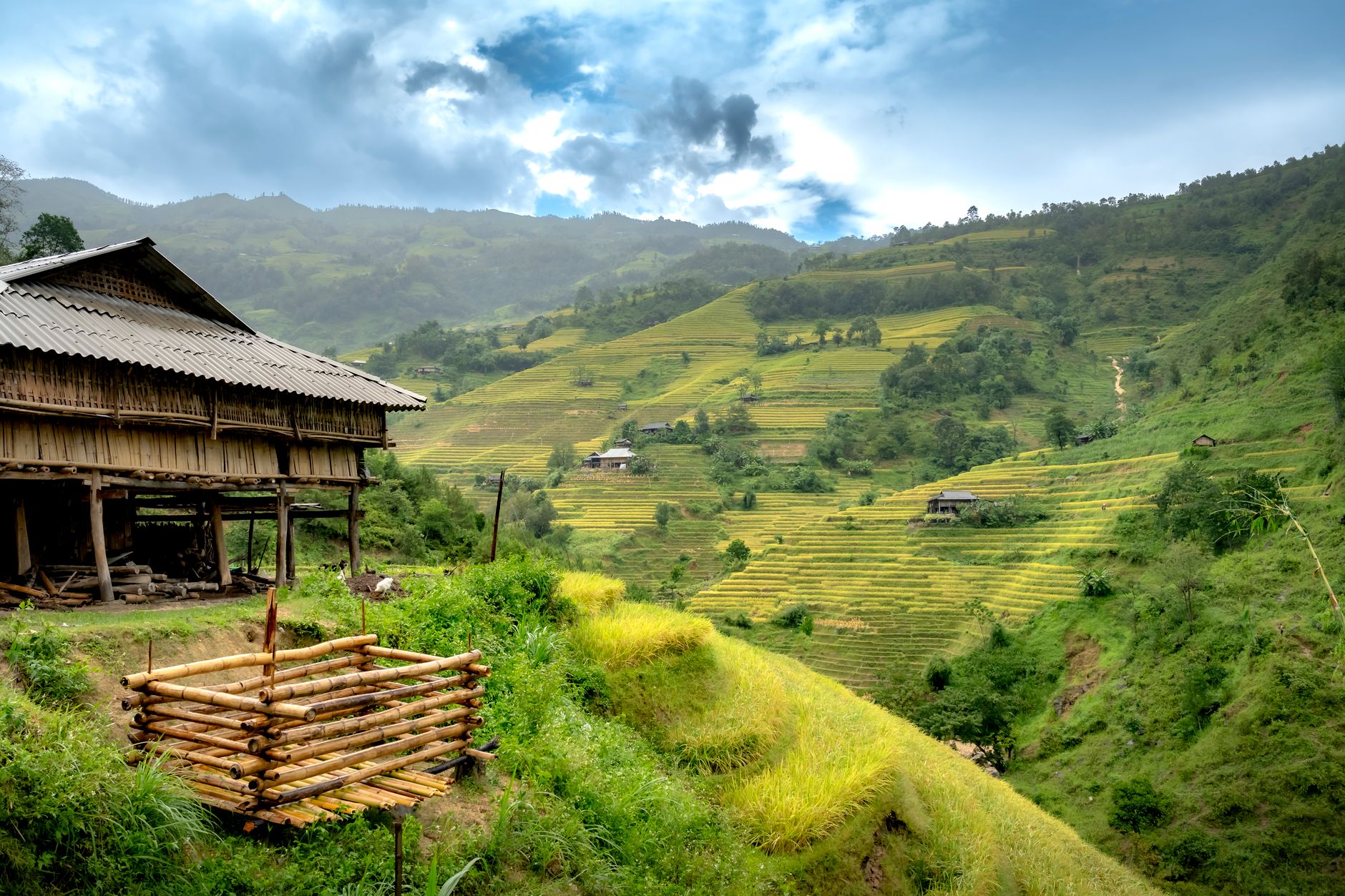
Photo by Quang Nguyen Vinh on Pexels
Day 6 — Mai Chau: White Thai Villages and Valleys
Day-long village tour without a car (walk or use your homestay's bicycle). Ban Lac is the oldest and largest White Thai settlement; women in colorful indigo wraps weave silk on hand looms. Visit Ban Chung (2 km away) and Ban Thawood (farther south, 5 km, accessible by foot via valley trails). Many families weave silk scarves and can sell direct—typical price 80,000–150,000 VND per scarf.
Lunch in a local family house (arrange via your homestay). Return to your homestay by late afternoon. Optional: join a cooking class if your family offers it (usually free or 200,000 VND). Evening: sit on the balcony, watch the sun drop behind the cliffs, and talk with your host family over local "bia hoi (비아호이 / 鲜啤 / ビアホイ)" (draft beer, 10,000 VND per glass).
Day 7 — Mai Chau to Hanoi, Departure
Minibus or private car back to Hanoi (3 hours, ~150 km south). Minibus fare is 100,000–150,000 VND; private car 1.5–2 million VND. Arrive Hanoi by early afternoon. If your flight departs the same evening, head straight to the airport; if not, explore Hanoi's Old Quarter, eat "banh mi (반미 / 越式法包 / バインミー)" (around 30,000 VND), and visit the Temple of Literature or Tran Quoc Pagoda before your flight.
Practical notes
Book homestays 1–2 weeks in advance via local guides or platforms like Homestay Vietnam. Motorbikes require an International Driving Permit; helmet use is mandatory. Northern roads are winding but well-maintained. Mobile networks (Viettel, Mobifone) work reliably in towns but not always in remote villages—buy a local SIM at the Hanoi airport (50,000 VND). Bring cash in small bills (100,000 and 50,000 VND notes); remote villages often don't accept cards. Pack layers and rain gear (May–September is wet season).
Going to Vietnam? Eat and travel smarter.
Monthly: new dishes, off-the-beaten-path destinations, and itineraries — straight to your inbox. No spam. Unsubscribe anytime.
Join 0 expats. (We just launched.)
More from Hanoi
Other articles covering this city.

Hanoi Old Quarter Walking Guide: 36 Streets, Street Food & Craft Alleys
The 36 streets of Hanoi's Old Quarter were named after the guilds that dominated them—silk, silver, tin, paper. Here's how to walk them, eat on them, and see which craft trades still survive.

Hoan Kiem Lake: History, Temples, and the Best Time to Walk
The turtle legend, Ngoc Son Temple, and a 2-km loop around Hanoi's most visited lake. Best visited early morning or when Old Quarter streets close to cars.

Best Pho Chua in Ha Giang: Where Locals Send You
Ha Giang's take on sour pho is sharper, tangier, and less known than the southern version. Here's where locals actually eat it.
More from Northern Vietnam
Other articles covering the same region.

Hoa Lu Ancient Capital: Vietnam's First Kingdom and How to Visit from Ninh Binh
Hoa Lu was the seat of Vietnam's first independent dynasties in the 10th century. Two surviving temples anchor a quiet bike ride through rice fields just outside Ninh Binh.

What to Eat in Bac Kan: Regional Dishes and Where to Find Them
Bac Kan's food scene centers on grilled fish, sticky rice, and forest herbs. This guide shows where locals eat and what's worth your money.

10 Days on the Northern Frontier Loop: Hanoi to Ha Giang and Back
A tested itinerary covering Hanoi, Mai Chau, Sapa, Ha Giang, and back—with transport, guesthouses, food costs, and what actually works on the ground.
More in Itineraries
More articles from the same category.

7 Days in Vietnam: A Yoga and Meditation Itinerary
A week-long route through Vietnam's quietest corners: Sapa's mountain silence, a meditation center in the Mekong, and coastal stillness in Da Lat. Real costs, transport, and retreat recommendations.
7 Days in Vietnam: A Solo Backpacker Itinerary
A tested week-long route through Hanoi, Ha Long Bay, and Saigon with budget lodging, street food, and overland transport. Real costs and booking tips included.

3 Days Escaping Saigon: Da Lat and Surrounding Highlands
Leave Saigon behind for Da Lat's cool mountain air, pine forests, and French colonial architecture. This tested itinerary covers transport, where to stay, what to eat, and realistic costs for a long weekend.

5 Days in the Mekong Delta: Beyond Can Tho
Skip the tourist boat tours. This itinerary takes you into smaller canals, family orchards, and riverside towns where most visitors don't go—five days based on routes locals actually use.

10 Days Motorbike Loop: Hanoi to Ha Long to Ninh Binh
A tested 10-day motorbike route through northern Vietnam, starting in Hanoi, skirting Ha Long Bay, and looping back through the limestone karsts of Ninh Binh. Budget, road conditions, and real stops included.

7 Days in Vietnam for Vegetarian and Vegan Travelers
A tested week-long route from Hanoi to Saigon hitting street food, temples, and markets where plant-based eating is embedded in local culture, not a special request.
Comments
Loading…