Hoa Binh Province: Culture, Mountains, and Lakes in Northwest Vietnam
Once a distinct province in Vietnam's Northwest, Hoa Binh was a mosaic of over 40 ethnic groups, mountain landscapes, and cultural heritage. Though it merged administratively with Phu Tho in 2025, its destinations—Mai Chau, Thung Nai, and the Hoa Binh Dam—remain essential stops for travelers seeking authentic highland Vietnam.

Hoa Binh Province: Culture, Mountains, and Lakes in Northwest Vietnam
Hoa Binh, a mountainous region in Vietnam (베트남 / 越南 / ベトナム)'s Northwest, long stood out for its ethnic diversity, terraced rice fields, and dramatic waterscapes. Bordered by Phu Tho, Son La, and Thanh Hoa, the province covered roughly 4,590 square kilometers and served as home to over 40 officially recognized ethnic groups. In June 2025, it was merged administratively into Phu Tho province, but its identity as a distinct cultural and geographic zone remains vital for travelers.
The Ethnic Tapestry
What made Hoa Binh remarkable was its human geography. The Muong constituted nearly two-thirds of the population, with Vietnamese (Kinh), Thai, Tay, and Dao making up most of the remainder. Each group maintained its own language, festivals, customs, and architectural traditions. Rather than a homogeneous region, Hoa Binh was a living archive of highland Southeast Asian culture—the kind of place where you'd encounter different spoken languages within a single valley.
This diversity wasn't merely demographic. It shaped everything from festival calendars to agricultural practice. The Muong terraced rice paddies that define Mai Chau's landscape, for instance, reflect centuries of adaptation to steep terrain and seasonal water flow.
Mai Chau: Terraced Rice and Stilt Houses
Mai Chau, about 140–150 kilometers southwest of Hanoi, is the most visited district in the region. It's known for sweeping terraced rice fields, verdant mountains, and traditional stilt-house villages inhabited by Muong and Thai families.
Most travelers approach Mai Chau by motorcycle—a popular half-day or overnight trip from Hanoi (하노이 / 河内 / ハノイ). The winding route itself is the draw: hairpin turns, mountain vistas, and small roadside stops. Once there, homestays and guesthouses in villages like Ban Lac offer meals cooked by residents and evening cultural performances (songs, dances, rice-wine hospitality—approach the latter with caution if you're driving back).
A typical overnight visit includes a valley hike or bicycle ride, lunch at a family home, and a night in a wooden bungalow. Prices run 300,000–600,000 VND ($12–25 USD) per person, including meals.
Thung Nai: Mountain and Lake
Thung Nai, in Cao Phong district, takes its nickname seriously: "Ha Long Bay on land." The comparison refers not to limestone karsts but to the dramatic interplay of steep hills, narrow water passages, and small islets scattered across a large lake. It's less crowded than Mai Chau and appeals to visitors seeking quiet boat rides or longer hiking routes.
Access is typically by car or motorcycle from Hoa Binh city (roughly one hour). Local guides can arrange boat tours of the lake or guided treks to ethnic villages in the surrounding hills. Cao Phong district is also known for orange orchards; seasonal visits (August–October) coincide with harvest and lower prices.

Photo by Quang Nguyen Vinh on Pexels
Kim Boi Hot Spring
About 30 kilometers north of Hoa Binh city lies Kim Boi, a thermal spring area with naturally heated mineral water (36°C year-round). Local tradition holds that the water has health benefits for rheumatism and skin conditions; modern facilities offer pools and massage services.
Kim Boi is more functional than scenic—a half-day side trip rather than a destination in itself. It's popular with groups and families from Hanoi seeking a long weekend. Entry and basic pool access: 50,000–100,000 VND ($2–4 USD).
Hoa Binh Dam
Constructed on the Da River starting in 1979, the Hoa Binh Dam was once Southeast Asia's largest hydroelectric facility. The reservoir behind it spans hundreds of kilometers, creating a massive inland sea that reshaped the region's geography and displaced thousands of people.
Today, the dam itself is open for guided tours: visitors walk the spillway, see turbine halls, and learn about Vietnam's energy infrastructure. A museum explains the project's history and engineering. The site is most interesting if you're into industrial history or engineering; casual tourists often skip it in favor of the lake's natural areas.
Tours are available through travel agencies in Hoa Binh city or Hanoi; figure half a day and 200,000–400,000 VND ($8–16 USD).
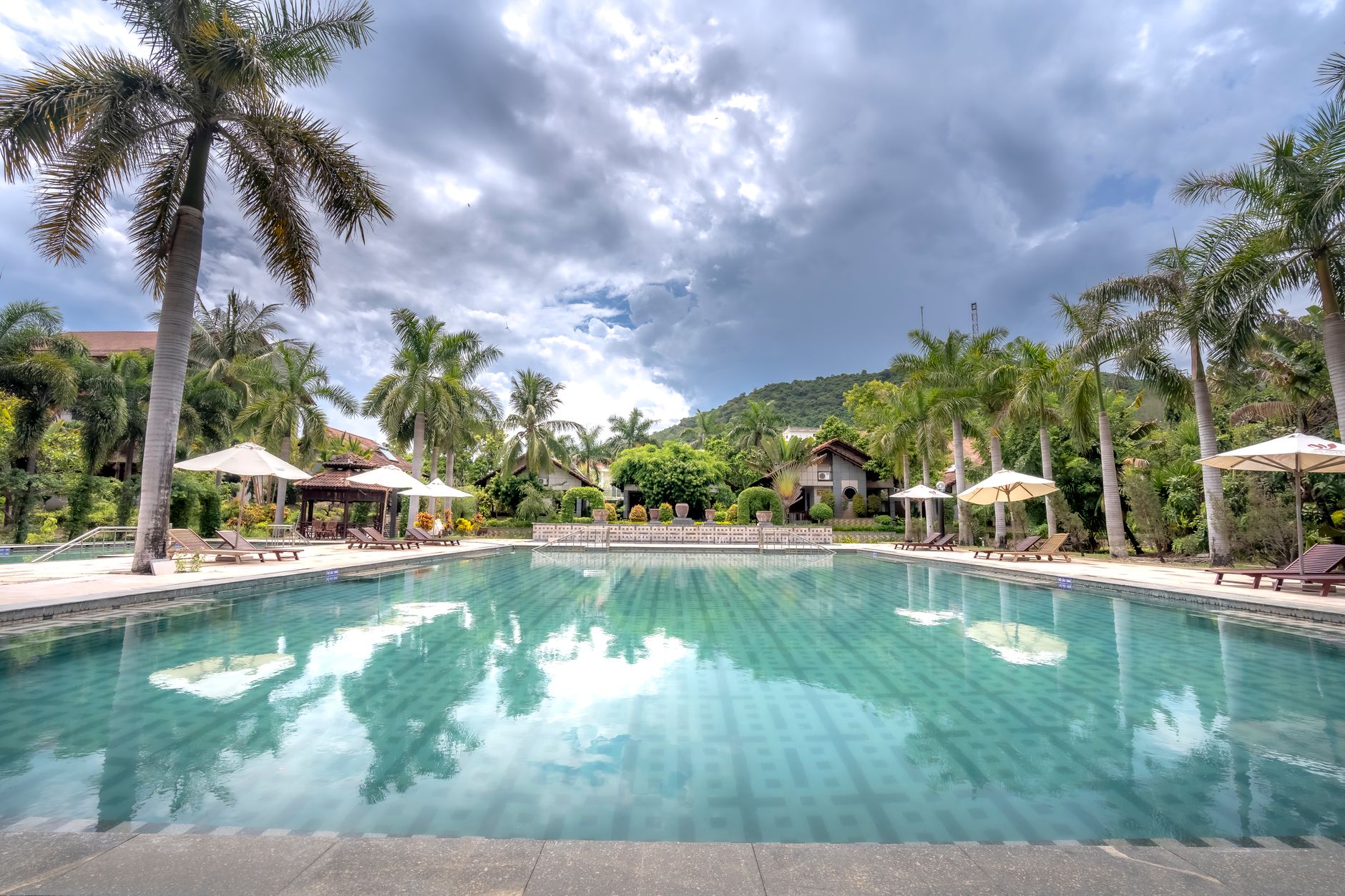
Photo by Quang Nguyen Vinh on Pexels
Cultural Heritage and Villages
Muong Bich Tru village offers a smaller-scale, less touristed alternative to Mai Chau's busier homestays. When the Hoa Binh hydroelectric project flooded its original arable land in the 1980s, the village adapted by shifting to aquaculture and community-based tourism. Today, 53 households operate fish cages and welcome visitors for meals and short stays. The experience is more intimate and less commercialized than larger tourist zones, though amenities are basic.
The province was documented as home to 184 historical relics—temples, shrines, and archaeological sites—though most are not well-marked or easily visited without local guidance. If cultural heritage is your focus, hire a local guide in Hoa Binh city (negotiate 300,000–500,000 VND per day) or contact a Hanoi-based tour operator specializing in ethnic minority regions.
Practical Notes
Getting there: Hoa Binh is 70–100 km from Hanoi. Most travelers rent motorcycles (cheap and flexible) or book guided tours. Buses from Hanoi to Mai Chau or Hoa Binh city run regularly (3–4 hours); expect 100,000–200,000 VND.
When to go: October–November (dry, cool, clear skies) and March–April (spring colors, mild temperatures) are ideal. Avoid June–September (heavy rain, slippery roads, limited visibility).
Language: English is rare outside major homestays and tour offices. Learn basic Vietnamese phrases or travel with a guide.
Phones and money: Viettel and Vina SIM cards are cheap and widely available. ATMs exist in Hoa Binh city and larger towns; smaller villages may not have them. Bring cash (VND) for meals and local transactions.
Going to Vietnam? Eat and travel smarter.
Monthly: new dishes, off-the-beaten-path destinations, and itineraries — straight to your inbox. No spam. Unsubscribe anytime.
Join 0 expats. (We just launched.)
More from Hanoi
Other articles covering this city.

Hanoi Old Quarter Walking Guide: 36 Streets, Street Food, and Craft Alleys
The Old Quarter's 36 streets were each named for the guild that once traded there. Here's how to walk them well — craft alleys, street food, and old houses included.

Hoan Kiem Lake: History, Temples, and the Best Time to Walk
The turtle legend, Ngoc Son Temple, and a 2-km loop around Hanoi's most visited lake. Best visited early morning or when Old Quarter streets close to cars.

7 Days in Vietnam: A Yoga and Meditation Itinerary
A week-long route through Vietnam's quietest corners: Sapa's mountain silence, a meditation center in the Mekong, and coastal stillness in Da Lat. Real costs, transport, and retreat recommendations.
More from Northern Vietnam
Other articles covering the same region.

Hoa Lu Ancient Capital: Vietnam's First Kingdom and How to Visit from Ninh Binh
Hoa Lu was Vietnam's first royal capital, and the two temple complexes that survive are among the most atmospheric historical sites in the north.

Lung Cu Flag Tower: Vietnam's Northernmost Point
The drive to Lung Cu Flag Tower takes you to Vietnam's northernmost point at 1,500 metres. It's a half-day trip from Dong Van with a steep climb, mountain views, and nearby Hmong villages.
Hoa Lu Ancient Capital: Vietnam's First Kingdom and How to Visit from Ninh Binh
Hoa Lu was the seat of Vietnam's first independent dynasties in the 10th century. Two surviving temples anchor a quiet bike ride through rice fields just outside Ninh Binh.
More in Destinations
More articles from the same category.

Landmark 81 Saigon: Observation Deck, Ice Rink, and Getting There from District 1
Landmark 81 is Vietnam's tallest building and Saigon's most visible skyline anchor. Here's what's actually inside and whether it's worth the trip.

Bitexco Financial Tower: Skydeck, Helipad Bar, and Whether the Ticket Is Worth It
Saigon's most recognizable skyscraper charges 250,000 VND to ride up to the 49th floor — here's what you actually see, and whether you should bother.

Notre Dame Cathedral Saigon: French Colonial Centerpiece in the Heart of HCMC
Saigon's Notre Dame Cathedral has been wrapped in scaffolding for years, but the square in front of it remains one of the best starting points for a colonial-era walking tour of District 1.

Paradise Cave, Quang Binh: The 31km Marble Cave That Beats Phong Nha for Photographers
Paradise Cave runs 31km through Quang Binh's karst and delivers the kind of cathedral-scale formations that Phong Nha's boat tour simply can't match. Here's how to see it properly.

Son Doong Cave: What the $3,000 Oxalis Expedition Actually Includes
Son Doong is the world's largest cave and only one operator is legally allowed to take you inside. Here is what the permit-only expedition covers and whether it is worth it.

Phong Nha Cave: Wet Cave, Dry Cave, and How to Choose
Phong Nha has two main caves worth your time — one you reach by river boat, one on foot. Here's how to pick, what each costs, and when to go.
Comments
Loading…