Banh Duc: Vietnam's Underrated Rice-Flour Cake
Banh duc is a silky, delicate rice-flour cake that Hanoi street vendors have perfected over decades. Served sweet or savory, it's the northern snack most travelers overlook.

What is Banh Duc?
"Banh duc" — literally "cake" and "duck" (though the name's etymology is debated) — is one of Hanoi's quietest breakfast and snack staples. It's a steamed cake made from a simple batter of rice flour, water, and salt, cooked until it reaches the consistency of soft custard. The result is silky, slightly wobbly, almost custardy. It's nothing like the dense, crumbly rice cakes you might expect. Instead, think closer to a savory flan or silken tofu in texture.
The magic is in the restraint. There are no fancy add-ins, no fillings. Just rice, water, heat, and technique — which is why a good banh duc vendor's consistency matters more than their marketing.
Sweet Banh Duc (Banh Duc Nong)
The simplest way to eat banh duc is hot and sweet. A vendor ladels the steaming cake into a bowl and drizzles it with a thin syrup made from brown sugar, sometimes infused with ginger or topped with a handful of crushed peanuts. The heat matters — banh duc served cold loses its appeal. You want that warmth, the way the syrup pools into the soft cake, the slight firmness that melts on your tongue.
It's breakfast food in Hanoi (하노이 / 河内 / ハノイ). Older locals sit on plastic stools around 6 or 7 a.m., eating banh duc and sipping Vietnamese coffee, barely saying a word. The cake costs about 10,000–15,000 VND (USD 0.40–0.60) per bowl.
Savory Banh Duc (Banh Duc Man)
The savory version is where banh duc gets more interesting. The cake itself is identical, but the toppings change the game. Common additions include:
- Ground shrimp or pork, lightly fried until fragrant
- Crispy fried shallots
- Fresh cilantro and scallions
- A drizzle of nuoc cham (fish sauce dipping sauce) or soy sauce
- Sometimes a raw quail egg stirred in
Savory banh duc works as a light lunch or late-morning snack. It's more substantial than the sweet version, though still delicate. Prices hover around 15,000–20,000 VND (USD 0.65–0.85).
Photo by Flo Dahm on Pexels
Where to Find It in Hanoi
Banh duc vendors cluster in Hanoi's Old Quarter and around early-morning market zones. There's no single "famous" banh duc place — it's an anonymous food. You'll spot vendors setting up with their aluminum pots and small plastic stools around 5:30 a.m., usually near Dong Xuan Market or on the narrow side streets off Hang Gai Street. By 9 a.m., many have sold out.
If you're staying near Hoan Kiem Lake, walk south through the Old Quarter toward the Red River. You'll pass several banh duc carts. Look for the steaming pot and line of locals — that's your signal.
One consistent spot: banh duc vendors often set up on Hang Hanh Street (the narrow alley running parallel to Hang Gai) around 6:00–8:30 a.m. They rotate, but there's almost always someone there.
Why It's Overlooked
Tourists miss banh duc because it doesn't photograph well. It's pale, humble, sits in a plastic bowl with brown syrup. There's no Instagram angle, no "wow" story. It doesn't fit the "street food adventure" narrative the way "[pho](/posts/pho-vietnam (베트남 / 越南 / ベトナム)-noodle-soup-guide)" or "banh mi" do. And most guidebooks don't mention it — partly because it's so localized, partly because it requires showing up early.
But that's exactly why it matters. Banh duc is the breakfast food Hanoians eat when they're not thinking about food, when they're just hungry and want something familiar and warm. It's generational. The women making banh duc in the Old Quarter learned from their mothers, who learned from theirs. There's no franchise, no TikTok account, no English signage.
That anonymity is the point. Banh duc is proof that you don't need "famous" or "photogenic" to be worth eating.
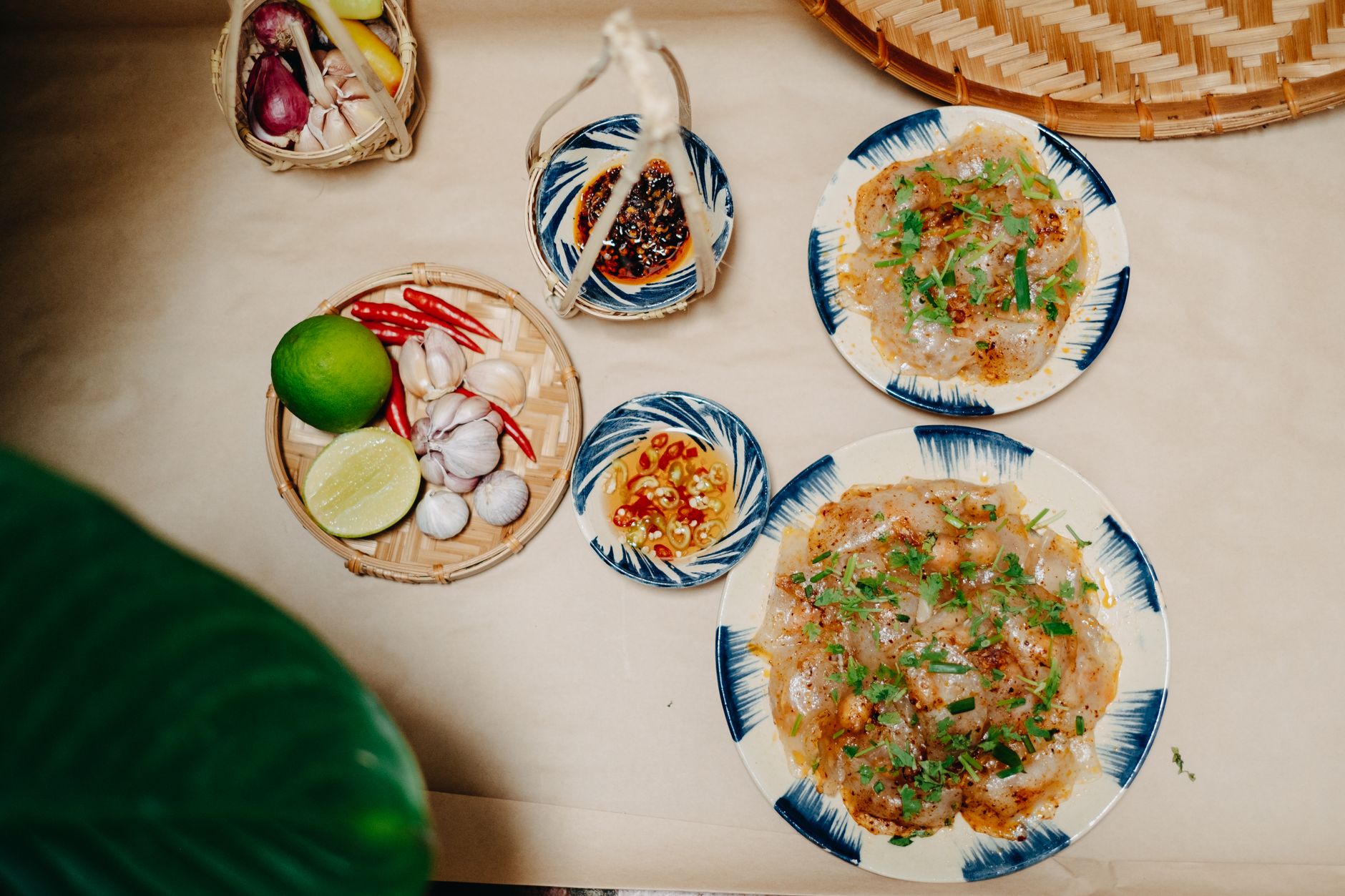
Photo by Pew Nguyen on Pexels
How to Eat It
Request banh duc nong (hot) and specify sweet or savory. Use the plastic spoon and eat it slowly while it's still warm. If you order the savory version, don't skip the nuoc cham — a small bowl is usually offered on the side. Mix it in or dip each spoonful. The combination of the soft cake, sharp fish sauce, and crispy toppings is what makes it work.
If it's your first time, try sweet first. It's gentler, lets you focus on the texture. Then come back another morning for savory.
Practical Notes
Banh duc is a breakfast-and-early-morning food. Plan to eat it between 6:00–8:30 a.m. Bring small notes (10,000 VND) — most vendors don't carry much change. It's one of the cheapest things you'll eat in Hanoi, and the profit margins are razor-thin, so tipping isn't expected but is always appreciated.
Going to Vietnam? Eat and travel smarter.
Monthly: new dishes, off-the-beaten-path destinations, and itineraries — straight to your inbox. No spam. Unsubscribe anytime.
Join 0 expats. (We just launched.)
More from Hanoi
Other articles covering this city.

Hoan Kiem Lake: History, Temples, and the Best Time to Walk
The turtle legend, Ngoc Son Temple, and a 2-km loop around Hanoi's most visited lake. Best visited early morning or when Old Quarter streets close to cars.

7 Days in Vietnam: A Yoga and Meditation Itinerary
A week-long route through Vietnam's quietest corners: Sapa's mountain silence, a meditation center in the Mekong, and coastal stillness in Da Lat. Real costs, transport, and retreat recommendations.

7 Days in Vietnam: A Solo Backpacker Itinerary
A tested week-long route through Hanoi, Ha Long Bay, and Saigon with budget lodging, street food, and overland transport. Real costs and booking tips included.
More from Northern Vietnam
Other articles covering the same region.

Lung Cu Flag Tower: Vietnam's Northernmost Point
The drive to Lung Cu Flag Tower takes you to Vietnam's northernmost point at 1,500 metres. It's a half-day trip from Dong Van with a steep climb, mountain views, and nearby Hmong villages.

Hoa Lu Ancient Capital: Vietnam's First Kingdom and How to Visit from Ninh Binh
Hoa Lu was the seat of Vietnam's first independent dynasties in the 10th century. Two surviving temples anchor a quiet bike ride through rice fields just outside Ninh Binh.

Best Pho Chua in Ha Giang: Where Locals Send You
Ha Giang's take on sour pho is sharper, tangier, and less known than the southern version. Here's where locals actually eat it.
More in Food & Drink
More articles from the same category.

Best Pho Saigon in Ho Chi Minh City: Where Locals Send You
Pho Saigon is thinner, sweeter, and faster than its northern cousin. Here's where to find the real thing in HCMC, plus what makes it different and how to order.

Best Banh Xeo in Nha Trang: Where Locals Send You
Nha Trang's banh xeo scene is rowdier and greasier than the south. Here's where locals actually eat, what to order, and why the crispy rice pancakes here taste different.

Best Banh Nam in Hue: Where Locals Send You
Hue's version of "banh nam" is a steamed rice cake pocket stuffed with shrimp and pork—nothing like its northern cousin. Here's where locals actually eat it.

Best Banh Uot Thit Nuong in Buon Ma Thuot: Where Locals Send You
Banh uot thit nuong — steamed rice rolls with grilled pork — is a breakfast staple in Buon Ma Thuot's Central Highlands. Here are the spots locals actually eat.

Best Banh Canh Ca in Da Nang: Where Locals Send You
Da Nang's version of "banh canh ca" — thick tapioca noodles in crab broth — tastes different from Hanoi or Saigon. Here's where locals actually eat it, what to order, and why timing matters.

Best Muc 1 Nang in Mui Ne: Where Locals Send You
Muc 1 nang—grilled squid stuffed with herbs and meat—reaches its peak in Mui Ne. Here's where locals actually eat it, what to order, and why this coastal town makes it better than anywhere else.
Comments
Loading…