Hanoi Old Quarter Walking Guide: 36 Streets, Street Food & Craft Alleys
The 36 streets of Hanoi's Old Quarter were named after the guilds that dominated them—silk, silver, tin, paper. Here's how to walk them, eat on them, and see which craft trades still survive.

Hanoi's Old Quarter is not romantic chaos. It's a 13th-century merchant republic that just never stopped trading. The 36 streets (actually closer to 40 today) were not named by romantic whim; each took the name of the goods its guild controlled. Hang Gai was silk. Hang Thiec was tin. Hang Ngang was dry goods. Walking them is learning how a medieval city organized itself—and still does.
The 36-street system and what it meant
When merchants from the Red River Delta moved into the walled city under the Ly dynasty, the king's administrators didn't let them settle anywhere. Goldsmiths lived on one street. Butchers on another. Candlemakers, papermakers, coffin makers—all segregated. It was hygiene, fire control, and monopoly rolled into one. The word "hang" (from the old Vietnamese hang, meaning "trade" or "goods") stuck to the street names. That's why almost every Old Quarter address starts with Hang.
Not all guilds have survived. Hang Thiec (tin) now sells tourist trinkets. Hang Duong (sugar) moved to plastic toys. But the silk makers of Hang Gai still sell fabric. The silver workers of Hang Bac haven't entirely vanished. And Hang Ngang still hosts fabric wholesalers.
Walking route: North to South, West to East
Start at the Dong Xuan Market, the Old Quarter's northern spine. Built by the French in 1889, it's still the neighborhood's grocery and textile hub. The ground floor buzzes until 10 a.m., then again at 4 p.m.—the quietest hours are noon to 3 p.m.
From Dong Xuan, head south on Hang Chieu (mat weavers). The street is narrow, wet, and smells of damp straw—they still sell sleeping mats here, bundled tight. Turn right onto Hang Ngang (dry goods, spices). This is the widest street in the quarter; colonial-era shop-houses have ground-floor stalls selling everything from herbs to coffee to cuttlefish. The shopkeepers have been here 40 years or more. Ask for "ca phe" (Vietnamese coffee). Some vendors will sell you a filter and beans for 40,000–80,000 VND.
Cut south to Hang Dao (silk dyers). The name still fits—you'll see bolts of fabric, threads, embroidery shops. Tourist souvenir sellers have colonized the ground floors, but upstairs and deeper in are real fabric wholesalers. This is where [ao dai](/posts/ao-dai-vietnam (베트남 / 越南 / ベトナム)-national-garment) tailors buy their stock.
Turn east onto Hang Bac (silver). The street smells of metal and solder. Silverware shops still pack the street, though half now sell cheap souvenirs. But a few—look for older shop-houses with high ceilings—still do custom silver work. Pricing starts around 300,000 VND for a basic bracelet, made to order.
Head north on Hang Gai (silk). It's touristy now—"silk shops" peddle pashminas and knockoffs. But Hang Gai is also where traditional hanbok (Vietnamese weaving) survives. Look for shops displaying bolts of hand-loomed fabric. Prices for genuine silk start around 150,000 VND per meter.
Turn west and explore the alleys: Hang Buom (sails, now anchovy paste), Hang Duong (sugar, now plastic tat), Hang Ma (paper and ceremonial goods). Hang Ma is the best preserved craft street. Small stalls stacked three stories high sell gold leaf, incense, paper lanterns, and votive objects for ancestor worship. It's not a museum—it's a working district. Visit it in late August or early September, and you'll see the real volume of business before the Mid-Autumn Festival.

Photo by Quang Nguyen Vinh on Pexels
Street food by block
The Old Quarter's food tradition is guilds + demand. Because merchants crowded the streets, street vendors followed. That's why almost every lane has a signature dish.
Hang Thiec (tin, now mixed): midday "pho (쌀국수 / 越南河粉 / フォー)" and "banh mi". Vendors set up plastic stools at 8 a.m. and vanish by 11 a.m. Pho costs 40,000–50,000 VND per bowl.
Hang Ngang: late breakfast "com tam (껌땀 / 碎米饭 / コムタム)" (broken rice). Two vendors operate near the intersection with Hang Dao. Broken rice with fried egg, grilled pork, and pickled vegetable runs 35,000 VND. Arrive by 9 a.m. or miss it.
Hang Dao (silk): morning "banh cuon (반꾸온 / 蒸米卷 / バインクオン)" (rolled rice cake). Near the corner of Cau Go Street, a small cart serves fresh "banh cuon" at 30,000 VND. The cook rolls them by hand. Busy by 8 a.m., sold out by 10 a.m.
Hang Bac (silver): afternoon "bun cha (분짜 / 烤肉米粉 / ブンチャー)" (grilled pork and noodles). Three or four stalls cluster at the southern end of the street around 11 a.m. Bun cha with rolls, herbs, and dipping sauce is 45,000–55,000 VND.
Hang Gai (silk): egg "ca phe sua da (연유커피 / 越南冰咖啡 / ベトナムアイスコーヒー)" (iced coffee with sweetened condensed milk). At least five coffee spots line the street. A standard iced coffee costs 25,000–30,000 VND; with egg, add 10,000 VND.
Hang Buom (sails, now fish): evening "cha gio (짜조 / 炸春卷 / チャーゾー)" (spring rolls) and grilled fish. Vendors appear around 4 p.m. Cha gio is 2,000–3,000 VND per roll; grilled fish sold by weight.
Old houses and colonial-era architecture
The Old Quarter's architecture is a palimpsest. Most shop-houses date to the French colonial period (1880s–1950s), but many sit atop Nguyen-dynasty or earlier foundations. A few are worth entering.
The House of 87 Hang Dao: a 19th-century merchant's home, now a small museum. Narrow, four stories, with a communal courtyard. Entry is 30,000 VND. Hours are erratic—knock and ask.
Quan Su Temple (on Quan Su Street, a short walk from Hang Gai): built in the 17th century but heavily restored. It's a working Buddhist temple, not a museum. Visitors are welcome during morning and evening hours (5–6 a.m. and 6–7 p.m.). Free entry.
St. Joseph Cathedral (Nha Tho Lon, at the corner of Nha Tho and Nha Chung Streets): opened 1887. Gothic, French design, with original stained glass in parts. It's an active Catholic parish. Mass times are posted outside; tourists can attend. Photography is usually restricted during services.
Tran Quoc Pagoda (not in the Old Quarter proper, but a 15-minute walk north): sits on a small peninsula in West Lake. Built in the 6th century, it's Hanoi's oldest pagoda. Entry is free. Open dawn to dusk.
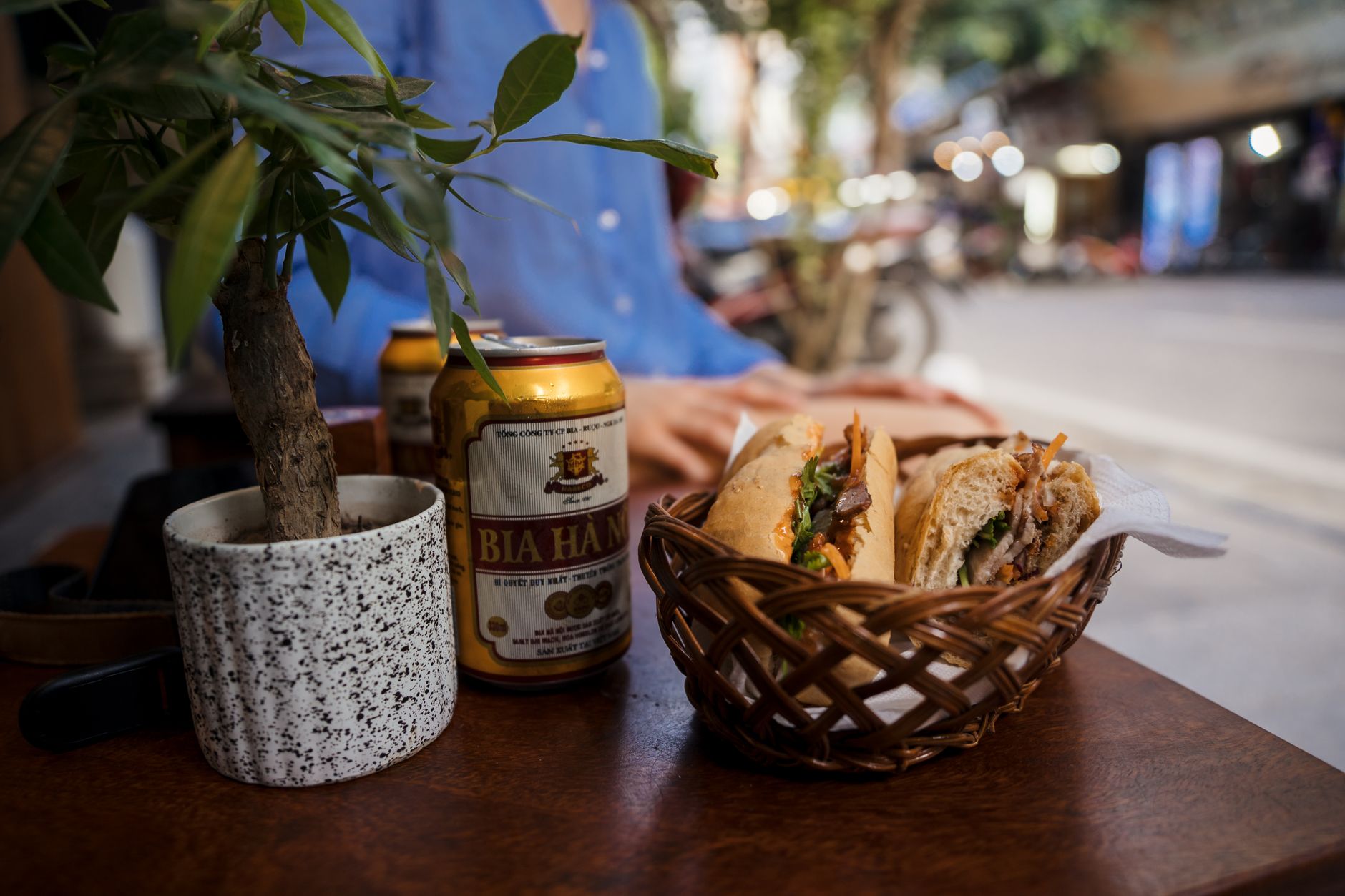
Photo by Flo Dahm on Pexels
Where to stay
Staying in the Old Quarter means noise, humidity, and monsoon odors in summer. It also means waking up to vendors setting up for breakfast and falling asleep to scooter horns. Most visitors either embrace it or regret it.
Budget hostels: line Hang Dieu and Hang Giay. Dorms run 150,000–250,000 VND per bed. Breakfast (usually a bread roll and instant coffee) is included. The best have rooftop bars where you can decompress from the street noise.
Mid-range hotels: cluster on Hang Bac and Hang Dao. Doubles with air conditioning, hot water, and a small desk cost 600,000–1.2 million VND per night. Avoid rooms facing the street—the noise is relentless, especially 6–9 a.m. and 4–8 p.m.
Guesthouses: scattered throughout. Many are family-run, above shop-houses. Rates are 400,000–800,000 VND for a double. Owners often speak English and can point you to neighborhood food vendors. Ask for a room on the second floor minimum; street-level rooms are damp and loud.
Practical notes
Visit the Old Quarter early (6–8 a.m.) to see the craft trades in action and eat street food before vendors close. Avoid midday (noon–3 p.m.); it's hot, crowded, and most food vendors have gone. Evenings are best for walking and photographing architecture, but fewer food stalls operate. Bring a small backpack and wear slip-on shoes; you'll dodge mopeds better if you can move quickly. The streets flood during heavy rain; monsoon season (May–September) can mean ankle-deep water. Use Google Maps to navigate, but trust your instincts when streets narrow—the quarter's alleys link in non-intuitive ways. Talk to shopkeepers; many have lived there 30+ years and will tell you which vendor sells the "real" version of a dish.
Going to Vietnam? Eat and travel smarter.
Monthly: new dishes, off-the-beaten-path destinations, and itineraries — straight to your inbox. No spam. Unsubscribe anytime.
Join 0 expats. (We just launched.)
More from Hanoi
Other articles covering this city.

7 Days in Vietnam: A Yoga and Meditation Itinerary
A week-long route through Vietnam's quietest corners: Sapa's mountain silence, a meditation center in the Mekong, and coastal stillness in Da Lat. Real costs, transport, and retreat recommendations.
7 Days in Vietnam: A Solo Backpacker Itinerary
A tested week-long route through Hanoi, Ha Long Bay, and Saigon with budget lodging, street food, and overland transport. Real costs and booking tips included.

10 Days on the Northern Frontier Loop: Hanoi to Ha Giang and Back
A tested itinerary covering Hanoi, Mai Chau, Sapa, Ha Giang, and back—with transport, guesthouses, food costs, and what actually works on the ground.
More from Northern Vietnam
Other articles covering the same region.

Lung Cu Flag Tower: Vietnam's Northernmost Point
The drive to Lung Cu Flag Tower takes you to Vietnam's northernmost point at 1,500 metres. It's a half-day trip from Dong Van with a steep climb, mountain views, and nearby Hmong villages.

Hoa Lu Ancient Capital: Vietnam's First Kingdom and How to Visit from Ninh Binh
Hoa Lu was the seat of Vietnam's first independent dynasties in the 10th century. Two surviving temples anchor a quiet bike ride through rice fields just outside Ninh Binh.

Best Pho Chua in Ha Giang: Where Locals Send You
Ha Giang's take on sour pho is sharper, tangier, and less known than the southern version. Here's where locals actually eat it.
More in Destinations
More articles from the same category.

Son Doong Cave: Inside the $3,000 Oxalis Expedition
Son Doong is the world's largest cave by volume—and the only way in is a 4-day permit-exclusive tour with Oxalis. Here's what you actually get, who should go, and what cheaper caves offer instead.

Phong Nha Cave: Boat Tours, Dry Caves, and How to Choose
Phong Nha-Ke Bang has two main cave experiences: the iconic river boat through Phong Nha Cave itself, and the dry trek into Tien Son. Here's how to pick, what to expect, and when to go.

Hoi An Lantern Festival: Full Moon Nights and How to Plan Around Them
The Hoi An Lantern Festival happens on the 14th lunar day each month. Electricity shuts off, lanterns float on the Thu Bon River, and crowds triple. Here's how to time your visit and actually enjoy it.

Japanese Bridge in Hoi An: What to Know Before You Visit
The 400-year-old Japanese Bridge is Hoi An's most iconic landmark. Here's how to see it properly—and avoid the crowds.

Thien Mu Pagoda in Hue: Seven Stories Above the Perfume River
Hue's most recognizable landmark rises 21 metres above the Perfume River. This is the story behind the tower, how to get there, and when to visit without the tour groups.

What to Eat in Bac Kan: Regional Dishes and Where to Find Them
Bac Kan's food scene centers on grilled fish, sticky rice, and forest herbs. This guide shows where locals eat and what's worth your money.
Comments
Loading…