Japanese Bridge in Hoi An: What to Know Before You Visit
The 400-year-old Japanese Bridge is Hoi An's most iconic landmark. Here's how to see it properly—and avoid the crowds.

A Quick History
The Japanese Bridge, or Cau Nhat Ban in Vietnamese, was built around 1593 by Japanese merchants who had settled in Hoi An's riverside trading port. At the time, Hoi An was Southeast Asia's busiest commercial hub—Japanese, Chinese, Indian, and European traders worked the wharves. The bridge connected the Japanese quarter (on the west bank) to the Chinese quarter (east), making it as much a practical crossing as a cultural landmark.
The structure you see today is a rebuild. The original survived centuries of monsoons and river flooding, but by the early 20th century it was in pieces. The French colonial administration oversaw reconstruction in 1986, and again in 2010–2013 when the span underwent major restoration work.
What You're Looking At
The bridge is short—about 18 meters long, 5 meters wide. What makes it work architecturally is the half-barrel vault roof that sits on timber trusses. There are no nails; everything is joinery and mortise. The roof tiles are clay, laid in the method used in 16th-century Japan. At each end of the bridge stand small alcoves: one holds a statue of a Japanese merchant patron; the other is now a small souvenir shop (which breaks the atmosphere, but that's Hoi An (호이안 / 会安 / ホイアン) tourism for you).
The railings are wooden lattice, weathered to silver-grey after decades of rain and river spray. The underside of the arch is dark from soot—votive candles and incense burn there year-round, left by local devotees.
Getting In
You do need a ticket to cross the bridge. It's part of the Hoi An Ancient Town combo pass: 120,000 VND (~$5 USD) for foreigners, 30,000 VND for Vietnamese nationals. The pass covers entry to the bridge plus four other heritage sites (your choice from the Temple of the Phuc Kien Congregation, the Tan Ky House, the Tran Phu House, and a few others).
You can buy tickets at the booth near the south end of Tran Phu Street, or at most hotels in the Old Quarter. The pass is valid for 24 hours, so you don't have to cram everything in one morning.
There are no entry restrictions based on time of day—the bridge is technically accessible from dawn to dusk, but in practice the ticketing booths operate from around 7 AM to 5 PM.
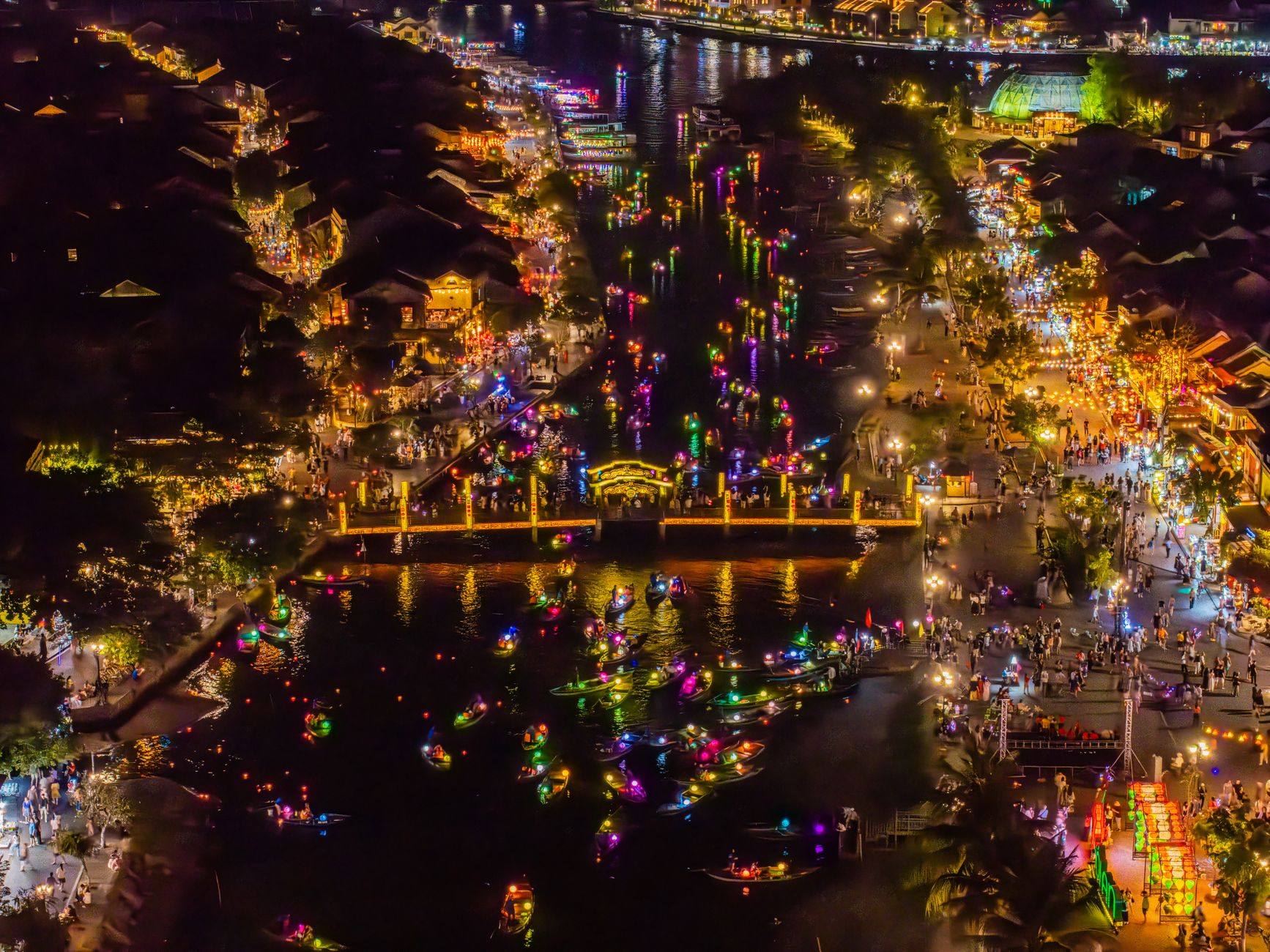
Photo by VANNGO Ng on Pexels
Best Time to Visit
Sunrise, early morning—this is not negotiable if you want a decent photo or a moment of quiet. By 8:30 AM, tour groups arrive in clusters. By 10 AM, you'll be shoulder-to-shoulder with cameras.
Early October to November (post-monsoon, pre-Christmas crush) and March to April are sweet spots weather-wise: dry, warm, not suffocating. August–September brings rain and humidity; December–January brings tourists and humidity in equal measure.
The lanterns that light the Old Quarter in the evening make for moody shots around 6–7 PM, but the bridge foot traffic is still heavy. If you're willing to come back twice, sunrise for clarity and golden hour for atmosphere is the move.
Photography Notes
The bridge photographs best from the south bank, shot from water level looking north. If you wade a few steps into the Ta Vu River (in the dry season, October–April), you can get the arch and the tiled roof framed cleanly. The morning light from the east casts the arch in relief without harsh shadows.
From the bridge itself, looking west or east along the riverbank, you get the wider context—the old houses, the water, the energy of the town. A wide lens works better than a telephoto here; you want context.
Don't bother trying to get the bridge and the Full Moon Lanterns in one frame at night. The lantern illumination is too dim for handheld shots without pushing ISO to the point of grain, and the bridge itself is lit with floodlights that skew yellow-orange in the blue twilight.

Photo by Quang Nguyen Vinh on Pexels
Practical Tips
Crowds: The bridge is the single most photographed spot in Hoi An. If you dislike crowds, visit in the window between 6:30–7:30 AM or after 4 PM, when day-trippers are leaving.
Wear shoes with grip. The wooden deck gets slick with humidity and morning dew. Hundreds of people walk across it every day; the wood is smooth.
Bargaining boat operators: Near the bridge, local boatmen will offer to take you on a short river ride. Prices start at 100,000–150,000 VND per person. It's a fine addition to your visit if you have time, but negotiate before boarding.
Incense smoke: The candles and incense under the arch create a haze. If you're sensitive to smoke, take the crossing when fewer people are burning offerings (early morning, or weekdays).
Combine with nearby sites: The Temple of Phuc Kien Congregation is a 2-minute walk south. The Tan Ky House is 50 meters north. Your 120,000 VND pass covers three of these, so use the time to explore rather than just photographing the bridge and leaving.
Final Notes
The Japanese Bridge is not subtle—it's the centerpiece of Hoi An's brand. But it rewards a quiet visit. Go early, linger, watch the light change. The 400-year-old timber beneath your feet has survived wars, floods, and decades of restoration. That's worth a slow crossing.
Going to Vietnam? Eat and travel smarter.
Monthly: new dishes, off-the-beaten-path destinations, and itineraries — straight to your inbox. No spam. Unsubscribe anytime.
Join 0 expats. (We just launched.)
More from Hoi An
Other articles covering this city.

Grab vs Be vs Xanh SM: Which Ride-Hailing App to Use in Vietnam
Three ride-hailing apps dominate Vietnam. Here's how they differ on price, coverage, payment, and which one makes sense depending on where you are and what you value.

Vegetarian Dining in Hoi An: Restaurants and Cooking Classes
Hoi An has become Vietnam's most welcoming city for plant-based eating. Here's where to eat and how to learn to cook like a local—without the fish sauce.

Best Cao Lau in Hoi An: Why the Well Water Actually Matters
Cao lau tastes different in Hoi An because of the water. Here's where to eat it, and why the geography isn't just marketing.
More from Central Vietnam
Other articles covering the same region.

Son Doong Cave: Inside the $3,000 Oxalis Expedition
Son Doong is the world's largest cave by volume—and the only way in is a 4-day permit-exclusive tour with Oxalis. Here's what you actually get, who should go, and what cheaper caves offer instead.

Phong Nha Cave: Boat Tours, Dry Caves, and How to Choose
Phong Nha-Ke Bang has two main cave experiences: the iconic river boat through Phong Nha Cave itself, and the dry trek into Tien Son. Here's how to pick, what to expect, and when to go.

Thien Mu Pagoda in Hue: Seven Stories Above the Perfume River
Hue's most recognizable landmark rises 21 metres above the Perfume River. This is the story behind the tower, how to get there, and when to visit without the tour groups.
More in Destinations
More articles from the same category.

Lung Cu Flag Tower: Vietnam's Northernmost Point
The drive to Lung Cu Flag Tower takes you to Vietnam's northernmost point at 1,500 metres. It's a half-day trip from Dong Van with a steep climb, mountain views, and nearby Hmong villages.

Hoa Lu Ancient Capital: Vietnam's First Kingdom and How to Visit from Ninh Binh
Hoa Lu was the seat of Vietnam's first independent dynasties in the 10th century. Two surviving temples anchor a quiet bike ride through rice fields just outside Ninh Binh.

Perfume Pagoda Day Trip from Hanoi: Boat, Hike, and Festival Season
A half or full-day pilgrimage from Hanoi to the Perfume Pagoda involves a scenic boat ride through limestone karst, a trek or cable car ascent, and crowds during Tet season. Here's what to expect and how to plan.

Hanoi Old Quarter Walking Guide: 36 Streets, Street Food & Craft Alleys
The 36 streets of Hanoi's Old Quarter were named after the guilds that dominated them—silk, silver, tin, paper. Here's how to walk them, eat on them, and see which craft trades still survive.

Hoan Kiem Lake: History, Temples, and the Best Time to Walk
The turtle legend, Ngoc Son Temple, and a 2-km loop around Hanoi's most visited lake. Best visited early morning or when Old Quarter streets close to cars.

What to Eat in Bac Kan: Regional Dishes and Where to Find Them
Bac Kan's food scene centers on grilled fish, sticky rice, and forest herbs. This guide shows where locals eat and what's worth your money.
Comments
Loading…