Vegetarian Dining in Hoi An: Restaurants and Cooking Classes
Hoi An has become Vietnam's most welcoming city for plant-based eating. Here's where to eat and how to learn to cook like a local—without the fish sauce.

Why Hoi An for vegetarian travelers
Hoi An isn't typically the first place travelers think of for vegetarian food in Vietnam (베트남 / 越南 / ベトナム). The city's famous dishes—"cao lau", "banh mi", street-food culture—all seem built around pork and seafood. But in the past five years, Hoi An has quietly become the country's most vegan-friendly destination, driven partly by backpacker culture and partly by local chefs curious about plant-based cooking.
Unlike Hanoi or Saigon, where vegetarian options often mean "add tofu to a pork broth", Hoi An (호이안 / 会安 / ホイアン) restaurants take it seriously. The Old Town's narrow streets and tourist audience mean chefs here are used to custom requests—and actually execute them well. You'll eat here without explaining "no fish sauce, no shrimp paste, no chicken stock" five times.
Restaurants and street food
Karma Waters
Karma Waters sits on a quiet lane near the Japanese Bridge, in a restored wooden house with a small courtyard. Everything on the menu is plant-based, though it's not advertised as vegan propaganda—just good food that happens to be without animal products.
Try the "banh mi (반미 / 越式法包 / バインミー)" (it's not technically banh mi without pâté, but their version with marinated tofu, pickled vegetables, and fresh herbs tastes complete). Soups are where they shine: a creamy coconut curry with roasted vegetables, a clear broth with mushroom "pho"-style noodles, a turmeric-based soup that tastes like home cooking. Main plates run 70,000–120,000 VND. Service is slow by design—this isn't a churn-and-burn place.
Coffee is single-origin, the kind where the barista will tell you the specific farm in Da Lat. Desserts lean into tropical fruit: mango cheesecake (cashew-based), coconut panna cotta, sticky rice with jackfruit.
Minh Hien
Minh Hien occupies a two-story colonial building on Tran Phu Street and focuses on traditional Vietnamese cuisine—with a vegetarian section that doesn't feel like an afterthought. Owner Minh Hien herself is warm and English-fluent; tell her you're vegetarian and she'll steer you toward the best options.
Signature dishes: a salad of fresh herbs, young papaya, and lime dressing (no fish sauce version available); fried spring rolls ("cha gio (짜조 / 炸春卷 / チャーゾー)") stuffed with mushroom, carrot, and glass noodles; a clay-pot curry with eggplant, okra, and tofu. Prices: 60,000–95,000 VND per dish. The restaurant sits on the quieter end of Tran Phu, so it's not overrun with tour groups.
An Heritage
An Heritage is the smallest of the three—a narrow storefront that seats maybe 20 people—but it's become a regular stop for conscientious travelers. The menu rotates based on what's available at market, which means you might find dishes one week that vanish the next.
Their "goi cuon" (fresh spring rolls) with herb-heavy fillings and peanut sauce are straightforward and perfect. The vegetable "banh canh (반깐 / 粗米粉汤 / バインカイン)" (a creamy tapioca-based noodle soup, normally made with shrimp) arrives instead with mushroom and bamboo shoot. Soft, cloying, deeply satisfying. Most mains sit under 85,000 VND.
Ask for the address—it's tucked away and doesn't rely on walk-in traffic.
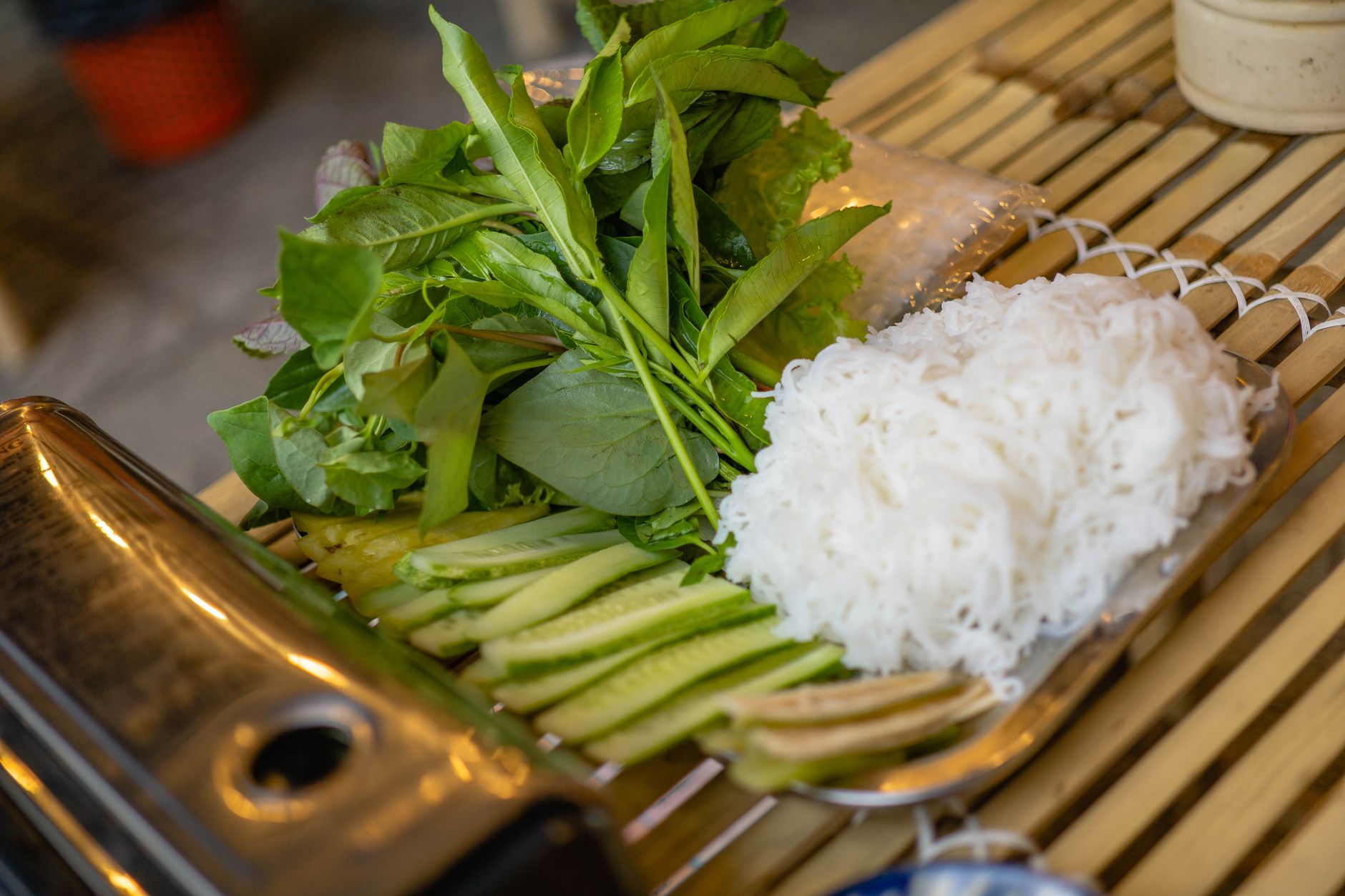
Photo by FOX ^.ᆽ.^= ∫ on Pexels
Cooking classes for vegetarian students
Red Bridge Cooking School
Red Bridge, just outside the Old Town, is the most established cooking school in Hoi An. Half-day classes (9am–1pm) cost around 450,000 VND per person and include market walk, kitchen lesson, and lunch.
They accommodate vegetarian students but don't have a dedicated vegan curriculum—you'll be cooking alongside meat-eating students, and the menu includes fish and meat options. The upside: you learn how to make these dishes plant-based. The downside: you're not building a fully vegan repertoire.
If you go, book at least a day ahead and email ahead to mention dietary restrictions. Classes are English-language, though the instructor may bring in local spice merchants who speak limited English (that's part of the charm).
Morning Glory Cooking School
Morning Glory has a smaller, more flexible program. They run 2–3 hour sessions (starting around 250,000 VND) and will design a custom vegetarian menu if you ask. You shop at the local market with the instructor, choose your vegetables, and cook in a shared kitchen.
Because it's less scripted than Red Bridge, the quality depends on your instructor—but most have worked at plant-based restaurants and know how to build flavor without animal stock. You'll probably learn to make "banh xeo (반세오 / 越南煎饼 / バインセオ)" (crispy turmeric pancake with vegetable filling), a salad or soup, and a stir-fry.
Their restaurant, downstairs from the kitchen, is also solid for a quick lunch if you don't have time for a full class.
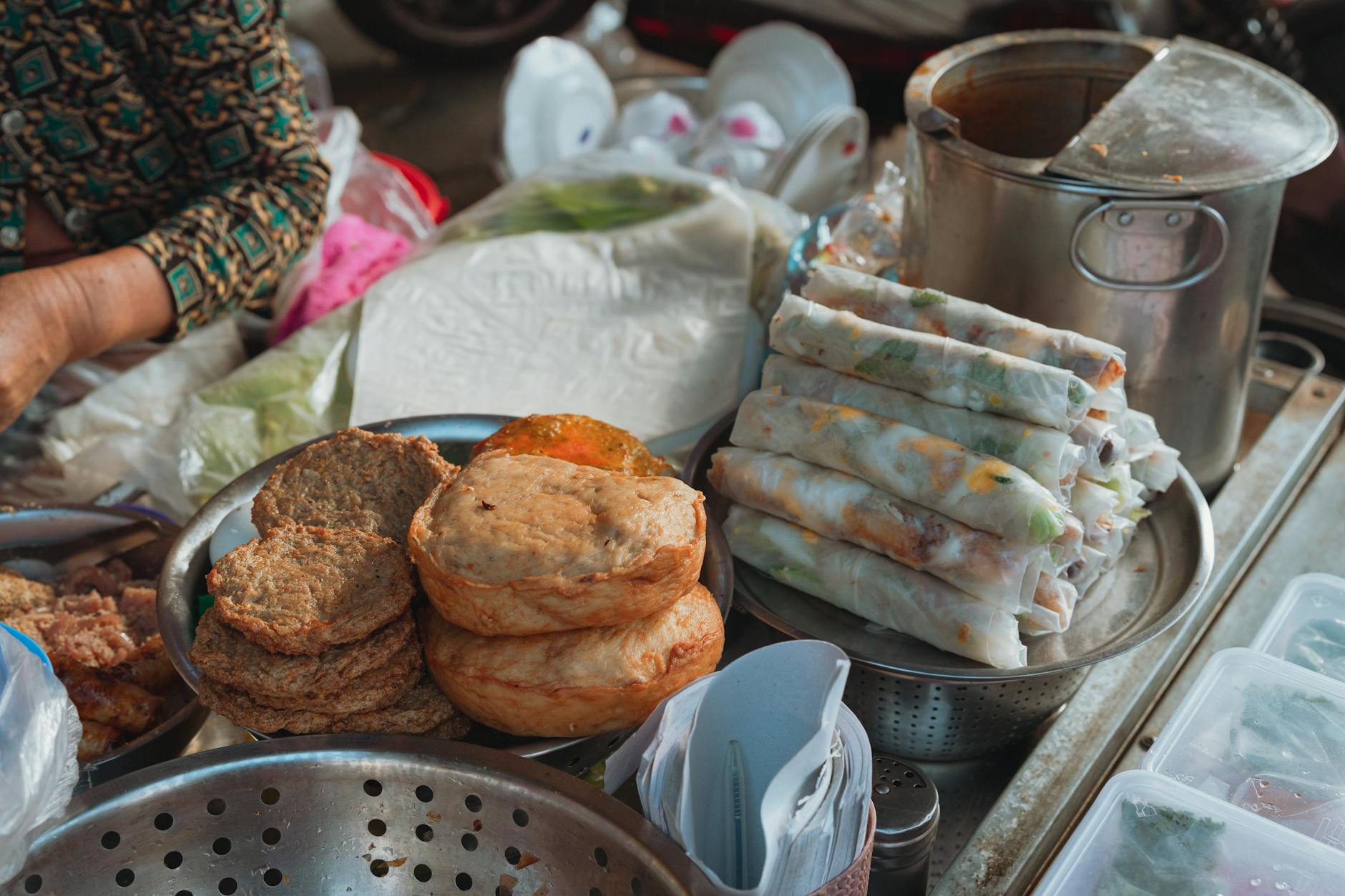
Photo by Theodore Nguyen on Pexels
Street eating and quick bites
Hoi An's evening markets (Tan Thanh market, near the river) have vegetable stalls and a few vendors selling "banh chung (반쯩 / 粽子 / バインチュン)" (sticky rice cake, often vegetarian—ask), steamed vegetable buns, and fresh sugar-cane juice. Prices are 15,000–30,000 VND. Language is a barrier, but pointing works.
Ca Phe Yen (corner of Tran Phu and Nguyen Duy Hinh) serves excellent "vietnamese coffee (베트남 커피 / 越南咖啡 / ベトナムコーヒー)". The owner will make it with soy milk if you ask in advance; most days she has it on hand.
Practical notes
Hoi An's Old Town is walkable, and most vegetarian-friendly spots are within 10–15 minutes of the central square. Book cooking classes a day or two ahead, especially during November–February. Vegetarian restaurants close around 9pm, so plan dinner accordingly.
Going to Vietnam? Eat and travel smarter.
Monthly: new dishes, off-the-beaten-path destinations, and itineraries — straight to your inbox. No spam. Unsubscribe anytime.
Join 0 expats. (We just launched.)
More from Hoi An
Other articles covering this city.
Hoi An Old Town Walking Guide: Yellow Walls, Lantern Alleys, and the Japanese Bridge
A street-level route through Hoi An's UNESCO core — old merchant houses, assembly halls, the famous Japanese Bridge, and when to walk each stretch for the best light.
Best Tau Hu in Hoi An: Where Locals Send You
Tau hu—silky tofu soup—tastes different in Hoi An. Here's where locals actually eat it, and why.

5 Days in Vietnam During Monsoon Season: What Actually Works
A tested itinerary for traveling Vietnam in the wet season. Choose destinations that stay dry, time activities around rain patterns, and eat your way through slack-season food.
More from Central Vietnam
Other articles covering the same region.

Paradise Cave, Quang Binh: The 31km Marble Cave That Beats Phong Nha for Photographers
Paradise Cave runs 31km through Quang Binh's karst and delivers the kind of cathedral-scale formations that Phong Nha's boat tour simply can't match. Here's how to see it properly.

Son Doong Cave: What the $3,000 Oxalis Expedition Actually Includes
Son Doong is the world's largest cave and only one operator is legally allowed to take you inside. Here is what the permit-only expedition covers and whether it is worth it.

Phong Nha Cave: Wet Cave, Dry Cave, and How to Choose
Phong Nha has two main caves worth your time — one you reach by river boat, one on foot. Here's how to pick, what each costs, and when to go.
More in Food & Drink
More articles from the same category.

Best Pho Chua in Ha Giang: Where Locals Send You
Ha Giang's take on sour pho is sharper, tangier, and less known than the southern version. Here's where locals actually eat it.

Best Pho Saigon in Ho Chi Minh City: Where Locals Send You
Pho Saigon is thinner, sweeter, and faster than its northern cousin. Here's where to find the real thing in HCMC, plus what makes it different and how to order.

Best Banh Xeo in Nha Trang: Where Locals Send You
Nha Trang's banh xeo scene is rowdier and greasier than the south. Here's where locals actually eat, what to order, and why the crispy rice pancakes here taste different.

Best Banh Nam in Hue: Where Locals Send You
Hue's version of "banh nam" is a steamed rice cake pocket stuffed with shrimp and pork—nothing like its northern cousin. Here's where locals actually eat it.

Best Banh Uot Thit Nuong in Buon Ma Thuot: Where Locals Send You
Banh uot thit nuong — steamed rice rolls with grilled pork — is a breakfast staple in Buon Ma Thuot's Central Highlands. Here are the spots locals actually eat.

Best Banh Canh Ca in Da Nang: Where Locals Send You
Da Nang's version of "banh canh ca" — thick tapioca noodles in crab broth — tastes different from Hanoi or Saigon. Here's where locals actually eat it, what to order, and why timing matters.
Comments
Loading…