Hoi An Lantern Festival: Full Moon Nights and How to Plan Around Them
The Hoi An Lantern Festival happens on the 14th lunar day each month. Electricity shuts off, lanterns float on the Thu Bon River, and crowds triple. Here's how to time your visit and actually enjoy it.

When it happens
The Hoi An Lantern Festival isn't a once-a-year event—it's the 14th day of every lunar month. In the Gregorian calendar, that translates to roughly monthly celebrations, though the exact dates shift. In 2024, lantern nights fall on dates like January 10, February 9, March 8, April 6, May 5—you get the idea. Check a lunar calendar before booking; the festival only really happens those nights.
The whole town transforms. Streetlights cut out around 7:30 p.m., old town goes dim, and locals + tourists crowd the streets with silk lanterns glowing in their hands. It's intentional nostalgia—Hoi An (호이안 / 会安 / ホイアン) is recreating what a night market looked like pre-electricity.
What actually happens
Around 7 p.m., the Town Council switches off the electric lights in the old town (within the Ancient Town boundary, roughly Tran Phu to Nguyen Hue streets). Shop owners light candles and lanterns. Street vendors wheel carts down the narrow lanes selling paper lanterns in every color—usually 50,000–100,000 VND per lantern depending on size and design.
On the Thu Bon River, floating lantern releasing begins. Locals and visitors release silk lanterns onto the water; they drift downstream like a slow procession of light. It's meditative and crowded at once. The river gets packed, especially between 7:30 and 9 p.m.
Water puppetry performances sometimes happen on temporary stages. Street musicians play. Food vendors set up pop-up stalls. The vibe is part festival, part working night market—it's not a stage show with a formal schedule; it's an evening when the town changes its rhythm.
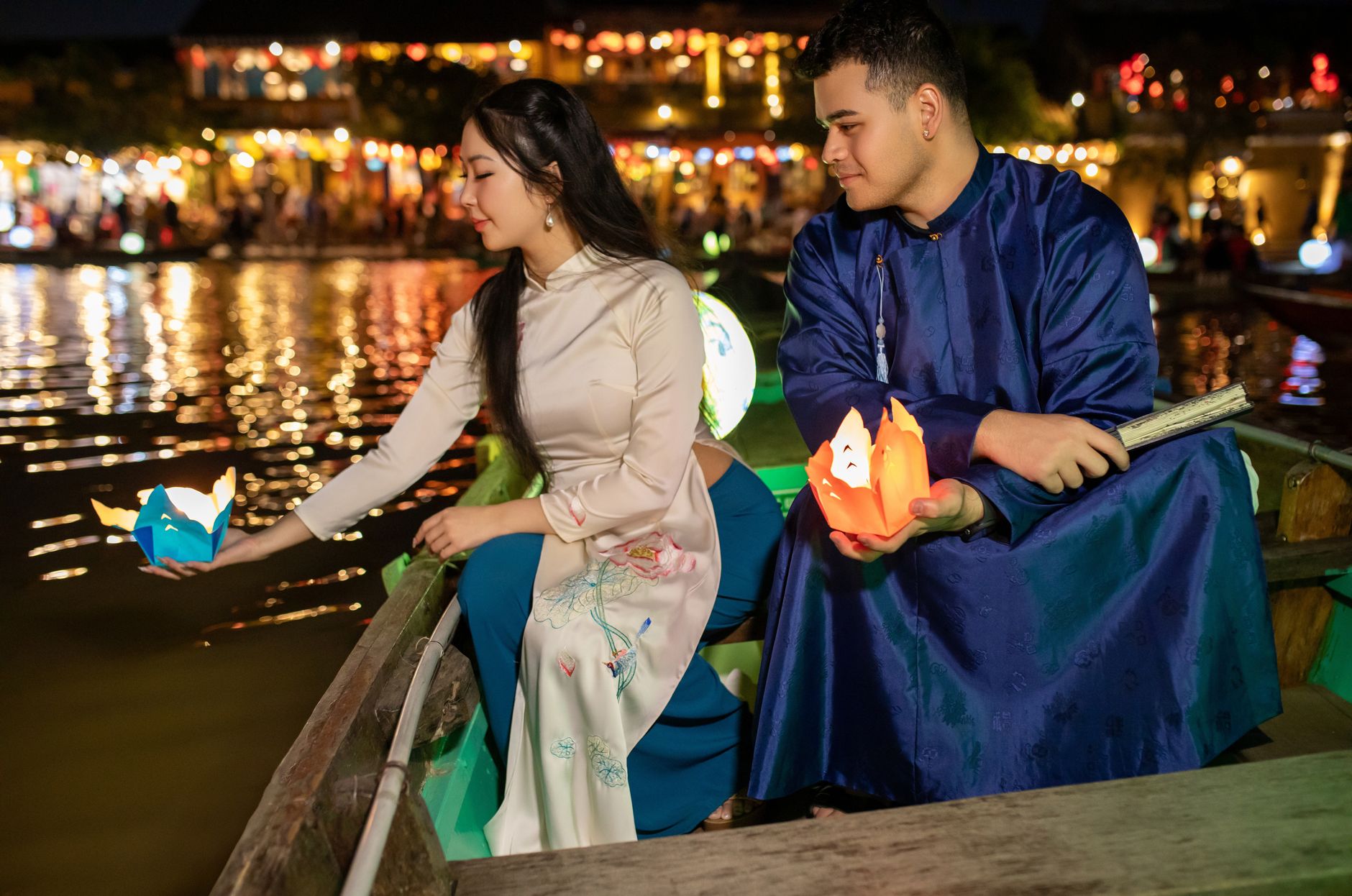
Photo by Võ Văn Tiến on Pexels
Where to release your lantern
The Thu Bon River waterfront is the main spot. The widest, least-congested access is along Tran Phu Street near the Old Covered Bridge (Japanese Covered Bridge); that's the iconic photo location, but it's also the most crowded. Locals joke you'll spend 30 minutes just shuffling forward to water's edge.
If you want to avoid the worst crush, walk east along the riverfront towards Hoi An Riverside Resort (about 300 m downstream from the bridge). There's still room, fewer tourists, and you can release a lantern without elbowing someone's camera out of the way. The water's just as calm, and your lantern floats downstream the same.
Alternatively, some smaller side streets leading to the river (like Le Loi or Nguyen Thai Hoc) have less dramatic crowds but shorter access. Scout earlier in the day if you're picky.
Where to eat with a view
Faifo Coffee (39 Tran Phu Street) sits right on the river, and they stay open late on lantern nights. You can grab a coffee or beer, sit on the balcony, and watch the floats drift by without fighting the crowds at water level. It's 40,000–80,000 VND per drink.
Mango Room (111 Nguyen Hue (후에 / 顺化 / フエ) Street) has rooftop seating with river views and serves dinner until late. Pricier than street food (mains 120,000–250,000 VND), but you get a table, a roof, and a view. Book ahead on festival nights.
Hoi An Saigon Riverside Resort (riverside, east of the bridge) has a restaurant and bar open to non-guests. Sit waterside, order a beer, and watch the lanterns float. Less touristy than the central drag; more relaxed vibe.
For budget: street stalls near the bridge sell "banh hoai" (a Hoi An specialty, crispy shrimp-and-noodle pancakes fried in oil), grilled fish cakes, and iced coffee. 20,000–40,000 VND per item. Stand, eat, and move on—it's part of the experience.
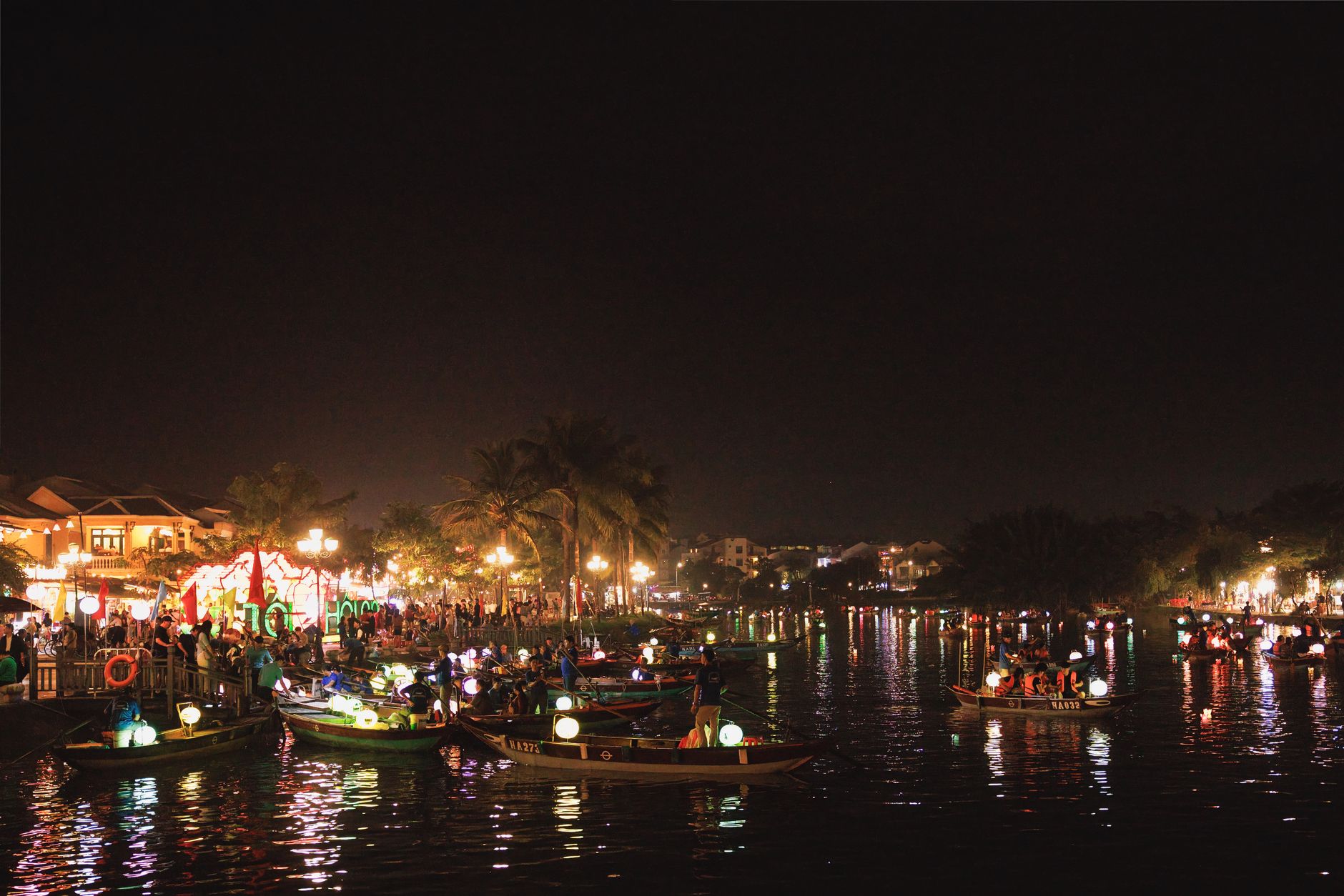
Photo by Fernando B M on Pexels
Surviving the crowds
Go earlier in the evening. Lantern nights draw day-trippers from Da Nang (40 km away, 1 hour by car). The peak crowd is 8–9:30 p.m. If you arrive by 6:30 p.m., eat first, release a lantern by 7:15 p.m., you miss the worst of it. By 9:45 p.m., the crowd thins out; the lanterns keep floating, the atmosphere stays intact, and you can actually move.
Buy your lantern away from the riverfront. Vendors along Tran Phu Street near the water charge a premium (100,000+ VND) because tourists are impatient. Walk back into side streets (like Nguyen Hue or Le Loi) and buy from stalls there. Same lantern, 50,000–70,000 VND. Saves money and time.
Skip the festival on weekends if it falls on a Saturday or Sunday. Friday and weeknight lantern nights are calmer. The town gets tourists from nearby resorts, but not the weekend day-tripper surge. January, May, September tend to have the heaviest crowds overall (Tet holidays, summer vacation, post-summer tourism); March, April, October, November are sweeter months.
Don't expect a photo of an empty river. Your lantern will float among dozens of others. If you're here for an Instagrammable moment of solitude, you'll be disappointed. That said, the sheer density of lights is genuinely beautiful—just a different kind of beautiful than you might have imagined.
Practical notes
Check a lunar calendar before traveling; many travel sites (e.g., timeanddate.com) show Hoi An lantern nights. Bring cash (most street vendors don't take cards). Wear sandals or shoes you don't mind getting wet if you lean over to release a lantern. If you're sensitive to crowds, avoid Saturday and Sunday lantern nights. The whole experience is free—you only pay for a lantern (50,000–100,000 VND) and food if you eat.
Going to Vietnam? Eat and travel smarter.
Monthly: new dishes, off-the-beaten-path destinations, and itineraries — straight to your inbox. No spam. Unsubscribe anytime.
Join 0 expats. (We just launched.)
More from Hoi An
Other articles covering this city.

Grab vs Be vs Xanh SM: Which Ride-Hailing App to Use in Vietnam
Three ride-hailing apps dominate Vietnam. Here's how they differ on price, coverage, payment, and which one makes sense depending on where you are and what you value.

Vegetarian Dining in Hoi An: Restaurants and Cooking Classes
Hoi An has become Vietnam's most welcoming city for plant-based eating. Here's where to eat and how to learn to cook like a local—without the fish sauce.

Best Cao Lau in Hoi An: Why the Well Water Actually Matters
Cao lau tastes different in Hoi An because of the water. Here's where to eat it, and why the geography isn't just marketing.
More from Central Vietnam
Other articles covering the same region.

Son Doong Cave: Inside the $3,000 Oxalis Expedition
Son Doong is the world's largest cave by volume—and the only way in is a 4-day permit-exclusive tour with Oxalis. Here's what you actually get, who should go, and what cheaper caves offer instead.

Phong Nha Cave: Boat Tours, Dry Caves, and How to Choose
Phong Nha-Ke Bang has two main cave experiences: the iconic river boat through Phong Nha Cave itself, and the dry trek into Tien Son. Here's how to pick, what to expect, and when to go.

Thien Mu Pagoda in Hue: Seven Stories Above the Perfume River
Hue's most recognizable landmark rises 21 metres above the Perfume River. This is the story behind the tower, how to get there, and when to visit without the tour groups.
More in Destinations
More articles from the same category.

Lung Cu Flag Tower: Vietnam's Northernmost Point
The drive to Lung Cu Flag Tower takes you to Vietnam's northernmost point at 1,500 metres. It's a half-day trip from Dong Van with a steep climb, mountain views, and nearby Hmong villages.

Hoa Lu Ancient Capital: Vietnam's First Kingdom and How to Visit from Ninh Binh
Hoa Lu was the seat of Vietnam's first independent dynasties in the 10th century. Two surviving temples anchor a quiet bike ride through rice fields just outside Ninh Binh.

Perfume Pagoda Day Trip from Hanoi: Boat, Hike, and Festival Season
A half or full-day pilgrimage from Hanoi to the Perfume Pagoda involves a scenic boat ride through limestone karst, a trek or cable car ascent, and crowds during Tet season. Here's what to expect and how to plan.

Hanoi Old Quarter Walking Guide: 36 Streets, Street Food & Craft Alleys
The 36 streets of Hanoi's Old Quarter were named after the guilds that dominated them—silk, silver, tin, paper. Here's how to walk them, eat on them, and see which craft trades still survive.

Hoan Kiem Lake: History, Temples, and the Best Time to Walk
The turtle legend, Ngoc Son Temple, and a 2-km loop around Hanoi's most visited lake. Best visited early morning or when Old Quarter streets close to cars.

What to Eat in Bac Kan: Regional Dishes and Where to Find Them
Bac Kan's food scene centers on grilled fish, sticky rice, and forest herbs. This guide shows where locals eat and what's worth your money.
Comments
Loading…