Bia Hoi: Vietnam's Fresh-Brewed Street Beer
"Bia hoi (비아호이 / 鲜啤 / ビアホイ)" translates literally as "fresh beer," and the name is exact. Unlike bottled lagers, bia hoi is brewed daily, matured for a few days, loaded into steel barrels, and trucked to street-corner bars across Hanoi every morning. By evening, that batch is gone. By tomorrow morning, fresh barrels arrive. It's a closed loop that keeps the beer tasting crisp and light—exactly what you want in 35°C heat.
You'll recognize a bia hoi spot by the plastic stools, the crowd, and the barrel sitting visibly behind the counter. The beer itself is pale lager, 4.1–4.3% ABV, served ice-cold in recycled-glass tumblers (often slightly imperfect—those marks are genuine). A glass costs 10,000–15,000 VND. That's roughly $0.43–0.52 USD. You can drink five glasses for less than a cappuccino at a Hanoi cafe.
How It Works
Bia hoi production is intentionally informal. Small-scale breweries (mostly in the north, concentrated around Hanoi) ferment in batches. After a short maturation, the beer goes into stainless-steel barrels and onto delivery trucks. Each bar or street stall receives its shipment daily. The barrels sit behind the counter; servers tap them by hand and pour into ice-filled glasses. Once a barrel empties, it goes back to the brewery tomorrow morning, and a fresh one arrives.
Because bia hoi exists outside large-scale commercial infrastructure, it's not regulated by the same health agencies as factory beer. That's partly why purists say it's a "rustic" experience—and it's also why some travelers hesitate. The truth is simpler: locals drink it daily without issue. If you're staying longer than a week, your stomach will adjust. If you're nervous, order one glass as an experiment, not four.
Most of the breweries supplying Hanoi's Old Quarter are clustered on the city's outskirts—Long Bien district and further out toward Dong Anh. The delivery trucks roll in around 5:00–6:00 a.m., so if you're up early near the Old Quarter you'll see the barrels being unloaded before the first customers arrive. Some stalls go through two or three barrels a day during summer. Others, especially in quieter residential lanes, might run through one.
The Glass
Those tumblers—slightly scratched, sometimes cloudy—have a story. In the 1970s, when bia hoi culture solidified, Vietnam (베트남 / 越南 / ベトナム) couldn't source high-quality glassware cheaply. Breweries used recycled glass, which came with manufacturing flaws. The flaws stuck around. Today, they're iconic. You see a scratched tumbler on a plastic stool in the Old Quarter, and you know exactly where you are.
The ice matters too. Most bia hoi stalls use factory-produced ice ("da sach")—the cylindrical tubes with a hole through the center. That ice is safe. If you see irregularly shaped blocks being chipped by hand, that's less certain, though still generally fine in Hanoi. When in doubt, look at what the regulars are doing. If they're putting ice in their glass, you can too.

Image via Wikimedia Commons (CC BY-SA)
Where to Drink It
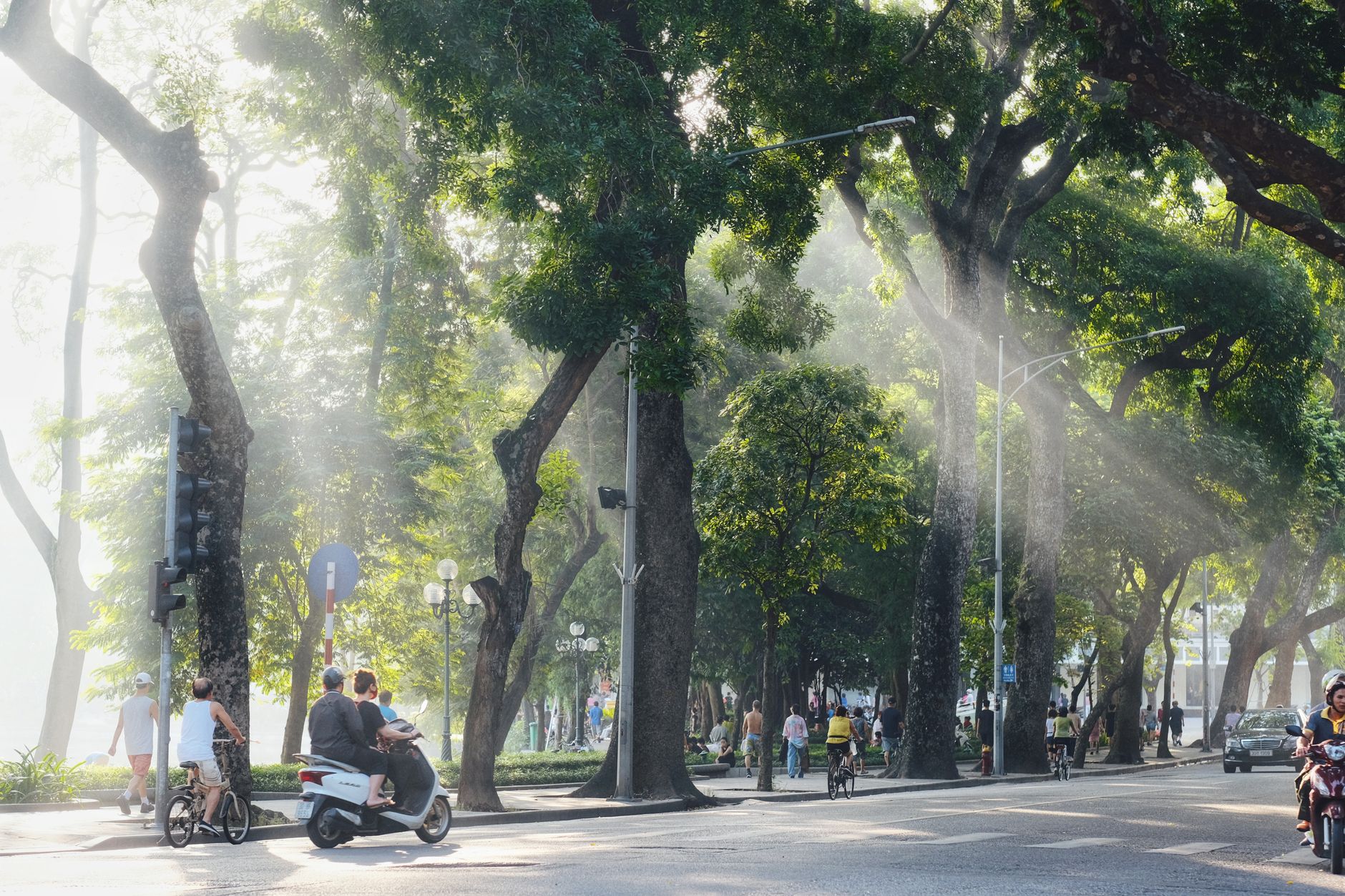
Bia hoi is a northern phenomenon. You might find it elsewhere, but Hanoi is the capital. The Old Quarter is the epicenter—every other corner has a spot. The junction of Cho Gao, Nguyen Sieu, and Dao Duy Tu is historically significant; locals have been drinking there for decades.
A few specific places worth knowing:
- Bia Hoi Corner (Ta Hien / Luong Ngoc Quyen intersection): The most famous spot among tourists. Loud, crowded, prices sometimes creep to 15,000 VND. It's fun once, but it skews heavily toward backpackers these days. Go at 5:00 p.m. before the tour groups arrive if you want a seat.
- Bia Hoi Hai Xom, 41 Duong Thanh: A locals-first stall one block from the tourist circuit. 10,000 VND per glass. They serve decent "nem chua ran" (fried fermented spring rolls) for 30,000–40,000 VND a plate.
- Residential lanes off Nguyen Khuyen (Dong Da district): About 3 km southwest of the Old Quarter, near the Temple of Literature. Quieter, cheaper, and you'll likely be the only foreigner. Glasses here still go for 7,000–10,000 VND in some spots.
If you head south to Ho Chi Minh City, bia hoi is harder to find. Saigon's beer culture revolves around bottled brands—Saigon Lager, 333, Tiger—and the southern heat makes the unpasteurized shelf-life problem even worse. You'll spot a few bia hoi stalls in districts 1 and 3, but it's not the same institution it is in the north. For Saigon's street-drinking scene, "bia hoi" gives way to "bia chai" (bottled beer) served with ice at sidewalk "quan nhau" joints.
But don't overthink it. Walk through any residential neighborhood at 5:30 p.m. You'll see the stools, the steel barrels, the clusters of after-work drinkers. Sit down. Point at what everyone else is drinking. The server will understand.

Image by ben klocek via Wikimedia Commons (CC BY-SA)
The Social Thing
Bia hoi isn't a solo experience. It's communal. You sit shoulder-to-shoulder with office workers, construction crews, grandmothers, students. Conversations happen in broken English, Vietnamese, gestures. People order "nem chua" (fermented pork sausage), "lac rang" (roasted peanuts), grilled offal, dried squid. The beer is cold. The food is salty. The laughter is loud.
For travelers, this is where you actually see how locals live—not in a tour group, not at a museum, but sitting on a plastic stool at 6:30 p.m., holding a beer that cost less than a postcard. It's the opposite of "off the beaten path" tourism (that phrase is dead, anyway). It's just... life. You're in it.
What to Eat with Bia Hoi
Bia hoi stalls are rarely beer-only. Most have a small menu, sometimes just a laminated sheet with photos, sometimes nothing at all—the food sits in trays behind glass and you point. The dishes lean salty, chewy, crispy: perfect counterpoints to a light, cold lager.
Here's what you'll see most often:
- "Lac rang" (roasted peanuts): The default. Every table gets a plate, often without asking. 10,000–15,000 VND. Sometimes they're warm; sometimes they've been sitting there a while. Either way, they work.
- "Nem chua ran" (fried fermented pork rolls): Sour, crunchy, served with sweet chili sauce and herbs. 30,000–50,000 VND per plate. A better version of the nem chua you'll find vacuum-packed at markets.
- "Cha gio" (fried spring rolls): Crispy, pork-filled, dipped in nuoc cham. Around 30,000 VND for a small plate. If you like these, the goi cuon (fresh spring rolls) at sit-down restaurants are the cooler, lighter cousin.
- Grilled "muc" (squid): Dried squid grilled over charcoal, torn into strips. Chewy, smoky, intensely savory. 40,000–60,000 VND depending on size. Pair with chili salt.
- "Dau phu" (fried tofu): Cubed, deep-fried, served with a soy-lime dipping sauce and sometimes topped with scallions. 20,000–30,000 VND. Unexpectedly good alongside beer.
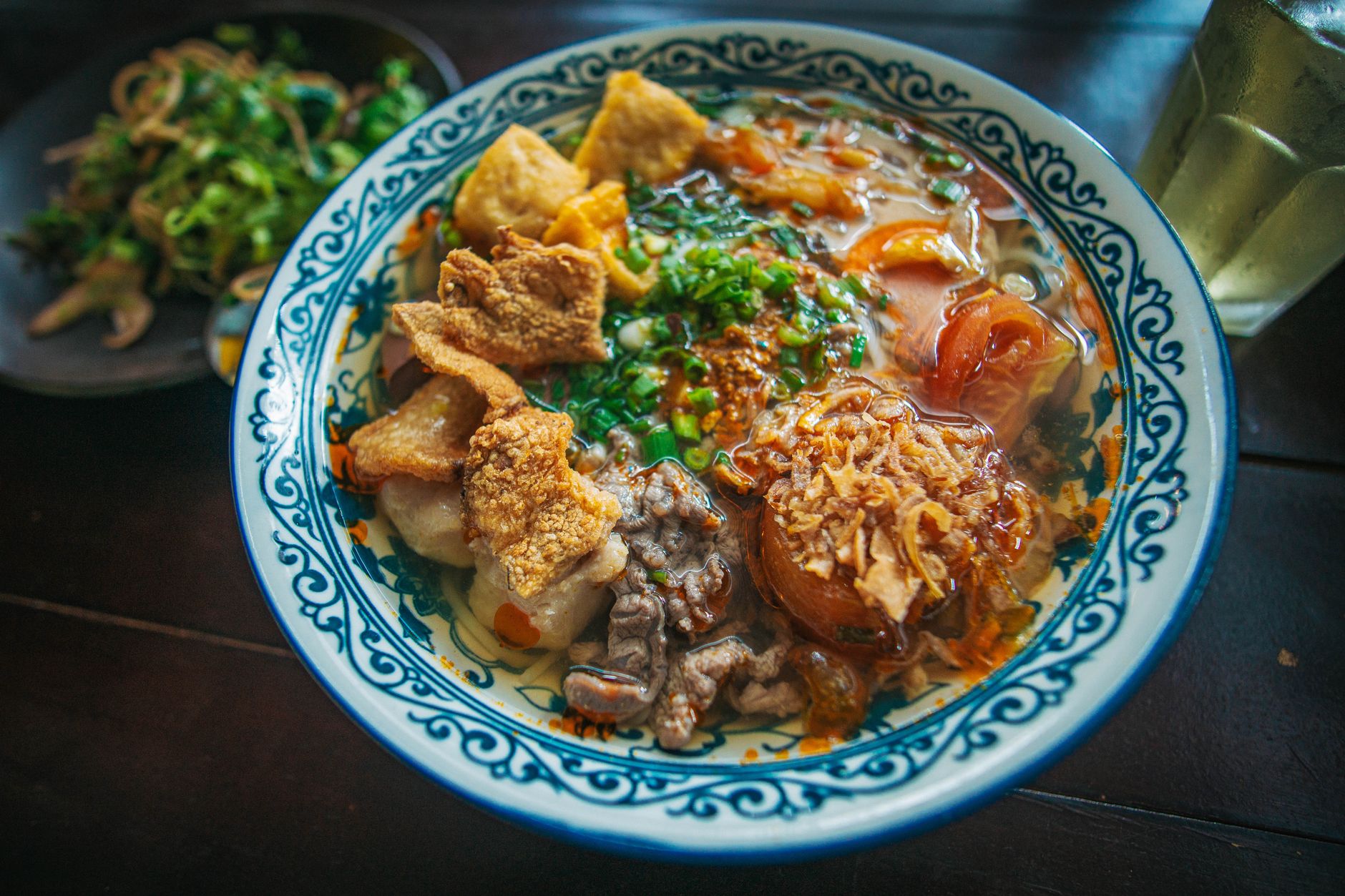
- "Bun cha" at nearby stalls: In Hanoi, many bia hoi spots sit near bun cha vendors. It's common to order grilled pork and noodles from the food stall next door and have them delivered to your beer table. Nobody minds. The two businesses often share an informal arrangement.
Don't expect a full restaurant menu. The point is snacking, not dining. If you want a proper meal, eat first—try a bowl of pho or a plate of com tam—then head to the bia hoi stall for the social session.
How to Order
You don't need much Vietnamese, but a few phrases help:
- "Cho mot coc bia hoi" — Give me one glass of bia hoi.
- "Them mot coc" — One more glass.
- "Tinh tien" — The bill, please.
- "Bao nhieu?" — How much?
At most stalls, you pay when you leave. The server keeps a mental tally or marks it on a slip. Don't be surprised if the math is rough—it's rarely a scam, just informal accounting. If you want to be precise, keep count yourself.
Tipping is not expected at bia hoi stalls. Leaving your change (a few thousand VND) is fine but not required. This isn't a bar with cocktail service. It's closer to buying fruit from a street cart.
A Note on Freshness
Bia hoi spoils fast. Once opened, drink it. Once a barrel is tapped, it's good for maybe 24 hours if the tap isn't contaminated and the barrel is kept cool. This is why the daily-delivery model exists—quality degrades quickly. Don't order a "bottle of bia hoi" to take home; there is no bottle. The experience is the bar, the barrel, the cold glass, the crowd. That's the product.
This also means timing matters. The best bia hoi is the freshest—afternoon and early evening, roughly 4:00–7:00 p.m., when the day's batch is still cold and carbonated. By 9:00 or 10:00 p.m., some stalls are pouring the bottom of the barrel, and you can taste the difference: flatter, slightly warmer, less alive. If you arrive late and the beer tastes off, it's not a bad batch—it's an old one.
Common Mistakes Foreigners Make
- Skipping the ice. Yes, putting ice in beer feels wrong if you grew up elsewhere. In Hanoi at 35°C, the beer warms in minutes without it. Locals use ice. You should too.
- Ordering too many glasses at once. Bia hoi goes flat fast. Order one glass, drink it, order another. Two at a time, maximum.
- Confusing bia hoi with "bia tuoi." Some bars, especially in tourist areas, advertise "bia tuoi" (draught beer) but serve rebranded commercial lager on tap. Real bia hoi comes from the steel barrel, costs under 15,000 VND, and has no brand label on the glass. If it costs 30,000+ VND and comes in a branded mug, that's not bia hoi.
- Going at noon. Some stalls technically open at lunch, but the real crowd—and the atmosphere—doesn't arrive until late afternoon. Between 5:00 and 7:00 p.m. is the sweet spot.
- Expecting craft beer. Bia hoi is not a farmhouse ale or a microbrewed IPA. It's mass-produced, light, low-alcohol, and cheap. That's the point. If you want craft beer in Hanoi, there are dedicated bars for that—but they're a different experience at a different price point.
- Worrying too much about hygiene. The stool is plastic, the glass is scratched, the street is loud. None of that means the beer is unsafe. Millions of people drink it every day.
Quick Reference
- What: Unpasteurized fresh draught beer, brewed and delivered daily
- ABV: 4.1–4.3%
- Price: 7,000–15,000 VND per glass (about $0.30–0.65 USD)
- Where: Northern Vietnam, especially Hanoi Old Quarter and residential neighborhoods
- Best time: 4:00–7:00 p.m. daily
- Served with: Ice, roasted peanuts, fried spring rolls, dried squid, grilled meats
- How to order: "Cho mot coc bia hoi" (one glass of fresh beer, please)
- Shelf life: Hours, not days. No bottles, no cans, no takeaway
- Pairs well with: Bun cha, nem chua, roasted peanuts
- Tipping: Not expected
Bottom Line
Bia hoi is not a craft-beer tasting or a bucket-list novelty. It's a daily ritual for a huge number of people in Hanoi—cheap, fresh, social, and deeply embedded in how the city unwinds after work. Sit on the stool, order a glass, eat some peanuts, and pay attention to the table next to you. That's the whole thing, and it's worth your time.
Last updated · May 29, 2026 · independently researched, never sponsored.