Lam Dong Province: The Central Highlands' Cool-Climate Heart
Three elevated plateaus, endless tea and coffee farms, and Da Lat's colonial-era charm make Lam Dong Vietnam's most distinctive highland province. Visit for cool air, flower gardens, and serious agriculture.

Lam Dong sits in Vietnam's Central Highlands (중부 고원 / 中部高原 / 中部高原), roughly 300 km northeast of Ho Chi Minh City. If you're used to the heat and chaos of Saigon or the humidity of the coast, the province feels like stepping into a different country—cooler, quieter, more deliberate.
Geography and Three Plateaus
The province's character comes from three elevated plateaus: Lam Vien, Di Linh, and Bao Loc, each hovering around 1,500 meters above sea level. That elevation is everything. It means morning fog instead of 35-degree heat. It means vegetables grow year-round. It means the air smells like pine and soil, not exhaust.
Borders matter here: Khanh Hoa lies east (coastal), Dong Nai and Ho Chi Minh City (호치민시 / 胡志明市 / ホーチミン市) to the southwest, Dak Lak to the north, and Cambodia northwest. That geographic position has shaped Lam Dong into a kind of gateway—not quite central Vietnam, not quite the south, but a threshold between climates and cultures.
Da Lat and Bao Loc: Twin Cities
Da Lat, the provincial capital, is the tourist anchor. Roughly 658 km south of Da Nang and 1,414 km from Hanoi (via National Route 1), it's accessible enough for a long weekend but far enough to feel like escape. The city earned the nickname "City of Eternal Spring"—not because of marketing, but because the temperature hovers between 15 and 24 degrees Celsius year-round. The French built villas and a railway station here in the colonial era; that architecture still frames the streetscape. Visitors come for the lakes (Xuan Huong Lake sits downtown), waterfalls, the Crazy House (an unfinished, deliberately surreal mansion-museum), and the Da Lat Railway Station itself, now a tourist attraction.
Bao Loc, elevated to provincial-city status in 2010 alongside Da Lat (달랏 / 大叻 / ダラット), is quieter. It's the tea and coffee center—the working heart of Lam Dong's agriculture. If Da Lat is about views and gardens, Bao Loc is about plantations, processing, and the smell of roasting beans or drying leaves.
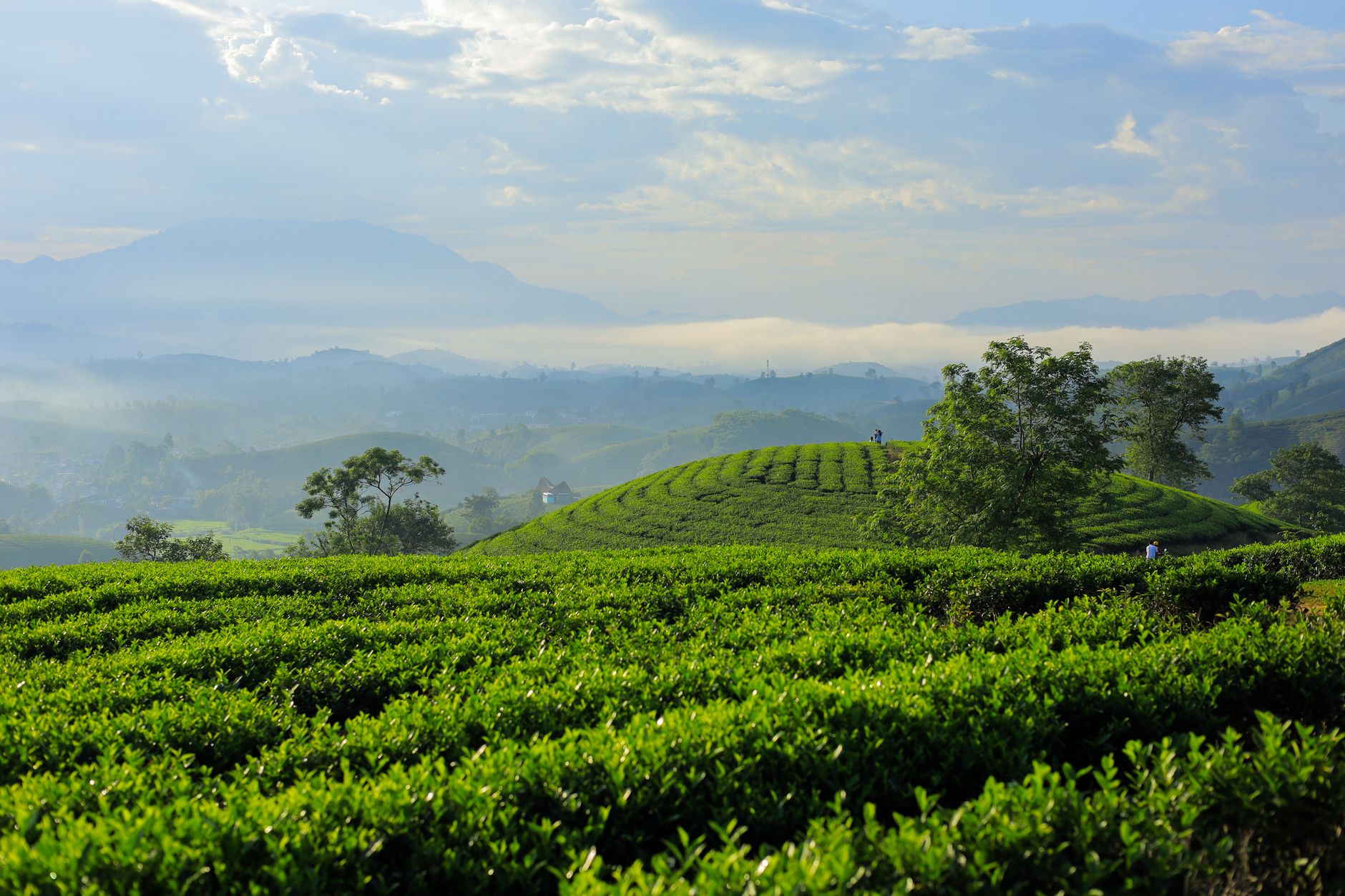
Photo by Hồng Quang Official on Pexels
Agriculture: Why Elevation Matters
The high altitude isn't accidental to Lam Dong's economy—it's the foundation. Tea, coffee, and fresh vegetables thrive at 1,500 meters where the lowland tropics can't compete.
Tea: Bao Loc's tea hills are among Vietnam's most productive. The cooler air and mineral-rich soil produce a distinctive flavor profile. You can visit working plantations, see harvest and processing, and buy directly from farmers or cooperatives.
Coffee: Lam Dong contributes significantly to Vietnam's coffee exports. Robusta and arabica both grow here. The crop funds rural livelihoods across the province, and roasted coffee is an obvious souvenir.
Vegetables: The cool climate allows year-round cultivation of tomatoes, avocados, strawberries, and temperate crops that struggle in the delta or the coast. These vegetables supply markets from Hanoi to Ho Chi Minh (호치민 / 胡志明 / ホーチミン) City.
Flowers: Da Lat is famous for floriculture—orchids, roses, dahlias, chrysanthemums. The flower farms double as tourist stops, especially during Tet when demand spikes for fresh blooms.
Tourism Numbers and Reality
In 2023, Lam Dong attracted 8.65 million tourists. Most came for Da Lat; smaller numbers reached Bao Loc or other towns. The province has accommodation at every price point—backpacker guesthouses in Da Lat old town, mid-range hotels, and resorts aimed at families or couples seeking a cool-air break.
What draws visitors: relief from heat, the colonial visual appeal of Da Lat, hiking and waterfall treks, flower farms, tea-plantation tours, the novelty of wearing a sweater in Vietnam. The climate is the sell—Da Lat becomes pleasant even in summer, when the coast is exhausting.

Photo by Duy's House of Photo on Pexels
Infrastructure and Road Access
Da Lat and Bao Loc are connected by a direct road; National Route 1 links the province to Ho Chi Minh City (accessible in 5-6 hours by car or minivan) and to the coast at Nha Trang (냐짱 / 芽庄 / ニャチャン) or Phan Rang. The roads are serviceable, though mountain sections can be winding. Public minibus and bus services run regularly to Ho Chi Minh City, Da Nang, and Nha Trang.
The two provincial cities function as admin and economic hubs—hospitals, markets, schools, banks. The infrastructure is modern enough for tourists but not aggressively developed; the province isn't trying to out-urbanize itself.
Why Lam Dong Stands Apart
Most travelers know Vietnam for beaches, Hanoi (하노이 / 河内 / ハノイ)'s chaos, or Mekong river scenes. Lam Dong is the highlands—a cooler, slower world where the economy depends on tea and coffee, where French villas still stand, and where you can actually wear layers in summer. Da Lat is the entry point, but the agriculture is the foundation. Walk through a tea plantation, drink coffee at a cafe in town, and you're tasting the landscape itself.
Going to Vietnam? Eat and travel smarter.
Monthly: new dishes, off-the-beaten-path destinations, and itineraries — straight to your inbox. No spam. Unsubscribe anytime.
Join 0 expats. (We just launched.)
More from Da Lat
Other articles covering this city.

3 Days Escaping Saigon: Da Lat and Surrounding Highlands
Leave Saigon behind for Da Lat's cool mountain air, pine forests, and French colonial architecture. This tested itinerary covers transport, where to stay, what to eat, and realistic costs for a long weekend.

Best Banh Can Da Lat in Da Lat: Where Locals Send You
"Banh can" — steamed rice cakes in individual clay molds — is a Da Lat obsession. Here's where locals actually eat it, why it tastes different here, and how to order like a regular.

Best Banh Uot in Da Lat: Where Locals Send You
Da Lat's banh uot is softer and more delicate than the northern version. Here's where locals actually eat it, how to order, and what makes the city's version stand out.
More from Central Vietnam
Other articles covering the same region.

Paradise Cave, Quang Binh: The 31km Marble Cave That Beats Phong Nha for Photographers
Paradise Cave runs 31km through Quang Binh's karst and delivers the kind of cathedral-scale formations that Phong Nha's boat tour simply can't match. Here's how to see it properly.

Son Doong Cave: What the $3,000 Oxalis Expedition Actually Includes
Son Doong is the world's largest cave and only one operator is legally allowed to take you inside. Here is what the permit-only expedition covers and whether it is worth it.

Phong Nha Cave: Wet Cave, Dry Cave, and How to Choose
Phong Nha has two main caves worth your time — one you reach by river boat, one on foot. Here's how to pick, what each costs, and when to go.
More in Destinations
More articles from the same category.

Landmark 81 Saigon: Observation Deck, Ice Rink, and Getting There from District 1
Landmark 81 is Vietnam's tallest building and Saigon's most visible skyline anchor. Here's what's actually inside and whether it's worth the trip.

Bitexco Financial Tower: Skydeck, Helipad Bar, and Whether the Ticket Is Worth It
Saigon's most recognizable skyscraper charges 250,000 VND to ride up to the 49th floor — here's what you actually see, and whether you should bother.

Notre Dame Cathedral Saigon: French Colonial Centerpiece in the Heart of HCMC
Saigon's Notre Dame Cathedral has been wrapped in scaffolding for years, but the square in front of it remains one of the best starting points for a colonial-era walking tour of District 1.

Hoi An Lantern Festival: Full Moon Nights and How to Plan Around Them
Once a month, Hoi An cuts the electricity and lights the Ancient Town with silk lanterns. Here's what actually happens and how to not spend the evening stuck in a crowd.

Japanese Bridge Hoi An: 400 Years of History, a Restoration Row, and How to See It Right
Hoi An's Japanese Bridge has anchored the Ancient Town for four centuries. Here's what to know about its origins, the restoration that divided locals, and when to visit.

Hoi An Old Town Walking Guide: Yellow Walls, Lantern Alleys, and the Japanese Bridge
A street-level route through Hoi An's UNESCO core — old merchant houses, assembly halls, the famous Japanese Bridge, and when to walk each stretch for the best light.
Comments
Loading…