Phan Rang: Cham Towers, Coastal Climate, and Grapes
Phan Rang is Ninh Thuan's capital and the beating heart of Cham culture in Vietnam. Ancient temple complexes, the Kate festival, and some of Southeast Asia's driest weather make this southern coastal city worth a detour.

Phan Rang sits about 330 km northeast of Ho Chi Minh City and 95 km south of Nha Trang (냐짱 / 芽庄 / ニャチャン)—close enough to Nha Trang for a day trip, far enough that most tourists skip it. That's a loss. The city (officially Phan Rang–Thap Cham since 1992) is the nerve center of Cham culture in Vietnam, and the two temple complexes here are the real thing: active sites of pilgrimage and ceremony, not museum pieces.
The Cham Temples
About 2 km west of Thap Cham Railway Station, Po Klong Garai temple complex sits on a hilltop overlooking the city. The main tower, built of intricately laid red brick in the 13th century, commemorates King Po Klong Garai, the last reigning Cham king. The craftsmanship is remarkable: small bricks mortared so tightly they've survived centuries without concrete. Inside the central sanctuary, a lingam (carved stone pillar) bears the king's likeness.
The second major site, Po Rome temple tower, is about 20 km southwest, accessible via Phu Quy and the village of Hau Sanh. Both complexes remain active—this is not a "sight-see and leave" situation. During the "Kate festival" in October (held around the 15th), the Cham community gathers to make ceremonial offerings of bullocks and food. Witnessing that, or a wedding ceremony, or even a smaller Ramadan observance, is the way to understand Cham faith and identity, not a solo walk through ruins.
Cham Culture
The Cham people here maintain a culture that blends Islam with older animist traditions, and inheritance runs through the maternal line—a rarity in Southeast Asia. You'll see it in the ornate ceremonial dress at festivals, the way women lead family units, the specificity of ritual. The towers themselves are decorated with fire motifs (arches with tongue-like brick extensions representing flames), and calyx-like minarets crown each structure.
The local Cham also farm rice, grow grapes and peaches, and raise Brahman cattle and goats. If you eat a meal with a Cham family, you're likely to find rice, seafood, and locally grown fruit on the table.
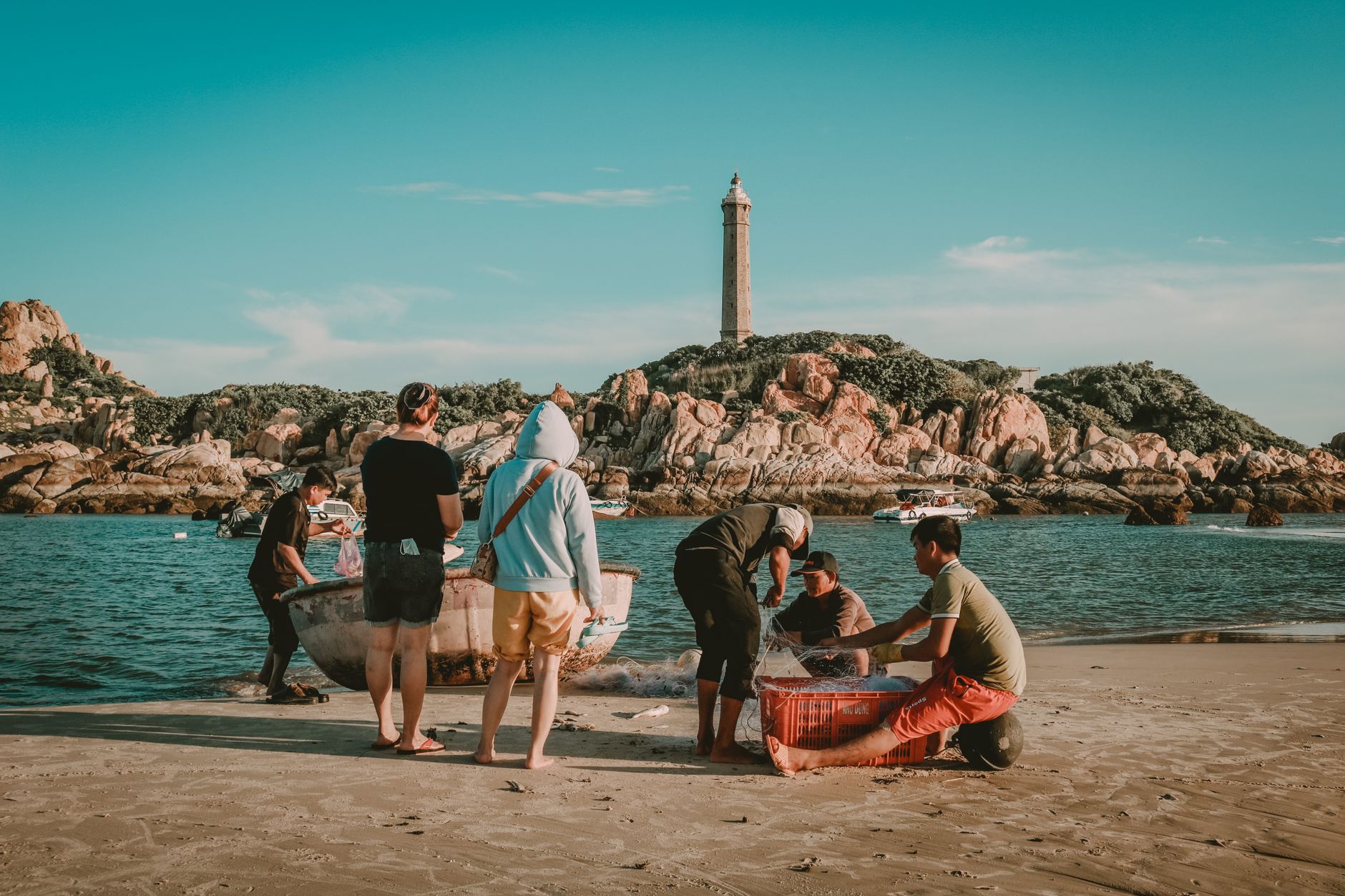
Photo by Loifotos on Pexels
Why Phan Rang Is Dry
Phan Rang is one of Vietnam (베트남 / 越南 / ベトナム)'s driest cities, receiving only about 700–800 mm of rain per year (one-third the national average). This aridity—combined with the coast—creates a particular microclimate. Most rain falls September to November; the rest of the year is dry season. Temperatures hover around 27–28°C (81–82°F) year-round. The dryness supports viticulture: Phan Rang grapes, destined for wine production, thrive here.
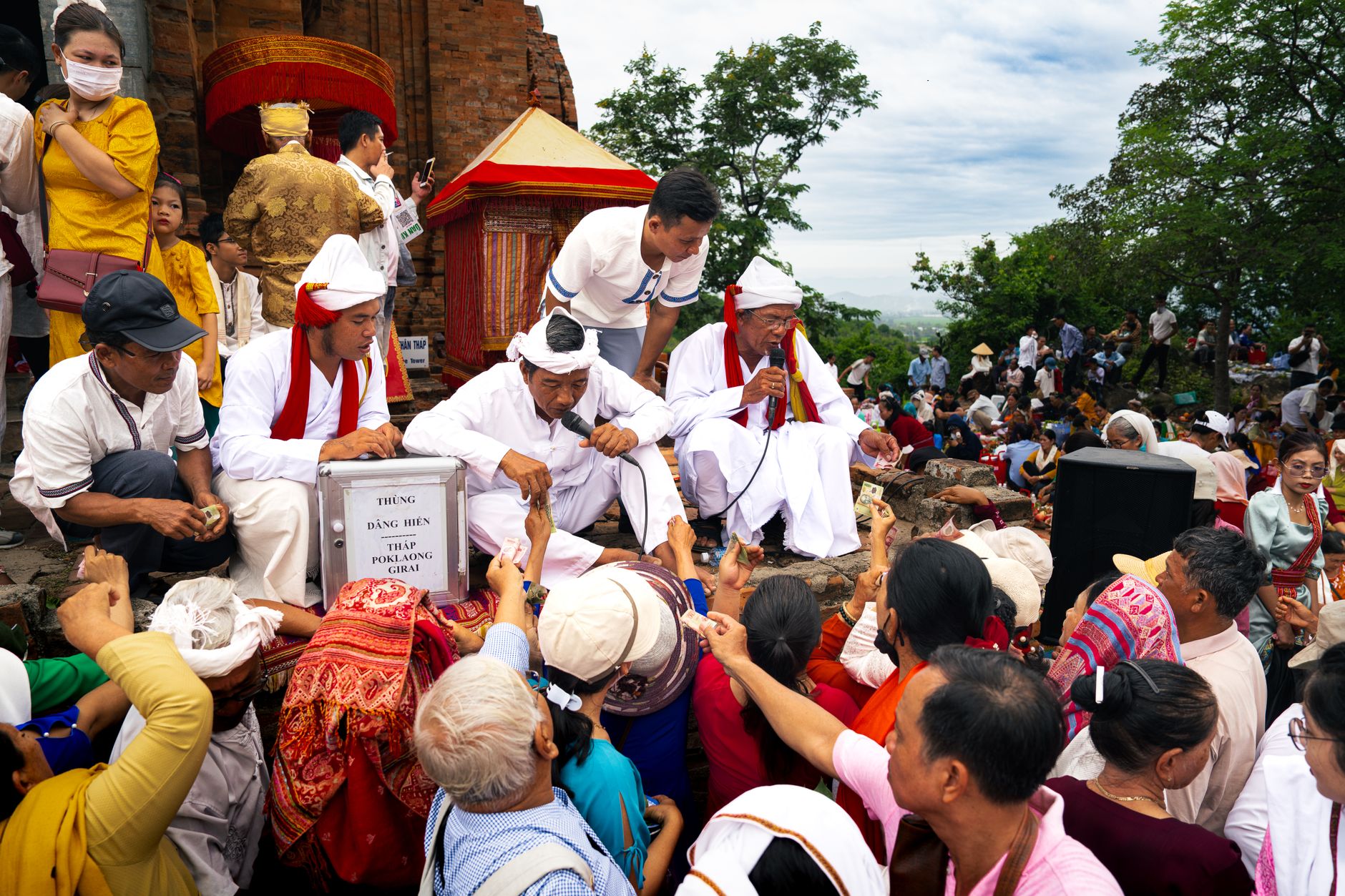
Photo by Felix Schickel on Pexels
Grapes and Seafood
The city is known for high-quality table grapes and wine grapes, especially in the surrounding districts. Rice production tops 30,000 tons annually, but it's the grapes—and the vineyards—that make Phan Rang distinctive in a vineyard-poor country.
With 10 km of coastline, seafood is central to the economy and the table. Fish, shrimp, scallops, and squid are farmed and caught. Industrial shrimp farming, particularly in Dong Hai ward, has expanded in recent years. A visit to the waterfront at dawn—fishing boats unloading, nets spread on the sand—gives a real sense of the work.
Practical Notes
Phan Rang achieved city status in 2007 and serves as capital of Ninh Thuan Province. The city is divided into 12 wards and one commune. Public transport is modest; a scooter rental is useful if you plan to visit Po Rome (the second temple, 20 km out). The railway station connects to Hanoi and Ho Chi Minh City (호치민시 / 胡志明市 / ホーチミン市). Most travelers arrive by bus from Nha Trang (about 2 hours) or heading south toward Mui Ne.
The best time to visit for Cham culture is October (Kate festival). For food, come hungry: the seafood is fresh, and local restaurants are not geared to tourists (a good sign). Grapes are in season late summer and early autumn.
Phan Rang is not a "must-see" on the usual Vietnam itinerary, but for anyone interested in Southeast Asia's living minority cultures, or in spending time in a genuine working city rather than a tourist corridor, it's worth the detour.
Going to Vietnam? Eat and travel smarter.
Monthly: new dishes, off-the-beaten-path destinations, and itineraries — straight to your inbox. No spam. Unsubscribe anytime.
Join 0 expats. (We just launched.)
More from Southern Vietnam
Other articles covering the same region.

Landmark 81 Saigon: Observation Deck, Ice Rink, and Getting There from District 1
Landmark 81 is Vietnam's tallest building and Saigon's most visible skyline anchor. Here's what's actually inside and whether it's worth the trip.

Bitexco Financial Tower: Skydeck, Helipad Bar, and Whether the Ticket Is Worth It
Saigon's most recognizable skyscraper charges 250,000 VND to ride up to the 49th floor — here's what you actually see, and whether you should bother.

Notre Dame Cathedral Saigon: French Colonial Centerpiece in the Heart of HCMC
Saigon's Notre Dame Cathedral has been wrapped in scaffolding for years, but the square in front of it remains one of the best starting points for a colonial-era walking tour of District 1.
More in Destinations
More articles from the same category.

Paradise Cave, Quang Binh: The 31km Marble Cave That Beats Phong Nha for Photographers
Paradise Cave runs 31km through Quang Binh's karst and delivers the kind of cathedral-scale formations that Phong Nha's boat tour simply can't match. Here's how to see it properly.

Son Doong Cave: What the $3,000 Oxalis Expedition Actually Includes
Son Doong is the world's largest cave and only one operator is legally allowed to take you inside. Here is what the permit-only expedition covers and whether it is worth it.

Phong Nha Cave: Wet Cave, Dry Cave, and How to Choose
Phong Nha has two main caves worth your time — one you reach by river boat, one on foot. Here's how to pick, what each costs, and when to go.

Hoi An Lantern Festival: Full Moon Nights and How to Plan Around Them
Once a month, Hoi An cuts the electricity and lights the Ancient Town with silk lanterns. Here's what actually happens and how to not spend the evening stuck in a crowd.

Japanese Bridge Hoi An: 400 Years of History, a Restoration Row, and How to See It Right
Hoi An's Japanese Bridge has anchored the Ancient Town for four centuries. Here's what to know about its origins, the restoration that divided locals, and when to visit.

Hoi An Old Town Walking Guide: Yellow Walls, Lantern Alleys, and the Japanese Bridge
A street-level route through Hoi An's UNESCO core — old merchant houses, assembly halls, the famous Japanese Bridge, and when to walk each stretch for the best light.
Comments
Loading…