Vietnam SIM and eSIM: best options for 7-day, 30-day, 90-day stays
Which Vietnamese SIM card suits your trip length. Viettel vs Vinaphone vs Mobifone, eSIM alternatives, and how to buy and top up.

Getting a local SIM in Vietnam (베트남 / 越南 / ベトナム) is straightforward, cheap, and gives you reliable data and calls for your stay. The choice between a physical SIM and an eSIM depends on your trip length and phone compatibility.
Physical SIM cards: the standard choice
Three carriers dominate Vietnam: Viettel, Vinaphone, and Mobifone. Viettel has the best coverage, especially in rural areas and mountains. Vinaphone and Mobifone offer comparable speeds in cities but can feel patchy outside urban centers.
Viettel: strongest signal nationwide, especially useful if you're heading to Sapa, Ha Giang, or other northern hill stations. Tourist packages start at 150,000–200,000 VND for 30 days of unlimited data (4G). International roaming is available but pricey; better to get a local card.
Vinaphone: similar pricing to Viettel, solid in cities like Hanoi and Saigon, but signal drops faster once you leave main highways.
Mobifone: competitive rates, slightly cheaper entry packages (around 120,000 VND for 30 days), but coverage is less consistent.
All three allow easy top-ups at convenience stores (every 7-Eleven, FamilyMart, Viettel shops) or via their apps. No contract required.
Where to buy a physical SIM
Airport kiosks (Noi Bai in Hanoi, Tan Son Nhat in Saigon (사이공 / 西贡 / サイゴン), Da Nang): convenience is the only advantage. Staff speak English, but prices can be 10–15% higher than the street. Expect to pay 200,000 VND for a basic 30-day plan.
Mobile shops in town: cheaper. Walk into any Viettel, Vinaphone, or Mobifone store in central Hanoi (하노이 / 河内 / ハノイ) or Saigon and you'll pay list price: 150,000–170,000 VND for a tourist 30-day package. Takes 10 minutes.
Street stalls: found in night markets and busy shopping districts (Hanoi Old Quarter, Ben Thanh Market area in Saigon). Prices are the same, but you need to negotiate and check the card works before handing over cash.
You'll need your passport for registration (Vietnamese law). Processing is instant.
eSIM: best for short stays
If your phone supports eSIM (iPhone 11 and newer, most modern Android flagship), Airalo is the easiest option. No physical card, no shop visits, no passport registration.
Airalo: download the app, buy a regional Asia-Pacific eSIM plan, activate instantly. A 7-day plan costs around $4–5 USD; 30 days is $10–15. Data speeds are reliable (4G LTE), coverage uses Viettel's network behind the scenes.
The trade-off: eSIM plans are more expensive per GB than a physical SIM card, and you lose the ability to have a Vietnamese phone number (relevant if you want to book rides on Grab, add yourself to group chats, etc.). Most travelers don't need a local number, but keep it in mind.
Alternatives: Google Fi (if you're a US customer) works in Vietnam for around $10 USD per day, no setup. Expensive for longer stays, cheap for 1–3 days.
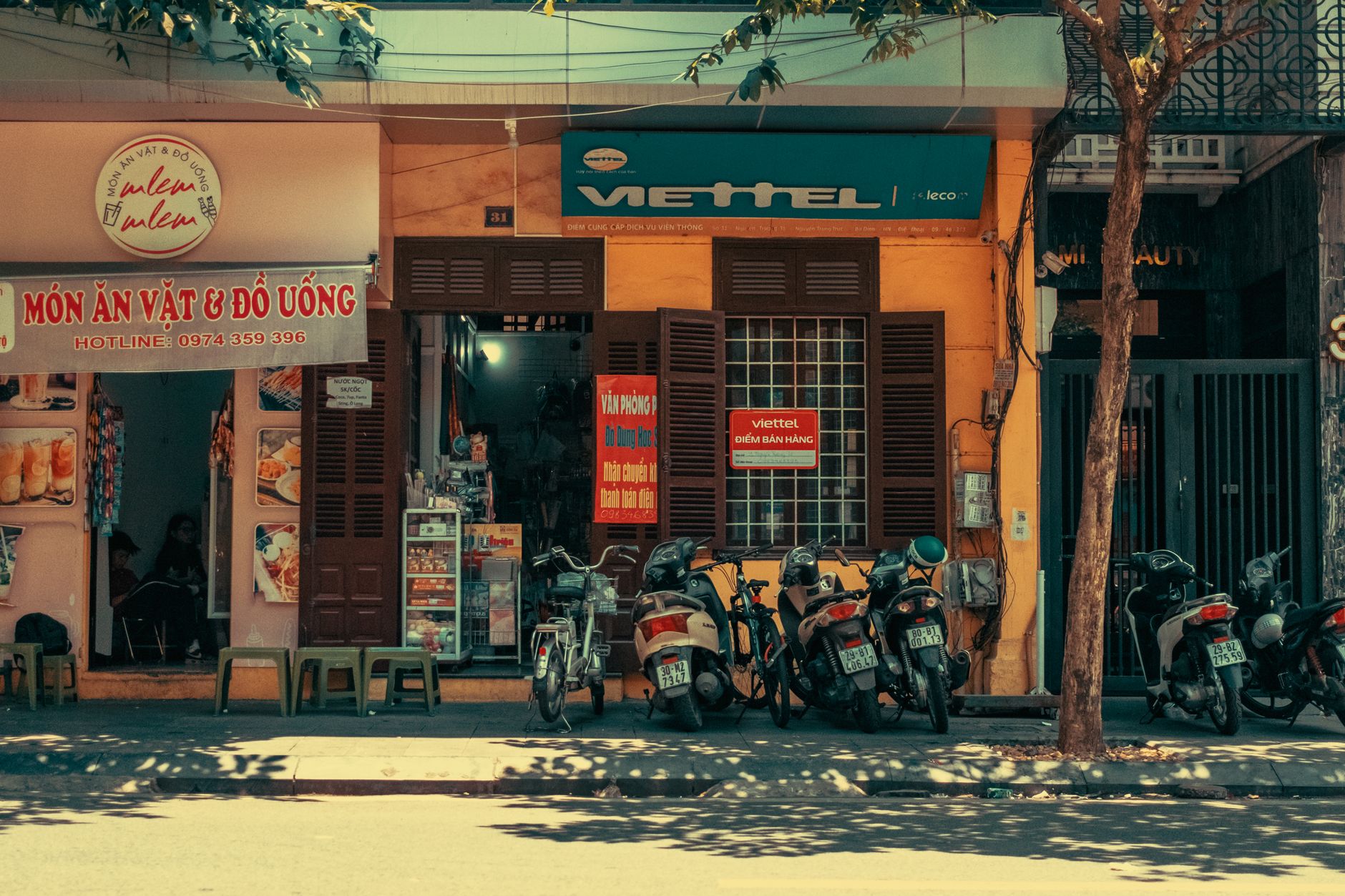
Photo by Quý Nguyễn on Pexels
Pricing breakdown by trip length
7 days: eSIM (Airalo, $4–5) or a physical SIM with a prepaid top-up plan (100,000 VND ≈ $4–5 USD for 3–5 GB). Both are roughly the same cost; eSIM wins on convenience.
30 days: physical SIM wins. A tourist 30-day unlimited package (typically 100 GB, often unlimited in practice) costs 150,000–200,000 VND. That's $6–8 USD for a month. eSIM equivalent would run $25–40.
90 days: stick with a physical SIM. Buy a 30-day tourist package and top up every month, or negotiate a longer contract directly with a shop (some offer 3-month packages for 400,000–500,000 VND, though terms vary). Cheaper than buying three 30-day blocks separately.
How to top up
Run out of data or credit? You have three options:
In-store: walk into any Viettel, Vinaphone, or Mobifone shop and hand over cash. Staff will load the top-up directly to your account. Instant.
Convenience stores: 7-Eleven, FamilyMart, and many local mini-marts sell prepaid vouchers (scratch cards with a PIN code). Ask for "the card for [carrier name]". Scratch, text the PIN to activate, or enter it into the app. Usually ready within seconds.
Via app: Viettel and Vinaphone have decent English-language apps (myViettel, Vinaphone). Link a debit card (Visa, Mastercard, or local bank card) and buy top-ups directly. Fastest but requires some Vietnamese language navigation.
Via SMS: text a code to the carrier's service number (printed on your phone bill or online). Works but can be slower.

Photo by Quang Nguyen Vinh on Pexels
Call rates and texting
Don't expect unlimited calls. Tourist packages give you data; calls are pay-as-you-go (around 10,000–15,000 VND per minute to other Vietnamese numbers, higher to international). Most travelers use WhatsApp, Viber, or Telegram instead.
Texting a Vietnamese number is cheap (around 1,000 VND per SMS). International SMS is pricier but rarely needed.
Practical notes
Buy a physical SIM as soon as you arrive if you're staying more than a week; eSIM makes sense only for short trips or if you hate paperwork. Keep your passport handy for registration. Top-up at 7-Eleven rather than airport shops to save money. If you're hopping between Vietnam and Cambodia (or Thailand), check if your carrier offers a regional package to avoid roaming charges.
Going to Vietnam? Eat and travel smarter.
Monthly: new dishes, off-the-beaten-path destinations, and itineraries — straight to your inbox. No spam. Unsubscribe anytime.
Join 0 expats. (We just launched.)
More from All of Vietnam
Other articles covering the same region.

Best Tau Hu in Hoi An: Where Locals Send You
Tau hu—silky tofu soup—tastes different in Hoi An. Here's where locals actually eat it, and why.

7 Days in Vietnam: A Yoga and Meditation Itinerary
A week-long route through Vietnam's quietest corners: Sapa's mountain silence, a meditation center in the Mekong, and coastal stillness in Da Lat. Real costs, transport, and retreat recommendations.

7 Days in Vietnam: A Solo Backpacker Itinerary
A tested week-long route through Hanoi, Ha Long Bay, and Saigon with budget lodging, street food, and overland transport. Real costs and booking tips included.
More in Travel Tips
More articles from the same category.

Where to Stay in Saigon: District 1 vs District 3 vs District 7
Three neighborhoods, three vibes. Pick District 1 for backpackers and chaos, District 3 for quiet and value, or District 7 for modern expat comfort. Here's how each stacks up.

Where to Stay in Sapa: Town Center vs Cat Cat vs Ta Van
Sapa has three distinct bases: the foggy town center for convenience, Cat Cat village for quiet hilltop views, or Ta Van for homestay immersion. Pick based on whether you're chasing comfort or trekking.

Where to Stay in Can Tho: Ninh Kieu, Cai Rang, or Orchards
Can Tho's three main neighborhoods offer different angles on Mekong Delta life. Here's how to pick based on your priorities and budget.

Where to Stay in Hue: Citadel vs South Bank vs Beach
Hue splits into three distinct neighborhoods for travelers. Each offers different trade-offs between history access, dining, and atmosphere—here's how to choose.

Vietnam Gift Culture: Red Envelopes, Lucky Money & Birthday Etiquette
Understanding "li xi", birthday cakes, and the unwritten rules of gift-giving in Vietnam—from Tet bonuses to wedding contributions.

Vietnam Tipping Guide by Service: What (and When) to Tip
Tipping isn't mandatory in Vietnam, but it's appreciated in certain services. Here's a breakdown of what to give—and what to skip—across hotels, taxis, tours, spas, and restaurants.
Comments
Loading…