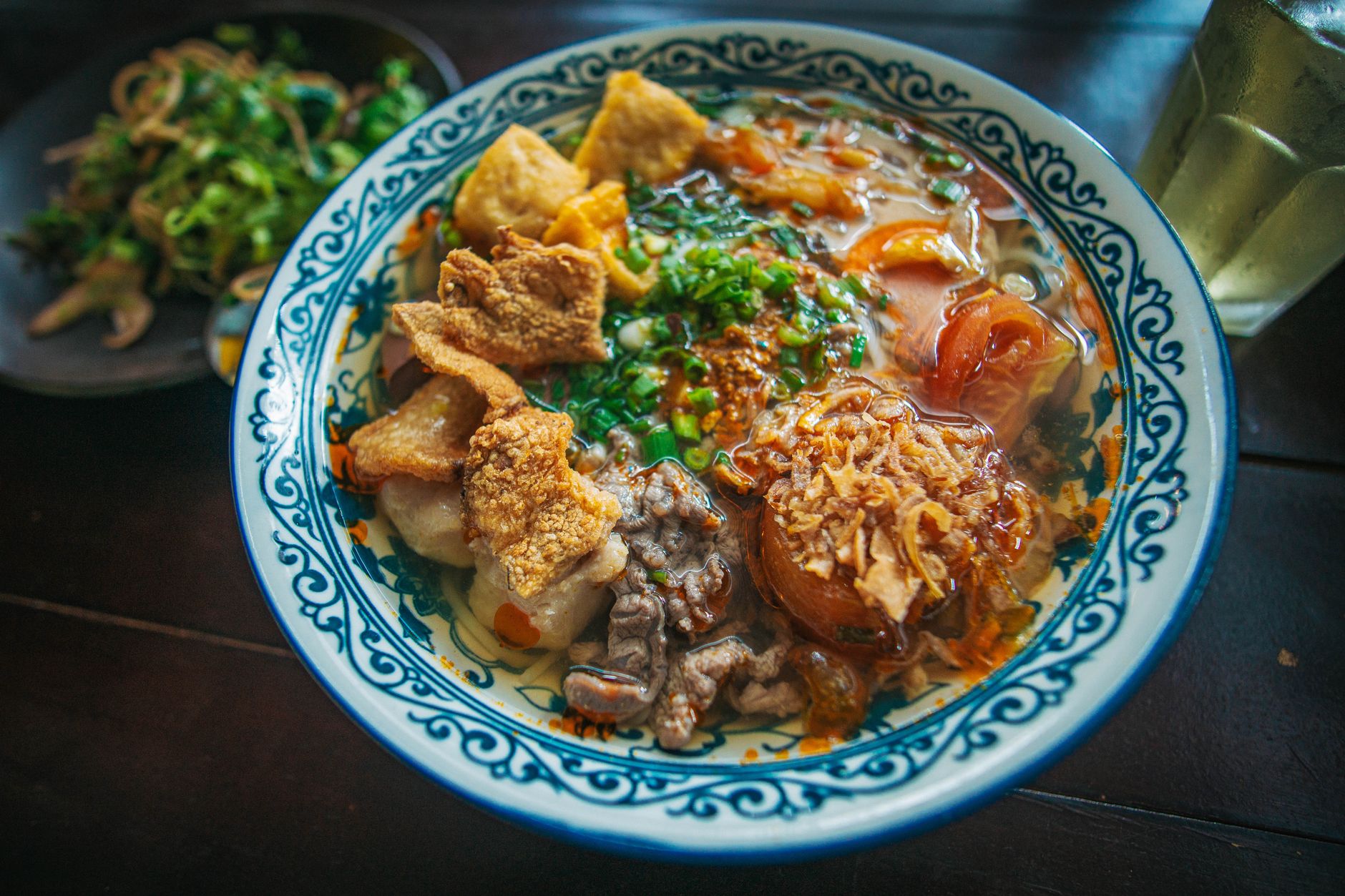
"Bun bo Hue" hits harder than most Vietnamese noodle soups. The broth is built on lemongrass, fermented shrimp paste, and a serious quantity of chili oil — the kind that pools bright red on the surface and stains the bowl. It's rich, funky, and aromatic in a way that "pho" simply isn't. Which means the drink sitting next to it matters more than you'd think.
Here's what pairs well, what locals actually drink, and why the wrong choice makes the heat worse.
Tra Da — The Default for a Reason
"Tra da" (iced tea) is the house drink at almost every bun bo Hue shop in Hue, and most of the time it costs nothing or arrives automatically. It's thin, lightly bitter, and cold — brewed from green or jasmine tea leaves, diluted enough that it reads more as flavored water than actual tea.
That thinness is the point. You're not drinking it for flavor. You're drinking it to reset your palate between bites, to cut through the fat, and to cool your mouth without adding sweetness or carbonation that might clash with the fermented-shrimp depth of the broth. The bitterness in the tea — mild as it is — actually complements the lemongrass, which shares a faint herbal edge.
In Hue (후에 / 顺化 / フエ)'s older shops, the ones that open at 6am and sell out by 9, tra da is practically part of the dish. Ask for it if it doesn't arrive automatically: "cho toi tra da" gets you a glass.
Bia — The Practical Counterargument
If you're eating bun bo Hue (분보후에 / 顺化牛肉粉 / ブンボーフエ) at lunch or in the evening rather than at breakfast (when most locals eat it), a cold beer makes real sense. The carbonation lifts the chili oil off your palate in a way that water can't quite manage. The light bitterness of a lager — Huda, which is brewed in Hue itself, is the local choice, running around 15,000–20,000 VND for a can at most shops — echoes the fermented notes in the broth without competing with them.
"Bia hoi" draft beer, if you can find it in Hue, works even better: it's lighter in body than bottled lager, which means it rinses clean rather than sitting heavy on top of a rich bowl. The alcohol content is low enough (around 3%) that it doesn't dull the spice entirely — and you want to feel some of that heat, because it's part of the experience.
Avoid darker beers or anything with strong malt character. They fight the lemongrass and make the fermented shrimp paste taste murkier than it is. A cold 333 or Saigon Special works fine if Huda isn't available. Tiger is fine. Don't overthink it.

Photo by Theodore Nguyen on Pexels
Nuoc Mia — The Underrated Call
"Nuoc mia" (fresh sugarcane juice) is the pairing most food tourists overlook, and it might be the most satisfying one. Sugarcane stalls cluster near the market streets in Hue — around Cho Dong Ba and along Tran Hung Dao — and a glass costs 10,000–15,000 VND. You can sometimes buy it from a vendor, carry it half a block, and sit down with your bun bo Hue before the ice melts.
What makes nuoc mia work is the way its sweetness interacts with chili heat. Capsaicin binds to fat and to sugar — both neutralize the burn more effectively than water or carbonation alone. The sugarcane juice is also very lightly acidic, with a clean green-grass flavor that matches lemongrass better than almost anything else you can drink. It's not subtle pairing logic; it's almost obvious once you try it.
The one caveat: nuoc mia doesn't love a bowl that's already very rich. If you're eating bun bo Hue with extra gio heo (pork knuckle) and the full chili oil hit, the sweetness can tip into cloying by the end of the glass. Order a small glass, not the large.
What Doesn't Work
Soda — Coke, Sprite, or any Vietnamese soft drink — is a common choice but a mediocre one. Carbonation helps briefly, but the sweetness in commercial sodas compounds the richness of the broth rather than cutting it. By the midpoint of the bowl, the combination tends to feel heavy.
"Vietnamese coffee" or "ca phe sua da" before or after is excellent, but not during. The bitterness is too dominant alongside the complex broth, and the condensed milk pulls things in a direction that doesn't serve either drink well. Save the coffee for afterward — it's a perfectly reasonable dessert move at any of the ca phe shops around Hue's old town.
Plain hot tea, the kind served in small cups at more traditional spots, is fine but lacks the temperature element that makes tra da useful. Heat doesn't help when your mouth is already on fire.

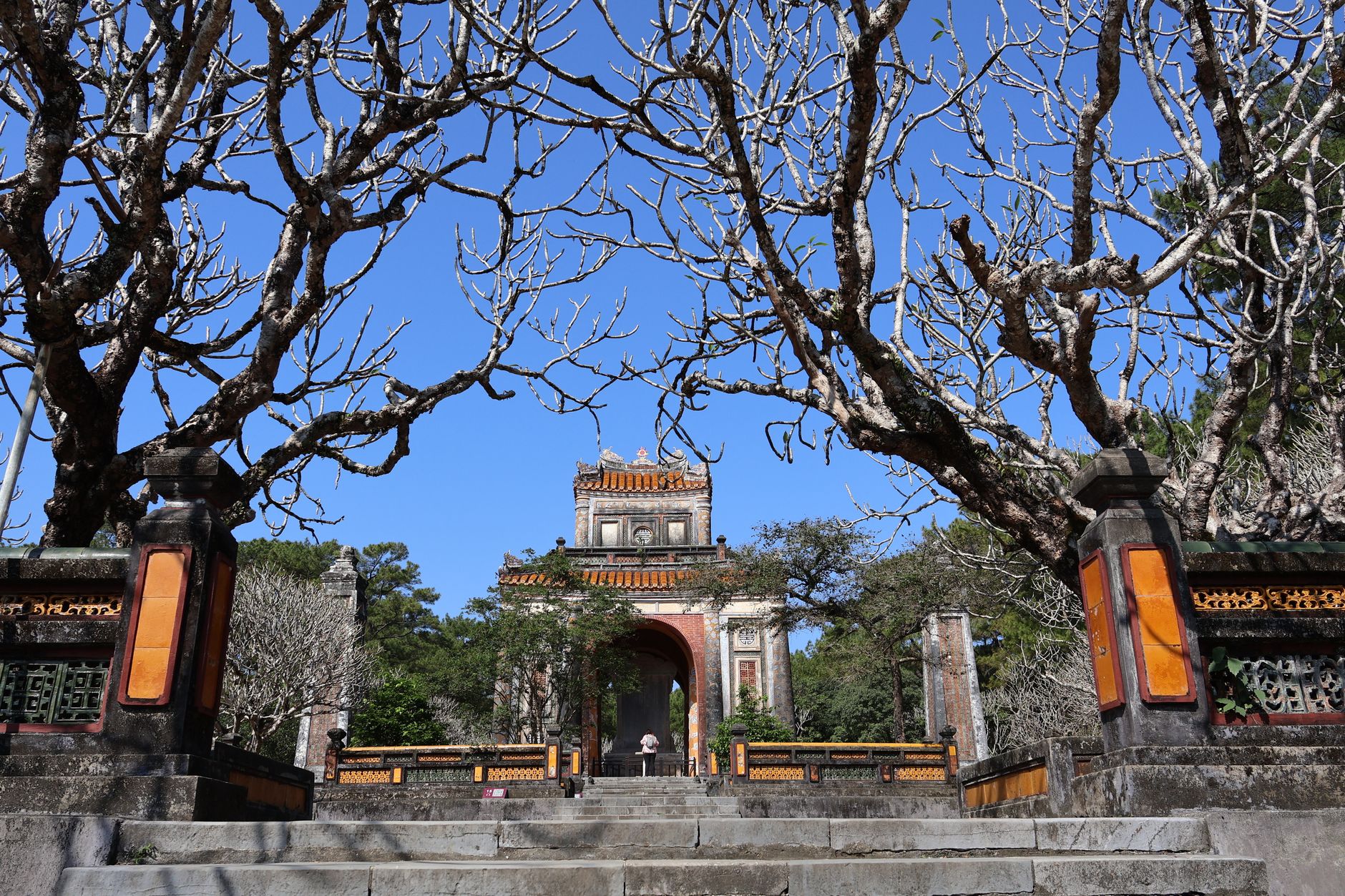
Photo by Quang Nguyen Vinh on Pexels
How Locals Actually Drink It
At breakfast — which is when most Hue residents eat bun bo Hue, before 8am — it's almost always tra da, full stop. No beer, no sugarcane, just the free iced tea. The spice levels at early-morning shops tend to be calibrated for regular customers who've been eating this for decades, which means the heat is real but not theatrical.
Later in the day, beer is common at casual restaurants. Nuoc mia is a street pairing — something you buy separately and bring to the table yourself. Both are worth doing at least once.
Practical Notes
Huda Beer is genuinely the most locally appropriate beer choice in Hue; it's cheap, cold, and the brewery has been part of the city since the 1990s. Most bun bo Hue shops don't serve alcohol — you'll need to pick a spot that does, or buy from a nearby convenience store. Sugarcane juice is best drunk within minutes of pressing, so time it accordingly.
Last updated · May 29, 2026 · independently researched, never sponsored.