5 Days in Quy Nhon and Binh Dinh: Beaches and Cham Temples Beyond Nha Trang
Quy Nhon has been undershadowed by Nha Trang for too long. This 5-day itinerary hits Cham temples, lagoons, and empty beaches that feel nothing like the cruise-ship crowd.

Quy Nhon (Binh Dinh province) sits 60 km south of Nha Trang (냐짱 / 芽庄 / ニャチャン) but feels like a different coast entirely. Fewer tourists, genuine fishing-town energy, and some of the best Cham-era temples outside Hoi An. You'll see beaches that stay quiet past 4 p.m., island day trips that don't require a pre-dawn wake-up, and food that leans into local seafood rather than tourist-menu compromises.
This itinerary assumes you arrive in Quy Nhon by bus (5–6 hours from Saigon) or domestic flight (1.5 hours) and have basic accommodation sorted. [Motorbike rental](/posts/renting-motorbike-vietnam (베트남 / 越南 / ベトナム)-legal-insurance) from your hotel runs 150,000–200,000 VND/day; group tours are available but less flexible.
Day 1 — Quy Nhon Town + Bai Xep Beach
Arrive in the morning. Spend the first half-day exploring Quy Nhon's waterfront and Old Town (around Nguyen Hue and Tran Hung Dao streets). Walk the harbor, grab coffee at a local cafe, and eat an early lunch at one of the "banh xeo" stalls near the market—crispy shrimp-and-pork pancakes folded with herbs and dipping sauce.
In the afternoon, drive north 15 km to Bai Xep, a fishing hamlet with a crescent beach backed by limestone cliffs. The sand here is coarser and darker than Quy Nhon's main beach, and it stays relatively quiet. Rent beach chairs (50,000 VND), swim, and watch fishing boats return at dusk. Eat dinner at one of the open-air seafood shacks along the shore—grilled squid, steamed crabs, white fish—then return to town.
Where to stay: Budget guesthouses line Nguyen Hue St. (200,000–400,000 VND/night). Mid-range: Saigon (사이공 / 西贡 / サイゴン) Quy Nhon (around 800,000 VND for a decent room).
Day 2 — Cham Temples: Banh It and Duong Long
This is the highlight. Two Cham temple towers stand about 30 km west of Quy Nhon town, built in the 12th century when the Champa Kingdom still ruled this coast.
Banh It Towers (30 km, 1 hour by motorbike): Two brick towers in good condition, set in rice paddies. The larger tower has intricate carved sandstone lintels and a brick facade. No crowds, no entrance fee—just walk in from the road. Bring water and a hat; there's no shade.
Duong Long Towers (25 km from Banh It, 1.5 hours): Three towers, more ruined but atmospheric. Surrounded by farmland. The central tower has a distinctive octagonal base. Again, free entry, no services nearby.
Visit both in one long day, starting early (7 a.m.). Pack lunch from Quy Nhon (banh mi, fruit, drinks). Return to town by 5 p.m. If you're not comfortable navigating alone, hire a motorbike taxi (250,000–350,000 VND for the full day) or book a group tour through your hotel (500,000–700,000 VND).
Why these matter: The Champa Kingdom ruled central Vietnam until the 15th century, and these temples—unlike the more-touristed My Son in Hoi An (호이안 / 会安 / ホイアン)—see almost no foreign visitors. The silence and the landscape make them feel genuinely forgotten.
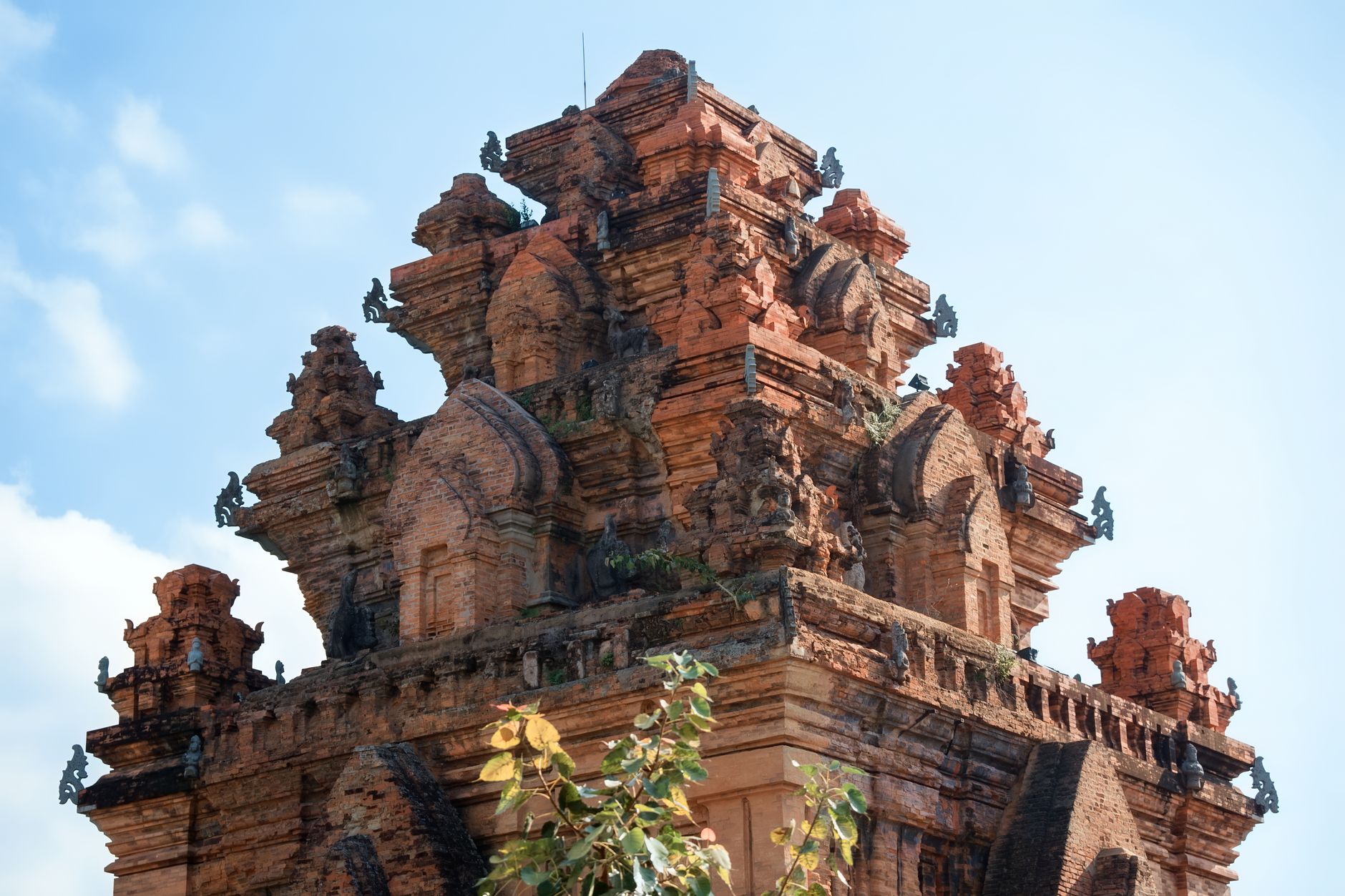
Photo by ㅤ quang vinh ㅤ on Pexels
Day 3 — Hon Kho Island Day Trip
Hon Kho lies 7 km offshore. Take a speedboat (departs 7 a.m., returns 4 p.m.) from Quy Nhon harbor. Cost: 350,000–450,000 VND per person, organized through your hotel or the ticket office at the harbor.
The island has a rocky, sheltered bay with calm water. Swim, snorkel (visibility is okay in calm weather), and eat a simple grilled-fish lunch on the beach. The boat operator typically includes snorkeling gear and a basic lunch. Bring sunscreen, a rash guard, and cash—there are no ATMs on the island.
Hon Kho is less crowded and smaller than Phu Quoc (푸꾸옥 / 富国岛 / フーコック) or Cat Ba, so the feel is more intimate. Return to Quy Nhon by mid-afternoon and rest or explore the town's night market (around 6 p.m. on Hai Ba Trung St.) for street snacks.
Day 4 — Eo Gio and Ky Co Lagoon
Eo Gio ("Ghost Pass") is a dramatic coastal gorge about 35 km south of Quy Nhon town. Ky Co is a turquoise lagoon near the pass, accessible by motorbike and a short hike or kayak.
Route: Drive south past Quy Nhon town toward Phu Cat district. The road winds through mountains and delivers coastal views. Stop at a viewpoint overlooking Ky Co—the water is bright jade-blue and almost unreal. You can park and photograph, or continue down to the lagoon itself (rough road, high-clearance motorbike recommended).
If the road is too rough or you prefer a guided experience, book a kayak tour (600,000–800,000 VND per person, includes transport from Quy Nhon and 3–4 hours of paddling through the lagoon and mangrove channels). The kayak option is more relaxing and avoids motorbike hassle.
Return to Quy Nhon for dinner. Try grilled seafood near the harbor or "bun rieu (분지에우 / 蟹肉米粉汤 / ブンリュウ)", a regional crab-and-tomato noodle soup.
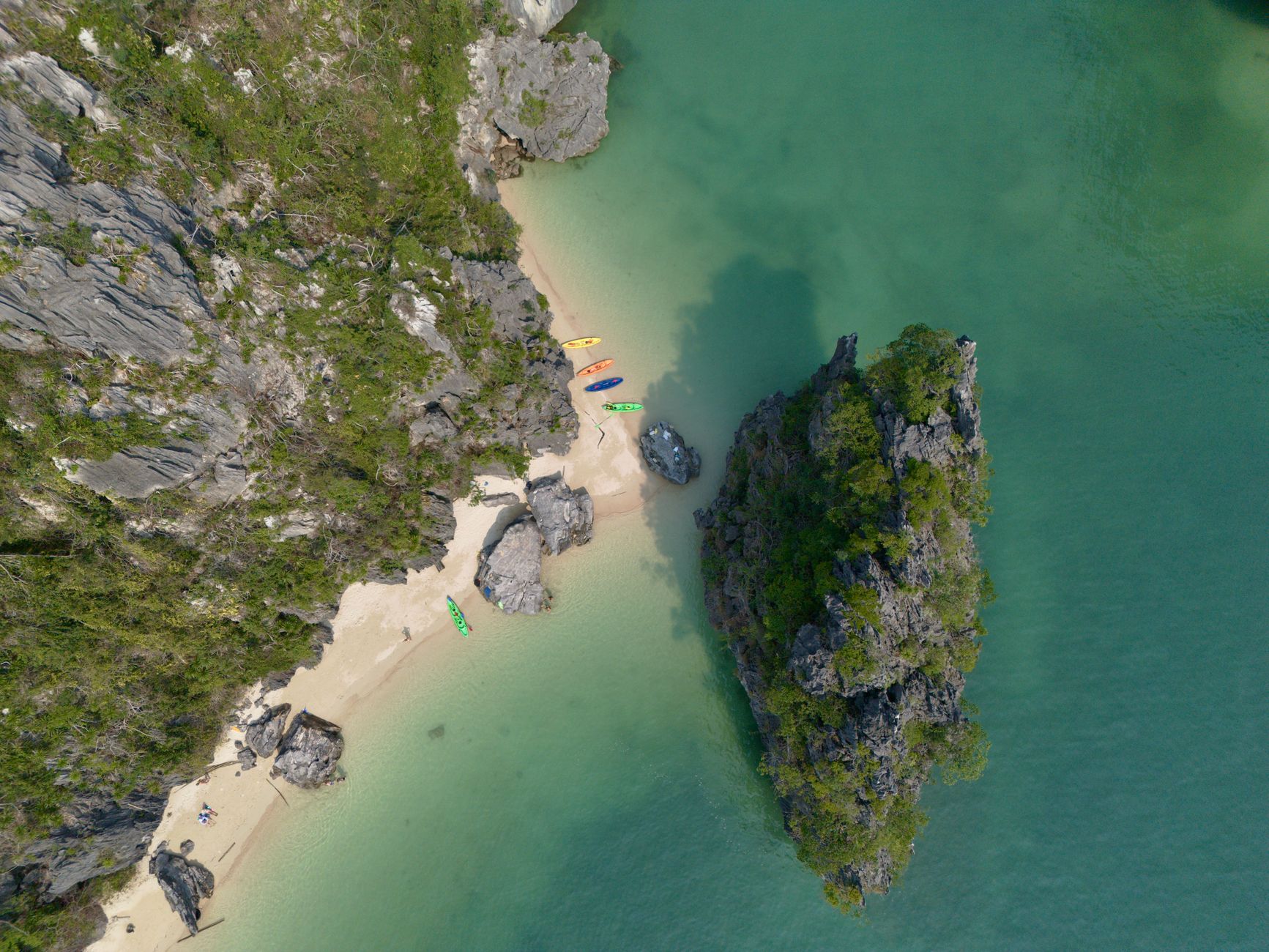
Photo by Vietnam Hidden Light on Pexels
Day 5 — Banh Xeo Tom Nhay + Departure
Spend the morning eating your way through Quy Nhon's breakfast and street-food scene. The star is "banh xeo (반세오 / 越南煎饼 / バインセオ) tom nhay"—crispy shrimp pancakes (banh xeo) served with fresh shrimp that has been gently cooked (tom nhay means "jumping shrimp", a poetic nod to freshness). Find this at stalls near the central market (Cho Quy Nhon) around 7–9 a.m. Cost: 40,000–50,000 VND per pancake.
Also try:
- "Hu tieu (후띠우 / 粿条 / フーティウ)" (clear pork-and-shrimp noodle soup) at a dawn stall, 35,000 VND.
- Fresh tropical fruit from the market: mango, rambutan, dragon fruit.
- "Banh hoai" (Hoi An-style crispy pancakes), if you find a vendor—they're less common here but a regional variant.
After breakfast, head to the bus station or airport for your onward journey. If your bus/flight is late afternoon, spend the midday at Quy Nhon's main beach (Bai Xep or Bai Kem) for a last swim.
Practical notes
Best season: May–September (dry, calm seas). October–April can be rainy and rough. Book accommodation and island tours a day or two ahead, especially weekends. Cash is essential—ATMs are available in Quy Nhon town but not in remote areas. Petrol stations are frequent; motorbike rental includes fuel or a fuel allowance. A basic Vietnamese phrasebook or Google Translate helps with temple locations and local directions.
Going to Vietnam? Eat and travel smarter.
Monthly: new dishes, off-the-beaten-path destinations, and itineraries — straight to your inbox. No spam. Unsubscribe anytime.
Join 0 expats. (We just launched.)
More from Central Vietnam
Other articles covering the same region.

Paradise Cave, Quang Binh: The 31km Marble Cave That Beats Phong Nha for Photographers
Paradise Cave runs 31km through Quang Binh's karst and delivers the kind of cathedral-scale formations that Phong Nha's boat tour simply can't match. Here's how to see it properly.

Son Doong Cave: What the $3,000 Oxalis Expedition Actually Includes
Son Doong is the world's largest cave and only one operator is legally allowed to take you inside. Here is what the permit-only expedition covers and whether it is worth it.

Phong Nha Cave: Wet Cave, Dry Cave, and How to Choose
Phong Nha has two main caves worth your time — one you reach by river boat, one on foot. Here's how to pick, what each costs, and when to go.
More in Itineraries
More articles from the same category.

5 Days in Vietnam During Monsoon Season: What Actually Works
A tested itinerary for traveling Vietnam in the wet season. Choose destinations that stay dry, time activities around rain patterns, and eat your way through slack-season food.

7 Days in Vietnam: A Yoga and Meditation Itinerary
A week-long route through Vietnam's quietest corners: Sapa's mountain silence, a meditation center in the Mekong, and coastal stillness in Da Lat. Real costs, transport, and retreat recommendations.

7 Days in Vietnam: A Solo Backpacker Itinerary
A tested week-long route through Hanoi, Ha Long Bay, and Saigon with budget lodging, street food, and overland transport. Real costs and booking tips included.

10 Days on the Northern Frontier Loop: Hanoi to Ha Giang and Back
A tested itinerary covering Hanoi, Mai Chau, Sapa, Ha Giang, and back—with transport, guesthouses, food costs, and what actually works on the ground.

3 Days Escaping Saigon: Da Lat and Surrounding Highlands
Leave Saigon behind for Da Lat's cool mountain air, pine forests, and French colonial architecture. This tested itinerary covers transport, where to stay, what to eat, and realistic costs for a long weekend.

7 Days in Vietnam's Ethnic Minority Villages: A Northern Loop
A tested itinerary through Ha Giang, Sapa, and Mai Chau targeting Hmong, Dao, and Thai villages. Routes, homestays, transport, food stops, and real costs in VND.
Comments
Loading…