Banh Khot: Vung Tau's Bite-Sized Rice-Flour Cups
Banh khot are crispy, coconut-rich rice cakes served in cast-iron molds. In Vung Tau, they're street-food currency—served hot with shrimp, mustard greens, and a dipping sauce that makes them disappear fast.

What is banh khot?
"Banh khot" translates roughly to "cake in a mold"—and that's exactly what it is. Unlike "[banh xeo](/posts/banh-xeo-vietnam (베트남 / 越南 / ベトナム)-sizzling-pancake)" (the larger, folded crepes), banh khot are tiny, crispy-edged rice-flour cups baked in special cast-iron molds, typically 2–3 cm in diameter. A single order is a cluster of 8–12 of these golden nuggets, still warm in their molds.
The batter is made from rice flour mixed with coconut milk, turmeric, and water. As it cooks in the oiled mold, the edges turn golden and crispy while the interior stays tender. A shrimp or two sits on top, and fresh herbs—usually mustard greens—nestle around the batter as it sets.
The taste and texture
Bite into one and you get contrast: the crispy, charred edges crunch against a soft, slightly sweet interior. The coconut milk gives banh khot a gentler, richer flavor than banh xeo (반세오 / 越南煎饼 / バインセオ). There's no cheese or meat inside; the shrimp and herbs are toppings, not fillings.
You eat them directly from the mold using a small bamboo or plastic pick (or your fingers, if you're not worried about grease). The traditional way is to load it with mustard greens, dip it in fish sauce with chili and lime, and pop the whole thing in your mouth. Speed matters—they cool fast, and reheated banh khot lose their edge.
Where banh khot comes from
Banh khot originated in the Mekong Delta (메콩 델타 / 湄公河三角洲 / メコンデルタ), particularly around Ca Mau and Bac Lieu provinces, where coconut is king and shrimp farms dot the landscape. But the snack has spread up the southern coast, and Vung Tau—a fishing and beach town southeast of Saigon—has embraced it as local street food. You'll find banh khot carts clustered near beaches and in the Old Town market areas, especially in late afternoon.
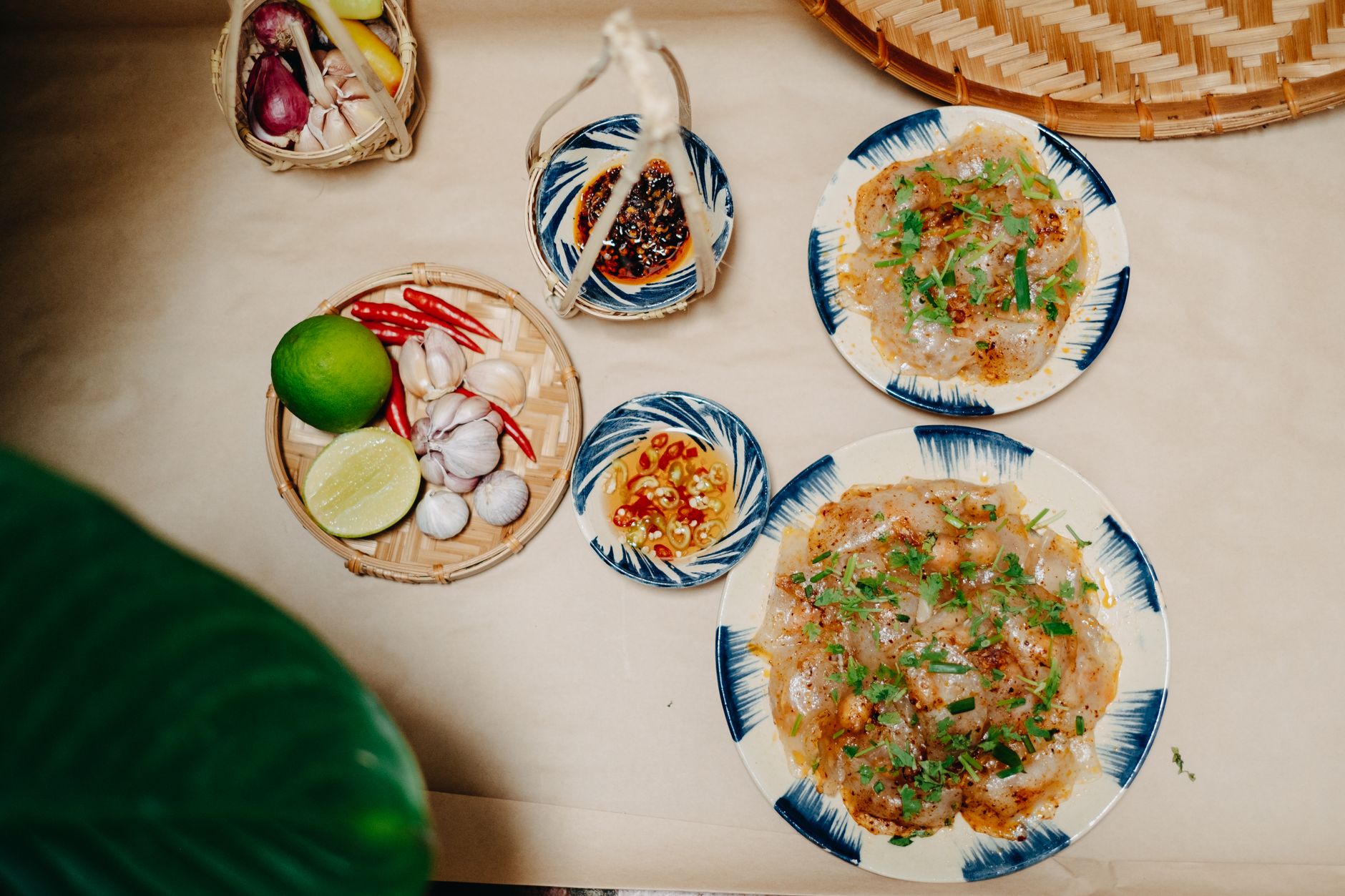
Photo by Pew Nguyen on Pexels
Eating banh khot in Vung Tau
The classic spot is Banh Khot Goc Vu Sua, a small storefront on Tran Phu Street in the Old Town. It's been there for years, and it shows: white plastic stools, a counter with mold racks, a loyal crowd of locals and cycling through every day. An order of 12 pieces runs 35,000–50,000 VND depending on shrimp size and what you add. A portion with extra mustard greens and a glass of fresh lime juice is still under 60,000 VND.
The owner cooks to order. You'll watch the molds get filled, the shrimp placed, the batter bubble and set. First-timers often order just one batch, but most people come back for seconds because 12 pieces vanish in about three minutes.
Other vendors operate from carts near Back Beach and around Tran Phu Market during lunch and early evening (around 4 p.m.). Prices are similar—30,000–50,000 VND for a standard order.
What to eat them with
Banh khot come with mustard greens ("rau cai chua") and a dipping sauce: fish sauce with minced chili, lime juice, and a bit of sugar. Some vendors add a dollop of spicy chili paste. You're also usually offered a small glass of fresh lime juice or herbal tea—the acid cuts through the richness of the coconut.
If you're at a sit-down spot like Goc Vu Sua, you might also order spring rolls ("goi cuon") or a small bowl of calamansi shrimp soup to round out the meal. Total bill for one person: 100,000–120,000 VND.
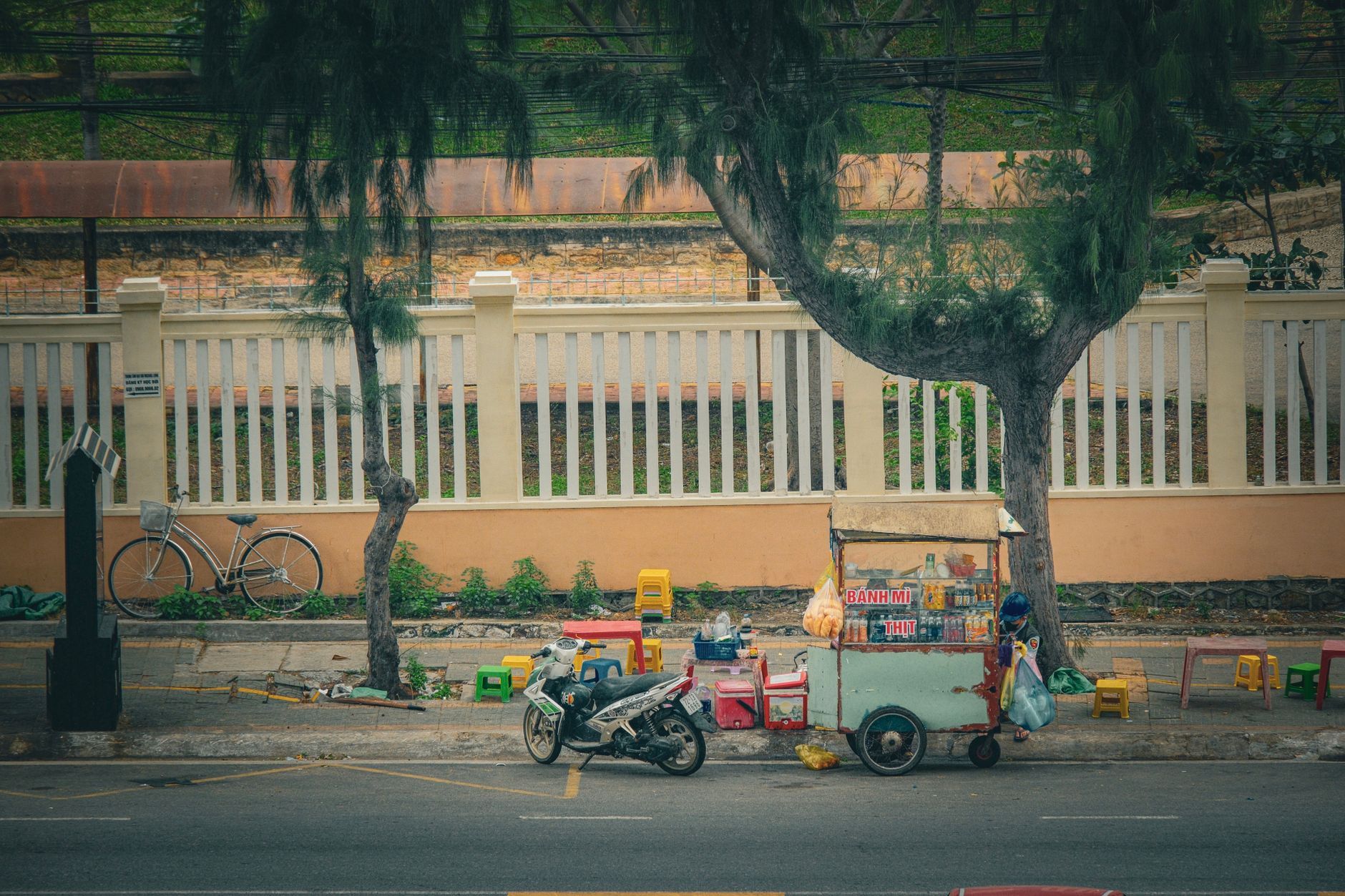
Photo by Pham Huan on Pexels
Best time to eat banh khot
Mid-afternoon (3–5 p.m.) is the sweet spot. The molds are hot, the shrimp are fresh, and the carts are busy enough that turnover is fast. Morning is possible at some vendors, but peak banh khot time in Vung Tau (붕따우 / 头顿 / ブンタウ) is when the beach crowd starts heading inland for a snack.
Avoid eating them hours after they're made. Banh khot don't reheat well—they lose their crisp and get gluey. Order fresh, eat immediately.
Practical notes
Banh khot are best as a snack or light meal, not a full dinner (though locals will argue otherwise). They're a Vung Tau summer staple—go between May and September if you want them at their most abundant. If you're visiting from Saigon (사이공 / 西贡 / サイゴン), Vung Tau is 2.5 hours by minibus or car, worth a day trip for the seafood, beach, and street food alone.
Going to Vietnam? Eat and travel smarter.
Monthly: new dishes, off-the-beaten-path destinations, and itineraries — straight to your inbox. No spam. Unsubscribe anytime.
Join 0 expats. (We just launched.)
More from vung-tau
Other articles covering this city.

3 Days by Motorbike from Saigon: Tay Ninh, Ben Tre, Vung Tau Loop
A 3-day motorbike loop from Ho Chi Minh City covering the Cao Dai temple, coconut-farm backroads, and a beach reset in Vung Tau. Doable on a rental 110cc bike with basic route planning.

Ruou Can: Vietnam's Communal Rice Wine Ritual
Ruou can is a fermented rice wine shared through cane tubes from a single earthenware jar—a ritual drink of Vietnam's ethnic minorities in the Central Highlands and Northwest, where hospitality and community are sipped together.

Vung Tau: Coastal City on Vietnam's Southeastern Cape
Vung Tau, once a independent city and now part of Ho Chi Minh City, sits on a scenic peninsula in southeastern Vietnam. Its human history stretches back 4,000 years, and its colonial architecture—lighthouses, villas, and beachfront promenades—still shapes the visitor experience today.
More from Southern Vietnam
Other articles covering the same region.

Landmark 81 Saigon: Observation Deck, Ice Rink, and Getting There from District 1
Landmark 81 is Vietnam's tallest building and Saigon's most visible skyline anchor. Here's what's actually inside and whether it's worth the trip.

Bitexco Financial Tower: Skydeck, Helipad Bar, and Whether the Ticket Is Worth It
Saigon's most recognizable skyscraper charges 250,000 VND to ride up to the 49th floor — here's what you actually see, and whether you should bother.

Notre Dame Cathedral Saigon: French Colonial Centerpiece in the Heart of HCMC
Saigon's Notre Dame Cathedral has been wrapped in scaffolding for years, but the square in front of it remains one of the best starting points for a colonial-era walking tour of District 1.
More in Food & Drink
More articles from the same category.

Best Tau Hu in Hoi An: Where Locals Send You
Tau hu—silky tofu soup—tastes different in Hoi An. Here's where locals actually eat it, and why.

Best Pho Chua in Ha Giang: Where Locals Send You
Ha Giang's take on sour pho is sharper, tangier, and less known than the southern version. Here's where locals actually eat it.

Best Pho Saigon in Ho Chi Minh City: Where Locals Send You
Pho Saigon is thinner, sweeter, and faster than its northern cousin. Here's where to find the real thing in HCMC, plus what makes it different and how to order.

Best Banh Xeo in Nha Trang: Where Locals Send You
Nha Trang's banh xeo scene is rowdier and greasier than the south. Here's where locals actually eat, what to order, and why the crispy rice pancakes here taste different.

Best Banh Nam in Hue: Where Locals Send You
Hue's version of "banh nam" is a steamed rice cake pocket stuffed with shrimp and pork—nothing like its northern cousin. Here's where locals actually eat it.

Best Banh Uot Thit Nuong in Buon Ma Thuot: Where Locals Send You
Banh uot thit nuong — steamed rice rolls with grilled pork — is a breakfast staple in Buon Ma Thuot's Central Highlands. Here are the spots locals actually eat.
Comments
Loading…