Thai Binh: Water Puppets, Hat Cheo, and the Red River Delta
Thai Binh's flat delta landscape, 52 km coastline, and reputation as birthplace of water puppetry and hat cheo opera make it a cultural waypoint between Hanoi and Hai Phong. Still largely undiscovered by international tourists.

Why Thai Binh Matters
Thái Bình—the name means "great peace" in Vietnamese—sits in the Red River Delta about 110 km south of Hanoi and 70 km west of Hai Phong. The province has spent centuries as a distinct cultural pocket, shaped by three rivers that bound it and a coastal stretch of 52 km facing the East Sea.
For travelers, Thai Binh is overlooked in favor of the bigger delta cities, but that's precisely the point. You'll find the birthplace of water puppetry, working silvercraft villages, and a landscape so flat and river-laced that the horizon disappears into paddy fields and fishing boats.
Geography: Rivers and Flatness
Flat doesn't begin to describe it. The elevation drops from 1–2 meters above sea level in the north to barely above sea level in the southeast—a gradient of less than 1%. Four major rivers crisscross the province:
- Hoa River (35 km, north and northeast)
- Luoc River (53 km, north and northwest)
- Lower Red River (67 km, western and southern edges)
- Tra Ly River (65 km, west to east through the middle)
These rivers form estuaries at Diem Dien (Thai Binh), Ba Lat, Tra Ly, and Lan. In summer, water levels surge with high sediment; in winter, saltwater pushes 15–20 km inland, shaping what grows and how the coast is farmed. The tidal influence is constant and visible—part of the landscape's rhythm.
Climate: Subtropical Seasons
Average temperature: 23.5°C. Summers (May–September) are hot, humid, and heavy with rain. Winters (November–March) are dry and cold. Autumn (July–October) brings cool relief. Spring is subdued compared to regions further north.
1,600–1,800 annual sunshine hours and 85–90% humidity year-round mean the air feels thick; plan outdoor activities for early morning or late afternoon.
Hat Cheo Opera — Live Theater in a Village
"Hát chèo" is a Vietnamese opera form that emerged in Khuoc village, Phong Chau commune, Dong Hung District. It blends music, dance, and spoken dialogue—think operetta with a sharp satirical edge. Performances are often political and comic, rooted in rural life.
You may catch hat cheo during Tet celebrations or local festivals. The National Thai Binh Hat Cheo Theatre sometimes hosts performances. Ask your hotel for current schedules; it's not a fixed tourist attraction, but rather a living tradition that appears seasonally.
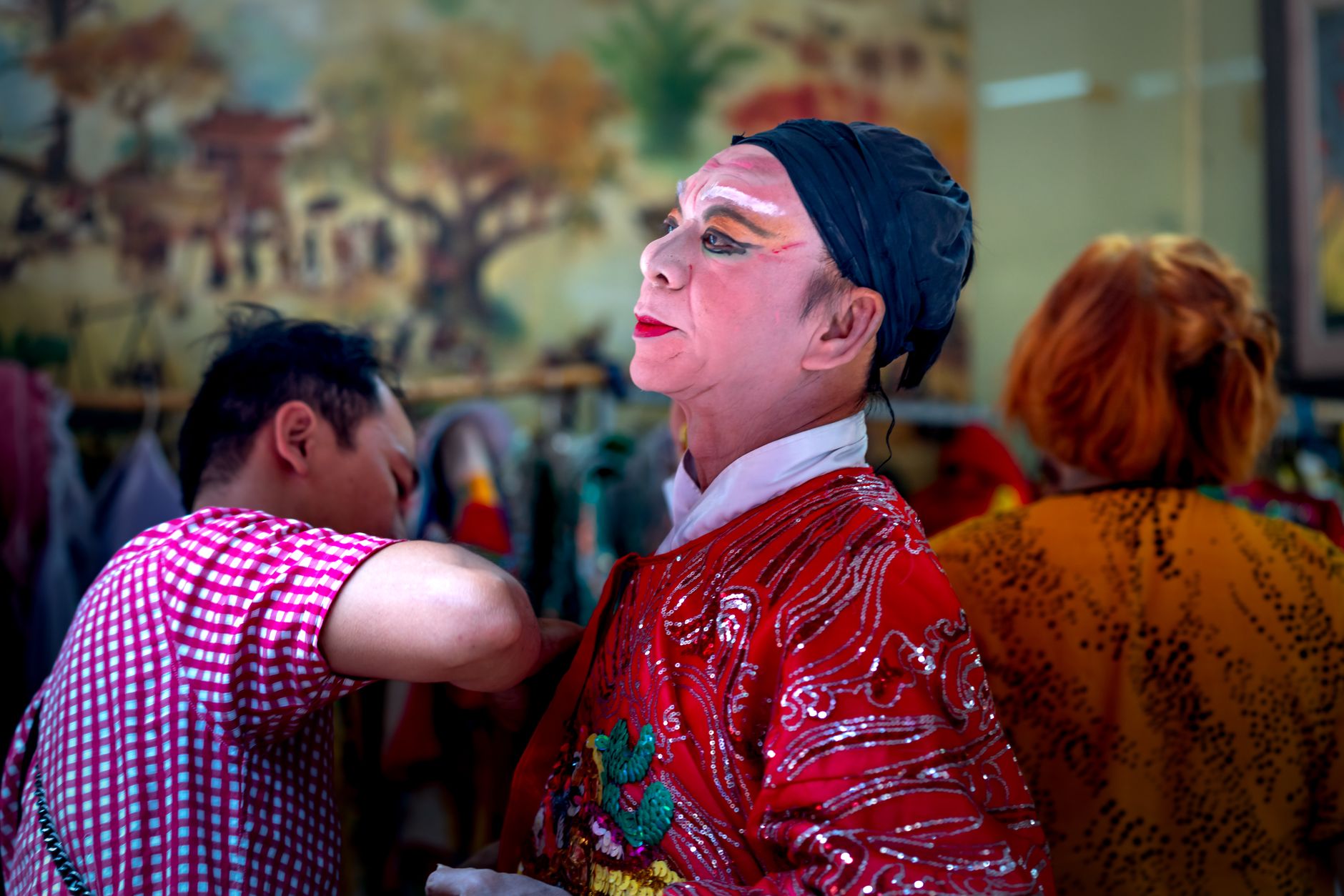
Photo by Quang Nguyen Vinh on Pexels
Water Puppetry — The Ancestral Form
Nguyen Xa commune, also in Dong Hung District, is where water puppetry originated. Puppeteers stand waist-deep behind a cloth screen, manipulating wooden figures that glide across a water stage while a small orchestra plays and a narrator sings the story. It's unlike anything you see in a Western theater.
Though the puppetry tradition has dispersed (Hanoi (하노이 / 河内 / ハノイ)'s Thang Long Water Puppet Theatre is the most famous venue), Thai Binh's connection is historical. Visiting Nguyen Xa is less about seeing performances and more about touching the roots. Some craftspeople still live there; locals can direct you to workshops.
Dong Xam Silvercraft Village
In Kien Xuong District, Dong Xam has been crafting silver for generations. Artisans make jewelry, decorative plates, and ceremonial bowls using traditional techniques—hand-chasing, repousse, and filigree. Prices are lower than Hanoi's tourist markets, and you can watch work in progress.
Most workshops don't have storefronts; ask around or hire a local guide through your accommodation. Expect to spend 1–2 hours here, sipping tea while a craftsperson works.
Tien Hai Nature Reserve
Tien Hai is part of the larger Red River Delta Biosphere Reserve and protects coastal wetlands and mangrove forest. It's crucial for migratory birds and fish nursery habitats. Access is limited and requires coordination with local authorities (not a walk-in tourist site), but birdwatchers serious about delta ecology should ask a guide about possibilities.

Photo by HONG SON on Pexels
Getting There
From Hanoi: hire a car or join a day-trip tour to Thai Binh city (2–2.5 hours by car). Most visitors pass through en route to Hai Phong or combine Thai Binh with a Red River Delta loop. Public buses run from Hanoi's Long Bien or Giap Bat stations.
The province-level municipality of Thai Binh city is the hub; from there, excursions to Dong Hung, Kien Xuong, and other districts are short by motorbike or car.
What to Eat
Thái Bình is rice land—the province feeds much of the delta. Local specialties include "com tam" (broken rice, a cheaper alternative that's become beloved), fresh river fish grilled or in broth, and "[banh chung](/posts/banh-chung-tet (뗏 (베트남 설날) / 越南春节 / テト (ベトナム旧正月))-sticky-rice-cake)" (sticky rice cakes, especially around Tet). The coast yields shrimp and crab; look for simple grilled or steamed preparations at family-run restaurants near the riverfront.
Best Time to Visit
October–April (autumn and winter) offers dry weather, cooler temperatures, and clearer skies. Avoid May–September's heat and monsoon rains unless you're drawn to the landscape's full-throttle green and the intensity of the rainy season.
Why Go?
Thái Bình is not a postcard destination. It won't give you perfect Instagram moments. But it offers something rarer in modern Vietnam (베트남 / 越南 / ベトナム) travel: a glimpse of delta life that tourism hasn't flattened, water puppetry's birthplace, and enough flatness to see how geography shapes culture. Come for the cultural heritage; stay for the quiet.
Going to Vietnam? Eat and travel smarter.
Monthly: new dishes, off-the-beaten-path destinations, and itineraries — straight to your inbox. No spam. Unsubscribe anytime.
Join 0 expats. (We just launched.)
More from Northern Vietnam
Other articles covering the same region.

Hoa Lu Ancient Capital: Vietnam's First Kingdom and How to Visit from Ninh Binh
Hoa Lu was Vietnam's first royal capital, and the two temple complexes that survive are among the most atmospheric historical sites in the north.

Hoan Kiem Lake: The Sword Legend, Ngoc Son Temple, and When to Visit
Hoan Kiem Lake sits at the center of Hanoi's Old Quarter — here's the legend behind it, how to walk it properly, and when the streets actually belong to you.

Lung Cu Flag Tower: Vietnam's Northernmost Point
The drive to Lung Cu Flag Tower takes you to Vietnam's northernmost point at 1,500 metres. It's a half-day trip from Dong Van with a steep climb, mountain views, and nearby Hmong villages.
More in Destinations
More articles from the same category.

Landmark 81 Saigon: Observation Deck, Ice Rink, and Getting There from District 1
Landmark 81 is Vietnam's tallest building and Saigon's most visible skyline anchor. Here's what's actually inside and whether it's worth the trip.

Bitexco Financial Tower: Skydeck, Helipad Bar, and Whether the Ticket Is Worth It
Saigon's most recognizable skyscraper charges 250,000 VND to ride up to the 49th floor — here's what you actually see, and whether you should bother.

Notre Dame Cathedral Saigon: French Colonial Centerpiece in the Heart of HCMC
Saigon's Notre Dame Cathedral has been wrapped in scaffolding for years, but the square in front of it remains one of the best starting points for a colonial-era walking tour of District 1.

Paradise Cave, Quang Binh: The 31km Marble Cave That Beats Phong Nha for Photographers
Paradise Cave runs 31km through Quang Binh's karst and delivers the kind of cathedral-scale formations that Phong Nha's boat tour simply can't match. Here's how to see it properly.

Son Doong Cave: What the $3,000 Oxalis Expedition Actually Includes
Son Doong is the world's largest cave and only one operator is legally allowed to take you inside. Here is what the permit-only expedition covers and whether it is worth it.

Phong Nha Cave: Wet Cave, Dry Cave, and How to Choose
Phong Nha has two main caves worth your time — one you reach by river boat, one on foot. Here's how to pick, what each costs, and when to go.
Comments
Loading…