Vietnam E-Visa for EU Passport Holders: Country-by-Country Guide
Nearly all EU nationalities qualify for Vietnam's e-visa. The process is identical regardless of whether your country is Schengen or not — Vietnam processes by passport nationality alone.

Who can apply for Vietnam e-visa
Vietnam (베트남 / 越南 / ベトナム)'s electronic visa system doesn't distinguish between Schengen and non-Schengen EU members. What matters is your passport's country of issue. If your passport says "Federal Republic of Germany" or "Kingdom of Spain," you're eligible. Period.
As of now, 199 nationalities — including all 27 EU member states — can obtain an e-visa online. You don't need to visit an embassy or consulate. Processing takes 1–3 business days; expedited service (4–6 hours) costs extra.
The e-visa application process is identical for all EU holders
Regardless of whether you're German, Polish, or Portuguese, the steps are the same:
- Go to the official immigration portal (nhập cảnh.đặc biệt quốc phòng — or use an authorized third-party agent; see notes below).
- Upload a scanned copy of your passport bio page and a digital photograph (4×6 cm, white background).
- Pay the fee (currently 25 USD via bank transfer or card).
- Wait for approval.
- You'll receive a letter of approval by email. Print it, or show it on your phone at the airport.
- Proceed through immigration; the officer stamps your passport.
There's no separate queue or process for different EU nationalities. A British passport holder and a Greek passport holder follow the exact same workflow.
Country-specific notes
While the process is uniform, a few details are worth knowing if you hold these passports:
Germany
German passport holders represent the largest EU cohort applying for e-visas to Vietnam. The process is straightforward. One thing: if your passport is a temporary emergency travel document (not the standard booklet), you may face delays. Stick with the standard burgundy passport. Processing time is typically 1–2 business days.
France
French citizens encounter no delays or special requirements. Your tri-color passport is processed at the same speed as any other. If you're traveling from Reunion, Martinique, or Guadeloupe (overseas departments), you're still using a French passport and qualify identically.
Italy
Italian passport holders apply and are approved without complications. One practical note: if your passport was issued in a small provincial comune (municipality) and has unusual formatting, it can occasionally trigger minor queries from the immigration system. This rarely causes rejection — just slightly longer review. Provide a clear, well-lit scan.
Spain
Spanish nationals process e-visas like any other EU holder. No friction. If you hold a Spanish passport issued before 2015 (older burgundy design), it's still valid and processes identically to newer versions.
Netherlands
Dutch passport holders face no special treatment. Processing is identical to other EU countries. The Netherlands' Schengen membership has zero bearing on Vietnam's e-visa decision.
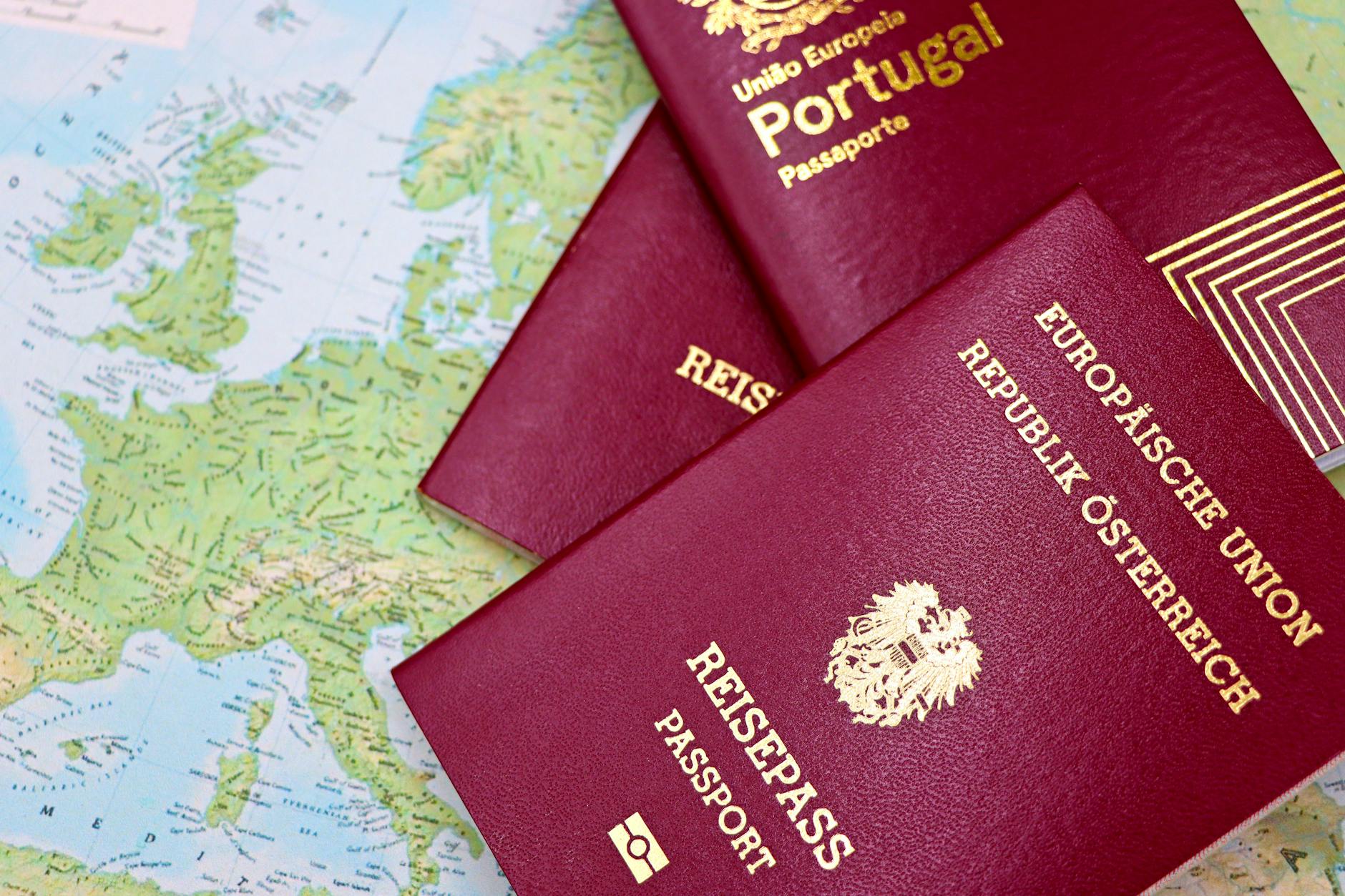
Photo by Marta Branco on Pexels
What you actually need to apply
- Valid passport (must have at least 6 months validity from your intended departure date).
- A digital photograph: 4×6 cm, white background, face clear and centered. Most travel photo shops can email you a digital file; you can also use a smartphone photo edited to white background using free apps.
- A color scan of your passport's bio page (the page with your photo and personal details).
- Payment method: debit or credit card, or bank transfer in USD.
Using an agent vs. the official portal
You can apply directly via the official Vietnam Immigration Department portal, or use a third-party agent. The agents (companies like Vietnamvisit.com, Visaforever.com, or Evisa.vn) charge a markup — typically 5–15 USD extra — but handle the paperwork for you.
Direct application is cheaper but requires you to upload documents yourself and monitor your email for approval. Agents are faster if you're in a hurry (expedited 4-hour service is popular) and useful if you're uncertain about photo or document formatting.
Both paths produce the same official approval letter. It doesn't matter which route you take.
Cost and validity
The government fee is 25 USD. Your approved e-visa is valid for 90 days from the date of approval — that is, you have a 90-day window to enter Vietnam. Once you enter, you can stay for 30 days from the date of entry.
If you need to stay longer than 30 days, you'll need a different visa type (like a business visa with 90-day stay allowance), which requires a letter of invitation and typically costs more.

Photo by RDNE Stock project on Pexels
Common mistakes to avoid
-
Passport photo is too small, poorly lit, or has a colored background. Vietnam's system is strict about photo standards. Use a proper travel photo or a phone shot with white paper as backdrop, good lighting, and your face centered. If your photo is rejected, reapply with a better one.
-
Scanning your passport at very low resolution. Use at least 300 dpi. A blurry, dark scan can slow review.
-
Not checking your passport expiration date. If your passport expires within 6 months of your planned departure, apply for a new one first. Immigration offices often won't approve an e-visa for a passport expiring too soon.
-
Typos in your name or passport number. Double-check everything before you submit. Even one wrong digit will cause the approval letter to be unusable.
-
Assuming your e-visa works at land borders. E-visas are valid at Vietnam's international airports and some seaports, but not at land borders (e.g., Cambodia, Laos). If you're crossing by land, you need a different visa type.
Timeline and planning
Standard processing takes 1–3 business days. If you're applying from within Vietnam (rare, but happens if you extend your stay), it still takes 1–3 days; you'll leave Vietnam, re-enter, and have a new stamp.
Book your flights after you have your approval letter in hand, or use an agent and have them rush it. The 4–6 hour expedited service exists for a reason.
Practical notes
All 27 EU member states are eligible. The e-visa system treats passport nationality alone — Schengen status is irrelevant. Whether you're German, Estonian, or Cypriot, the process, cost, and validity are identical. Apply directly or via an agent; both are secure and official. Keep your approval letter safe (screenshot it, email it to yourself) and bring it printed or ready on your phone at immigration.
Going to Vietnam? Eat and travel smarter.
Monthly: new dishes, off-the-beaten-path destinations, and itineraries — straight to your inbox. No spam. Unsubscribe anytime.
Join 0 expats. (We just launched.)
More from All of Vietnam
Other articles covering the same region.

Best Tau Hu in Hoi An: Where Locals Send You
Tau hu—silky tofu soup—tastes different in Hoi An. Here's where locals actually eat it, and why.

7 Days in Vietnam: A Yoga and Meditation Itinerary
A week-long route through Vietnam's quietest corners: Sapa's mountain silence, a meditation center in the Mekong, and coastal stillness in Da Lat. Real costs, transport, and retreat recommendations.

7 Days in Vietnam: A Solo Backpacker Itinerary
A tested week-long route through Hanoi, Ha Long Bay, and Saigon with budget lodging, street food, and overland transport. Real costs and booking tips included.
More in Travel Tips
More articles from the same category.

Where to Stay in Saigon: District 1 vs District 3 vs District 7
Three neighborhoods, three vibes. Pick District 1 for backpackers and chaos, District 3 for quiet and value, or District 7 for modern expat comfort. Here's how each stacks up.

Where to Stay in Sapa: Town Center vs Cat Cat vs Ta Van
Sapa has three distinct bases: the foggy town center for convenience, Cat Cat village for quiet hilltop views, or Ta Van for homestay immersion. Pick based on whether you're chasing comfort or trekking.

Where to Stay in Can Tho: Ninh Kieu, Cai Rang, or Orchards
Can Tho's three main neighborhoods offer different angles on Mekong Delta life. Here's how to pick based on your priorities and budget.

Where to Stay in Hue: Citadel vs South Bank vs Beach
Hue splits into three distinct neighborhoods for travelers. Each offers different trade-offs between history access, dining, and atmosphere—here's how to choose.

Vietnam Gift Culture: Red Envelopes, Lucky Money & Birthday Etiquette
Understanding "li xi", birthday cakes, and the unwritten rules of gift-giving in Vietnam—from Tet bonuses to wedding contributions.

Vietnam Tipping Guide by Service: What (and When) to Tip
Tipping isn't mandatory in Vietnam, but it's appreciated in certain services. Here's a breakdown of what to give—and what to skip—across hotels, taxis, tours, spas, and restaurants.
Comments
Loading…