10 Days Vietnam by Train: North to South on the Reunification Express
A complete 10-day itinerary following Vietnam's main railway from Hanoi to Ho Chi Minh City, with overnight sleeper trains and stops in Hue, Da Nang, and Hoi An.

The [Reunification Express](/posts/vietnam (베트남 / 越南 / ベトナム)-train-travel-reunification-express)—the main railway line linking Hanoi to Ho Chi Minh City—is one of Southeast Asia's most practical and atmospheric ways to see Vietnam. This 10-day itinerary uses the train as your main transport, with time to explore cities and towns along the way. You'll spend nights on overnight sleepers, wake to changing landscape, and avoid the stress of booking domestic flights or dodging chaotic bus routes.
Day 1 — Arrive in Hanoi
Fly into Noi Bai International Airport (about 30 km north of the city center). Most travelers take a taxi or grab (the ride-hailing app) directly to their accommodation in the Old Quarter—budget 200,000–300,000 VND. Get settled, grab lunch at a local pho stall, and spend the afternoon exploring on foot. Walk the narrow streets around Hoan Kiem Lake, visit [Tran Quoc Pagoda](/posts/tran-quoc-pagoda-hanoi (하노이 / 河内 / ハノイ)-west-lake) if you have energy, or simply sit at a coffee shop and adjust to the rhythm.
Eat dinner in the Old Quarter. Try "bun cha" (grilled pork with noodles) at a streetside joint, or a simple rice-and-meat bowl ("[com tam](/posts/com-tam-saigon (사이공 / 西贡 / サイゴン)-broken-rice)") from a lunch canteen that stays open in the evening. No need to book ahead—walk, see what smells good, sit down.
Day 2 — Hanoi: Temples and Markets
Start early. Visit Temple of Literature (Quoc Tu Giam), Hanoi's first university, about 2 km from the Old Quarter. Entry is 30,000 VND; go before 9 a.m. to beat crowds. Walk south to Hoan Kiem Lake and circle it on foot—locals fish, tai chi groups gather, and the water is peaceful in morning light.
For lunch, try "banh cuon" (steamed pork and shrimp rolls) at a stall; Banh Cuon Thanh Tri on Mac Dinh Chi street is reliable. Afternoon: browse Dong Xuan Market (the Old Quarter's main covered market, loud and dense) or visit the Ho Chi Minh Mausoleum complex if you're interested (allow 2 hours, queues can be long). Late afternoon, grab "ca phe sua da (연유커피 / 越南冰咖啡 / ベトナムアイスコーヒー)" (Vietnamese iced milk coffee) and repack for your overnight train.
Day 3 — Night Train: Hanoi to Hue (12 hours)
The train departs Hanoi station around 7:30–8 p.m. and arrives in Hue (후에 / 顺化 / フエ) the next morning around 7:30–8 a.m. Book a soft sleeper ("giuong nam") in a 4-bed or 2-bed cabin—prices range from 800,000–1,200,000 VND per person depending on class and how far in advance you book. Hard sleepers are cheaper (500,000–700,000 VND) but narrower and noisier.
Arrive at Hanoi station 1.5 hours early. The platform is crowded; staff will direct you to your carriage. Bring a small bag of snacks (instant noodles, biscuits, fruit) because dining-car prices are high. The train rocks gently; most people sleep well. You'll pass through the Red River Delta and into the mountains as night falls—if you wake at 3 or 4 a.m., the window views are worth it.
Day 4 — Arrive Hue: Royal Tombs
Disembark at Hue station around 7:30–8 a.m. The city center is about 1 km south. Grab a taxi or walk (it's flat and straightforward). Check into your hotel and freshen up.
Spend the morning resting or exploring the Citadel (the walled royal palace district). Entry is 150,000 VND; allow 2–3 hours. The Citadel was heavily damaged during the Vietnam War and is now partly restored; you'll see remnants of walls, gates, and the old royal residence.
Afternoon: hire a motorbike taxi or join a half-day tour to visit royal tombs. Tomb of Tu Duc is the most visited—a serene, sprawling complex about 7 km south of the city. Entry is 100,000 VND. Tomb of Khai Dinh is closer (about 10 km south) and smaller. Visit one or both; allow 1–2 hours per tomb. Both are set in quiet countryside and are beautiful for photography.
Dinner on the Perfume River: many restaurants have waterfront seating. Try local Hue specialty "bun bo Hue (분보후에 / 顺化牛肉粉 / ブンボーフエ)" (beef and pork broth noodles) for around 50,000–80,000 VND.
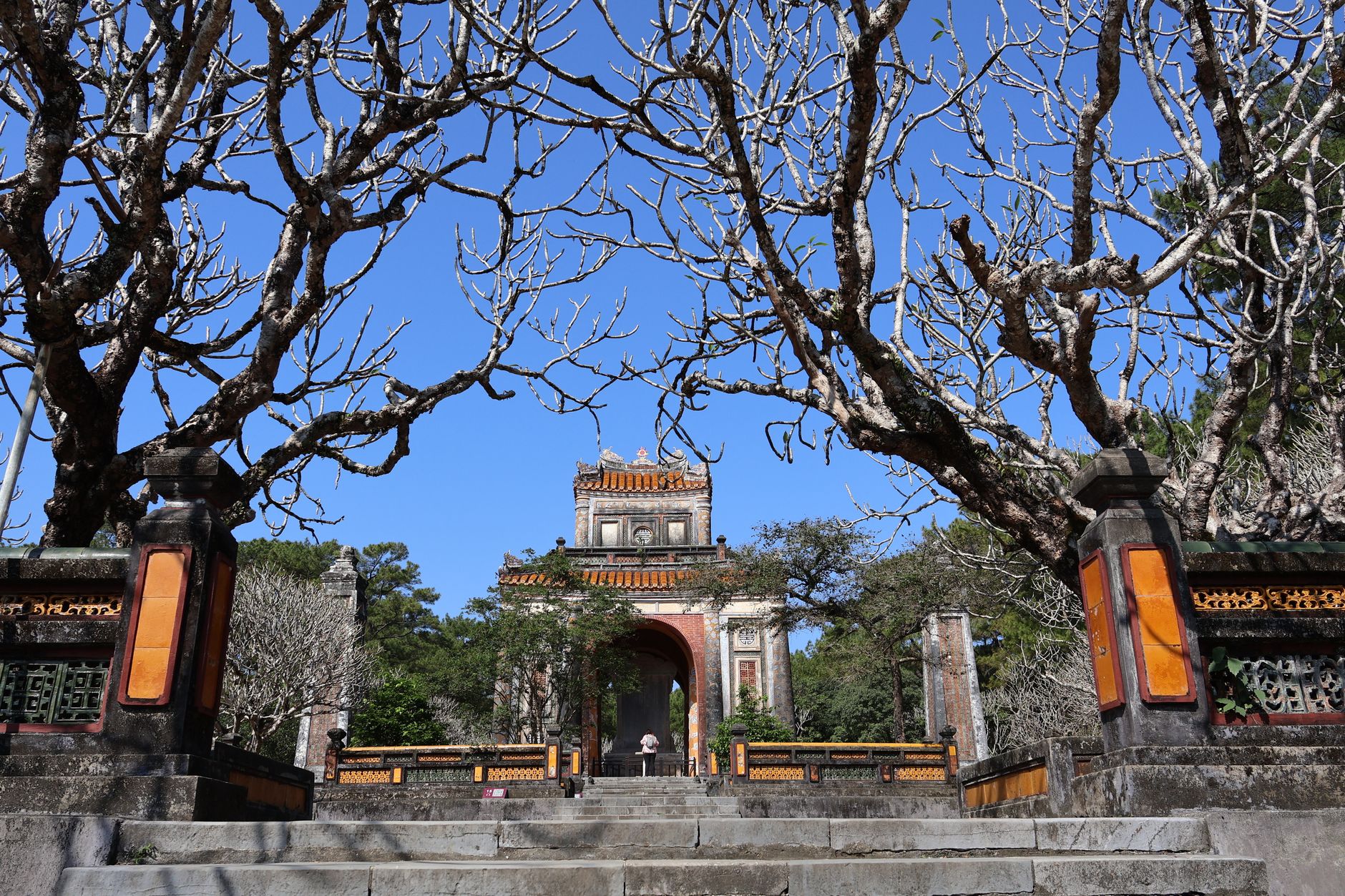
Photo by Minh Lê on Pexels
Day 5 — Hue: Countryside and Evening Departure
Early morning: rent a bicycle or join a sunrise tour to Bai Dinh temple complex (about 15 km north of Hue, in neighboring Ha Nam province—but easily visited as a day trip). It's one of Vietnam's largest Buddhist temples, set in limestone mountains. Alternatively, take a slow boat down the Perfume River to see the landscape and stop at villages.
Return to Hue for a late lunch. Afternoon: pack and get to the train station by 4–5 p.m. for your evening departure to Da Nang (다낭 / 岘港 / ダナン).
Day 6 — Day Train: Hue to Da Nang (3 hours)
The afternoon train from Hue to Da Nang takes about 3 hours and is a scenic daytime journey. Sit on the right side of the carriage as the train hugs the coastline near Lang Co beach around halfway—the views are excellent. Standard seat fares are 100,000–150,000 VND. Arrive in Da Nang around 5–6 p.m.
Check into your hotel in Da Nang city center (near the Han River). Walk along the riverfront in the evening, grab dinner at a beachfront pho (쌀국수 / 越南河粉 / フォー) joint, and rest early.
Day 7 — Da Nang to Hoi An
Da Nang itself is modern and less charming than Hoi An, 30 km south. Take a minibus, taxi, or grab early morning (about 45 minutes, 50,000–80,000 VND). You'll arrive in Hoi An by mid-morning.
Hoi An is a UNESCO-listed riverside town with preserved 18th- and 19th-century architecture. Check into a hotel in the Old Town (the central riverside district). Spend the day walking: explore the narrow streets, visit the Ancient Town (no entrance fee, but each of the heritage buildings charges 50,000 VND or you can buy a combined ticket for 130,000 VND), and cross the iconic Japanese Bridge.
Eat "banh xeo" (sizzling crisps with pork and shrimp) for lunch, and "cao lau" (a local noodle specialty with pork and greens) for dinner. Both are unique to Hoi An. Tailor shops line the main street if you want to order custom clothing; it takes 2–3 days.
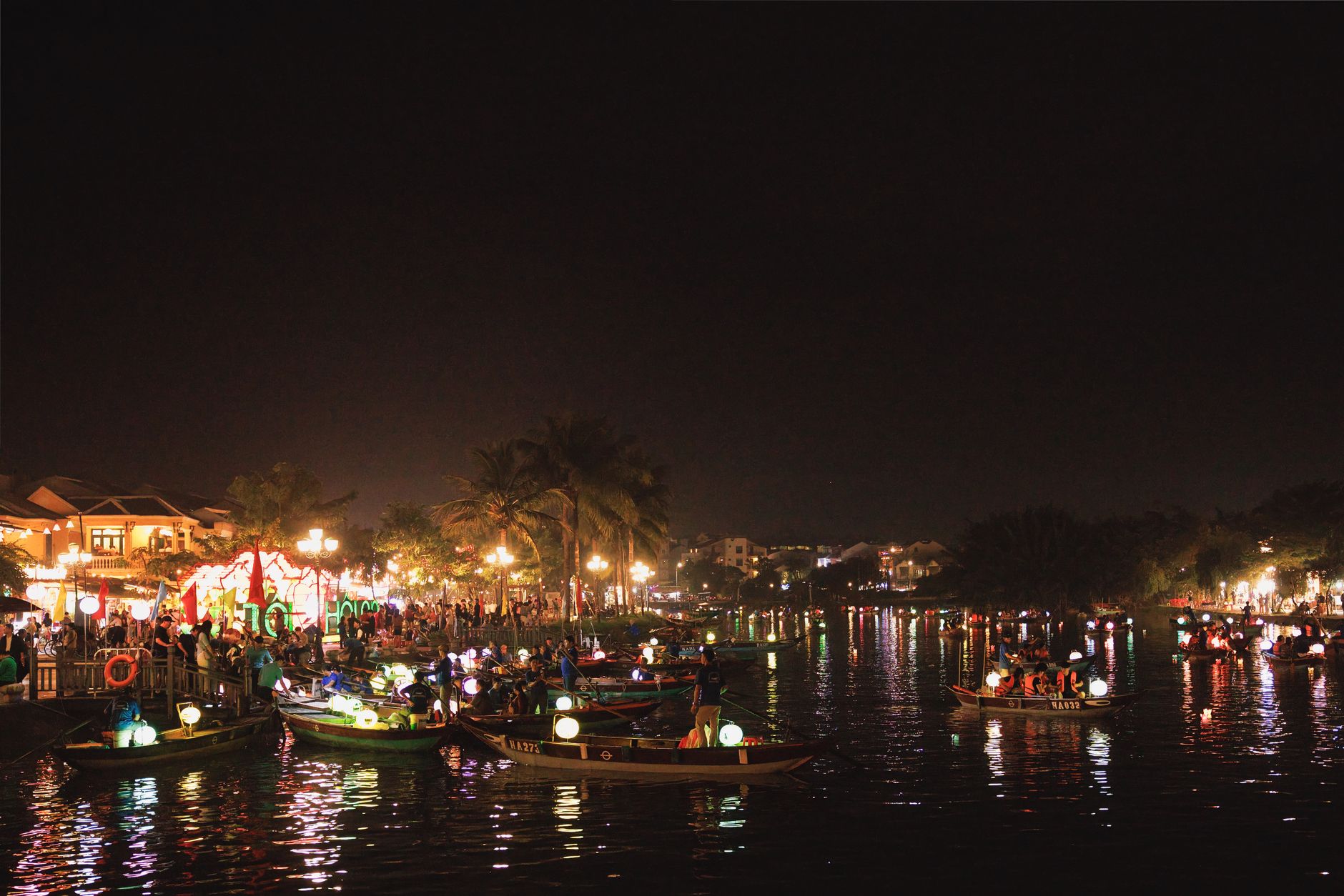
Photo by Fernando B M on Pexels
Day 8 — Hoi An: Markets, Tailoring, River
Wake early and visit the central market (near the waterfront)—it's busy around 6–7 a.m. with locals buying produce and fish. Wander the Old Town again during daylight; streets feel different in the morning than evening. Visit Phung Hung House or Tan Ky House (both preserved family homes, 50,000 VND each) for a glimpse of 18th-century merchant life.
Afternoon: rent a bicycle and cycle to Cam Thanh village (about 4 km north), a mangrove area where locals fish with traditional basket boats. You can take a short boat tour through the mangroves (100,000–150,000 VND, 30–45 minutes). It's quiet and a change of pace from the Old Town crowds.
Eat at a riverside restaurant for dinner. Many serve fresh seafood and local fish cooked to order.
Day 9 — Night Train: Hoi An to Ho Chi Minh City (via Da Nang) (19 hours)
From Hoi An, take a minibus back to Da Nang station (about 1 hour, 50,000–80,000 VND). The overnight train departs Da Nang around 6 p.m. and arrives in Ho Chi Minh City (Saigon) around noon the next day. Book a soft sleeper again (900,000–1,400,000 VND per person); this journey crosses central Vietnam and heads south through the Mekong Delta region.
The overnight is long but manageable. You'll pass through a mix of mountains, flatland, and eventually rice paddies. Arrive refreshed in Ho Chi Minh City mid-day.
Day 10 — Ho Chi Minh City: Urban Wrap-Up
Arrive at Saigon Railway Station (Ga Sai Gon) around noon. Station is about 3 km west of the downtown district (District 1). Take a taxi or grab to your hotel.
Spend the afternoon exploring District 1: the Reunification Palace (130,000 VND entry), Ben Thanh Market (the city's main market, always crowded and atmospheric), and the War Remnants Museum if you're interested in 20th-century history (75,000 VND). Walk along Dong Khoi Street, a wide colonial boulevard with cafes and shops.
Eat a final meal—try "hu tieu" (clear tapioca noodle soup, a southern specialty) or grab a banh mi sandwich from a street vendor (15,000–25,000 VND). Spend your last evening in a rooftop bar or riverside restaurant. Depart for the airport (Tan Son Nhat, about 7 km north) in the morning via taxi or airport shuttle.
Train Bookings and Practical Notes
How to book: Use the official Vietnam Railways website (dsvn.vn) or third-party English-language sites like 12go.asia, Baolau, or VieTravelDesk. 12go.asia and Baolau are easiest for foreigners; they charge a 10–15% markup but handle all language barriers. Book 3–7 days ahead for peak season (October–March) to secure soft-sleeper berths.
Classes: Soft sleeper (giuong nam) has 2 or 4 beds per cabin, thin mattresses, and a small fan or A/C. Hard sleeper (giuong cung) has 6 beds per compartment, no privacy, and is noisier. Hard seat is daytime only and very crowded. For long overnight journeys (12+ hours), soft sleeper is worth the extra cost.
Costs: Soft sleeper 800,000–1,400,000 VND per person. Hard sleeper 500,000–800,000 VND. Daytime soft seat 300,000–500,000 VND. Prices vary by class and how far ahead you book.
What to bring: Small backpack with toiletries, a light blanket or sleeping sheet (trains provide thin bedding), earplugs, and snacks. Dining cars sell instant noodles and basic drinks but at high markup.
Visa: Most foreign nationals can get a 90-day e-visa online for 25 USD. Apply at evisa.xuatnhapcanh.gov.vn at least 3 days before arrival.
This itinerary gives you a genuine feel for how Vietnamese travel by train, access to major cities and cultural sites, and the slow, contemplative pace of rail travel. You'll see the country from a local vantage point and arrive in Ho Chi Minh City relaxed rather than exhausted.
Going to Vietnam? Eat and travel smarter.
Monthly: new dishes, off-the-beaten-path destinations, and itineraries — straight to your inbox. No spam. Unsubscribe anytime.
Join 0 expats. (We just launched.)
More from Hanoi
Other articles covering this city.

Notre Dame Cathedral Saigon: French Colonial Centerpiece in the Heart of HCMC
Saigon's Notre Dame Cathedral has been wrapped in scaffolding for years, but the square in front of it remains one of the best starting points for a colonial-era walking tour of District 1.

Hoi An Lantern Festival: Full Moon Nights and How to Plan Around Them
Once a month, Hoi An cuts the electricity and lights the Ancient Town with silk lanterns. Here's what actually happens and how to not spend the evening stuck in a crowd.

Japanese Bridge Hoi An: 400 Years of History, a Restoration Row, and How to See It Right
Hoi An's Japanese Bridge has anchored the Ancient Town for four centuries. Here's what to know about its origins, the restoration that divided locals, and when to visit.
More from All of Vietnam
Other articles covering the same region.

Best Tau Hu in Hoi An: Where Locals Send You
Tau hu—silky tofu soup—tastes different in Hoi An. Here's where locals actually eat it, and why.

7 Days in Vietnam: A Yoga and Meditation Itinerary
A week-long route through Vietnam's quietest corners: Sapa's mountain silence, a meditation center in the Mekong, and coastal stillness in Da Lat. Real costs, transport, and retreat recommendations.

7 Days in Vietnam: A Solo Backpacker Itinerary
A tested week-long route through Hanoi, Ha Long Bay, and Saigon with budget lodging, street food, and overland transport. Real costs and booking tips included.
More in Itineraries
More articles from the same category.

5 Days in Vietnam During Monsoon Season: What Actually Works
A tested itinerary for traveling Vietnam in the wet season. Choose destinations that stay dry, time activities around rain patterns, and eat your way through slack-season food.

10 Days on the Northern Frontier Loop: Hanoi to Ha Giang and Back
A tested itinerary covering Hanoi, Mai Chau, Sapa, Ha Giang, and back—with transport, guesthouses, food costs, and what actually works on the ground.

3 Days Escaping Saigon: Da Lat and Surrounding Highlands
Leave Saigon behind for Da Lat's cool mountain air, pine forests, and French colonial architecture. This tested itinerary covers transport, where to stay, what to eat, and realistic costs for a long weekend.

7 Days in Vietnam's Ethnic Minority Villages: A Northern Loop
A tested itinerary through Ha Giang, Sapa, and Mai Chau targeting Hmong, Dao, and Thai villages. Routes, homestays, transport, food stops, and real costs in VND.

5 Days in the Mekong Delta: Beyond Can Tho
Skip the tourist boat tours. This itinerary takes you into smaller canals, family orchards, and riverside towns where most visitors don't go—five days based on routes locals actually use.

10 Days Motorbike Loop: Hanoi to Ha Long to Ninh Binh
A tested 10-day motorbike route through northern Vietnam, starting in Hanoi, skirting Ha Long Bay, and looping back through the limestone karsts of Ninh Binh. Budget, road conditions, and real stops included.
Comments
Loading…