Banh Canh Cua: Saigon's Thick Rice-Noodle Crab Soup
Thick, chewy tapioca noodles in a rich crab broth, topped with shrimp, pork, and quail eggs. A Saigon comfort dish that's nothing like the vegetarian or crab versions you'll find elsewhere.

"[Banh canh](/posts/banh-canh-vietnam (베트남 / 越南 / ベトナム)-thick-noodle-soup) cua" is a bowl of thick tapioca noodles swimming in a milky crab broth, studded with shrimp, pork ribs, and quail eggs. It's heavier and more indulgent than "pho", with a texture somewhere between noodle soup and stew. Saigon's version is distinctly richer than northern interpretations—the broth gets its body from prolonged simmering of crab shells, pork bones, and sometimes shrimp heads.
What Makes Cua Different
The word "cua" means crab, and that's the defining ingredient. Unlike "banh canh (반깐 / 粗米粉汤 / バインカイン) chay" (the vegetarian version made with pumpkin or taro) or "banh canh ghe" (blue crab, lighter and more delicate), cua uses whole crabs—usually mud crabs or swimming crabs—broken into pieces and boiled until the flesh disintegrates into the broth. The result is a soup with deep umami, almost creamy without any added cream.
The noodles themselves are hand-rolled tapioca dough, thicker than spaghetti, chewy, and slightly slippery. They hold the broth well and don't fall apart after sitting for five minutes like dried instant noodles do. Quality matters: cheap versions use pre-made, rubbery noodles; good ones roll them fresh each morning.
A typical bowl includes:
- Thick tapioca noodles
- Crab broth (sometimes with floating bits of crab meat)
- Two or three quail eggs, boiled and halved
- A few shrimp
- Sliced pork or pork ribs
- Spring onion and coriander
- Fried shallots for texture
Where to Eat in Saigon
Banh Canh Cua 39 Ly Tu Trong (District 1, near Ben Thanh Market area). This is the place Saigonese point to first. The noodles are rolled to order, the broth tastes like it's been simmering for hours, and a full bowl costs 60,000–70,000 VND. Go before 10 a.m. or after 2 p.m. if you want a table; lunch hour gets tight. The owner has run it for over twenty years and doesn't advertise.
Banh Canh Cua O Huong (Binh Tan District). Less polished, more local. Bowls run 50,000–60,000 VND, and the broth has a slightly smoky undertone—they use a wood-fired stove. Cash only, no English menu, and it closes by 4 p.m. The shrimp are always fresh and visibly pink.
Banh Canh Cua Tung (District 3, Cao Thang area). A hybrid stall in a wet market that also does takeaway. 55,000 VND for a standard bowl, 70,000 VND if you add extra shrimp or crab meat. The noodles are slightly thinner here and almost al dente—good if you find the Ly Tu Trong version too chewy.
Banh Canh Cua at Tan Dinh Market (District 1). A cart stall on the ground floor. Bowls around 55,000 VND, no frills. The owner uses store-bought noodles, so it's not the most memorable version, but it's reliable and you get a seat facing the market bustle.
For a sit-down restaurant meal (not street food), Nha Hang Saigon (사이공 / 西贡 / サイゴン) in District 1 offers a cleaner, more upscale version for 80,000–95,000 VND. It's worth one visit for the experience, but you lose some of the roughness that makes the dish interesting.

Photo by Nadin Sh on Pexels
How to Eat It
The broth will be hot enough to burn your mouth if you rush. Let it cool for a minute. Use chopsticks to lift the noodles; they'll slide apart easily. The quail eggs are already soft-boiled, so eat them whole or split them to add to each spoonful. Don't leave the eggs for last—they cool down and get rubbery. Drink the broth between bites; it's the best part.
Many stalls serve it with "nuoc mam" (fish sauce) and fresh herbs on the side—cilantro, mint, lime. A pinch of chili powder or fresh chili goes in your personal sauce dish, not directly into the bowl. Some people add a squeeze of lime juice to brighten the richness.
When to Eat It
Breakfast or lunch. Breakfast vendors start around 6 a.m. and close by 11 a.m. Afternoon shifts run 1 p.m. to 5 p.m. It's rare to find banh canh cua after 6 p.m., and soup-based dishes are traditionally a morning or midday food in Saigon—eating a hot, heavy soup at 9 p.m. is unusual and will get you odd looks.
Summer heat doesn't stop Saigonese from eating it; the sweat cools you down and the umami hits a craving that cold food doesn't scratch. Rainy season (May–September) is peak season for this soup—watch for longer queues at popular stalls on mornings after a downpour.
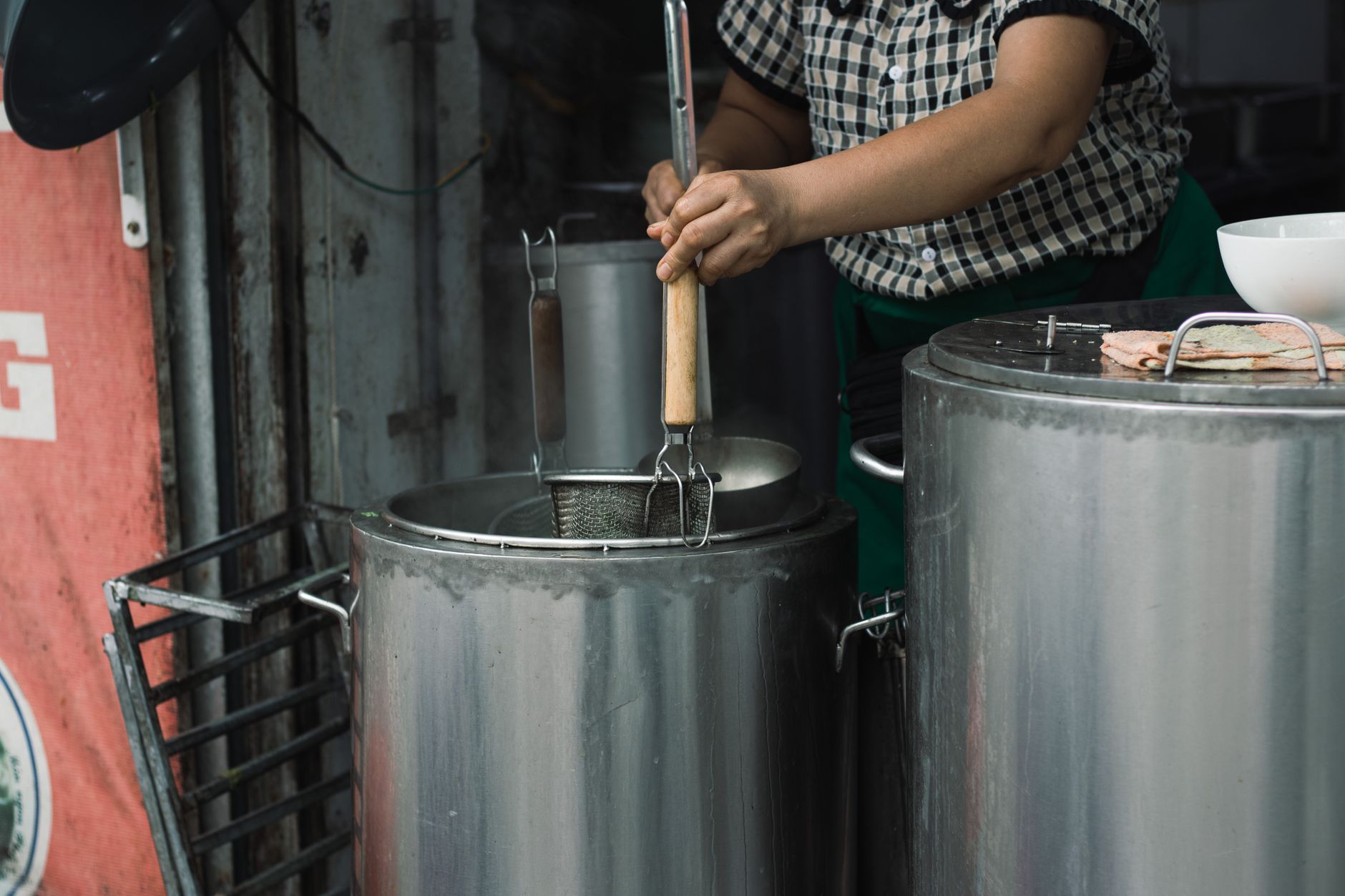
Photo by Nimit N on Pexels
What It Costs
Stand-alone stalls: 50,000–70,000 VND (roughly $2–$3 USD) for a full, satisfying bowl. Market carts: 55,000–65,000 VND. Sit-down restaurants: 80,000–95,000 VND. Upgrading to extra shrimp, crab meat, or pork adds 10,000–15,000 VND. The price hasn't changed much in five years despite inflation—vendors often absorb cost increases rather than raise menu prices.
Banh Canh Cua vs. Its Cousins
Don't confuse it with banh canh chay (vegetarian tapioca noodles with pumpkin or mushroom broth—lighter, less rich). That's a different dish entirely, often eaten by people fasting or on certain religious days. "Banh canh ghe" uses swimming crab and a clearer, lighter broth; it's more delicate but less indulgent. Banh canh cua is the heavyweight of the family—unapologetically rich, protein-forward, and Saigon's answer to northern pho (쌀국수 / 越南河粉 / フォー).
Going to Vietnam? Eat and travel smarter.
Monthly: new dishes, off-the-beaten-path destinations, and itineraries — straight to your inbox. No spam. Unsubscribe anytime.
Join 0 expats. (We just launched.)
More from Ho Chi Minh City
Other articles covering this city.

Best Banh Canh in Ho Chi Minh City: Where Locals Send You
Banh canh is thick, chewy, and deeply satisfying—and Ho Chi Minh City does it better than most. Here's where locals actually go.

Best Banh Khot in Ho Chi Minh City: Where Locals Send You
Banh khot—crispy, golden cups of savory goodness—are a southern Vietnam staple. Here's where to find the real deal in Saigon, from family stalls to neighborhood favorites.

Where to Stay in Saigon: District 1 vs District 3 vs District 7
Three neighborhoods, three vibes. Pick District 1 for backpackers and chaos, District 3 for quiet and value, or District 7 for modern expat comfort. Here's how each stacks up.
More from Southern Vietnam
Other articles covering the same region.

3 Days Escaping Saigon: Da Lat and Surrounding Highlands
Leave Saigon behind for Da Lat's cool mountain air, pine forests, and French colonial architecture. This tested itinerary covers transport, where to stay, what to eat, and realistic costs for a long weekend.

5 Days in the Mekong Delta: Beyond Can Tho
Skip the tourist boat tours. This itinerary takes you into smaller canals, family orchards, and riverside towns where most visitors don't go—five days based on routes locals actually use.

Best Muc 1 Nang in Mui Ne: Where Locals Send You
Muc 1 nang—grilled squid stuffed with herbs and meat—reaches its peak in Mui Ne. Here's where locals actually eat it, what to order, and why this coastal town makes it better than anywhere else.
More in Food & Drink
More articles from the same category.

Best Pho Chua in Ha Giang: Where Locals Send You
Ha Giang's take on sour pho is sharper, tangier, and less known than the southern version. Here's where locals actually eat it.
Best Banh Xeo in Nha Trang: Where Locals Send You
Nha Trang's banh xeo scene is rowdier and greasier than the south. Here's where locals actually eat, what to order, and why the crispy rice pancakes here taste different.

Best Banh Nam in Hue: Where Locals Send You
Hue's version of "banh nam" is a steamed rice cake pocket stuffed with shrimp and pork—nothing like its northern cousin. Here's where locals actually eat it.

Best Banh Uot Thit Nuong in Buon Ma Thuot: Where Locals Send You
Banh uot thit nuong — steamed rice rolls with grilled pork — is a breakfast staple in Buon Ma Thuot's Central Highlands. Here are the spots locals actually eat.

Best Banh Canh Ca in Da Nang: Where Locals Send You
Da Nang's version of "banh canh ca" — thick tapioca noodles in crab broth — tastes different from Hanoi or Saigon. Here's where locals actually eat it, what to order, and why timing matters.

Best Chao Ca Loc in Can Tho: Where Locals Send You
Chao ca loc—rice porridge with snakehead fish—is a Can Tho breakfast ritual. Here's where locals actually eat it, what it costs, and why this city does it better than anywhere else.
Comments
Loading…