Seven Days in Saigon, Cu Chi, and the Mekong Delta
A week covering Saigon's museums and markets, the Cu Chi Tunnels, Ben Tre's coconut plantations, and the floating markets of Can Tho—enough to taste both the city and the rural delta.

Overview
Seven days lets you move from Saigon's dense, sweaty energy into the slow-moving waterways of the Mekong Delta (메콩 델타 / 湄公河三角洲 / メコンデルタ). You'll spend three days in the city itself, one day at the Cu Chi Tunnels, then float downriver through Ben Tre and Can Tho before returning to the capital. It's a natural progression: urban, then historical, then rural.
Day 1 — Saigon Markets and War History
Arrive in Saigon and settle into your accommodation in District 1 (central, walkable, good cafes and bars). Spend the late morning at "Ben Thanh Market", the city's busiest market since 1914. Arrive early—by 8:30 a.m.—to beat the heat and crowd. Wander the souvenir aisles and eat "banh mi" from one of the stalls inside (50,000–70,000 VND). The quality varies wildly; older vendors tend to toast the bread properly.
In the afternoon, visit the War Remnants Museum on Vo Van Tan Street. Allow 90 minutes minimum. The exhibits are heavy and graphic; this isn't a skip-it site for most visitors. The museum is designed to convey a particular historical perspective; read the captions critically, but don't avoid it.
Eat "pho (쌀국수 / 越南河粉 / フォー)" or "hu tieu" for dinner along Nguyen Hue Street, where vendors set up wooden stools and plastic tables at dusk. A bowl of pho is 30,000–50,000 VND; "hu tieu" (clear pork-and-shrimp noodle soup, a southern specialty) runs similar.
Day 2 — Water Puppetry, Coffee, and Old Saigon
Breakfast: "Vietnamese coffee (베트남 커피 / 越南咖啡 / ベトナムコーヒー)"—thick, sweetened, over ice ("ca phe sua da")—at any street corner café. 10,000–15,000 VND. Saigonites drink this standing up, fast.
Walk through the Old Quarter (around Dong Khoi and Ly Tu Trong streets) to see colonial architecture. The Saigon (사이공 / 西贡 / サイゴン) Hotel, the People's Committee building, and Dong Khoi Street itself are relics of French Indochina. No museum entry needed; the streetscape is the thing.
Lunch: "Banh canh (반깐 / 粗米粉汤 / バインカイン)"—a thick pork and crab soup with tapioca pearls—from a street vendor. Harder to find than pho, but worth seeking. 25,000–40,000 VND.
In the evening, catch a "water puppetry" show at the Thong Nhat Theatre. Performances are at 5 p.m. and 6:30 p.m. daily (tickets ~150,000–200,000 VND). Water puppetry is a northern art form, but Saigon performances are professional. It's touristy, yes, but genuinely beautiful—silk-covered wooden puppets dance on water behind a screen, to live music. Go.
Dinner: "Cha gio (짜조 / 炸春卷 / チャーゾー)" (fried spring rolls, also called "cha gio") from a small restaurant in District 1, or from street carts around the backpacker quarter. 5,000–10,000 VND per roll.
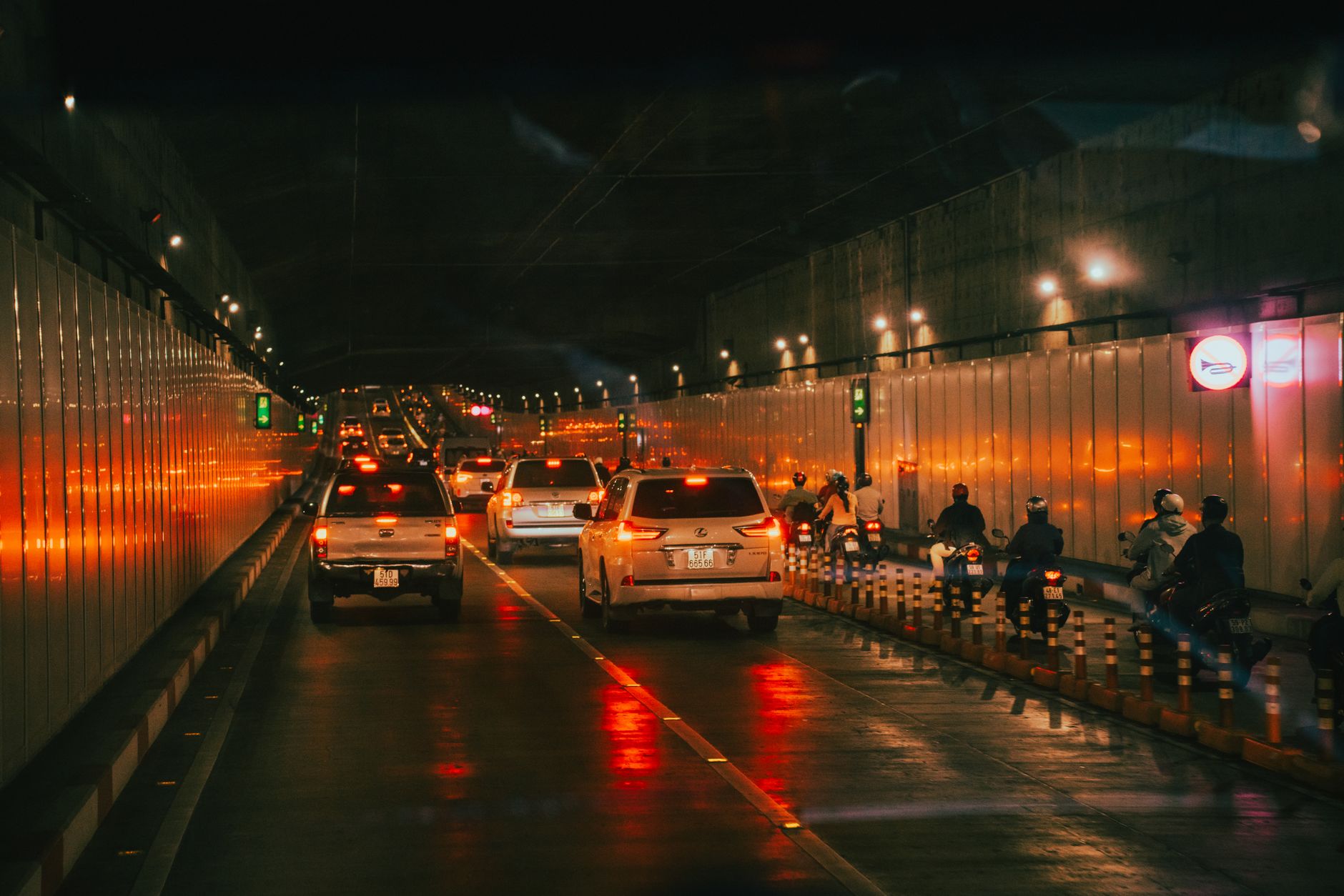
Photo by Nguyên Đoàn on Pexels
Day 3 — Art Deco Villas and Evening Show
Take a taxi or Grab to the "Ao Dai (아오자이 / 奥黛 / アオザイ)" show at the Diamond Galaxy Theater (Ben Thanh Ward). The 7 p.m. performance showcases the traditional silk tunic through fashion-show choreography, with music and modern lighting. Tickets are 250,000–400,000 VND. It's slick and designed for tourists, but if you want to understand the garment's geometry and cultural weight, it's efficient.
Or, skip the show and instead visit the Fine Arts Museum (97 Pho Duc Chinh Street). Three floors of Vietnamese art from lacquer panels to modern painting. Quieter, cheaper (50,000 VND), less marketed. Decide based on your mood.
Lunch at Pho 2000, near Ben Thanh Market, or any pho stall. This city's not short on good soup.
Spend the afternoon walking around District 3 and District 4—quieter zones with villas, small cafes, and Buddhist temples. Vinh Nghiem Pagoda (on Nguyen Trai Street, free entry) is worth 20 minutes; the main hall is impressive.
Early dinner, then rest at your hotel. You'll wake at 5 a.m. tomorrow for Cu Chi.
Day 4 — Cu Chi Tunnels
Book a tour the night before (or negotiate a driver to take you). Most hotels offer Cu Chi packages (400,000–600,000 VND per person for group tours, 600,000–1,200,000 VND for private). Distance is ~70 km northwest of central Saigon; the drive takes 90 minutes in light traffic, often 2+ hours in rush hour.
Arrival at the site is usually 8:30–9 a.m. The tunnels are a massive network of underground passages built during the war; today, two preserved sections open to tourists: Ben Dinh (closer to Saigon, more visited) and Ben Duoc (less crowded, deeper tunnels). Most tours stop at Ben Dinh.
You'll walk through a small museum, watch a short film, then crawl through short stretches of the tunnel system. It's genuinely claustrophobic and dark. Expect to bend or crouch constantly. The experience is oddly powerful—a concrete understanding of life underground.
Many tours include a rifle-shooting range on-site (additional cost, optional). Skip it or do it; it's not essential to understanding the site.
Lunch is usually included: rice, stir-fried vegetables, and boiled pork—basic and forgettable, but fuel.
Return to Saigon by 4–5 p.m. Rest and shower. Eat a light dinner; you'll travel early tomorrow.
Day 5 — Ben Tre Coconut Sampan
Leave Saigon at 6:30–7 a.m. via van or private driver (~140 km, 3 hours) to Ben Tre, in the heart of the Mekong Delta. Ben Tre is small and quiet, known for coconut plantations and traditional wooden boats.
Arrive by 10–11 a.m. Check into a simple hotel or homestay in the town center (200,000–400,000 VND a night is typical). Eat lunch at a local "com tam" stall—broken-rice with grilled pork or fish. 30,000–50,000 VND.
In the early afternoon, hire a sampan (traditional wooden rowboat) for a 2–3 hour tour of narrow canals around Ben Tre's coconut plantations. A guide rows you through waterways flanked by palm groves, stops at a coconut-processing house (where workers crack coconuts by hand and extract fiber), and usually ends with a "goi cuon" (fresh spring roll) tasting at a local family's home. Cost is ~250,000–400,000 VND per boat (fits 4–6 people; split the cost).
The pace is slow, the light is soft, and the rhythm is nothing like Saigon. Bring water, sunscreen, and a hat.
Dinner: fish "bun cha" or "bun rieu" (crab noodle soup) at a riverside restaurant. 40,000–60,000 VND.
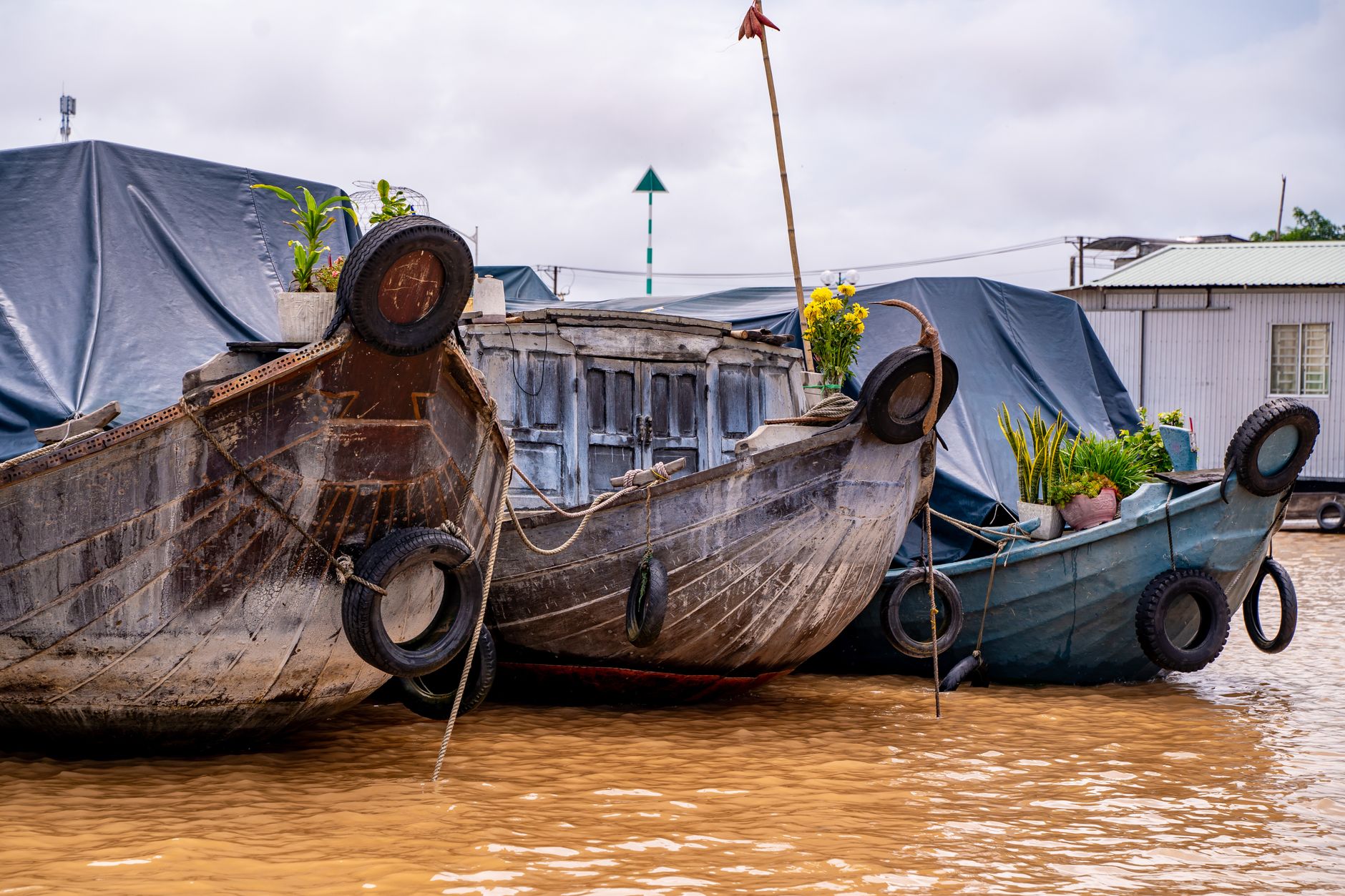
Photo by Vietnam Tri Duong Photographer on Pexels
Day 6 — Can Tho and Cai Rang Floating Market
Early morning (5–5:30 a.m. departure) via motorbike-taxi, van, or private driver to Can Tho (~70 km, 90 minutes). You're heading to the Cai Rang Floating Market, which is liveliest at dawn.
Arrive at Cai Rang by 7–7:30 a.m. Hire a small motorboat (negotiate in advance or book via your hotel) for a 2–3 hour tour. Cost is ~250,000–400,000 VND for the boat.
Cai Rang is a working wholesale market where farmers sell fruits, vegetables, and rice from boats. It's busy, loud, chaotic—nothing staged for tourists. You'll weave through dozens of boats, see vendors haggling, and watch the morning commerce of the delta. It's worth the early wake-up.
Return to Can Tho town by 10 a.m. Rest at a café (eat "banh chung"—sticky-rice cake—with a coffee). Can Tho is flat and sprawling; most tourists skip exploring the town itself. You can: stroll the riverfront promenade, visit Ong Met Pagoda (a small, peaceful temple on the eastern bank), or simply eat and rest.
Lunch: "Mi Quang" (a southern noodle dish with turmeric broth, pork, and greens) at a street stall. 30,000–50,000 VND.
Late afternoon, either return to Saigon (3–4 hour drive) or stay another night in Can Tho. If you're tired, stay. If you want to end in Saigon, leave by 2–3 p.m. to arrive by 6–7 p.m.
Day 7 — Saigon, Final Wanders
If you returned to Saigon on Day 6 evening, use your final day to revisit favorite spots, buy souvenirs, eat one last meal you loved, or simply rest. Many travelers use it to catch a flight in the early evening.
If you stayed in Can Tho, travel back to Saigon this morning (3+ hours). Arrive by noon, rest, eat a final meal, and head to the airport.
Practical Notes
Bookings: Tours to Cu Chi and sampan rides in Ben Tre can be booked through your hotel or online platforms like Viator or Klook 1–2 days ahead. Floating market tours at Cai Rang are best booked the night before with your hotel.
Weather: This route is hot and humid year-round. May–October is the monsoon season; expect rain in the afternoon in the delta. November–April is cooler and drier. Budget ~15,000,000 VND (USD ~650) per person for lodging, local food, and tour costs (excluding flights and long-distance transport).
Going to Vietnam? Eat and travel smarter.
Monthly: new dishes, off-the-beaten-path destinations, and itineraries — straight to your inbox. No spam. Unsubscribe anytime.
Join 0 expats. (We just launched.)
More from Ho Chi Minh City
Other articles covering this city.

5 Days in the Mekong Delta: Beyond Can Tho
Skip the tourist boat tours. This itinerary takes you into smaller canals, family orchards, and riverside towns where most visitors don't go—five days based on routes locals actually use.

Best Chao Ca Loc in Can Tho: Where Locals Send You
Chao ca loc—rice porridge with snakehead fish—is a Can Tho breakfast ritual. Here's where locals actually eat it, what it costs, and why this city does it better than anywhere else.

Best Com Tam in Ho Chi Minh City: Where Locals Send You
Authentic "com tam" in Saigon isn't trendy—it's breakfast, lunch, and dinner staple. Here's where locals actually eat it, what to order, and why the rice is better here than anywhere else.
More from Southern Vietnam
Other articles covering the same region.

3 Days Escaping Saigon: Da Lat and Surrounding Highlands
Leave Saigon behind for Da Lat's cool mountain air, pine forests, and French colonial architecture. This tested itinerary covers transport, where to stay, what to eat, and realistic costs for a long weekend.

Best Muc 1 Nang in Mui Ne: Where Locals Send You
Muc 1 nang—grilled squid stuffed with herbs and meat—reaches its peak in Mui Ne. Here's where locals actually eat it, what to order, and why this coastal town makes it better than anywhere else.

Best Bun Ca in Nha Trang: Where Locals Send You
Nha Trang's bun ca is lighter and fishier than the inland versions—built on fresh catch landed that morning. Here are the spots locals actually queue for, and how to order like you belong there.
More in Itineraries
More articles from the same category.

7 Days in Vietnam: A Solo Backpacker Itinerary
A tested week-long route through Hanoi, Ha Long Bay, and Saigon with budget lodging, street food, and overland transport. Real costs and booking tips included.

10 Days on the Northern Frontier Loop: Hanoi to Ha Giang and Back
A tested itinerary covering Hanoi, Mai Chau, Sapa, Ha Giang, and back—with transport, guesthouses, food costs, and what actually works on the ground.

7 Days in Vietnam's Ethnic Minority Villages: A Northern Loop
A tested itinerary through Ha Giang, Sapa, and Mai Chau targeting Hmong, Dao, and Thai villages. Routes, homestays, transport, food stops, and real costs in VND.

10 Days Motorbike Loop: Hanoi to Ha Long to Ninh Binh
A tested 10-day motorbike route through northern Vietnam, starting in Hanoi, skirting Ha Long Bay, and looping back through the limestone karsts of Ninh Binh. Budget, road conditions, and real stops included.

7 Days in Vietnam for Vegetarian and Vegan Travelers
A tested week-long route from Hanoi to Saigon hitting street food, temples, and markets where plant-based eating is embedded in local culture, not a special request.

7 Days in North-Central Vietnam: Thanh Hoa, Nghe An, Ha Tinh & Quang Binh
Skip the Hanoi-Saigon tourist loop. This 7-day itinerary takes you through Thanh Hoa, Nghe An, Ha Tinh, and Quang Binh—provinces where foreigners are still a curiosity and the food hits different.
Comments
Loading…