This is not a tour of Vietnam (베트남 / 越南 / ベトナム)'s highlights. It's a tour of Vietnam's bowls — a 21-day route designed to put the right dish in front of you in the city where it was actually invented, refined, and eaten daily by people who'd notice if something was off.
Day 1–3 — Hanoi: Baseline
Land in Hanoi and spend the first two days calibrating. The city's version of "pho" is the benchmark everything else gets measured against — specifically Northern-style: clear, clean bone broth, no garnish plate, white onion and scallion only. Go to Pho Thin on Lo Duc or Pho Gia Truyen on Bat Dan. Both open at dawn and close when the pot runs out, usually by 9am.
Day 3 is for "bun thang" — a Hanoi (하노이 / 河内 / ハノイ) dish of thin vermicelli in a delicate chicken broth, layered with shredded chicken, pork floss, sliced egg crepe, and a dab of shrimp paste on the side. It's technically fussy to make and easy to do badly; Bun Thang Ba Duc near Hang Gai is the reference point locals still use. Round out the evenings with "bia hoi" on the corner of Luong Ngoc Quyen — 10,000–15,000 VND a glass, poured fresh from a keg that empties by midnight.
Day 4–5 — Nam Dinh: Where Pho Began
Take the morning train south from Hanoi (about 2 hours, 100,000–150,000 VND). Nam Dinh is unglamorous and largely off the tourist map, which is exactly the point. The city's claim as the origin point of pho is contested by food historians but argued fiercely by locals — and eating here, you understand why they bother. Nam Dinh pho uses a shorter, fatter noodle than Hanoi's and the broth skews sweeter and more intensely beefy. Pho Co on Nguyen Du is the most-cited address. Eat two bowls. Take notes.
Before heading out, stop for "banh cuon" from one of the steamed-roll carts near the market — thin rice sheets filled with wood-ear mushroom and minced pork, served with a bowl of nuoc cham and fried shallots.
Day 6–7 — Ninh Binh: Rest, Then Eat
Ninh Binh is two hours from Nam Dinh by bus and makes a logical overnight before pushing into the central region. The local dish here is "com chay" — crispy scorched rice, broken into slabs and served with stir-fried pork and mushrooms. It sounds like a use-it-up dish because it is, and it's better than it has any right to be. Pick up a bag of the dried version as a snack for the train.
Day 8–10 — Hue: The Spice Benchmark
Hue is where Vietnamese food gets its most distinctive regional identity. The imperial kitchen culture produced dozens of dishes no other city does well, and the street version of "bun bo Hue" — beef and pork hock noodle soup with lemongrass, shrimp paste, and fresh chilies — is the one that defines the city's cuisine nationally.
The canonical bowl is at Bun Bo O Bep on Chi Lang or the older stalls on Nguyen Cong Tru that open at 6am. The broth here is not subtle: it's rust-red, deeply savoury, with a fermented shrimp paste backbone that makes Hanoi pho taste polite by comparison. Order with fresh banana blossom and Vietnamese mint on the side.
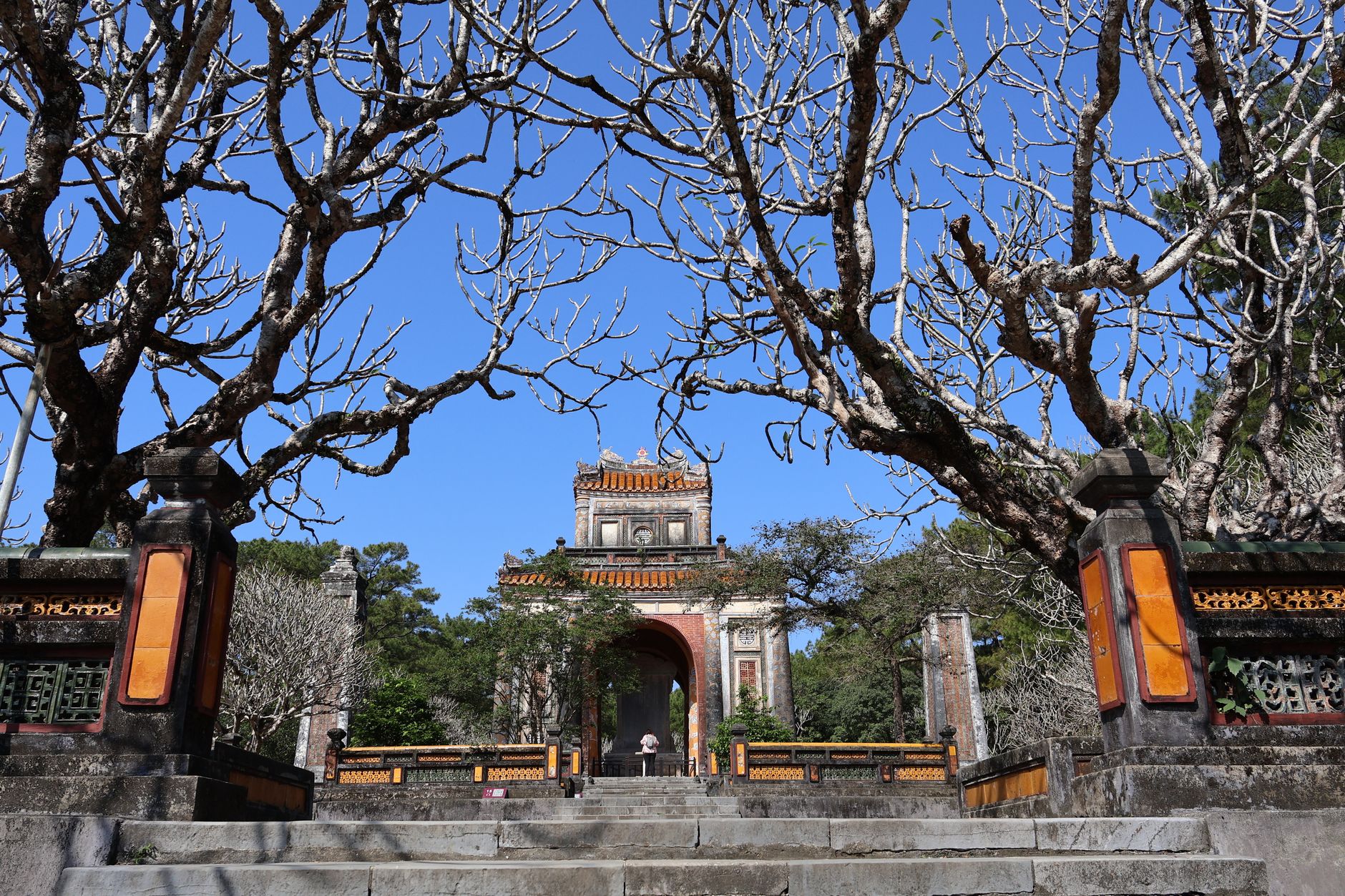
Days 9 and 10 are for the city's other dishes: "banh khoai" (smaller, crispier cousin of "banh xeo", filled with shrimp and pork, eaten wrapped in rice paper with fermented shrimp dipping sauce), "com hen" (baby clam rice, eaten cold, piled with 15-odd condiments), and the French-influenced "banh mi" variations available around Truong Tien Bridge. The Tomb of Khai Dinh and the Imperial Citadel are worth a morning each if food fatigue sets in.

Photo by Theodore Nguyen on Pexels
Day 11–13 — Da Nang & Hoi An: Mi Quang Country
Two hours by train from Hue. Da Nang is the transit hub; Hoi An, 30km south, is where "mi quang" — turmeric-stained wide noodles with pork, shrimp, peanuts, and a tablespoon of rich broth (not a soup, not a salad) — gets the most attention. But the Quang Nam province versions, found in smaller joints outside Hoi An's tourist corridor, are often better.
Mi Quang Ba Mua in Hoi An is the most cited. Order the version with both pork and shrimp; add the dried rice cracker on top and eat it before it softens. In Da Nang proper, look for "banh xeo" — the central version is larger and crispier than the southern style, stuffed with shrimp, pork, bean sprouts, and eaten wrapped in mustard leaf.
Cao Lau deserves its own meal: thick noodles made with local Hoi An well water (the mineral content apparently matters), served with char-roasted pork and crispy rice crackers. It doesn't travel well, so eat it here.
Day 14–15 — Quy Nhon: Off-Script
Few itineraries bother with Quy Nhon, which is a mistake. The city on the central coast does a regional variant of "bun rieu" — crab and tomato noodle soup — that is sharper and less sweet than the Saigon version. The local "banh canh cha ca" (thick tapioca noodles with fish cake) from the market stalls near Lon Market is the best meal you'll have for under 40,000 VND.
Day 16–17 — Saigon: The South's Chaos
Fly or take the overnight train into Saigon. Two days isn't enough to eat this city properly, so pick a lane: "com tam" (broken rice with grilled pork chop, shredded pork skin, egg) at one of the street stalls on Nguyen Trai for breakfast, then "hu tieu" (Southern noodle soup, clear pork broth, thinner noodles than pho) at a cart near Ben Thanh Market. Evening: "goi cuon" — fresh spring rolls with shrimp and herbs — from a restaurant in District 3, then "bia hoi" or a Vietnamese coffee at a sidewalk cafe on Bui Vien.

Photo by Duy Nguyen on Pexels
Day 18–19 — Can Tho: End of the Road
Three hours by bus from Saigon, Can Tho is the Mekong Delta's largest city and the place to eat "bun mam" — arguably the most complex bowl in the Vietnamese canon. The broth is fermented fish-based (mam), thickened and deep, served with rice vermicelli, eggplant, water lily stems, and mixed proteins including fish and pork. It is aggressively funky in the way that blue cheese is aggressively funky: you either get it or you don't, and it rewards patience.
Look for stalls around the Ninh Kieu waterfront that open for breakfast and lunch only. Follow that with a morning at the Cai Rang floating market (go by 7am, the vendors thin out by 9).
Day 20–21 — Wind Down
Return to Saigon for your flight. Use the last two days to revisit whatever hit hardest — Saigon's breakfast options alone could fill a week.
Practical Notes
Budget roughly 100,000–200,000 VND per meal eating at local spots; transport between cities by train or bus runs 100,000–400,000 VND per leg. Book overnight sleeper trains in advance during peak months (December–February, July–August). A 4G SIM from Viettel or Mobifone at any airport will handle navigation and translation for the full three weeks.
Last updated · May 30, 2026 · independently researched, never sponsored.