4 Days Vegan and Vegetarian Vietnam: Hanoi to Hoi An
A four-day route through Hanoi, Hue, and Hoi An built around vegetarian restaurants, Buddhist temple culture, and a hands-on vegan cooking class. Central Vietnam is genuinely easier for plant-based eating than many travelers expect.

Plant-based eating in Vietnam (베트남 / 越南 / ベトナム) is easier than stereotypes suggest, especially if you know where to go. This four-day loop through Hanoi, Hue, and Hoi An pairs dedicated vegetarian restaurants with Buddhist temple culture and cooking classes—most of the vegan-friendly infrastructure in Vietnam grew from Buddhist communities who've been keeping "chay" (vegetarian) diets for centuries.
Day 1 — Hanoi: Loving Hut and Old Quarter Street Food
Start in Hanoi (하노이 / 河内 / ハノイ) with two spots that anchor the city's vegan scene. Loving Hut, a global chain with strong roots in Vietnam, sits on Tran Hung Dao and serves mock-meat banh mi, com tam alternatives, and smoothies. Mains run 55,000–85,000 VND. It's busy at lunch, quieter after 2 p.m. The mock-shrimp rolls and com tam (broken rice with plant-based "pork") are convincing enough that you won't feel like you're eating substitute food.
For dinner, head to Tamarind Cafe on Nha Tho Street (near Hoan Kiem Lake). It's part of a small group focused on vegan Vietnamese and Southeast Asian dishes. Their spring rolls, pho with tofu, and coconut curries are straightforward without heavy cream or fish sauce swaps. Mains are 60,000–90,000 VND. Reserve ahead; it fills quickly by 7 p.m.
If you want to explore the Old Quarter on foot, navigate the street-food stalls directly: most "banh cuon (반꾸온 / 蒸米卷 / バインクオン)" (steamed roll) vendors will make them without meat if you point and say "khong thit" (no meat). Tofu stalls are common around Hang Dieu Street. A plate of tofu fried with turmeric and lemongrass costs 15,000–25,000 VND.
Day 2 — Hanoi: Hum and Buddhist Temples
Breakfast at Hum Vegetarian, a casual spot in the Ba Dinh district near the One Pillar Pagoda. Hum is worker-owned and focuses on traditional "com chay" (vegetarian rice) plates: steamed vegetables, fermented bean paste, mushroom dishes. Cost is 40,000–60,000 VND per plate, and the clientele is mixed—locals and travelers. No English menu; photos on the wall help. Hours are 6:30 a.m.–1 p.m. only, so arrive before noon.
After breakfast, spend the morning at Tran Quoc Pagoda, the oldest Buddhist temple in Hanoi, on Thanh Nien Road by the Red River. Monks maintain a vegetarian practice here; the grounds are peaceful and less crowded than Hoan Kiem-area temples. There's no charge, but a small donation (20,000–50,000 VND) is customary.
Lunch near the temple at any of the informal "com chay" stalls that cater to locals—ask your hotel to write down the temple name and nearest food alley in Vietnamese so you can show it to a taxi driver or ask locals. A full rice plate with 3–4 vegetable dishes and tofu runs 30,000–50,000 VND.
In the afternoon, visit the Temple of Literature, a sprawling Confucian sanctuary with gardens and courtyards. Quieter than other Hanoi monuments, it has no religious ceremony in the afternoon, so you can walk without crowds. Entry is 30,000 VND.
Dinner: return to one of the three restaurants or try a street-food "pho (쌀국수 / 越南河粉 / フォー)" shop and ask for "pho chay" (vegetarian pho with tofu and mushroom broth instead of meat stock). Most shops will make it without fuss if you order early, before the evening rush.
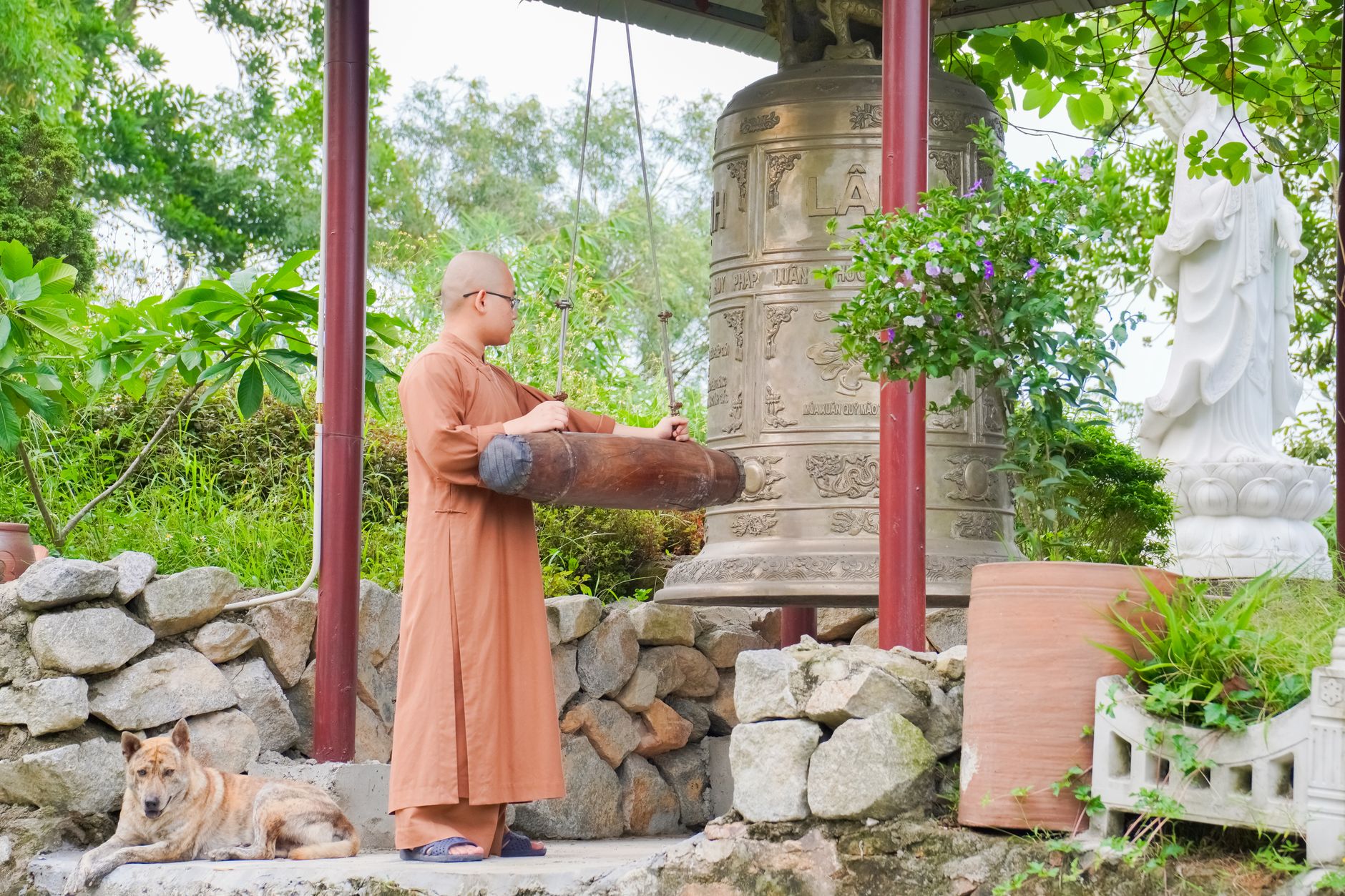
Photo by Thành Văn Đình on Pexels
Day 3 — Hue: Buddhist Temples and Chay Restaurants
Fly or take an overnight train (10–12 hours) from Hanoi to Hue (후에 / 顺化 / フエ). The overnight train arrives around 6 a.m.; a mid-morning flight gets you there by 1 p.m. If flying, ticket prices vary 800,000–1,500,000 VND depending on how far in advance you book.
Breakfast or brunch at a local pho shop; Hue's pho is excellent, and "pho chay" is standard at any stall. A bowl is 30,000–40,000 VND.
Hue's vegetarian culture is strong because of its large Buddhist population and royal history. Spend the afternoon visiting Thien Mu Pagoda on the Perfume River, the most iconic Buddhist temple in Hue. Its seven-story tower is recognizable from any guidebook. Monks here maintain strict vegetarian diets, and the temple grounds are serene and sprawling. Entry is free; allow 90 minutes. If you're there around meditation times (early morning or late afternoon), you may be invited to sit quietly with monks.
Near Thien Mu, several "com chay" restaurants serve the local Buddhist community. Nhat Huong and Y Thao are two spots that cater primarily to local lay Buddhists and monks; both serve hearty rice plates, pumpkin curries, and sticky rice desserts made with coconut and brown sugar. Mains run 40,000–70,000 VND. English menus are minimal, but pointing works. Hours are typically 10 a.m.–7 p.m.
Early evening, walk through Hue's Citadel (Imperial Citadel Thang Long equivalent, but this is the Hue royal complex). The Citadel straddles the Perfume River and offers quieter grounds and smaller crowds than Hanoi's monuments. Entry is 150,000 VND. Vegetarian vendors are fewer here, but a sticky-rice snack stall near the south gate usually operates in the late afternoon.
Dinner: book a table at Tropical Garden or another restaurant on Hung Vuong Street. Both serve Vietnamese vegetarian and some Western vegan-adapted dishes (salads, pasta with vegetable sauces). Prices are 70,000–120,000 VND per main.
Day 4 — Hoi An: Vegan Cooking Class and Cao Lau
Take a train or bus (3 hours) from Hue to Hoi An (호이안 / 会安 / ホイアン) in the morning. Buses depart every 30 minutes, cost 100,000–150,000 VND, and are slow but reliable.
Arrive by late morning and head straight to a vegan cooking class. Hoi An Red Bridge Cooking School and Hoi An Cooking Academy both offer half-day and full-day vegetarian versions of their standard classes. You'll shop at Hoi An's morning market (An Hoi Market), learn to make "goi cuon" (spring rolls), "banh xeo (반세오 / 越南煎饼 / バインセオ)" (sizzling pancakes—made with vegetable fillings), and region-specific noodle soups. Classes run 2–4 hours and cost 450,000–650,000 VND per person. Book online or at your hotel desk the evening before.
After class, walk Hoi An's Ancient Town. It's a living market and residential quarter, not a museum display, and vegetarian stalls operate throughout the narrow streets. Try "cao lau (까오러우 / 高楼面 / カオラウ)" (a local chewy noodle specialty) made with tofu instead of pork; most street vendors will swap the protein. Cost is 35,000–50,000 VND. White Rose dumplings ("banh nam") also come in shrimp or vegetable versions; ask for "nhan chay" (vegetarian filling).
Lunch or dinner at Morning Glory Street Food Restaurant on Nguyen Hue Street. It serves modern Vietnamese with many vegan-marked options: vegetable "banh mi", tropical smoothies, and stir-fries. Mains are 80,000–130,000 VND. The kitchen is open to the street, and you can watch staff prepare dishes.
If you have evening time, climb up to the Japanese Bridge for sunset views without the mid-day crowds, then explore local "com chay" spots on Bach Dang Street (which runs parallel to the river). These are worker canteens, not tourist restaurants, but the prices and authenticity are unbeatable: 35,000–50,000 VND for a full plate.
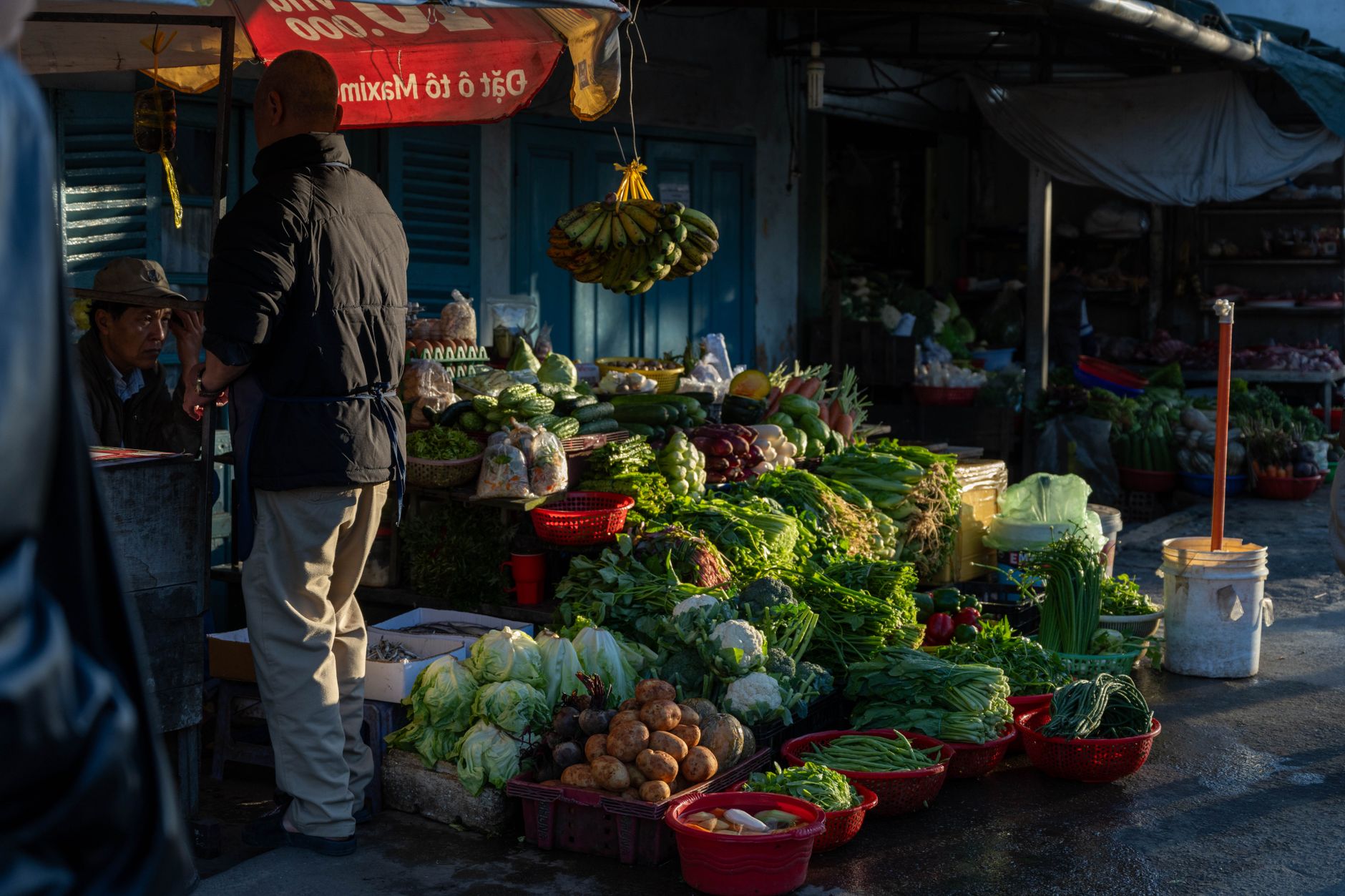
Photo by Quang Vuong on Pexels
Why Central Vietnam Is More Vegan-Friendly
Hue and surrounding provinces in central Vietnam were historical Buddhist strongholds, and that legacy persists in the number of temples, monks, and lay Buddhists who maintain vegetarian diets. Because of this, "com chay" (vegetarian rice) restaurants and stalls are deeply embedded in the food culture—not afterthoughts or tourist add-ons. Restaurant owners and home cooks understand how to make vegetables, tofu, and mushrooms taste compelling without meat, because they've been doing it for centuries, not just for the past decade.
Hanoi's vegan scene is newer and more tied to Western cafe culture and imported restaurants. Central Vietnam's vegan infrastructure is rooted in actual religious and cultural practice, which makes it more reliable and more embedded in everyday life.
Secondly, central Vietnam's markets are smaller and more walkable. Hoi An's morning market is a 10-minute stroll from the Old Town center, and vendors know their regular customers by face. If you ask politely and return, they'll remember your preferences. Hanoi's markets (Dong Xuan, Ben Thanh) are massive and chaotic; it's harder to build rapport with a single stall.
Practical notes
Bring a translation app or a printed card with "I eat vegetarian / vegan" in Vietnamese: "Toi an chay" (I eat vegetarian) or "Toi an chay toan chay" (I eat strict vegan). This speeds up ordering at smaller stalls. Most restaurants in Hanoi and Hoi An have English menus; Hue's are spottier. Hue and Hoi An have excellent water for drinking and cooking, but in Hanoi, stick to bottled or filtered water. Summer (May–September) is hot and humid; visit in October–April for comfort. Temple visits are free or ask-what-you-wish; carry small notes (10,000–50,000 VND) for donations.
Going to Vietnam? Eat and travel smarter.
Monthly: new dishes, off-the-beaten-path destinations, and itineraries — straight to your inbox. No spam. Unsubscribe anytime.
Join 0 expats. (We just launched.)
More from Hanoi
Other articles covering this city.

Hoi An Old Town Walking Guide: Yellow Walls, Lantern Alleys, and the Japanese Bridge
A street-level route through Hoi An's UNESCO core — old merchant houses, assembly halls, the famous Japanese Bridge, and when to walk each stretch for the best light.

Hoan Kiem Lake: The Sword Legend, Ngoc Son Temple, and When to Visit
Hoan Kiem Lake sits at the center of Hanoi's Old Quarter — here's the legend behind it, how to walk it properly, and when the streets actually belong to you.
Best Tau Hu in Hoi An: Where Locals Send You
Tau hu—silky tofu soup—tastes different in Hoi An. Here's where locals actually eat it, and why.
More from All of Vietnam
Other articles covering the same region.

7 Days in Vietnam: A Yoga and Meditation Itinerary
A week-long route through Vietnam's quietest corners: Sapa's mountain silence, a meditation center in the Mekong, and coastal stillness in Da Lat. Real costs, transport, and retreat recommendations.

7 Days in Vietnam: A Solo Backpacker Itinerary
A tested week-long route through Hanoi, Ha Long Bay, and Saigon with budget lodging, street food, and overland transport. Real costs and booking tips included.

Best Banh Xeo in Nha Trang: Where Locals Send You
Nha Trang's banh xeo scene is rowdier and greasier than the south. Here's where locals actually eat, what to order, and why the crispy rice pancakes here taste different.
More in Itineraries
More articles from the same category.

5 Days in Vietnam During Monsoon Season: What Actually Works
A tested itinerary for traveling Vietnam in the wet season. Choose destinations that stay dry, time activities around rain patterns, and eat your way through slack-season food.

10 Days on the Northern Frontier Loop: Hanoi to Ha Giang and Back
A tested itinerary covering Hanoi, Mai Chau, Sapa, Ha Giang, and back—with transport, guesthouses, food costs, and what actually works on the ground.

3 Days Escaping Saigon: Da Lat and Surrounding Highlands
Leave Saigon behind for Da Lat's cool mountain air, pine forests, and French colonial architecture. This tested itinerary covers transport, where to stay, what to eat, and realistic costs for a long weekend.

7 Days in Vietnam's Ethnic Minority Villages: A Northern Loop
A tested itinerary through Ha Giang, Sapa, and Mai Chau targeting Hmong, Dao, and Thai villages. Routes, homestays, transport, food stops, and real costs in VND.

5 Days in the Mekong Delta: Beyond Can Tho
Skip the tourist boat tours. This itinerary takes you into smaller canals, family orchards, and riverside towns where most visitors don't go—five days based on routes locals actually use.

10 Days Motorbike Loop: Hanoi to Ha Long to Ninh Binh
A tested 10-day motorbike route through northern Vietnam, starting in Hanoi, skirting Ha Long Bay, and looping back through the limestone karsts of Ninh Binh. Budget, road conditions, and real stops included.
Comments
Loading…