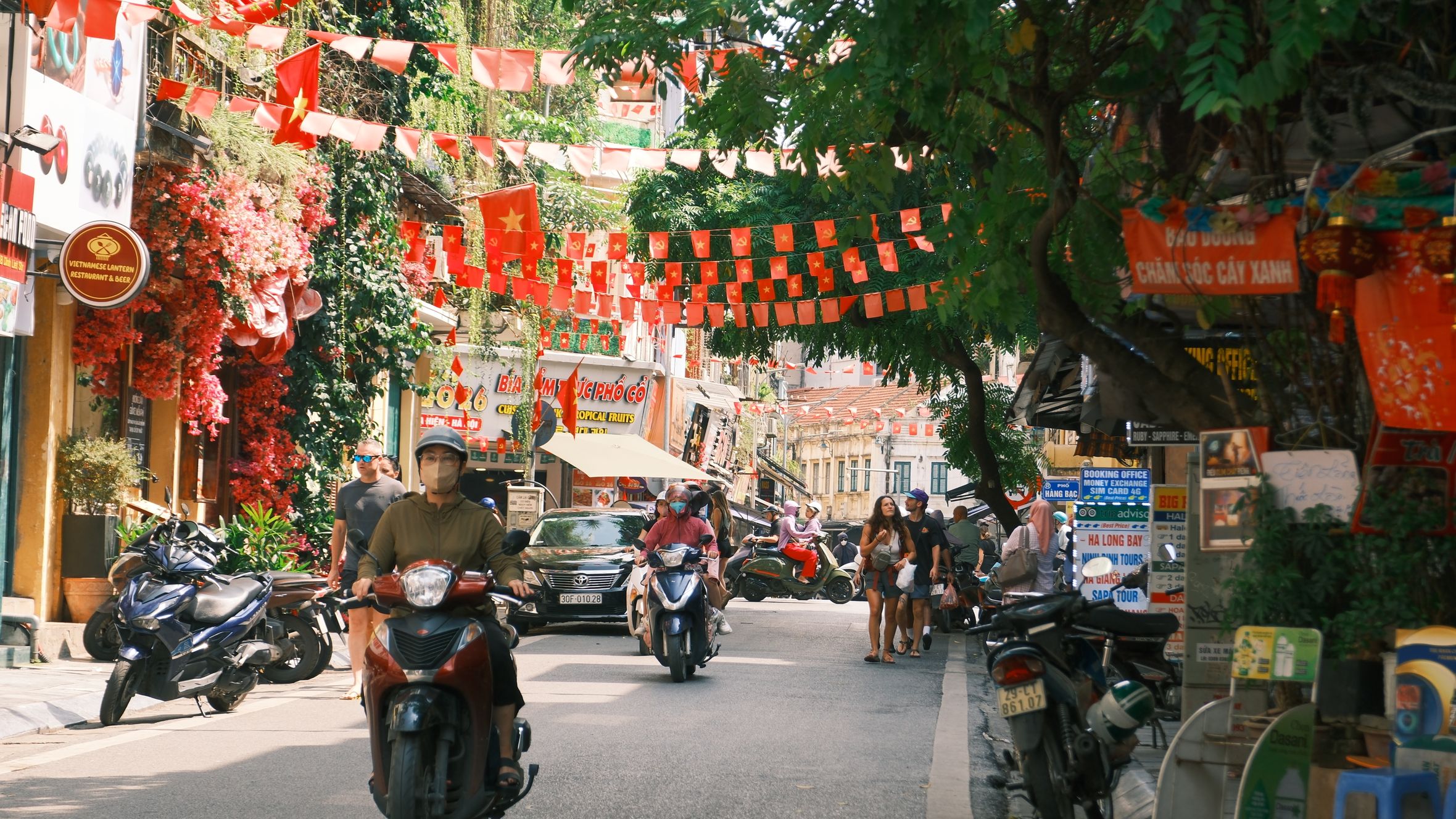
Overview
This seven-day loop hits Vietnam (베트남 / 越南 / ベトナム)'s three most visited regions without feeling rushed. You'll fly twice, stay in three bases, and eat more than you expected. The itinerary assumes you arrive in Hanoi and leave from Saigon—reverse it if your flight lands south. Budget around 40–60 USD per day for accommodation (mid-range), plus domestic flights and meals.
Day 1 — Hanoi: Old Quarter and Long Bien Bridge
Arrive in Hanoi, collect your luggage, and head to your hotel in the Old Quarter (Hoan Kiem district). Drop your bags, then walk to Long Bien Bridge, the iron cantilever span built by the French in 1902. Locals still cross it on motorbikes and bicycles; the morning light is gentler than afternoon glare.
Eat lunch at a side-street pho stall near Hang Bac—order "pho bo" (beef pho) and sit on a plastic stool like everyone else. The broth should have floated on it for at least eight hours.
Spend the afternoon at the Temple of Literature, Hanoi's 11th-century university. Wander the courtyards and stone turtle stelae; it's quieter than tourist guidebooks suggest if you arrive after 3 p.m. Finish the day with egg coffee at Giang Cafe, a narrow shophouse on Hang Gai Street—the drink is sweet, frothy, and a Hanoi cliche you should taste anyway.
Day 2 — Ha Long Bay Overnight Cruise
Leave Hanoi (하노이 / 河内 / ハノイ) early (5:30 a.m. pickup is standard). The drive to Ha Long port is 2.5 hours on a decent highway. Board your overnight cruise—pick mid-range operators like Indochina Sails or Azalea Cruises, not the cheapest floating hostels. Your cabin has air conditioning, a private bathroom, and a porthole view of limestone karsts.
Spend the afternoon kayaking or swimming in Emerald Waters near Tung Sau Island. Dinner is seafood on the upper deck: grilled fish, squid, and prawns, usually with white wine and beer. At sunset, the karsts turn gray-blue and the water flattens like glass.
Sleep onboard. There's no reason to rush back to Hanoi tomorrow.

Image by Cheong. Original uploader was Cheong Kok Chun at en.wikipedi via Wikimedia Commons (CC BY-SA)
Day 3 — Fly to Da Nang, Settle in Hoi An
Return to Ha Long port by 8 a.m., drive back to Hanoi, and catch a midday flight to Da Nang (1 hour, ~40 USD one-way). Rent a car or take a shared van south to Hoi An (40 km, 1 hour). Check into your hotel by late afternoon.
Walk the Old Town at dusk. The narrow streets—Tran Phu, Nguyen Trai—fill with locals on motorbikes and tourists in rental bikes. Lantern sellers hang silk lanterns outside shops, and the air smells of grilled meat and incense. Eat dinner at one of the many storefronts on Tran Phu Street: "banh mi" stands, com tam (broken-rice) places, or sit-down restaurants. A full meal costs 3–6 USD.
Day 4 — Hoi An: Cooking Class and Bicycle Tour
Book a half-day cooking class the night before (most hotels can arrange it, or contact operators like Red Bridge Cooking School directly). You'll shop at Hoi An market in the early morning, learn to roll "goi cuon" (fresh spring rolls) and "cha gio" (fried rolls), and eat lunch with the chef.
In the afternoon, rent a bicycle and pedal to Cam Kim Island across the Thu Bon River. Visit a traditional woodcarving workshop and a family silk-weaving studio—no hard sell, just artisans working looms and chisels in open-air studios. Return by sunset and walk the Old Town again; it's different after dark, quieter and more intimate.
Dine at a "cao lau" specialist (a Hoi An noodle dish with broth, pork, and croutons) or book a table at a restaurant with river views.
Day 5 — Day Trip to Hue, then Overnight
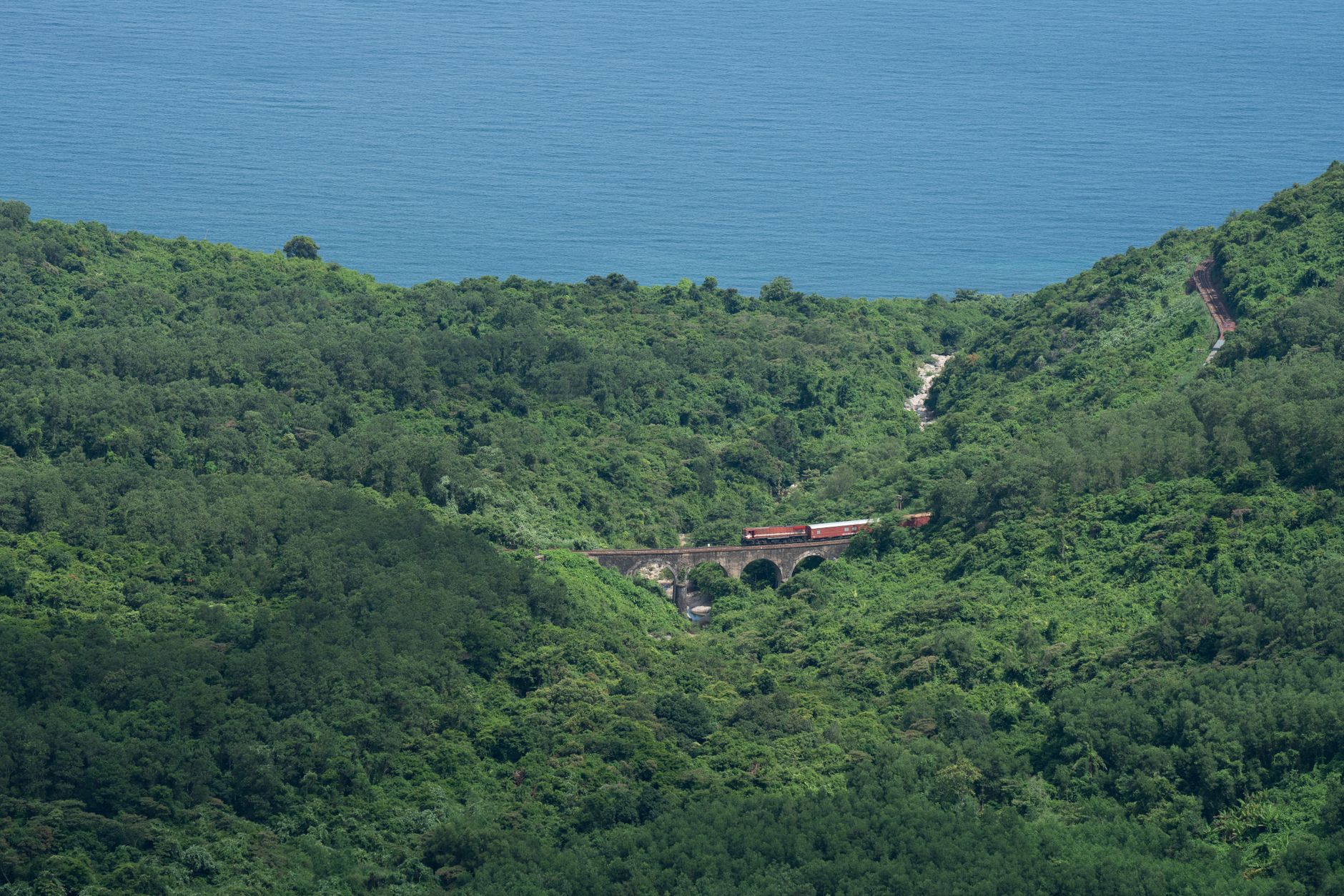
Check out of your Hoi An hotel and take a van or shared minibus north to Hue (3 hours, 150 km). The road climbs the Hai Van Pass, a scenic spine between Da Nang and Hue.
Arrive mid-morning and go straight to the Imperial Citadel, the fortified palace complex built in 1802. Rent a guide (5–8 USD) to navigate the walls, moats, and royal pavilions—it's a labyrinth otherwise. The Citadel is large; budget 2–3 hours.
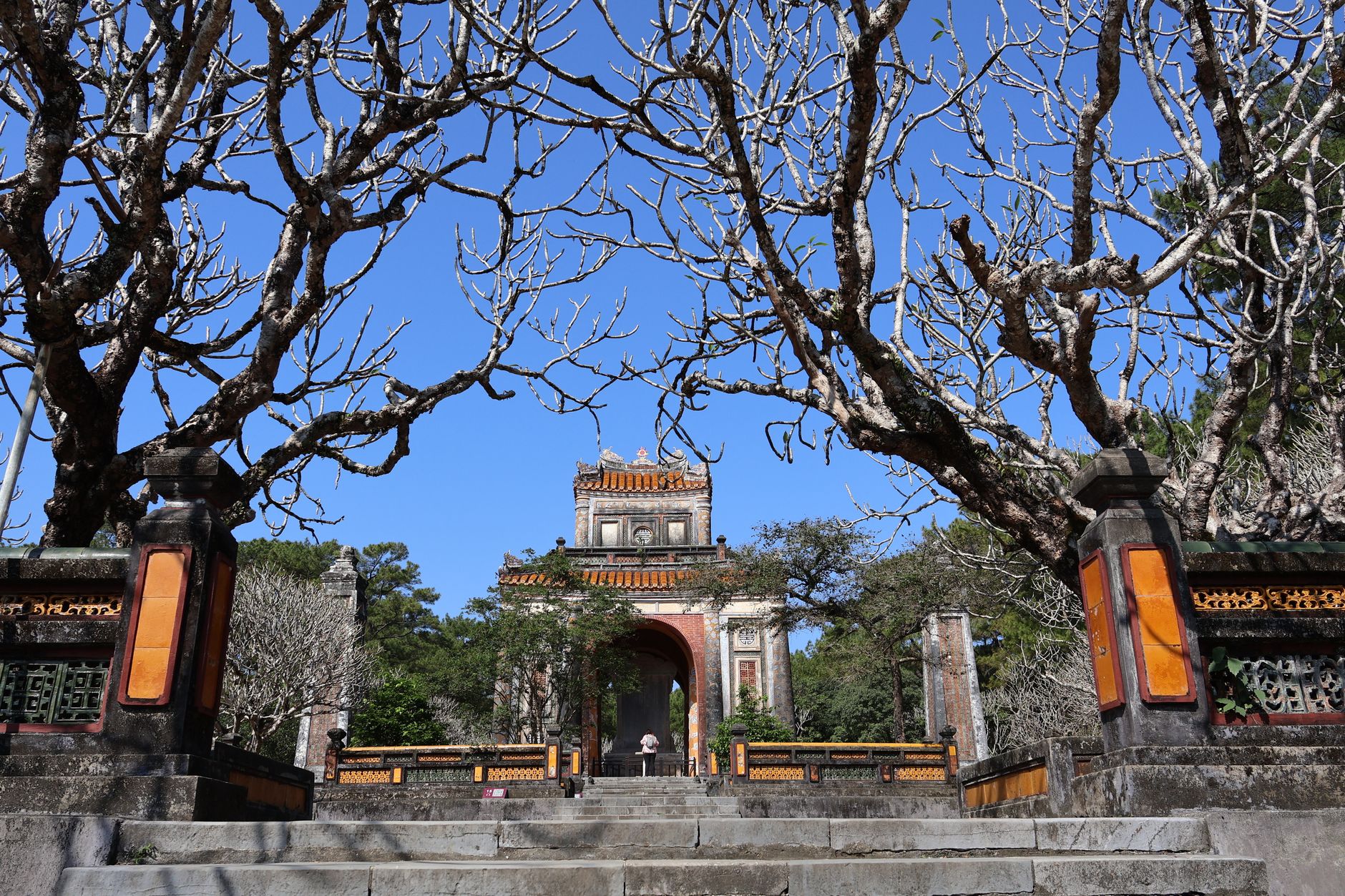
In the afternoon, visit the Tomb of Khai Dinh, the ornate mausoleum of Emperor Khai Dinh (buried 1925). The interior is painted and tiled in Sino-French style; it feels like walking into a jewel box. Then visit the Tomb of Tu Duc, more serene and spread across 5 hectares of gardens and lakes. Stay overnight in Hue.

Image by CEphoto, Uwe Aranas via Wikimedia Commons (CC BY-SA)
Day 6 — Fly to Saigon
Catch a morning flight from Da Nang (or Hue's nearby airport) to Saigon (1.5 hours, ~50 USD). Arrive early afternoon, transfer to your hotel, and rest or explore Ben Thanh Market, the covered bazaar in District 1. It's touristy but chaotic and real—knock-offs, spices, and local snacks sprawl across three floors.
Eat pho or "bun cha" (grilled pork with noodles) for dinner. A bowl costs 2–4 USD.
Day 7 — Cu Chi Tunnels and Mekong Delta
Split the day. In the morning, visit the Cu Chi Tunnels, the underground network built by Viet Cong fighters during the war. A half-day tour (8 a.m.–12 p.m.) includes a guide, a walk through preserved tunnels, and a firing range where you can shoot old rifles. It's touristy but historically important; about 20 km northwest of Saigon.
In the afternoon, take a speedboat tour of the Mekong Delta. Depart from the Can Tho docks or arrange a tour operator pickup. You'll float past floating fish farms, coconut plantations, and stilt houses. Stop at a fruit orchard for fresh juice and a "hu tieu" (clear broth noodle soup) lunch. Tours run 3–4 hours and cost 15–25 USD including food and boat.
Return to Saigon by early evening. Grab a final dinner near your hotel or in District 3, where restaurants cluster. Fly out the next morning or add a few more days to explore.
Frequently Asked Questions
How much should a first-time traveler budget per day in Vietnam?
Budget around 40-60 USD per day for mid-range accommodation, on top of domestic flights and meals. Meals are very affordable: a full dinner in Hoi An costs 3-6 USD, and a bowl of pho from a side-street stall in Hanoi costs just a few dollars. Domestic flights between cities, such as Hanoi to Da Nang, run about 40 USD one-way.
What is the best way to travel between Hanoi and Hoi An?
Fly from Hanoi to Da Nang, which takes about 1 hour and costs roughly 40 USD one-way. From Da Nang airport, rent a car or take a shared van 40 km south to Hoi An, which takes about 1 hour. This combination is faster and more practical than overland travel and gets you to Hoi An by late afternoon with time to explore the Old Town.
When is the best time to visit the Temple of Literature in Hanoi?
Arriving after 3 p.m. makes for a quieter visit to the Temple of Literature, Hanoi's 11th-century university. Earlier in the day it draws larger crowds. The complex contains several courtyards and stone turtle stelae worth exploring at a relaxed pace. It is located in the Hoan Kiem district and is walkable from the Old Quarter where most mid-range hotels are based.
Practical notes
Domestic flights are cheap (40–60 USD) and reliable; book via Vietnam Airlines, Vietjet, or Bamboo Airways. Overnight trains are an alternative to buses (Hanoi–Hue is 12–15 hours), but flights save time. Carry a small day pack, light rain jacket, and comfortable shoes for walking. Tap water isn't drinkable; stick to bottled water or filtered water sold everywhere. Tipping is not expected but appreciated if service is good. ATMs are common in all three cities.
Last updated · May 29, 2026 · independently researched, never sponsored.