Where to Stay in Da Lat: City Center vs Tuyen Lam Lake vs Flower Farms
Da Lat offers three distinct neighborhood vibes: walkable colonial center, lakeside resorts, or rural flower-farm homestays. Choose based on whether you want markets and cafes, peaceful water views, or sunrise over flowers.

Which neighborhood fits your trip
Da Lat isn't large, but where you sleep shapes the rhythm of your days. The city center puts you in the walking zone; Tuyen Lam Lake trades bustle for calm water views and resort amenities; flower-farm areas (mostly north and east of the city) trade everything for Instagram mornings and silence. None is objectively "best"—it depends on whether you came to browse markets, relax, or sit in a field.
City Center: Hanoi Street, Tran Phu, around Xuan Huong Lake
Stay here if you want to walk to "[pho](/posts/pho-vietnam (베트남 / 越南 / ベトナム)-noodle-soup-guide)", coffee, and the Thursday night flower market without planning transport.
The center sprawls gently around Xuan Huong Lake (the colonial lake with paddle boats and ducks). Most guesthouses cluster on Hanoi Street, Tran Phu Avenue, and the alleys near Dalat Market. You're 50–300 meters from "ca phe sua da" (iced milk coffee), souvenir shops, bakeries, and the flower market on Thursday evenings. Walking at night is safe. Cyclo drivers know these streets and won't hassle you aggressively.
Price range: 250,000–2,200,000 VND/night ($10–100, but realistically $25–60 for decent comfort). Budget guesthouses run 250,000–500,000 VND. Mid-range hotels (private bathroom, aircon, hot water) sit 700,000–1,200,000 VND. Boutique or colonial-style places climb to 1,500,000–2,200,000 VND.
Vibe: Busy by Da Lat (달랏 / 大叻 / ダラット) standards (which means "more people than the lake"), but still quiet compared to Hanoi or Saigon. Families and older couples dominate. Street food vendors set up at dusk. You'll hear xich lo (three-wheeled taxi) bells and construction noise on Tran Phu.
What's nearby: Dalat Market (Cho Da Lat) is 10–15 min walk—worth visiting even if you're not buying, just for the chaos of fruit, flowers, and fresh herbs. Tran Phu Avenue has bakeries, pho (쌀국수 / 越南河粉 / フォー) shops, and the War Remnants Museum (neutral history, not a heavy experience). The Thap Linh Mu Temple sits on the hill overlooking the lake.
Downside: No gardens or farms. If you came to Da Lat for flowers, you'll miss the morning light in the valleys. The lake is pretty but crowded with tourists on weekends.
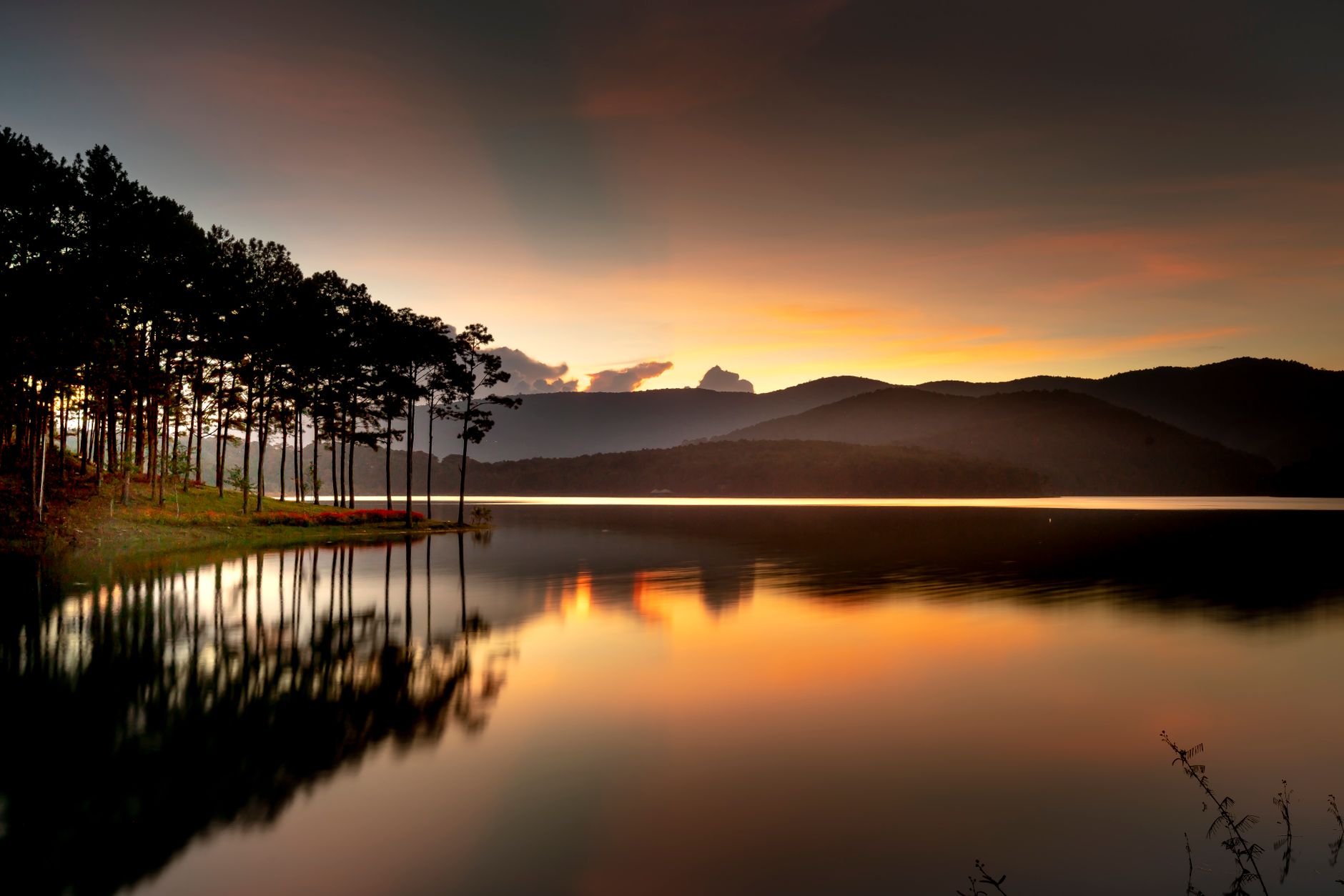
Photo by Quang Nguyen Vinh on Pexels
Tuyen Lam Lake: Resorts and guesthouses lakeside, 5 km south
Stay here if you want to see water from your balcony, take yoga classes, or eat dinner with a lake view without leaving the property.
Tuyen Lam Lake is a reservoir fringed with pines and filled with hotels, resorts, and tourist cafes. It's the "resort zone" of Da Lat—more organized, less chaotic, farther from markets. You lose the spontaneous street-food energy but gain peace and pastoral views. The lake itself is less dramatic than Xuan Huong (it's industrial-edged, used for hydropower) but feels less touristy. Early mornings, it's genuinely quiet.
Price range: 500,000–5,000,000 VND/night ($20–200). Budget stays (basic rooms, shared facilities) run 500,000–800,000 VND. Mid-range resorts with gardens and lake access: 1,200,000–2,500,000 VND. Upscale resorts (spas, restaurants, chalets): 2,500,000–5,000,000 VND.
Vibe: Quieter, slower, more couples and honeymooners. Hotels here cater to families wanting a quiet getaway. Morning walks along the water are peaceful. You're less likely to bump into backpackers or tour groups.
What's nearby: Tuyen Lam Pagoda (about 1 km walk from the lake shore) is a real working monastery, not a tourist attraction. Hang Nga Crazy House (the surrealist mansion) is 2–3 km away—reachable by motorbike or taxi. The lake path itself is lovely for jogging or meditation. Pine forests surround the water, good for short hikes.
Downside: You'll need a motorbike or taxi to reach the city center, markets, or restaurants outside your resort. If your hotel doesn't have good dining, you're stuck. About 20–30 min from the flower markets. Less spontaneous street food; more curated resort menus.
Flower Farm Areas: Tuyen Duc District, Dam Market area, northeast valleys
Stay here if you want to wake up in a flower field, don't mind isolation, or are here specifically to photograph or work in farms.
Flower farms ring Da Lat: strawberry patches, sunflower fields, carnation greenhouses, and wildflower meadows occupy the valleys and slopes north, east, and south of the city. A few guesthouses and homestays have moved into these areas to capture the morning-light and farm-stay tourism. You're 10–20 km from the city center but surrounded by red soil, blooms, and rural quiet.
Price range: 300,000–1,200,000 VND/night ($12–50). Most farm stays are basic guesthouses or homestays: 300,000–700,000 VND. Some newer eco-lodges or boutique farm stays: 800,000–1,200,000 VND.
Vibe: Very quiet. You're eating with the family who runs the property or walking to a nearby farm stand for coffee. Sunrise is the main event. Very few Westerners; mostly Vietnamese weekend visitors and photographers. Feels remote but safe.
What's nearby: Flower fields (obviously). Some areas have U-pick strawberry farms or guided farm tours. Tuyen Duc District has a small market and local pho shops. The Lamb Village (Lamvil, a rural cluster 20 km away) has alpacas and is a destination in itself. Most visitors use these areas as a base for day trips into the city rather than staying for the nightlife (there isn't any).
Downside: Isolation. You need a motorbike or pre-arranged transport to do anything. Internet can be spotty. If you get sick of the quiet or the food, you're stuck. Rainy season (May–Sept) makes some farm roads muddy. Not ideal if you want to browse restaurants or night markets.

Photo by Duc Nguyen on Pexels
Why Da Lat, period: The slow-travel + couples angle
Da Lat works for slow travel and couples because the pace is actually slow. There's no must-see monument you'll regret missing. There's coffee, flowers, waterfalls, and walking. The colonial architecture is background, not a checklist. You can spend a day doing nothing and not feel like you're wasting a trip.
The city is small enough (100,000 people) that you can navigate without a guide. Cool weather (15–20°C most of the year) means you're not melting or hiding from noon sun. Couples love it because there's no pressure—gardens are romantic without being performative, and a shared coffee on a bench is genuinely enough.
Bottom line
City center if you want spontaneity and people-watching. Tuyen Lam if you want quiet but don't want to feel stranded. Flower farms if you came specifically for the aesthetic or a rural slow-down. None requires a long commitment—Da Lat is walkable enough that you can stay central and day-trip to farms, or base yourself at a lake resort and taxi in for markets. The choice is really about morning light and how much silence you can handle.
Going to Vietnam? Eat and travel smarter.
Monthly: new dishes, off-the-beaten-path destinations, and itineraries — straight to your inbox. No spam. Unsubscribe anytime.
Join 0 expats. (We just launched.)
More from Da Lat
Other articles covering this city.

3 Days Escaping Saigon: Da Lat and Surrounding Highlands
Leave Saigon behind for Da Lat's cool mountain air, pine forests, and French colonial architecture. This tested itinerary covers transport, where to stay, what to eat, and realistic costs for a long weekend.

Best Banh Can Da Lat in Da Lat: Where Locals Send You
"Banh can" — steamed rice cakes in individual clay molds — is a Da Lat obsession. Here's where locals actually eat it, why it tastes different here, and how to order like a regular.

Best Banh Uot in Da Lat: Where Locals Send You
Da Lat's banh uot is softer and more delicate than the northern version. Here's where locals actually eat it, how to order, and what makes the city's version stand out.
More from Central Vietnam
Other articles covering the same region.

Paradise Cave, Quang Binh: The 31km Marble Cave That Beats Phong Nha for Photographers
Paradise Cave runs 31km through Quang Binh's karst and delivers the kind of cathedral-scale formations that Phong Nha's boat tour simply can't match. Here's how to see it properly.

Son Doong Cave: What the $3,000 Oxalis Expedition Actually Includes
Son Doong is the world's largest cave and only one operator is legally allowed to take you inside. Here is what the permit-only expedition covers and whether it is worth it.

Phong Nha Cave: Wet Cave, Dry Cave, and How to Choose
Phong Nha has two main caves worth your time — one you reach by river boat, one on foot. Here's how to pick, what each costs, and when to go.
More in Travel Tips
More articles from the same category.

Bargaining in Vietnam: When to haggle, when to pay the asking price
Haggling is normal at markets and with cyclos, but not everywhere. Learn which settings expect negotiation, how much to push back, and where to just hand over your money.
Best Vietnam eSIM Providers 2026: Costs, Setup, and Real-World Tips
A practical breakdown of Vietnam's top eSIM options, real prices, and how to avoid common pitfalls when arriving with no local SIM.

Where to Stay in Saigon: District 1 vs District 3 vs District 7
Three neighborhoods, three vibes. Pick District 1 for backpackers and chaos, District 3 for quiet and value, or District 7 for modern expat comfort. Here's how each stacks up.

Where to Stay in Sapa: Town Center vs Cat Cat vs Ta Van
Sapa has three distinct bases: the foggy town center for convenience, Cat Cat village for quiet hilltop views, or Ta Van for homestay immersion. Pick based on whether you're chasing comfort or trekking.

Where to Stay in Can Tho: Ninh Kieu, Cai Rang, or Orchards
Can Tho's three main neighborhoods offer different angles on Mekong Delta life. Here's how to pick based on your priorities and budget.

Where to Stay in Hue: Citadel vs South Bank vs Beach
Hue splits into three distinct neighborhoods for travelers. Each offers different trade-offs between history access, dining, and atmosphere—here's how to choose.
Comments
Loading…