Where to Stay on the Ha Giang Loop: Town Center vs Yen Minh vs Dong Van
Choosing where to sleep on the Ha Giang Loop depends on your pace and budget. Here's how the main stops compare, and why each works for different riders.

The Ha Giang Loop itinerary moves fast — usually three days on a motorbike, covering 350+ km through limestone karst, ethnic minority villages, and single-track mountain roads. Where you rest each night shapes the whole trip. Most riders base themselves in Ha Giang town, jump out to Yen Minh on Day 1, then push to Dong Van on Day 2. But timing and comfort matter. Here's what you're choosing between.
Ha Giang Town Center
Start here. This is the natural kickoff point — most bus routes from Hanoi arrive here, rentals are centralized, and you can get an early breakfast and check your bike before leaving.
Ha Giang town itself is unremarkable: a standard Vietnamese provincial capital with a few good "[pho](/posts/pho-vietnam (베트남 / 越南 / ベトナム)-noodle-soup-guide)" stands and motorbike repair shops on every corner. But that's the point. You're not coming for the town; you're using it as a launchpad.
Budget homestay and hostel options run 200,000–400,000 VND ($10–18 USD) per night. Places like Old Quarter Hanoi (하노이 / 河内 / ハノイ)-style budget dives charge around 350,000 VND for a fan room, 450,000 VND for air-con. A few hostels aimed at Loop riders sit near the northern edge of town, advertising "motorbike parking" and "early breakfast" — these are fine if you're riding out at dawn, but they're not social hubs.
Stay here if you're arriving late the night before, or if you want a clean bed and a shower before you go. Don't expect to fall in love with the town. The Loop is what you came for.
Yen Minh
Day 1 of the Loop typically ends here (around 120 km from Ha Giang (하장 / 河江 / ハーザン) town, depending on your stops). Yen Minh is a village checkpoint and a natural resting spot — it's where the road opens up into Lung Cu plateau, where H'mong and Tay villages start appearing, and where most riders are tired enough to call it a day.
Homestays dominate here. Family-run setups, often run by ethnic minorities or Vietnamese who've settled in the area, charge 150,000–300,000 VND ($7–14 USD). Expect a simple room (no frills), a communal dinner with the family (if you want it), and sometimes a swimming hole or small waterfall nearby. Booking.com doesn't list many; you'll find them via QT Adventures or Bong (a Facebook group for Loop riders), or by walking the main street and knocking on doors with "Nha nghi" signs.
The advantage is pace. By staying in Yen Minh, you're not rushing the first day. You can loiter in Lang Son Province, explore a "ca tru" singing village if you want to, or just roll in at 4 p.m., shower, and eat. The homestays are cheaper and more real than town hotels — you might eat dinner with a family, hear about their motorbikes, and sleep to the sound of roosters and kids playing outside.
Stay here if you want a slower first day and a more intimate sense of rural life. Skip it if you're only got two full days for the Loop and want to maximize time in Dong Van.
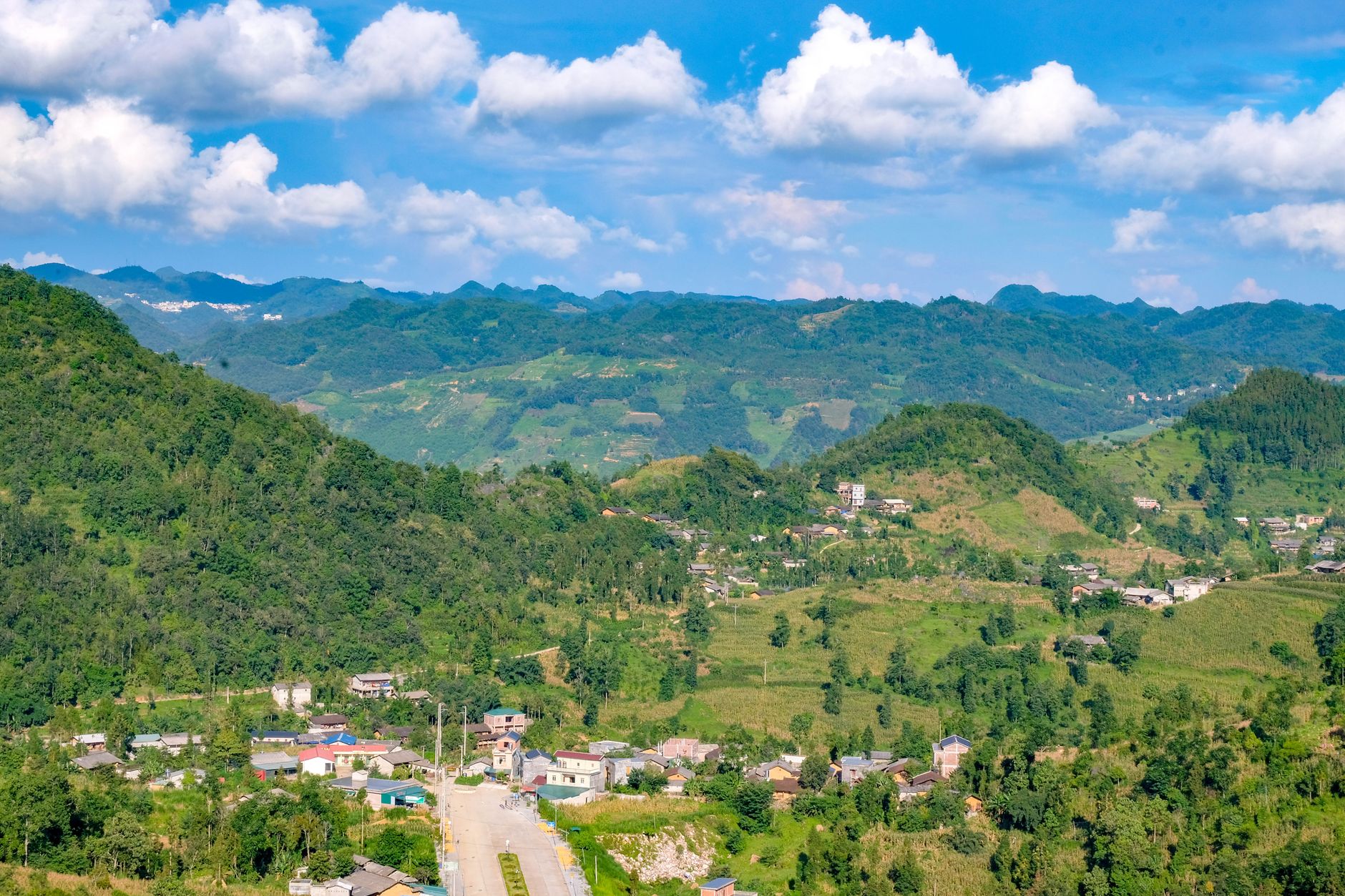
Photo by Du Tử Mộng on Pexels
Dong Van
This is the dramatic finale: a high-altitude town (1,000+ m) perched on the edge of Dong Van plateau. On a clear day, the view down into the karst valleys is the kind of thing that makes you understand why you spent 12 hours on a motorbike.
Dong Van has grown into a legitimate tourist stop. Homestays, small hotels, and a few mid-range guesthouses dot the main street. Budget: 250,000–600,000 VND ($12–28 USD) for a homestay; 400,000–1,000,000 VND ($19–47 USD) for a hotel room with a private bathroom and hot water. Places like Nha Tro Viet or Du Gia homestay village (just outside town, near a natural swimming hole) are popular with Loop riders — they're simple, clean, and locals can arrange onward transport or extra day trips to nearby villages.
The town itself has a single long main street with a few cafés, pho (쌀국수 / 越南河粉 / フォー) shops, and a motorbike repair place. At night, the air gets cold (even in summer), and you're literally above the clouds. Most tourists eat a late lunch in Dong Van, rest, then move on. If you want to linger, Day 3 of the Loop usually includes a side trip to Thac Moc valley or a Tay village on the way back south — Dong Van is your anchor for that.
Stay here if you want the iconic "end of the Loop" experience and space to recover. It's higher, colder, and emptier than Yen Minh — more meditative, less social.
Du Gia Homestay Village
Mention deserves its own space. Du Gia sits 2 km south of Dong Van town, up a rough track. It's a cluster of homestays run by H'mong families, overlooking the plateau. Swimming hole, village hiking, simple meals — the whole package.
Costs 150,000–300,000 VND ($7–14 USD). It's rougher than town (no hot water, shared bathrooms, no WiFi), but that's the appeal. You're genuinely staying in a village, not a commercial guesthouse. Riders who do this report it as the most memorable night on the Loop.
Book via QT Adventures, Bong (Facebook), or ask your rental place. Or just show up; most homestays have space.
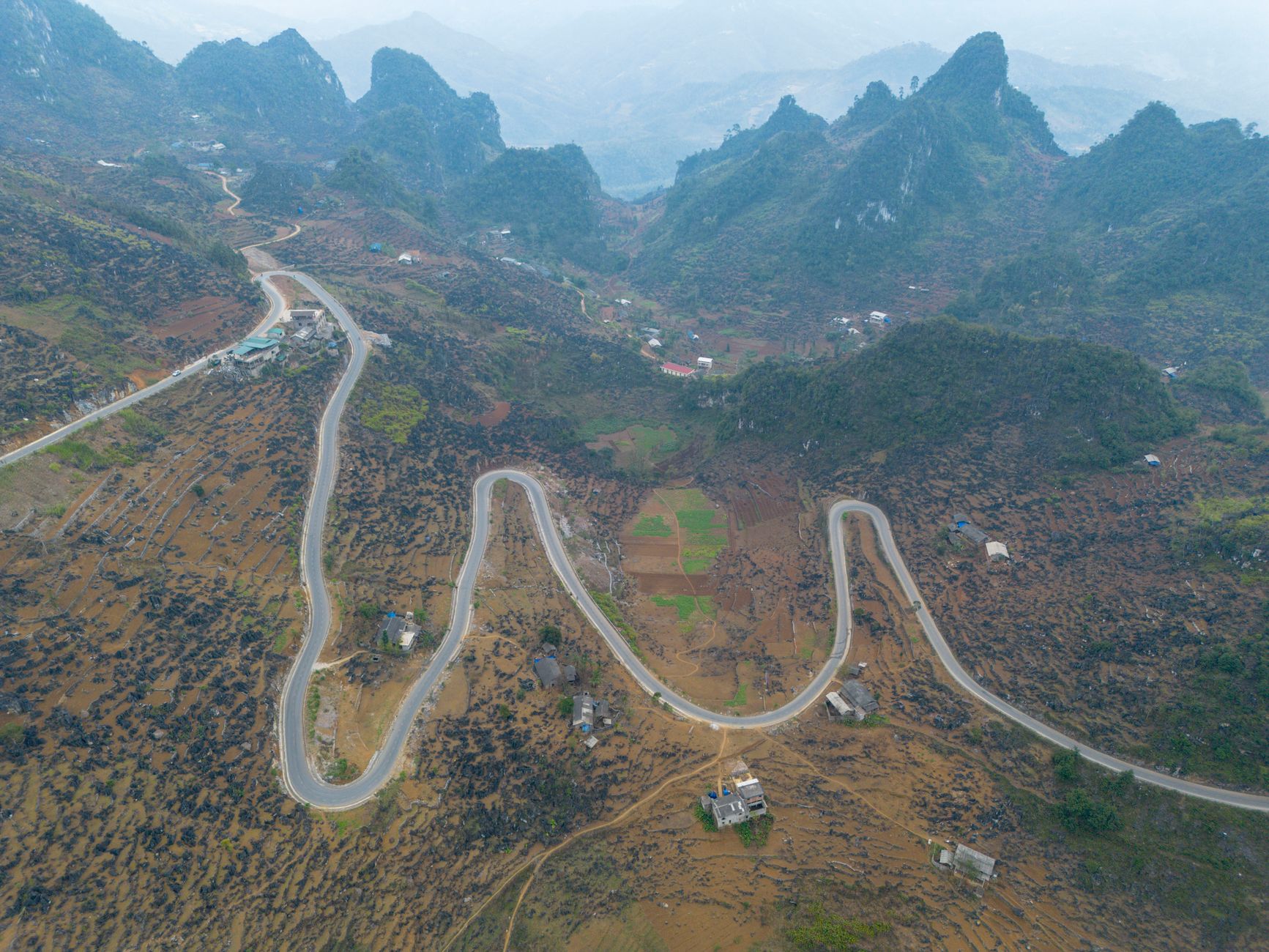
Photo by Vietnam Hidden Light on Pexels
How to Book
Booking.com and Agoda: OK for Ha Giang town and some Dong Van hotels. Miss most homestays.
QT Adventures: UK-run outfit with a strong presence on the Loop. Can book homestays, arrange guides, relay messages. Their Facebook group and website (qtadventures.asia) are the clearing house for Loop logistics.
Bong (Facebook group): Vietnamese riders and expats share real-time updates on road conditions, homestay recommendations, and ride reports. Search "Bong Ha Giang Loop" or "Bong Loop Ha Giang." No formal booking; it's peer-to-peer.
Direct: Walk into town, ask at a pho stand or motorbike rental. Homestay owners don't advertise; they rely on word-of-mouth and walk-ins.
Bottom line
Ha Giang town is your jump-off. Yen Minh works if you want a human-paced first day and a taste of village life. Dong Van is the payoff — go high, stay high, rest. Du Gia is for riders chasing maximum immersion and minimum comfort. Booking apps help with town hotels; QT Adventures and Bong are your friends for homestays. Most riders do Ha Giang town → Yen Minh → Dong Van and regret nothing.
Going to Vietnam? Eat and travel smarter.
Monthly: new dishes, off-the-beaten-path destinations, and itineraries — straight to your inbox. No spam. Unsubscribe anytime.
Join 0 expats. (We just launched.)
More from Ha Giang
Other articles covering this city.
10 Days on the Northern Frontier Loop: Hanoi to Ha Giang and Back
A tested itinerary covering Hanoi, Mai Chau, Sapa, Ha Giang, and back—with transport, guesthouses, food costs, and what actually works on the ground.

7 Days in Vietnam's Ethnic Minority Villages: A Northern Loop
A tested itinerary through Ha Giang, Sapa, and Mai Chau targeting Hmong, Dao, and Thai villages. Routes, homestays, transport, food stops, and real costs in VND.

Best Cha Man in Ha Giang: Where Locals Eat
Ha Giang's version of cha man is leaner, more herb-forward, and almost always served at dawn. Here's where locals line up and what makes it worth the trip.
More from Northern Vietnam
Other articles covering the same region.

Hoa Lu Ancient Capital: Vietnam's First Kingdom and How to Visit from Ninh Binh
Hoa Lu was the seat of Vietnam's first independent dynasties in the 10th century. Two surviving temples anchor a quiet bike ride through rice fields just outside Ninh Binh.

Perfume Pagoda Day Trip from Hanoi: Boat, Hike, and Festival Season
A half or full-day pilgrimage from Hanoi to the Perfume Pagoda involves a scenic boat ride through limestone karst, a trek or cable car ascent, and crowds during Tet season. Here's what to expect and how to plan.

Hanoi Old Quarter Walking Guide: 36 Streets, Street Food & Craft Alleys
The 36 streets of Hanoi's Old Quarter were named after the guilds that dominated them—silk, silver, tin, paper. Here's how to walk them, eat on them, and see which craft trades still survive.
More in Travel Tips
More articles from the same category.

Bargaining in Vietnam: When to haggle, when to pay the asking price
Haggling is normal at markets and with cyclos, but not everywhere. Learn which settings expect negotiation, how much to push back, and where to just hand over your money.
Best Vietnam eSIM Providers 2026: Costs, Setup, and Real-World Tips
A practical breakdown of Vietnam's top eSIM options, real prices, and how to avoid common pitfalls when arriving with no local SIM.

Where to Stay in Saigon: District 1 vs District 3 vs District 7
Three neighborhoods, three vibes. Pick District 1 for backpackers and chaos, District 3 for quiet and value, or District 7 for modern expat comfort. Here's how each stacks up.

Where to Stay in Sapa: Town Center vs Cat Cat vs Ta Van
Sapa has three distinct bases: the foggy town center for convenience, Cat Cat village for quiet hilltop views, or Ta Van for homestay immersion. Pick based on whether you're chasing comfort or trekking.

Where to Stay in Can Tho: Ninh Kieu, Cai Rang, or Orchards
Can Tho's three main neighborhoods offer different angles on Mekong Delta life. Here's how to pick based on your priorities and budget.

Where to Stay in Hue: Citadel vs South Bank vs Beach
Hue splits into three distinct neighborhoods for travelers. Each offers different trade-offs between history access, dining, and atmosphere—here's how to choose.
Comments
Loading…