Where to Stay in Lai Chau: Budget, Mid-Range, and Upscale Options
Lai Chau is small and remote, so accommodation is sparse. Here's what actually exists, where to book it, and which neighborhoods suit different travelers.

Lai Chau: the accommodation reality
Lai Chau is not Sapa or Da Lat. It's a quiet provincial town in the far northwest, surrounded by mountains and ethnic minority villages. Most travelers pass through on a motorbike loop or as a pit stop between Ha Giang and Sapa. The upside: the town itself is manageable, walkable, and mercifully free of the backpacker tourist apparatus. The downside: your choices are limited, and "luxury" in Lai Chau means something different than it does in Hanoi.
Most accommodation clusters in the town center, a few blocks either side of the main road. There's no distinct "neighborhood vibe" — it's all fairly compact. But your choice of where to stay will shape whether you're in the thick of things or tucked into something quieter.
Town center (the main drag)
This is where most guesthouses and the few larger hotels sit. The road is lively in the early morning (vendors, motorbikes, the market) and dies down after dark. It's noisy if you're a light sleeper, but you're steps from food stalls, the local market, and the main north–south highway.
If you want to eat quickly and mingle with local shop owners or truck drivers, stay here. If you want silence, choose elsewhere.
Tai Loi street (quieter fringe)
Just south of the center, this side road is marginally quieter. A couple of mid-range places sit here. You're 5–10 minutes' walk from the main strip, but you lose the road noise.
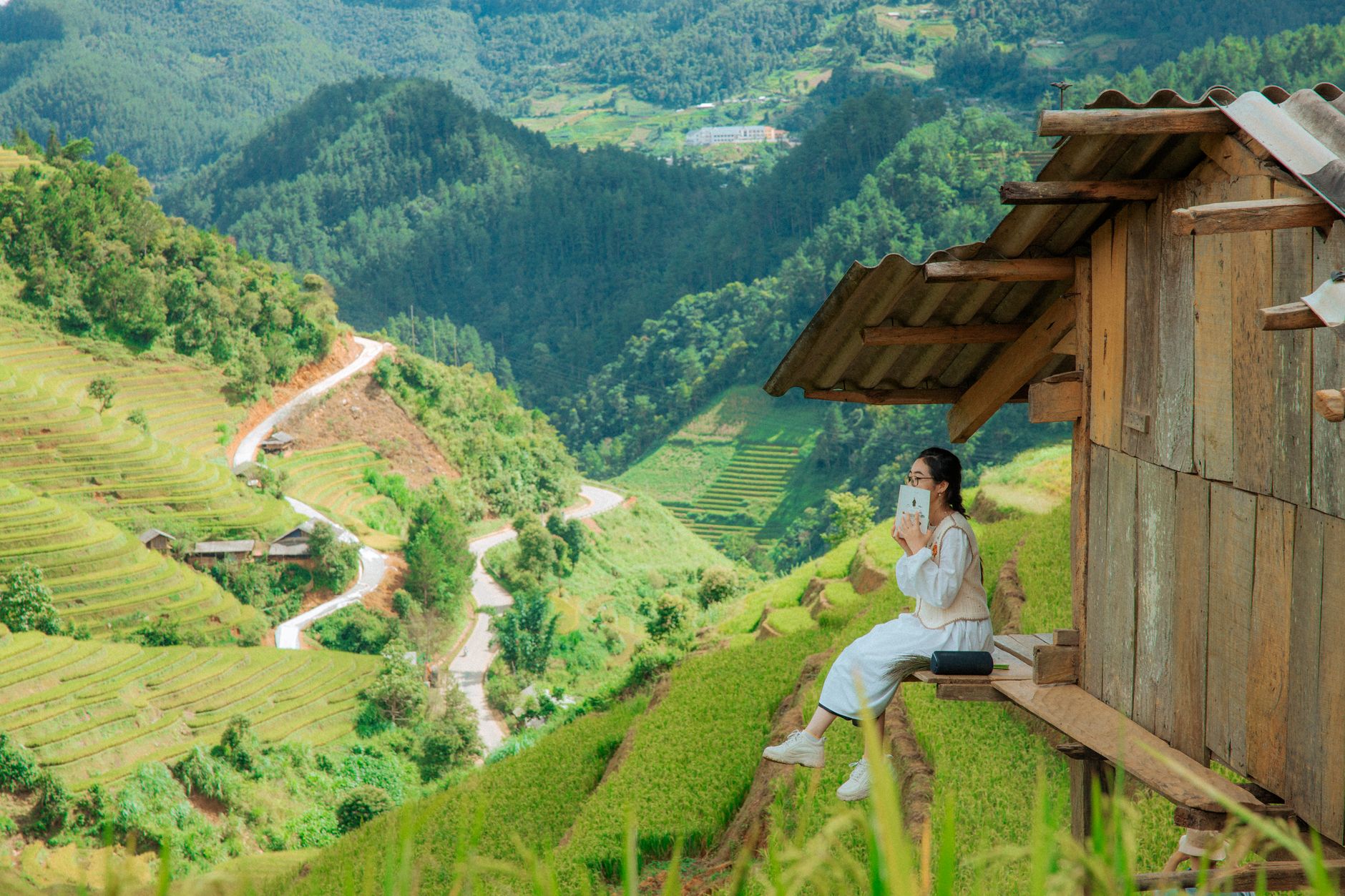
Photo by HONG SON on Pexels
Budget: 150,000–350,000 VND per night
Guest houses dominate this bracket. Most are family-run, simple, and clean — thin mattresses, shared or private bathrooms, basic hot water, fan or air-con. A few common names circulate among travelers on motorbike forums and booking apps, but turnover is high and new places open regularly.
What you get: a bed, breakfast (usually bread and instant coffee), WiFi that mostly works, and the owner's advice on routes. What you don't get: frills, English-fluent staff, or consistency across rooms in the same building.
Best for: backpackers on a motorbike, budget overlanders, travelers who view accommodation as a place to sleep and shower, not linger.
How to book: Agoda, Booking.com, or turn up and walk the main road. Dropping in often yields same-day discounts (10–20%), especially off-season (May–August, November). English is spotty, but "room?" and a nod usually works.
Mid-range: 400,000–900,000 VND per night
This is where a handful of actual hotels sit. They tend to be purpose-built, 3–4 stories, with proper lobby areas, larger rooms, and amenities like TV, mini-fridge, and air-con. Some have small restaurants or at least reliable breakfast service. They're not fancy, but they're a step above a guesthouse.
Hotel names and quality shift; again, turnover is real. But the mid-range segment is stable enough that if you book via Agoda or Booking, you'll usually land somewhere serviceable. Rooms are cleaner, beds firmer, plumbing more reliable. Breakfast is better — often a small buffet with eggs, fruit, bread.
Best for: travelers wanting comfort without pretense, families, couples looking for a bit of privacy after days on the road.
How to book: Online (Agoda or Booking). Prices drop 15–30% if you book 2–3 days ahead and are flexible on dates. Walking in usually costs 5–10% more than the online rate.
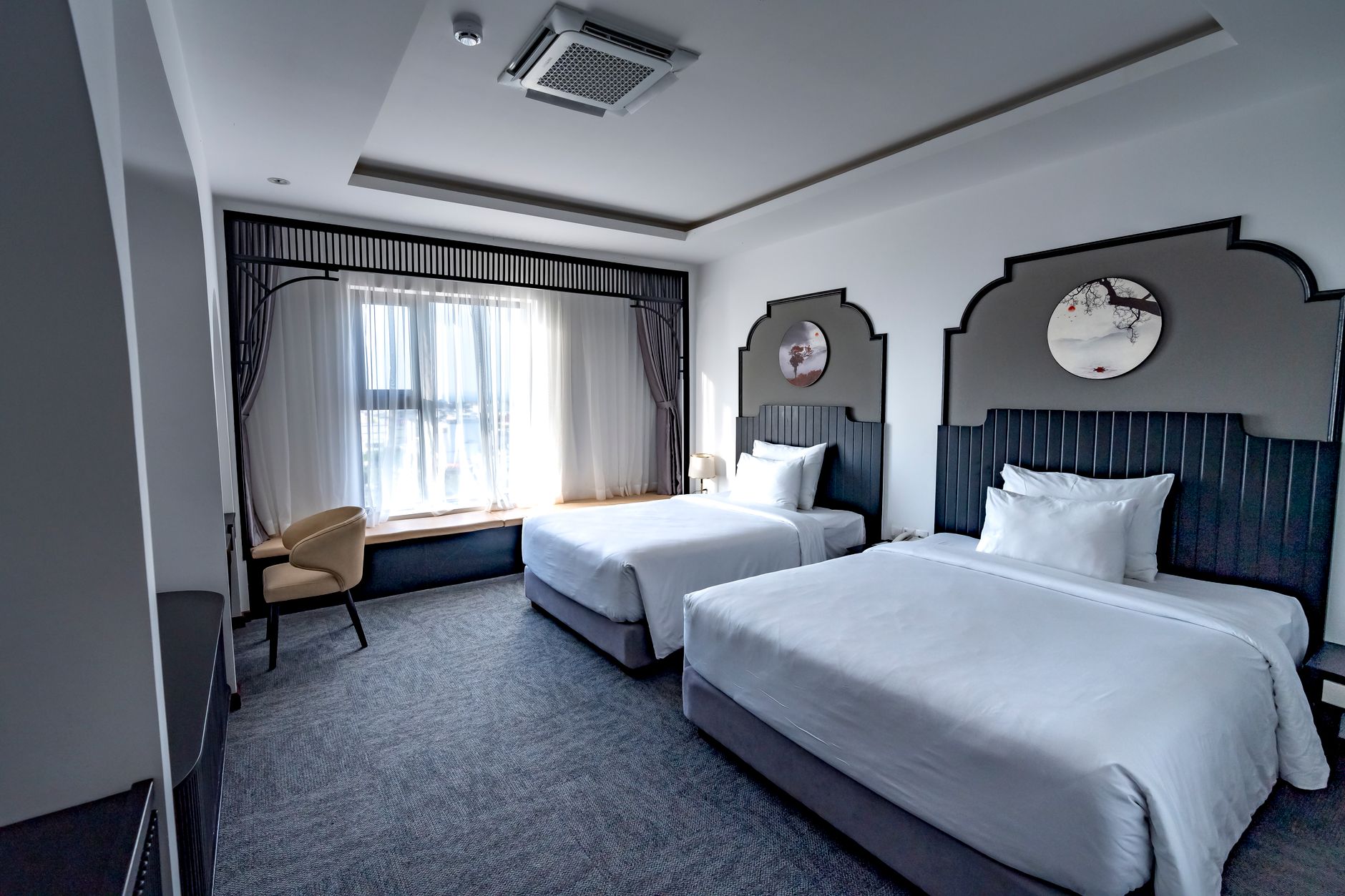
Photo by Quang Nguyen Vinh on Pexels
Upscale: 900,000+ VND per night
Lai Chau's "luxury" is thin. A handful of newer properties have branded themselves as eco-lodges or resort-style places, often on the outskirts. Think: newer construction, en-suite bathrooms with hot water, decent bedding, possibly a small restaurant and garden space.
But this is still a remote provincial town. Don't expect a spa, 24-hour room service, or the polish of a Hanoi 4-star. You're paying for quiet, cleanliness, and a sense that someone cared about the interior design. Prices reflect scarcity, not amenity load.
Best for: travelers with more time and money, couples wanting a romantic base, people working remotely who need reliable WiFi and a comfortable desk.
How to book: Online. These places rely on online platforms because walk-in traffic is too thin to sustain them. Book directly if the website shows contact details; otherwise, use Agoda or Booking.
Practical notes
Lai Chau town itself is small enough that wherever you stay, you're within a 10-minute walk of the main market and eating spots. The real question is noise tolerance and whether you want instant access to the street energy or prefer a quieter base.
Booking in advance (2–3 days) is wise during holidays and the dry season (October–April). Off-season rates drop noticeably. Expect to pay 10–20% less in June, July, or September.
If you're arriving by bus late in the day, book ahead to avoid the scramble. If you're on a motorbike and flexible, showing up and negotiating can save money — but don't bank on it in October or November.
WiFi is present but erratic everywhere. If you're working remotely, test the connection and ask other guests before committing to a multi-night stay. Mobile data (Viettel or Vinaphone SIM cards are easy to buy) is often faster than WiFi.
Hot water is standard now, even in budget places, but showers can be weak in dry season. Ask before booking if this matters.
The town has no 24-hour ATM. There's a Vietinbank branch on the main road, open 8 a.m.–4 p.m. Bring enough cash for 2–3 days, or use Agoda/Booking payment to cover accommodation.
Noise: even the quieter mid-range places may get early-morning activity (5–6 a.m.). Bring earplugs if you're sensitive.
Going to Vietnam? Eat and travel smarter.
Monthly: new dishes, off-the-beaten-path destinations, and itineraries — straight to your inbox. No spam. Unsubscribe anytime.
Join 0 expats. (We just launched.)
More from lai-chau
Other articles covering this city.
How to Get to Lai Chau: Transport Options from Hanoi, Da Nang & Beyond
Lai Chau sits in the far northwest, 400 km from Hanoi. Here's how to reach it by bus, motorbike, or occasional flights—with costs, duration, and where to stay once you arrive.
What to Eat in Lai Chau: Regional Dishes and Where Locals Go
Lai Chau's mountain cuisine is built on pork, sticky rice, and wild greens. Here's what actually gets cooked in local kitchens and where to find it without overpaying.
More from Northern Vietnam
Other articles covering the same region.

Hoa Lu Ancient Capital: Vietnam's First Kingdom and How to Visit from Ninh Binh
Hoa Lu was Vietnam's first royal capital, and the two temple complexes that survive are among the most atmospheric historical sites in the north.

Hoan Kiem Lake: The Sword Legend, Ngoc Son Temple, and When to Visit
Hoan Kiem Lake sits at the center of Hanoi's Old Quarter — here's the legend behind it, how to walk it properly, and when the streets actually belong to you.

Lung Cu Flag Tower: Vietnam's Northernmost Point
The drive to Lung Cu Flag Tower takes you to Vietnam's northernmost point at 1,500 metres. It's a half-day trip from Dong Van with a steep climb, mountain views, and nearby Hmong villages.
More in Destinations
More articles from the same category.

Landmark 81 Saigon: Observation Deck, Ice Rink, and Getting There from District 1
Landmark 81 is Vietnam's tallest building and Saigon's most visible skyline anchor. Here's what's actually inside and whether it's worth the trip.

Bitexco Financial Tower: Skydeck, Helipad Bar, and Whether the Ticket Is Worth It
Saigon's most recognizable skyscraper charges 250,000 VND to ride up to the 49th floor — here's what you actually see, and whether you should bother.

Notre Dame Cathedral Saigon: French Colonial Centerpiece in the Heart of HCMC
Saigon's Notre Dame Cathedral has been wrapped in scaffolding for years, but the square in front of it remains one of the best starting points for a colonial-era walking tour of District 1.

Paradise Cave, Quang Binh: The 31km Marble Cave That Beats Phong Nha for Photographers
Paradise Cave runs 31km through Quang Binh's karst and delivers the kind of cathedral-scale formations that Phong Nha's boat tour simply can't match. Here's how to see it properly.

Son Doong Cave: What the $3,000 Oxalis Expedition Actually Includes
Son Doong is the world's largest cave and only one operator is legally allowed to take you inside. Here is what the permit-only expedition covers and whether it is worth it.

Phong Nha Cave: Wet Cave, Dry Cave, and How to Choose
Phong Nha has two main caves worth your time — one you reach by river boat, one on foot. Here's how to pick, what each costs, and when to go.
Comments
Loading…