Ha Nam: What to Eat — A Traveler's Guide
Ha Nam's food scene punches above its size. Skip the tourist traps and eat where locals queue — clay-pot fish, sticky rice dumplings, and some of the best egg coffee in the Red River Delta.

Ha Nam is a quiet province just south of Hanoi, easy to overlook on the way to somewhere else. That's precisely why the food here tastes like it's still made for people who actually live here, not for Instagram. If you pass through, or base yourself for a day trip, eat these things.
Regional standouts
Ha Nam sits in the Red River Delta, so expect glutinous rice, fresh-water fish, and vegetables that come to the market within hours of harvest. The province specializes in a few dishes that rarely leave the province — because locals keep them secret.
"Com tam" (broken rice) is everywhere in the south, but Ha Nam's version leans harder into clay-pot cooking. The rice is pressed into a clay pot with a thin crust on the bottom, then steamed with fish sauce, garlic, and sometimes pork liver or salted egg. You crack the pot at the table — the ceramic shatters, the rice tumbles out, and the crispy shards taste like toasted grain. A full bowl with sides runs 35,000–50,000 VND.
Clay-pot fish ("ca kho to") is the province's signature. They use smaller freshwater fish — usually catfish or snakehead — stewed low and slow in a clay pot with caramel, fish sauce, garlic, and chilies. The sauce reduces to a dark, sticky glaze. It's rich, funky, and nothing like the bland fish you'll get in a tourist restaurant. Expect to pay 60,000–90,000 VND for a pot that feeds two people. The best versions are made at home or at small family stalls; restaurants that cater to tourists often oversalt and overcook it.
"Banh chung" (square glutinous rice cake) is a Tet staple nationwide, but Ha Nam's version uses sticky rice stuffed with mung bean and pork, wrapped in bamboo leaf, and boiled for hours. Outside Tet season, you'll still find it at markets, broken into wedges. A wedge costs 5,000–10,000 VND. It's dense, slightly sweet, and tastes like heritage.
Where locals eat
Dong Nhan Market (Dong Nhan Ward, Phu Ly City)
This is the real market — not the tourist-facing one. Arrive by 6:30 a.m. and you'll see vendors selling fresh "pho" to construction workers and delivery drivers. The broth is lighter than Hanoi's style, finished with a handful of fresh herbs and a squeeze of lime. A bowl of "pho" runs 25,000–35,000 VND. The noodle sellers here also make "banh canh" (thick tapioca noodle soup) with pork or shrimp — creamy, filling, the kind of breakfast that sticks with you. 30,000–40,000 VND.
After 8 a.m., the market shifts to produce and prepared foods. Hunt for the sticky-rice stall — they sell pyramids of glutinous rice wrapped in bamboo, often stuffed with a salted duck egg yolk or red bean paste. 8,000–15,000 VND. The egg sellers on the north side of the market do boiled eggs, but also "trung hap lo" (baked eggs in clay pots), which are creamy and less sulfurous than boiled. 5,000–8,000 VND.
Phu Ly Old Quarter (Ba Trieu Street)
Walk Ba Trieu Street in the late afternoon (4–6 p.m.) and you'll see tiny hole-in-the-wall stalls setting up. A woman in a blue apron cooks "bun cha" (grilled pork with noodles) over a charcoal brazier. The pork is minced, formed into patties, and charred until the edges blacken. The dipping sauce is fish sauce, lime, garlic, and chili. She serves it with a bowl of cold rice noodles, pickled papaya, and fresh herbs. One plate feeds one hungry person. 30,000–40,000 VND. Sit on a plastic stool and eat with the locals.
Crab stalls near Xuan Phuong Lake (south of Phu Ly City)
If you rent a motorbike, drive 5 km south of Phu Ly toward Xuan Phuong Lake. You'll see ramshackle restaurants built on stilts over the water. They all serve mud crabs — either steamed whole with salt and lime, or stir-fried with garlic and black pepper. Prices are fair if you negotiate: a medium crab (300–400g) costs 150,000–200,000 VND. Order one, grab a cold beer, and watch fishermen on the water. These are not fancy places — plastic chairs, no air-con, excellent food.
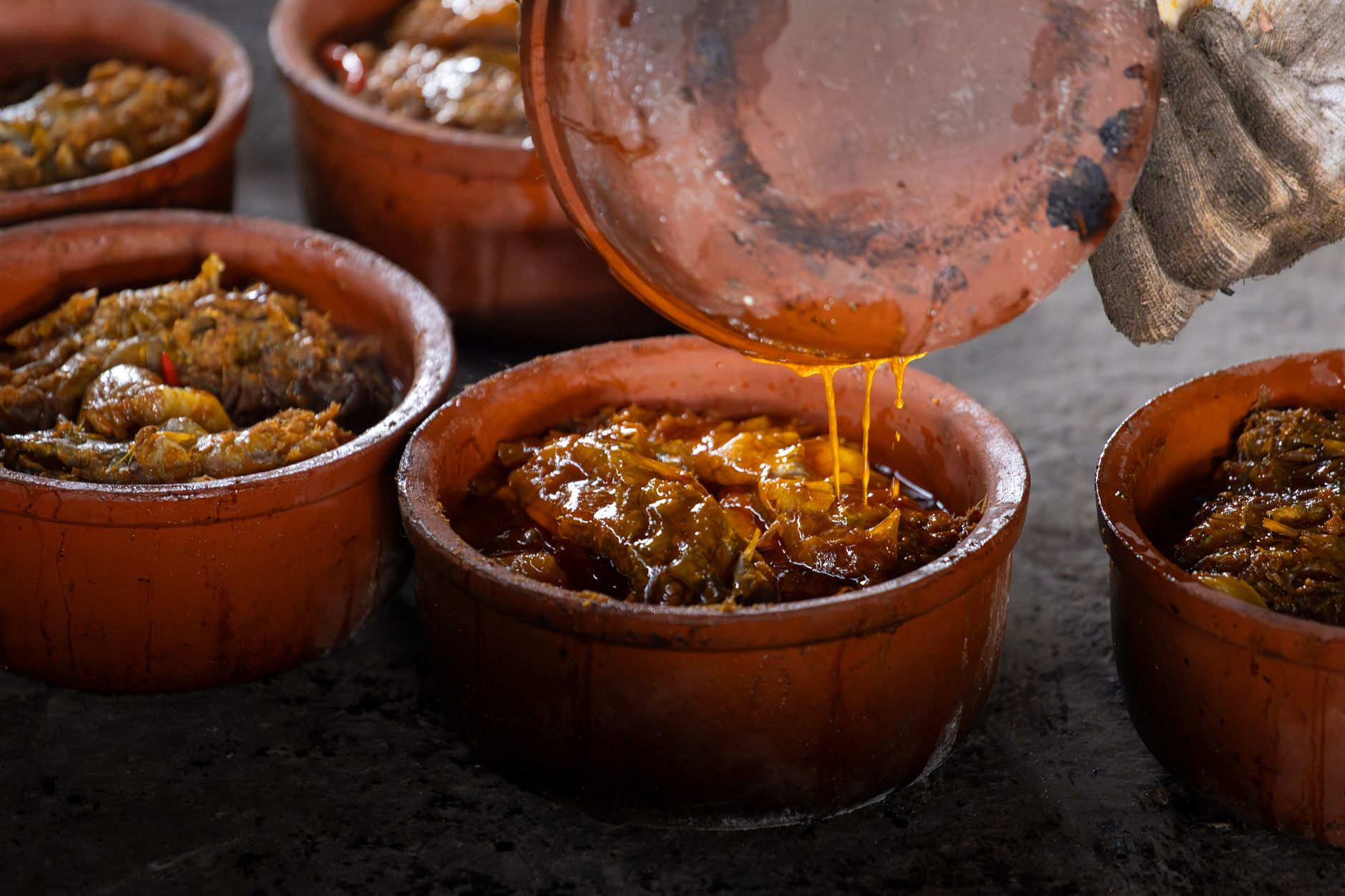
Photo by Hồng Quang Official on Pexels
Street food and snacks
Egg coffee ("ca phe trung") is not unique to Ha Nam, but the version here is worth trying. Locals claim the egg yolks from the Red River Delta are richer. A cup of egg coffee costs 25,000–35,000 VND. Sit in a small cafe near the old town and sip it slowly; the foam is sweet, the coffee underneath is bitter and strong.
Grilled squid ("muc nuong") appears at evening street stalls. Vendors buy whole squid from the lake, clean them, and grill them over charcoal on a metal grate. They serve it with a dipping sauce of chili, garlic, and lime. A few pieces cost 40,000–60,000 VND. The flesh is tender if it's fresh and charred correctly — rubbery if it's been sitting.
Fried tofu ("tau huu chien") is a late-afternoon snack. Vendors fry golden blocks of tofu and serve them with a salty, slightly sweet dipping sauce. They're crispy outside, soft inside. 3,000–5,000 VND for three pieces.
What to skip
Avoid the restaurants on the main highway (National Road 1) unless you're desperate. They cater to bus tours and serve bland, pre-cooked versions of everything. You can spot them by the laminated menu boards and the photos of food taped to the window.
Similarly, steer clear of the upmarket "seafood restaurants" that have popped up near the lake — they're often tourist traps with high markups and lower quality than the family stalls.
Photo by HONG SON on Pexels
Cost expectations
A full meal in Ha Nam (main dish + rice + vegetable + drink) costs 60,000–120,000 VND (roughly $2.50–$5 USD) at a local stall. A sit-down restaurant that caters partly to tourists might charge 150,000–250,000 VND. Alcohol is cheap: a cold draft beer at a street stall is 10,000–15,000 VND; a coffee is 15,000–25,000 VND.
Practical notes
Ha Nam is a 45-minute drive south of Hanoi. If you're staying in the capital, a day trip is feasible — rent a motorbike or hire a taxi. The best time to eat is early morning (6–8 a.m.) at the markets, or late afternoon (4–6 p.m.) when stalls fire up. Bring cash; most street vendors don't take cards. Bring a small phrase book or learn the names of dishes — the English spoken outside Hanoi is sparse.
Going to Vietnam? Eat and travel smarter.
Monthly: new dishes, off-the-beaten-path destinations, and itineraries — straight to your inbox. No spam. Unsubscribe anytime.
Join 0 expats. (We just launched.)
More from Northern Vietnam
Other articles covering the same region.

Hoa Lu Ancient Capital: Vietnam's First Kingdom and How to Visit from Ninh Binh
Hoa Lu was Vietnam's first royal capital, and the two temple complexes that survive are among the most atmospheric historical sites in the north.

Hoan Kiem Lake: The Sword Legend, Ngoc Son Temple, and When to Visit
Hoan Kiem Lake sits at the center of Hanoi's Old Quarter — here's the legend behind it, how to walk it properly, and when the streets actually belong to you.

Lung Cu Flag Tower: Vietnam's Northernmost Point
The drive to Lung Cu Flag Tower takes you to Vietnam's northernmost point at 1,500 metres. It's a half-day trip from Dong Van with a steep climb, mountain views, and nearby Hmong villages.
More in Destinations
More articles from the same category.

Landmark 81 Saigon: Observation Deck, Ice Rink, and Getting There from District 1
Landmark 81 is Vietnam's tallest building and Saigon's most visible skyline anchor. Here's what's actually inside and whether it's worth the trip.

Bitexco Financial Tower: Skydeck, Helipad Bar, and Whether the Ticket Is Worth It
Saigon's most recognizable skyscraper charges 250,000 VND to ride up to the 49th floor — here's what you actually see, and whether you should bother.

Notre Dame Cathedral Saigon: French Colonial Centerpiece in the Heart of HCMC
Saigon's Notre Dame Cathedral has been wrapped in scaffolding for years, but the square in front of it remains one of the best starting points for a colonial-era walking tour of District 1.

Paradise Cave, Quang Binh: The 31km Marble Cave That Beats Phong Nha for Photographers
Paradise Cave runs 31km through Quang Binh's karst and delivers the kind of cathedral-scale formations that Phong Nha's boat tour simply can't match. Here's how to see it properly.

Son Doong Cave: What the $3,000 Oxalis Expedition Actually Includes
Son Doong is the world's largest cave and only one operator is legally allowed to take you inside. Here is what the permit-only expedition covers and whether it is worth it.

Phong Nha Cave: Wet Cave, Dry Cave, and How to Choose
Phong Nha has two main caves worth your time — one you reach by river boat, one on foot. Here's how to pick, what each costs, and when to go.
Comments
Loading…